Missed calls in a beauty salon on Saturday
Quick summary
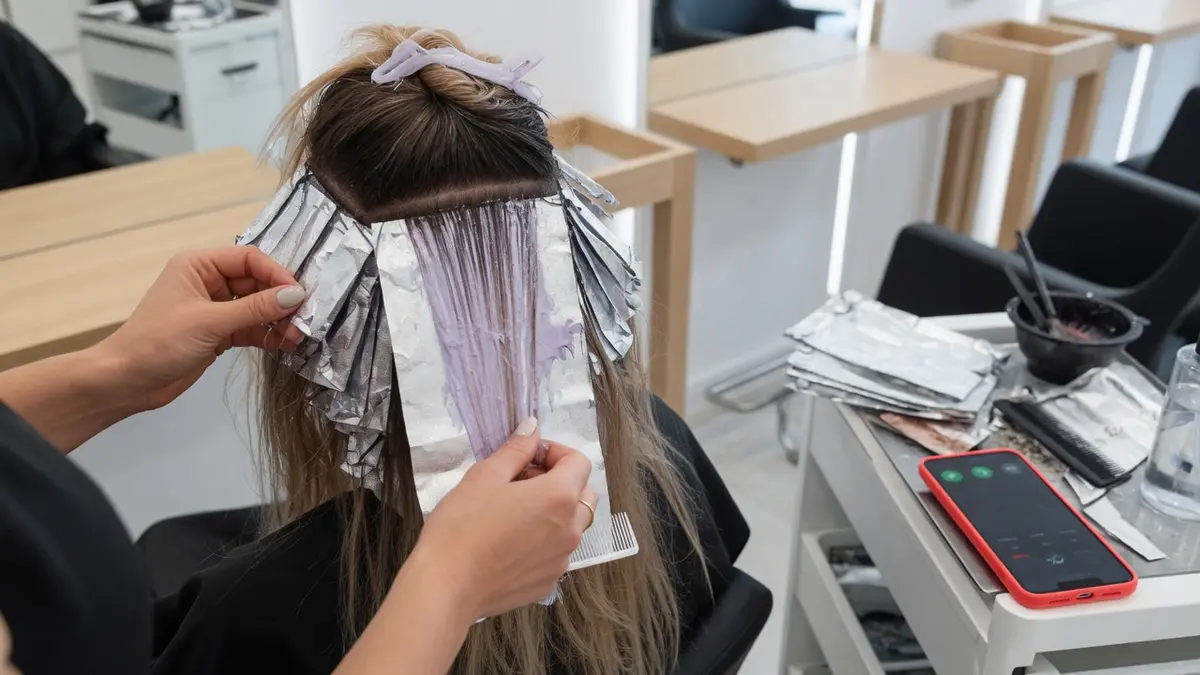
- Saturday late morning both hands are in the foils; the person who would pick up is mixing or walking someone to the dryer.
- A walk-in who gets voicemail hangs up and goes two doors down.
- Saturday calls arrive together — a colour enquiry, a cancel, two walk-in questions — in the time it takes to mix a bowl.
- The people who leave a message already have a chair. The people who wanted a same-day cut leave nothing.
- Forward after a short ring so whoever is free at the desk still takes the call.
- Pull unanswered calls by hour for Saturday before you change anything.
TL;DR
Saturday morning the phone rings and nobody can pick up. The stylists have both hands in the foils. The caller is often already on the street — a walk-in cut, or a colour enquiry looking at your window and the next one. They will not wait on voicemail. They hang up and go two doors down. An assistant answers every line at once, asks whether they want a cut, colour or nails, writes the request down, and, if you take walk-ins, tells them to come in or offers the next free colour time. You get a Saturday list of what people actually asked for, including the ones who used to hang up at the beep.
Key takeaways
- Pull unanswered-call figures by hour, and look at Saturday 10:00–13:00 on its own before you judge the week.
- Do not judge the loss by the messages on the tape — the walk-in who wanted a same-day cut hangs up at the beep.
- Forward after a short ring so a free pair of hands at the desk still takes the call, and the assistant takes what is left.
- Tag new colour enquiries separately from reschedules — one of those is a chair you did not have, the other is already on the book.
- If you take Saturday walk-ins, tell the assistant that window in one sentence, or it will book those hours as colour.
- Re-count Saturday unanswered calls after four weekends. If they have not dropped, the forward is wrong, not the script.
Saturday, foils, and the call nobody can take
It is Saturday, late morning. The colour is on. The foils are going in. Someone is mixing the next bowl. Someone else is walking a client to the dryer. The phone rings, and the person who would have picked up has dye on both gloves.
The client in the chair cannot be left. Leave the foils too long and you have a correction you did not plan. Let the bowl dry on the trolley and you mix again. So the phone rings, and it keeps ringing, and then it stops.
The caller is often already on the street. They have your name on the window and the salon two doors down in the same glance. They wanted a cut this morning, or they wanted to know if a colour chair still exists today. They will not wait on voicemail. They hang up and push a door.
You already measure the book, the till, the no-shows. The number that is usually missing is how many people tried the number on the door and heard ringing. A caller who rang for eleven seconds at 10:47 is in the provider’s log. Nobody on the floor has asked to see it. They were in foils.
A salon can be quiet at half past eight on a Tuesday and unable to reach the phone at ten past eleven on a Saturday. If you average the week, Saturday disappears into a calm figure, and you hire as if the problem were a missing weekday receptionist. Pull Saturday on its own. That is the day the walk-in is on the pavement and the colourists cannot take a glove off.
Who hangs up, and who leaves a message
Not every unanswered call is worth the same.
Someone rings on Thursday to move Friday’s blow-dry. They already have a chair. They know your name. They will record a message, or they will come on Friday anyway. These are the calls you see, so these are the calls that shape how large the problem feels. They are also the cheapest miss.
Someone rings on Saturday about a colour. No name, no hair length, no trace in the book. They had your salon and the next one in the same look. They hear the beep and treat it as nobody there. They hang up. This is the call that would have paid for the afternoon.
Someone is standing outside and asks if they should come in. They did not want a booking. They wanted a yes. If it keeps ringing they treat it as a no. They sit down two doors down. You will not see them in the messages. You may not see them in the call log either, if they only rang once and nobody tagged the number.
Someone cancels a Saturday colour on Friday evening, still inside the four-hour window. That chair just became free. If nobody picks up, the chair stays empty, and the person who rang at 10:12 asking for Saturday is already next door. You already have the cancel on the book. What you did not get is the person who could have taken that chair.
A gel-fill question uses the same number. If nobody picks up, they do not leave a name for Monday. They walk into the nail bar. Same street, same Saturday, a different station — and still a call you never counted if you only open the tape.
The messages you do get are not the calls you lost
The people who record a message already have an appointment, or want something in two weeks, or know which stylist they always see. The people who will not record one are standing outside with an hour to spare and three salons on the same stretch of pavement.
So you hear the Thursday reschedule and you do not hear the person who rang about colour and would have sat down. If you judge the problem by the messages, you conclude you miss a couple of moves. The log says otherwise, once you isolate Saturday.
A direct message on Instagram is a person who decided you were worth a wait. It is a useful channel. It is not a count of the people who tried the number on the glass. The person with wet hair and an hour does not open the app. They try the door, then the next door.
If you have never asked the provider for unanswered calls by hour, do that before you change a script or a hire. Four Saturdays is enough to see the shape. Look at ten to one. Look at Friday from six. Leave the rest of the week as one figure until you have those two.
Five calls while the bowl is being mixed
The calls do not arrive one, then a gap, then one. They arrive as a colour enquiry, an “are you taking walk-ins”, a cancel, and a gel-fill question in the window it takes to mix a bowl.
Hire someone for Saturday and they take the first call. Callers three and four still hear ringing, or a busy tone, or the beep. One extra pair of hands still leaves people on the street. The assistant can hold more than one conversation while the gloves stay on.
There is a second failure, quieter. If you forward every call at once, including the ones a free receptionist would have taken, the regular who only wanted to move a Thursday blow-dry never hears a familiar voice, and you decide the assistant does not sound like you. Do not switch it off. Forward after fifteen or twenty seconds, so the desk keeps what it can reach and the assistant catches the rest. Calls you answer cost nothing.
A second line with the same two hands does not change this. The third caller is still waiting. What changes it is that the third call is answered while Anna is still in the foils.
The person standing at the window
A walk-in who asks “are you taking people this morning?” is not asking for Thursday at four. They are asking whether it is worth crossing the street. The honest answers are short: yes until a time you set; no, the book is closed, here is the next colour time; or yes for a cut, no for colour.
If you take Saturday walk-ins, the assistant has to be able to say that sentence. If it answers with the next bookable colour on Monday, it has not heard the question. The person hangs up and goes two doors down, where someone said come in.
If you do not take walk-ins, say that too, in a sentence it can repeat. Otherwise a caller is told to come down into a floor that only has booked colour left.
Do not give away a booked balayage because someone is at the door. The client who planned their afternoon around a two-hour colour will be standing at the basin when the walk-in sits down. Someone in tears because a box dye went wrong is still a beauty call. Take the name, take the number, offer the next honest colour-consultation time. Do not invent a chair by moving someone else’s foils.
Those walk-in hours have to stay off the colour book. If the assistant treats every Saturday hour as bookable colour, the window you have always protected disappears. Block the hours in the calendar the way you block a stylist’s lunch. The assistant will follow what it can see.
A line outside the salon two doors down is not always a sign they take more walk-ins. Sometimes your walk-in rang you first, heard ringing, and pushed their door. Saturday’s unanswered log is how you tell.
Friday evening, when Saturday’s colour book starts to move
Saturday clients decide in the morning whether they are coming. A lot of the movement starts the night before. At twenty to seven on a Friday someone is cashing up. Someone is sweeping. The phone rings. It is a cancel for tomorrow at two.
Four hours is the window most of you already say out loud. A cancel inside that window is a chair you can still offer to the next person who calls. If nobody picks up, the chair stays empty, and the Saturday-morning caller who wanted colour sits down somewhere else, because they never heard that a time had opened.
A cancel after the window is still worth taking. You would rather hear it than find an empty basin. It is not a refill you can count on. The assistant should still write it down.
Friday from six is the other slice to pull from the provider, after Saturday late morning. That is when tomorrow’s colour book starts to move, and when a missed cancel is still a chair you can sell. A weekday receptionist who is excellent at moving blow-dries will not be on the floor when those calls arrive.
If the cancel rule in the notes is written for the next day, a cancelled two o’clock stays empty. Set the window you actually enforce, say it at the end of a booking, and treat a cancel inside it as a chair that is free again, not as a note under the till for Monday.
What the assistant has to do when it picks up
Answer. The loss above is not caused by clumsy handling. It is caused by nobody picking up. Someone has to take the call while the gloves stay on.
Answering is not enough if the first question is “what time”. A walk-in asking whether to come in now, a colour enquiry asking for Saturday, and a nail fill for Thursday collapse into the same diary if nobody asks what they want done. Pick up. Find out whether they wanted a cut, colour or nails. Write that down even if you cannot finish the booking.
For colour, ask how long the hair is before anyone offers a time. A printed “full colour” is wrong the moment the hair is past the shoulders. You do not need a finished Saturday book on the first pickup. You need the request written down, and you need the assistant not to offer a short gap for long hair.
A box dye that went wrong is not a medical emergency. It is not a walk-in you invent a chair for. An assistant that starts suggesting home remedies has left the job. It takes the request. You look at the hair.
How CITT handles a missed salon call
- Your number stays on the window. A forwarding rule at the provider sends what you do not answer. Calls the desk picks up never leave the salon.
- Several calls are answered at once. Saturday late morning is three conversations, not three busy tones.
- It asks what they want done — cut, colour or nails — and writes that down, even when the booking cannot be finished on the call.
- It knows the walk-in window you marked. It can say come in for a cut until one; colour is booked; here is the next colour time.
- A cancel inside your four-hour window frees the chair and the next caller can be offered it.
- It confirms by SMS when a time is actually booked, in the language of the call — 70+ languages.
- You get the transcript, the summary, and the service the caller named, tagged so Saturday is not one pile called “missed”.
What it will not do
The stylists stay in the foils. The assistant picks up.
It will not move a booked colour because someone is at the door, or because someone is upset about a box dye. It describes the window you set. It does not give away someone else’s chair.
It will not treat walk-in hours and booked colour as the same book. Mark the difference, or it will book colour into the hours you meant to keep open.
It will not quote unseen colour work, give skin advice, or decide a redo. It takes the name and what they asked for. You decide.
What you set up first
- The Saturday slice of the call log. Unanswered calls, by hour, four Saturdays back. If you skip this you will never know whether anything moved, and you will argue from the feeling of the floor.
- Forward on no-answer, not always. Fifteen to twenty seconds. The desk keeps the calls it can take.
- Three tags: colour enquiry, cut / walk-in, reschedule. The weekly summary is useless if Saturday is one pile.
- The walk-in window, said in one sentence the assistant can repeat — “cuts as walk-ins until one, colour is booked”.
- The four-hour cancel, so a Friday-night or Saturday-morning cancel is a chair the next caller can be offered, not a note under the till.
- Re-pull the Saturday log after four weekends. Compare unanswered calls, not assistant volume.
Then who does colour on Saturday, the length question, and one line that forbids skin, mole and rash advice. Give it the published prices it may repeat. Do not give it a colour figure it would read out.
Rates live on the pricing section of the home page. They are not repeated here.
Put your own chair figure in
The worked example above is arithmetic on stated assumptions. A root touch-up and a correction are not the same chair. Put your own figure in. If Saturday still justifies the change with your number, the argument is real.
Count unanswered Saturday calls. Then count them again.
AI receptionist, in-house staff, or a call centre
| CITT | In-house | Call centre | |
|---|---|---|---|
| Catches a walk-in who will not leave a message | Yes — it answers | Only if a stylist is free | Yes |
| Handles a Saturday burst of five calls | Yes | No | Depends on the Saturday roster |
| Knows the caller wanted colour, not a cut | Asks service type, writes it down | If they had time to ask | A short message, often just a name |
| Available at 18:40 on a Friday | Yes | Floor is closing, nobody picks up | At a surcharge |
| Cost of the calls it does not take | None — you answered them | Wages whether the phone rings or not | Often a Saturday minimum |
| Refills a four-hour cancel | Offers the freed chair on the next call | If someone is free to rebook it | Takes a message for Monday |
The Saturday the messages under-counted
Worked from these assumptions — change any of them and the answer changes:
- Four chairs, one Saturday, 40 inbound calls.
- 14 of them arrive between ten and twelve.
- The desk reaches 6 of those 14; the rest ring out.
- Of the 8 missed, 2 leave a message and 6 leave nothing.
- A new colour booking is worth about €85 to the salon — replace this with your own chair figure before you trust the answer.
- The tape shows 2 missed callers. That is the number the owner believes.
- The provider's call log shows 8. The other 6 are the ones nobody counted.
- Assume half of the silent six wanted colour or a cut-and-colour — 3 bookings.
- 3 × €85 = €255, on one Saturday morning, not in the book and not in the till.
Roughly €12,240 a year that never appears in a report, from Saturday mornings alone.
What it costs
CITT is pay as you go: no packages, no minimum, no contract. The current rates — the monthly fee per number and the per-minute rate — are on the pricing section of the home page, which is the only place they are published.
Frequently asked questions
How do I find out how many Saturday calls we actually miss?
Ask your telephony provider for unanswered calls by hour, and isolate Saturday. If you have never done this, start there. The tape is the wrong count: a caller who wanted a same-day cut hangs up at the beep and walks into the next salon. The log is the number to work from.
Would hiring someone just for Saturday not fix this?
It helps the first call. It does not help the third. Saturday traffic arrives together — a colour enquiry, a cancel, two walk-in questions — in the same few minutes. One extra person changes how many hands can leave a bowl. It does not change how many people ring at once.
Does the Instagram inbox not catch them?
Some of the calm ones, later. A person standing outside with an hour to spare does not open an app and wait. They try the number on the door. If it rings out, they try the next door. Direct messages are from the people who already decided you were worth waiting for.
What happens to the calls the desk does answer?
Nothing, and nothing is charged. The forward only sends a call onward when it has rung for the seconds you choose. A call a receptionist picks up never leaves the salon.
Will regulars mind talking to an assistant?
Regulars already have a chair and a time. The calls you are missing are first-timers and last-minute Saturday people, and what they mind is a ringing tone. The assistant introduces itself the way you configure, and it does not pretend to be a person if asked.
How soon can we tell it worked?
Four Saturdays, against the same unanswered-call figure you pulled at the start. Do not use “calls the assistant handled” as the measure — that number cannot tell you whether anyone is still ringing out while Anna is in foils.