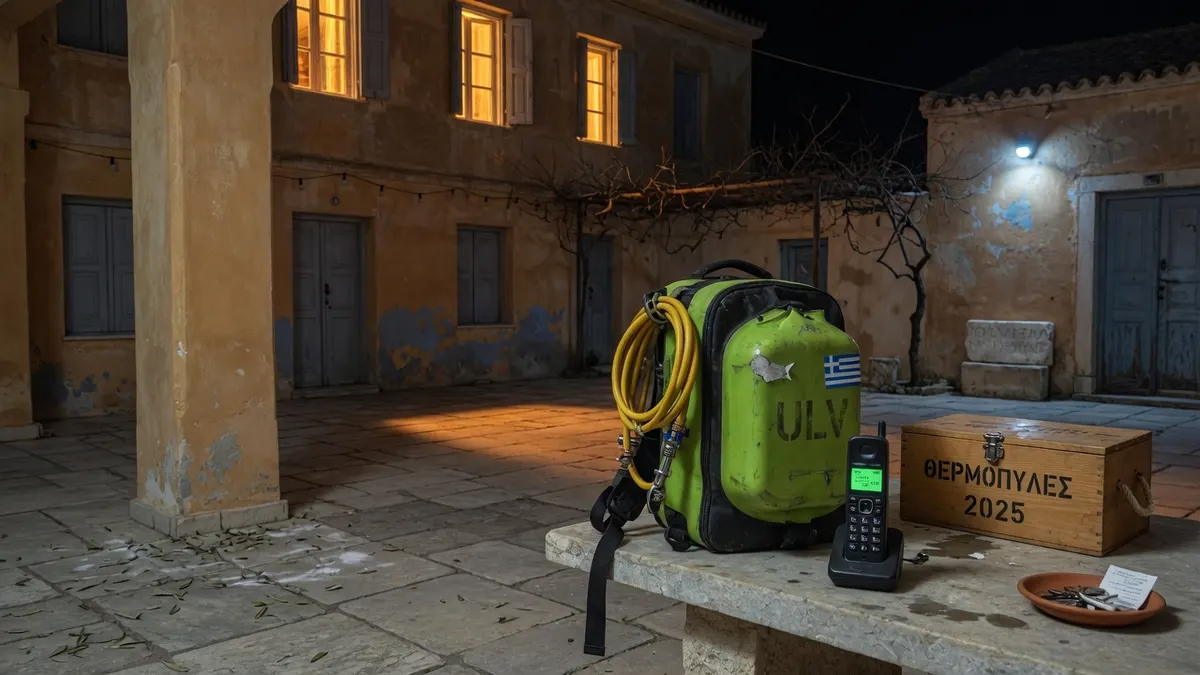
AI phone receptionist for pest control
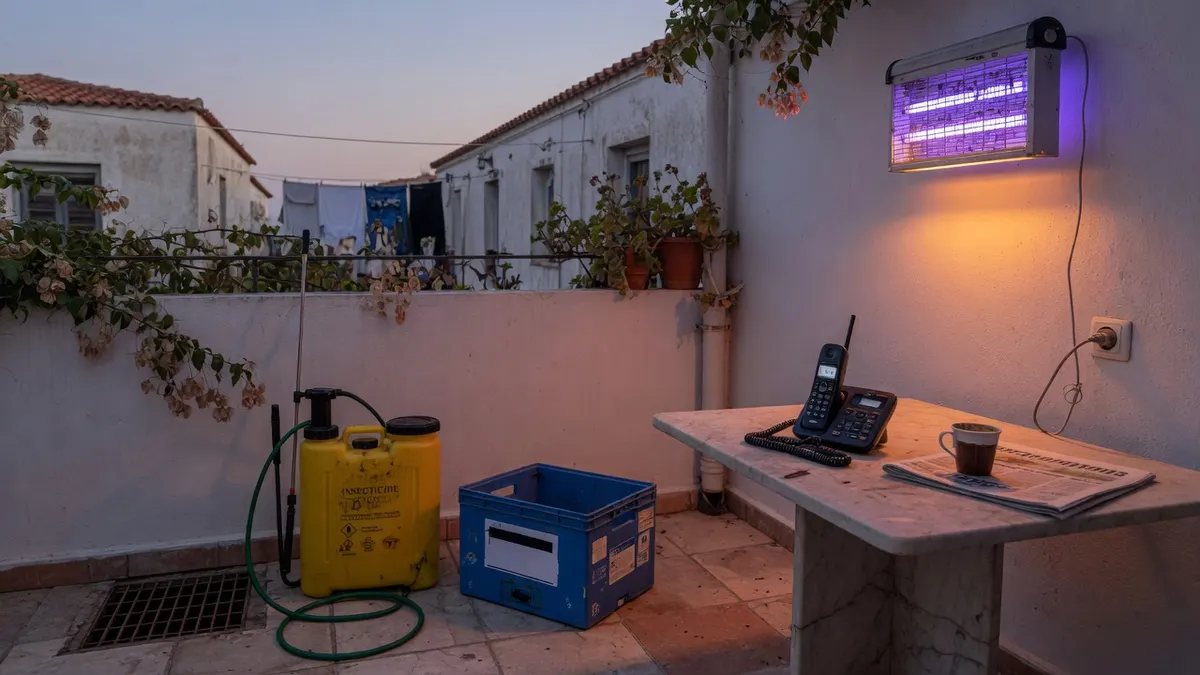
Quick summary
- The technician is already in a vacant shop, or in a kitchen after close, with both hands in a suit.
- Mosquito, cockroach or rodent first — those are three treatments, not one spray.
- Occupied house or vacant unit next. Someone sleeping there tonight changes the visit.
- A caller who saw a cockroach at midnight will not wait on voicemail. They ring the next crew.
- It checks your book before it offers a time, writes the visit in, and texts the confirmation.
- It never names a product, a mix, or a dose. The technician decides on site.
TL;DR
August. The technician is in a vacant shop with a suit on, or in a taverna kitchen after the last covers. The phone rings. Someone has mosquitoes on a terrace, a cockroach in a kitchen, or droppings in a storeroom. Those are three jobs. They will not leave a message. An assistant answers, asks which pest and whether anyone is living there, books a visit that is actually free, and never names a product, a mix or a dose. It does not invent a price from “I saw two”. It does not tell them they can sleep in the house tonight.
Key takeaways
- Put the assistant on the published number with a forward-on-no-answer rule, so a free pair of hands still takes the call.
- Teach it the first split: mosquito, cockroach or rodent — and do not let it jump to a time before that.
- Then occupied or vacant, and whether there are children or pets. Give it the sentence: it cannot name a product.
- Let it book first visits and contract slots you marked. Keep dose, mix and “can we sleep here” as a callback.
- In August, shorten the ring-time before forwarding so overflow is caught before the third ring-out.
- Give it the line verbatim: the technician decides on site. It does not invent a price from a description.
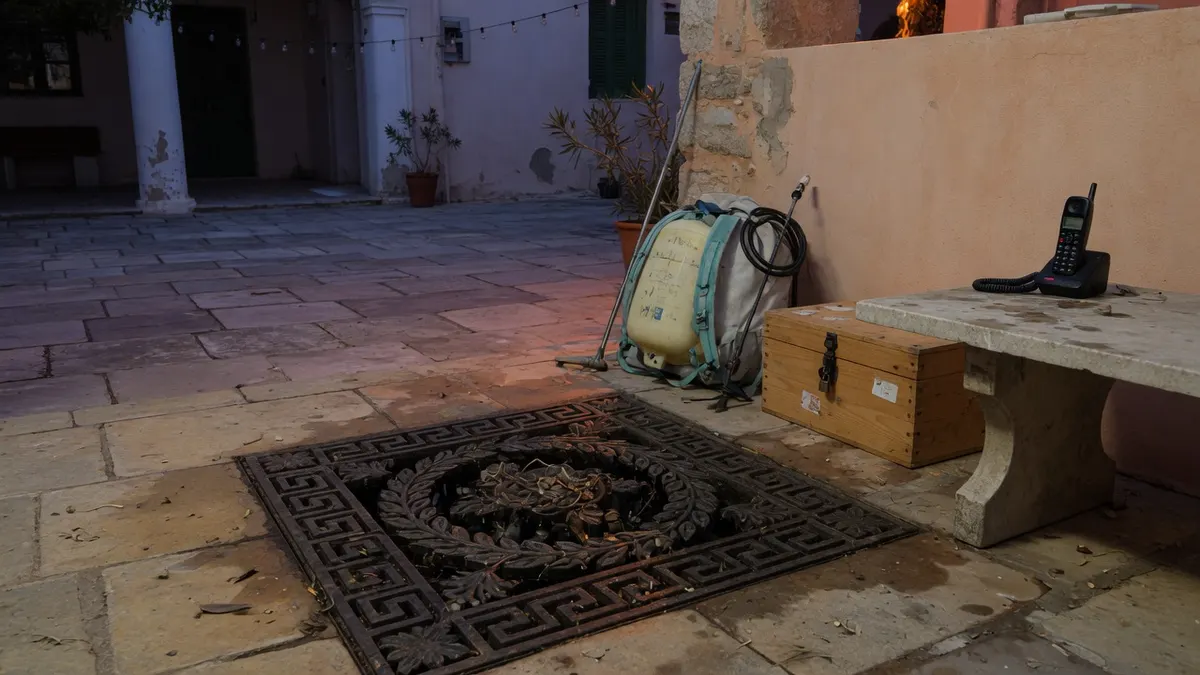
What an AI phone receptionist does in a pest-control firm
August, just after nine. One of you is in a vacant shop on a pedestrian street, suit on, torch on the floor. The other is still in a taverna kitchen that closed at midnight. The published number rings. You cannot peel the suit off to take a cocktail of questions. The colleague cannot leave bait stations half-laid. There is no third pair of hands.
You put the assistant on the number already on the van and on the card in the letterbox. It answers when you cannot. Then it does one of two things. It books a first visit that is actually free. Or it takes a note for a callback.
The first question is whether this is mosquitoes, a cockroach, or a rodent. A terrace full of mosquitoes is not a kitchen. A kitchen is not a storeroom with droppings. An assistant that opens with “what time would you like?” will put a vacant-shop job into a family house at supper, and will still not have asked whether anyone sleeps there.
A caller who rang in English gets the confirmation in English. A caller who rang in Greek gets it in Greek. The assistant works in 70+ languages. The SMS follows the language of the call.
In a suit, and the phone still ringing
One of you is already zipped in. The other is driving between a storeroom and a flat that has been empty since May. The number on the van still rings.
It is a burst. Dusk in August, after the heat. The first week the holiday houses open. The Monday a taverna failed an inspection. A second line with the same two hands still leaves the third caller on a busy tone.
The person who just saw a cockroach by the fridge will not wait on voicemail. They have your card and another crew’s card from the same search. They hang up and dial the next firm. The person whose terrace is unusable tonight will not leave a message either.
Clients on a monthly contract will often wait. A person who cannot report a cockroach, and a person who cannot book mosquitoes before guests arrive on Friday, will not. If those two wait behind the job you are already in, the first visit is gone, and the inspection certificate arrives as an angry call at eight — or the next crew has already taken the house.
Whoever treats the first cockroach often keeps the contract. That is why a missed first visit is not only a missed hour.
Mosquito, cockroach, or rodent — then occupied or vacant
Mosquitoes. Terrace, garden, a hotel courtyard, a villa that opens on Friday. The assistant asks where they are seeing them, whether the house is occupied, and when someone can be there. It does not name a fog, a tablet, or a backyard mix. It does not say the neighbours will stop breeding them. Mark dusk slots in August if that is when you actually work. A mosquito call at noon in January is a note, not a same-day dash.
Cockroach. Kitchen, bakery, a staff room behind a shop. The assistant asks occupied or vacant, then whether there are children or pets, then whether this is a house or food premises. It does not name a gel, a spray, or a powder they can buy on the way home. A photo of an insect on a tile is not a survey. Book the first visit. If they say it is a taverna that needs treating after close, that is a night slot, not a morning between houses.
Rodent. Droppings in a storeroom, scratching in a ceiling, a vacant shop. The assistant asks occupied or vacant, food on site or not, and whether they have already put down anything. It does not say rat or mouse from a description of a sound. It does not tell them where to put bait. It books a visit. If they mention a cat or a dog that roams the rooms, write that on the note. Do not let the assistant invent a layout of stations from the call.
People remember what they saw. They do not remember the difference between a first visit and a follow-up on a contract. Ask which pest first. Then occupied or vacant. One of those two is enough to stop a family house being treated like an empty unit. None is still a note, not a guess.
A sentence the assistant is not allowed to say
“What should I spray?” is the question on this phone. It comes after a cockroach, after mosquitoes on a baby’s terrace, after droppings next to dry food.
The assistant does not answer it. Not with a brand. Not with “the usual gel”. Not with a mix of oil and something from under the sink. A sentence that sounds like a recipe, said on the recorded line, is a sentence the firm now owns, and the assistant cannot see the rooms, the voids, the pets, or what is legal to use there.
The line you give it is short: the technician decides on site. This call books the visit. It does not name a product.
“Can the children sleep here tonight?”, “should I wash the plates?”, “can I put borax in the corners?”, and “is it safe if I close the bedroom?” are still treatment questions. The assistant names the topic so the callback is useful, and refuses the decision.
Do not put a product list in the notes. It will read the list out.
Occupied house, vacant shop, food premises
An occupied house is a different visit from a vacant shop. The assistant has to ask, on the first call, which one it is.
Someone sleeping there tonight, a baby, a dog, a cat that jumps on worktops: that belongs on the note before anyone offers a time. The assistant does not decide whether they should go to a relative. It does not tell them to bag the food. It writes who is in the building and flags you if they ask about sleeping there.
A vacant holiday house that has been shut since May is a different job again. Often the owner is still in Athens and the key is with a neighbour. The assistant takes who has the key and when someone can open. It does not promise Friday if nobody can let you in on Thursday.
Food premises — taverna, bakery, hotel kitchen — need the hour after close, and often a certificate date. Mark those as their own slot type. A morning you have already given to houses is not a hole for a kitchen that can only be done at one in the morning.
If they need a paper for an inspection next week, the assistant takes the date. It does not say the inspector will accept last year’s certificate. It does not say the kitchen is “ready”.
A price nobody can give from “I saw two”
When someone describes two cockroaches on a kitchen tile, or sends a blurry photo from a phone, the tempting answer is a number. The assistant does not give one.
How many rooms, whether the unit is occupied, whether this is a one-off or the start of a contract, access after close, a courtyard that needs a return at dusk: all of that changes the work. A number quoted before anyone has walked the rooms is a number you then spend the visit taking back.
It can repeat a published starting figure you typed in and marked as speakable. Unseen food premises, a vacant shop with a ceiling void, a house with children and a dog — those do not get a number on this call. The assistant takes the request and books the visit.
If they press — “just a round figure, I need to tell the owner” — the assistant still refuses. Book them as soon as a time is free. Flag it if guests arrive on Friday, or if an inspection is next week.
After close, and the taverna kitchen
Some of these callers are still in a kitchen at midnight. They want to know whether you can come before breakfast service, whether the staff can stay, whether a certificate will be ready by Monday.
The assistant is not in the kitchen. It cannot see the grease traps or the dry store.
What it can take: the address, after-close or during the day, occupied or empty, the inspection date if they have one, and a name that can open the door. What it can repeat, if you typed the line in: someone must be there to let you in, and food must be covered the way you already tell every kitchen. What it must not say: which product, how long until they can cook, whether the inspector will pass them.
If they say someone has been in contact with bait they found, or a child has put something in their mouth, that is a transfer. You give the assistant a short list: child, pet, bait swallowed. It collects a name and a number while it is connecting. It does not tell them what to do at the sink.
A caller who is already home, with a cockroach in a jar, is a first visit and, if they want, a time when someone is in.
Certificates, contracts, and “can I sleep here tonight?”
Certificate. The inspection is next week, the hotel wants a paper for the file, a bakery needs a date on a letterhead. The assistant takes who it is for and when they need it. It does not say what the inspector will accept, and it does not confirm that last year’s paper still holds.
Contract. Monthly mosquitoes at a villa, a kitchen on a round. The assistant asks whether they already have a contract with you, then books a slot you marked for that round, or takes a first-visit request if they do not. It does not invent a monthly figure from a terrace description.
Sleep tonight. “Can we sleep here?” is a treatment question. The assistant takes occupied, children, pets, and flags you to call the same evening. It does not read a re-entry time off a list and say yes. If they need an answer before the baby’s bedtime, that is a same-day phone.
August needs its own dates. Do not let the assistant book a first visit into a week when both of you are already on island houses.
How CITT handles it
- Your number stays on the van and on the card in the letterbox. A forwarding rule sends what you do not answer. Calls you pick up from the kerb never leave the firm.
- Every line is answered at once. An August dusk is several conversations, not a stack of busy tones.
- It knows the firm you described. What you treat, whether you take new houses this week, how a first-visit note should look, who is on after close.
- It asks mosquito, cockroach or rodent first, then occupied or vacant, and only then looks at the book.
- It takes a product question as a refusal, in the caller’s words, and never as a recipe.
- It checks the real diary before it offers a time, and writes the visit into the same calendar the crew already uses.
- It confirms by SMS, in the language of the call — 70+ languages — and can remind them who must be there with the key.
- It escalates product, dose, “can we sleep here”, and a child or pet in contact with bait as a tagged note or a transfer.
- You get the transcript, the summary, the pest, occupied or vacant, and what the caller asked for.
What it will not do
It will not name a product, a mix, or a dose. It will not tell anyone to spray a corner, put powder down, or wash the plates. It will not say they can sleep in the house tonight, or that the baby is fine. It will not invent a price from a photo of an insect. It will not say the inspector will pass the kitchen. It will not treat mosquitoes, a cockroach and a rodent as the same visit. It will not treat an occupied house like a vacant shop.
What these calls sound like
The order is the pest, then occupied or vacant, then the visit or the note, then the refusal said out loud. There is no supermarket brand. There is no round figure over two insects nobody has walked. There is no “you can sleep there” to a person with a baby in the next room.
If the assistant is friendly and still answers the recipe question, you own that sentence. Put the person who rang about the fridge at 21:10 on a first-visit note, not on the next crew’s pad.
What you set up first
Put the assistant on the number on the van with a forward-on-no-answer rule, so a free pair of hands still takes the call. Then the three-way split, the occupied question, and the sentence that forbids a product name.
Write down what you actually treat and whether you are taking new houses this week. Give it the fields you want on every note: pest, occupied or vacant, children or pets, food premises or house, after close or daytime, who has the key. Mark two kinds of visit: a first visit that needs you, and a contract slot already on the round.
Give it the same-day phone list: a child or a pet in contact with bait, an inspection tomorrow, guests on Friday, they ask if they can sleep there tonight. Do not give it a product table it would read out. Write one line that forbids recipe, dose and re-entry sentences. Add opening hours, who is on after close, August dates, island weeks.
Rates live on the pricing section of the home page. They are not repeated here.
AI receptionist, in-house staff, or a call centre
| CITT | In-house | Call centre | |
|---|---|---|---|
| Answers while the technician is in a suit | Always | Only between jobs | Yes |
| Several callers in an August dusk | Every line at once | One | Depends on the plan |
| Asks mosquito, cockroach or rodent first | Yes — before it looks at the book | Yes | Often jumps to what time |
| Names a product or a dose | Never — books the visit | Not on the first call either | Must not; sometimes does |
| Quotes from “I saw two in the kitchen” | Never | Looks, then prices | Often reads a range |
| Speaks the caller's language | 70+ languages | One or two | Whoever is on that shift |
| What it will not do | Name a product, a mix, or whether they can sleep there | Sees the site, still does not prescribe over the phone | Reads a script |
What one unanswered August evening costs a two-person pest crew
Worked from these assumptions — change any of them and the answer changes:
- Two technicians, a mid-August week, roughly 28 inbound calls before ten at night.
- About a third arrive while both of you are already in a kitchen or a vacant unit.
- Of the calls nobody reaches, 5 are first mosquito or cockroach jobs at houses that can pay a visit.
- A first visit that stays is worth about €140 to the crew — put your own figure in, this is the number to change first.
- This example assumes 3 of the 5 never leave a message and ring the next firm.
- 5 first-visit requests reach nobody on a normal August evening.
- 3 of them do not call back.
- 3 × €140 = €420 of first-visit work, that evening.
- August evenings, over a 10-week mosquito season — 10 × €420.
About €4,200 in that season, from the same dusk window repeating.
What it costs
CITT is pay as you go: no packages, no minimum, no contract. The current rates — the monthly fee per number and the per-minute rate — are on the pricing section of the home page, which is the only place they are published.
Frequently asked questions
Do I have to give up the van number?
No. You keep the number on the van, the card in the letterbox and the Google listing. You set one forwarding rule — every call, or only the ones still ringing after the seconds you choose. If you pick up from the kerb, the call never leaves the firm and is never charged.
Can it tell them which spray to buy?
It must not. It takes the pest in the caller's words, asks whether the place is occupied, collects a name and a callback number, and puts the note in front of you. What to apply, if anything, is a decision on site after the technician has seen the rooms. The assistant does not name a product to sound helpful.
Can it quote if they send a photo of a cockroach?
No. A photo of an insect on a tile is not a survey. A number said before anyone has seen the kitchen, the voids and whether anyone sleeps there is a number you then have to take back at the door. It books a first visit. If a price must not be said until you have walked the rooms, do not give the assistant that price.
What if I am already in a suit in a vacant shop?
That is the usual August evening. The assistant answers the overflow. A mosquito call becomes a visit that is actually free, or a callback. A cockroach in a kitchen becomes a note with occupied or vacant. Shorten the ring-time in August so the third caller is not listening to a busy tone.
Someone asks if the children can sleep there tonight. Can it answer?
No. It takes whether anyone is living there, whether there are children or pets, and what they have already done. It does not say stay, go to a hotel, wash the plates, or close the bedroom. If they say a child has been in contact with bait they found, it puts the caller through to a phone you actually hold.
What do we actually see afterwards?
A transcript, a short summary, whether this was mosquito, cockroach or rodent, occupied or vacant, and whatever was booked or left for you. Confirmations go out by SMS in the language of the call.