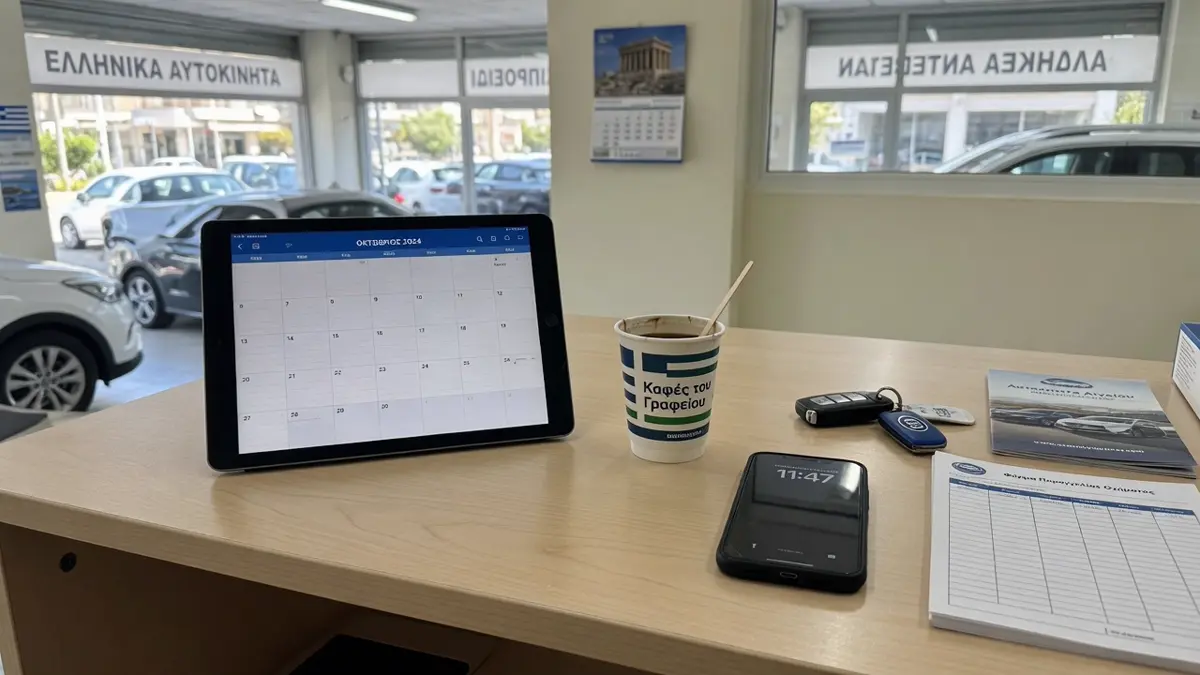
AI phone receptionist for car dealerships
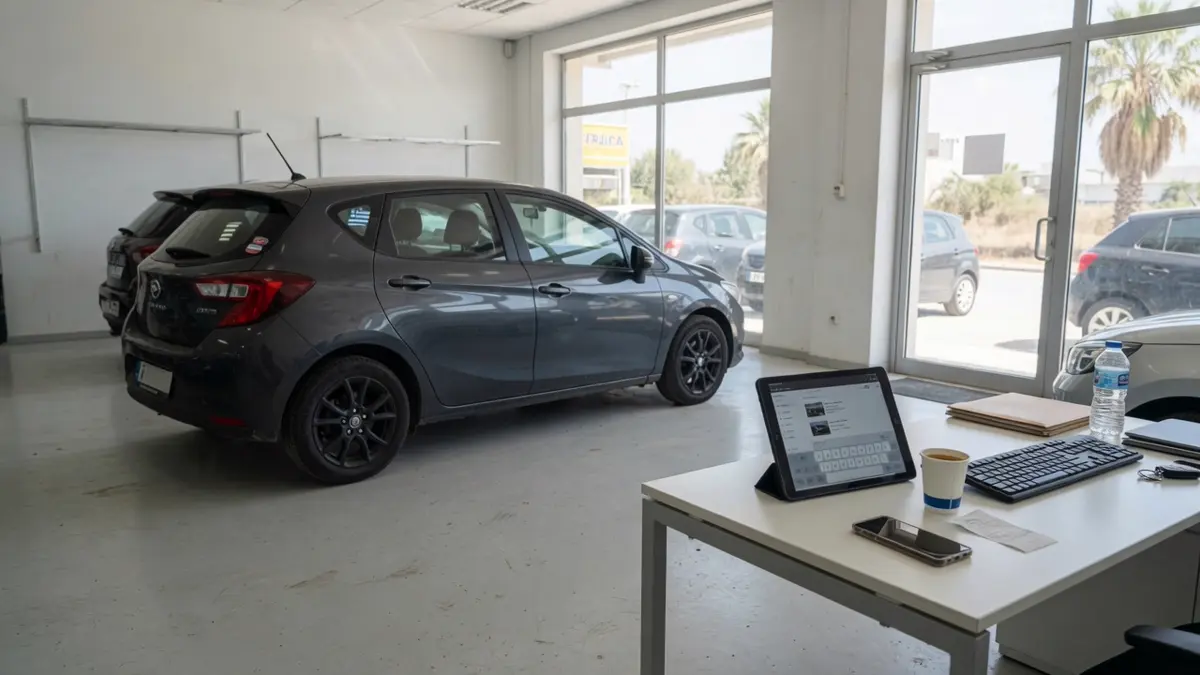
Quick summary
- The salesperson is in the passenger seat on a test drive; the technician has both hands under a car on the lift.
- Sales and the workshop share one number. Ask which job this is before anyone looks at a book.
- A caller who asks whether the Peugeot is still on the lot will not leave a message. They will tap the next dealer.
- A test drive needs a free salesperson and the car. A service time needs a free bay and a technician. Those are two diaries.
- The assistant checks the diary you actually use before it offers a time, writes the booking in, and texts the confirmation.
- It will not invent that a car is still on the lot, and it will not invent a price.
TL;DR
The salesperson is out on a test drive. A technician has both hands under a car on the lift. Sales and the workshop share one number, and it is ringing. The caller wants to know if the Peugeot is still there, or they want a bay this week. They will not leave a message. The assistant answers, asks sales or service first, takes the car they mean or the work they need, and books a test drive or a service time only when that calendar is free. It will not invent that a car is still on the lot. It will not invent a price.
Key takeaways
- Put the assistant on the number already on the listings and the workshop card, with a forward-on-no-answer rule, so whoever is free at the desk still takes the call.
- Make sales or service the first question. A test drive and a service booking do not share a diary, a person, or a set of keys.
- Give it two books: who is on sales and when, and which bays are free. Do not let it offer a lift time from the sales diary.
- Tell it never to confirm a car is still on the lot, or to speak a price, unless that fact is in the stock file you connected.
- Write how a test drive works — length, who can take one, that they should bring a licence — and mark Saturday workshop hours separately.
- Workshop status and the courtesy car come off the job card. If the card is silent, the assistant takes a callback.
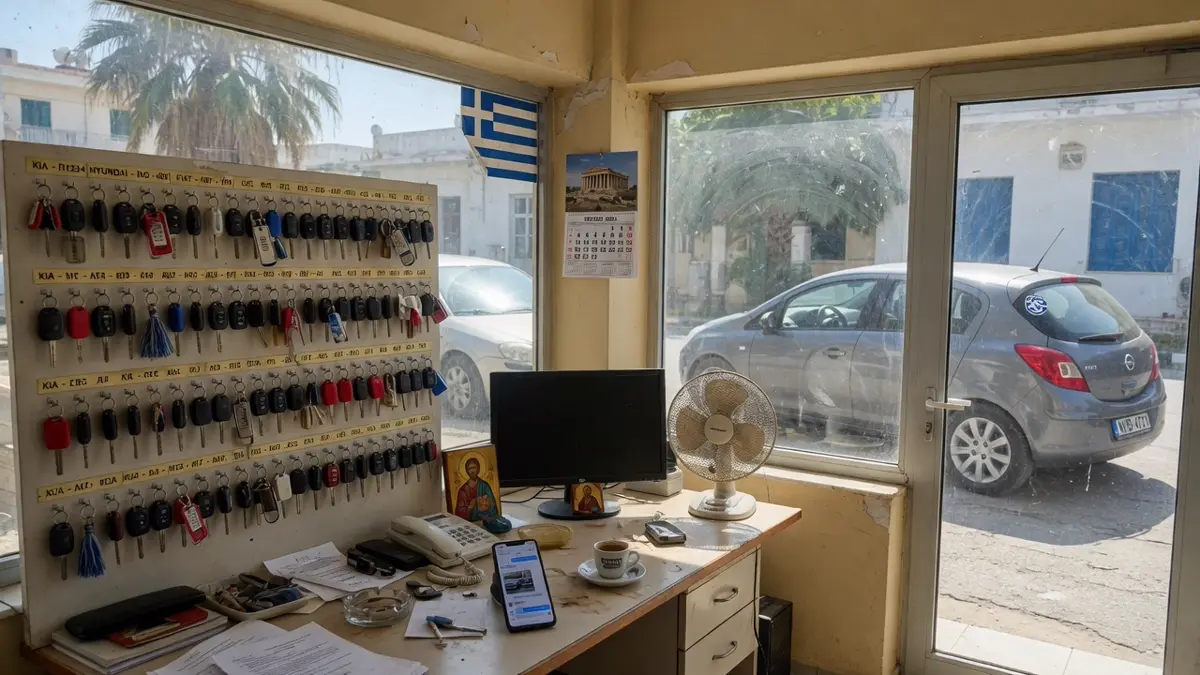
What the assistant does on this number
The number on the listing, the workshop card and the banner over the lot is one number. A caller who wants the grey Peugeot and a caller who wants an oil change both dial it. The first thing the assistant has to get right is which job this is.
It answers when the salesperson is in a passenger seat and the technician is under a car. It asks sales or service. Then it takes the car they mean, or the work they need. Then it either books a test drive or a bay against a diary that is actually free, or it writes a request and puts that in front of whoever can act on it.
Opening hours, where the lot is, how a test drive works, whether the workshop takes cars on Saturday morning: those can be finished on the phone. Whether that Peugeot is still on the lot, what it costs, whether a noise is safe to drive to Thessaloniki, whether finance will go through: those become a request if the file does not already say.
A caller who rang in English gets the confirmation in English. A caller who rang in Greek gets it in Greek. The assistant works in 70+ languages. The SMS follows the language of the call.
The test drive, the lift, and the phone
On a Greek lot with a workshop this is not two businesses with two switchboards. The same handset sits between the showroom glass and the door to the lifts. New cars, used cars, service, tyres, a KTEO prep, “where is my car” — they all land there.
Saturday, late morning. A buyer who saw the listing at breakfast is already in a used Peugeot. Your salesperson is in the passenger seat with the only keys for that car. In the workshop a technician is under a diesel on the lift, oil draining. Someone at the desk is writing a job card for a drop-off. The phone on the pillar rings.
Nobody can pick up. Both hands on the lot are in a moving car. Both hands in the bay are greasy. The person at the desk has a customer in front of them and a set of keys to tag.
These calls arrive in a clump, late morning, on the day people sit with Car.gr and decide to come down. Hiring someone for the quiet weekdays does not put a pair of hands on the Saturday phone. The caller who asked about a specific car is often still on the listing page. They have your card and the next dealer in the same glance. They are not going to wait through the beep. They hang up and tap.
The same hour is when the workshop takes weekend drop-offs, if you take them. A driver who needs the car on Monday will not leave a message about an oil change. They will ring another workshop.
If the assistant treats every caller as a buyer, a customer who wants an oil change spends three minutes being offered a test drive. If it treats every caller as a service drop-off, the person who just opened a listing is asked for a registration and a fault. The person at the desk already asks the split without thinking. The assistant has to be told, or Saturday will have a buyer waiting at a booked lift and a service customer holding keys at an empty sales desk.
Sales or service — then the car, or the work
Sales. Used or new, a car they saw, or a car they have not picked yet. If they name a listing, write the name down exactly — make, year, colour, the fuel if they said it, the site if they said Car.gr or somewhere else. Do not add a status the stock file has not confirmed. If they have not picked a car, take what they can actually say: body type, budget band if they offer one, automatic or not, when they can come. “A nice diesel, not too many kilometres” is not something a salesperson can work from. “Used, small automatic, Saturday late morning” is.
Service. What they want done, the registration if they have it, and when they can leave the car. An oil and filter, a service interval, tyres, aircon before summer, a KTEO prep: those are bookable once you have said you do them and how long they hold a bay. A noise they cannot describe, a warning light they are frightened of, “can I drive it to Thessaloniki”: those are a request or a bay, not a diagnosis.
A caller who is already a customer — they left a car yesterday, they want to know if it is ready, they want to move Tuesday’s booking — should not be asked whether they are calling about a car for sale. Listen for the job card, the registration, the word “ready”. Those calls belong to the workshop book.
New and used sit on the same desk and still must not be mashed together. A new-car order is not a used car on the lot. Allocation, a wait, a discount off a list: the assistant does not invent any of that. It takes the model they named and a time for someone on sales to call. A used car on the gravel is a different conversation, and even then the file has to say it is still there.
“Is the Peugeot still there”
Callers who name a car want a yes or a no. You cannot answer that from the listing.
The listing can be a day behind. The car can be on a test drive, reserved and not yet marked, at the paint shop, or gone since yesterday afternoon. Last week’s printout is not a stock file.
The assistant confirms a car is still on the lot only when your own stock record says so at that moment. If the file is silent, stale, or unreachable, it takes the car they mean and leaves the confirmation to you. It does not say yes because the listing is still up. A buyer who drives across Athens for a car that left on Friday will not ring you a second time.
If they want to come on Saturday, book a salesperson who is actually free, against a car that is actually there. If only one of those two facts exists, take a callback. Do not put a name against an empty space on the gravel. The same rule covers “do you still have a diesel automatic in that size” when they have not named a car. The assistant cannot invent a specific car that would fit.
A price that is not in the file
When someone reads a listing aloud — the grey one, they think the number on the site is old, what will you take — the tempting answer is a figure. The assistant does not give one unless that figure is in the record you connected. Whatever it says, they will treat as yours. A range becomes the price in their notes. If the file has no figure, the assistant takes the request and you call back.
It can repeat a published workshop menu you gave it. An oil and filter can have a list price. A KTEO prep can, if you actually publish one. Unseen used stock cannot, and a new-car discount cannot either. Leave the number to someone who can see the car.
Do not store a “from” figure for the whole lot. The assistant will read it out. If nobody should name a price until someone has walked to the car, do not give it that figure.
A trade-in asked from a description is the same trap. Year, kilometres and a photo on the phone are not a valuation. The assistant takes make, year, kilometres, and that they want to put it against a car. It does not speak a trade-in figure. You look at the car.
A test drive is not a service booking
These are two different appointments. They do not use the same person, the same keys, or the same stretch of ground.
A test drive holds a salesperson and a car. It usually wants a licence in the driver’s hand. It has a length you already use, and it cannot sit on top of another drive in the same car. If that Peugeot is already out, the next drive is not at 11:10 just because the sales diary has a gap. The assistant has to know which car is free, not only which salesperson.
A service booking holds a bay, a lift, a technician, and often parts. An oil and filter is not a clutch. A KTEO prep is not “have a look at a noise”. The assistant asks what they want done, matches a length of time you wrote down, and only then looks at the workshop book. If you do not do that work — windscreens, gas, a brand you never touch — say so, so it stops taking those bookings.
Saturday morning makes the split sharper. Plenty of desks still take sales walk-ins and keep the workshop on booked drop-offs, or the other way around. Mark those hours the way you mark a technician’s lunch. If the assistant treats every Saturday hour as a free test drive, the lifts sit idle. If it treats every Saturday hour as a bay, a buyer is told to come back on Tuesday.
If you run a courtesy car, that is a third resource. The assistant offers it only when you have marked one as free. If it offers one that is not marked free, two customers arrive for one Polo.
A caller who wants a new car is not asking whether something is on the gravel. They want a model, a colour, a month, sometimes a number off the list. If you have a demonstrator and you wrote that it can be driven, the assistant can book a test drive against that car. If they want to order, it takes the model and a callback. Delivery months move. A date spoken on your number is a date they will hold you to at the handover. A discount if they decide this week is a request. The assistant does not negotiate.
The workshop board
“Is my car ready?” is not a sales question, and it is not a guess.
The assistant reads the job card. Ready, not ready, waiting for a part. If the card says ready, it can say so and tell them where to collect. If the card does not say, it takes a name and a number. It does not invent half past five because that is when you usually finish.
A caller who wants to move a booking follows the workshop book, not the sales diary. A cancel should free the bay the way you already free it, so the next oil change can take that lift. Set the notice you actually enforce. The assistant should say it at the end of a service booking.
“The car is making a noise, can I keep driving it?” is not a reception answer. The assistant does not say yes, and it does not say what the noise is. It offers a bay if one is free, or it puts the description in front of a technician. A human looks at the car.
Parts follow the same file rule as stock. If the part is in what you entered, the assistant can repeat that. If it is not, it takes the request.
Trade-in, finance, and the papers
Trade-in. Make, year, kilometres, and which car they want to put it against. A time for someone to see it, if you take those on the lot. No figure from a description.
Finance. They want to know if they can be approved, what the month would be, whether you work with a bank they name. The assistant takes a request for the person who actually runs the numbers. It does not say they are approved. It does not invent a monthly figure.
The papers. Transfer, plates, what they need to bring to a handover. If you wrote a list — identity, tax number, the old registration — the assistant can read that list back. Whether a foreign buyer can complete, or what a specific transfer will cost in their case, is a request. The assistant does not give legal or tax advice.
A complaint about last week’s handover, or about work that was supposed to be in the service, is the same kind of call: take the name, take what they said, put it in front of you. Do not offer a free redo from the phone. You look at the car, or at the job card.
How CITT handles it
- The number on the listing stays yours. A forwarding rule at the provider sends what you do not answer. Calls the desk picks up never leave the lot.
- Every line is answered at once. Saturday on a new listing is conversations, not a stack of busy tones.
- It knows the desk you described — hours, Saturday sales versus workshop, where to park, who is on sales, how a test drive works.
- It asks sales or service before it looks at a book.
- It checks the diary that matches the job — sales for a test drive, the workshop book for a bay — and writes the booking into the book the team already uses.
- It confirms by SMS, in the language of the call — 70+ languages — and can remind before a test drive or a drop-off.
- It will not confirm stock or speak a price unless that fact is in the record you connected.
- You get the transcript, which job it was, the car or the work they named, and what was booked or left for you.
What it will not do
It will not invent stock. A caller who asks if the Peugeot is still there gets a confirmation only from the file, or a request.
It will not invent a price — not on used stock, not as a new-car discount, not as a trade-in from a description.
It will not put a test drive on a workshop hour if you gave it two books. It will not say a car is ready, or that a courtesy car is waiting, unless the job card says so.
It will not diagnose a noise, tell someone they can keep driving, or say what a warning light means. It will not approve finance, promise a delivery month, or decide a transfer. It takes the request. A human decides.
What these calls sound like
The order is the job, then the car or the work, then the offer, then whatever cancel notice you use on that book. There is no “yes, it’s still there” from a listing, and no price pulled off a screen the assistant cannot trust. The caller who asked about the Peugeot belongs on a salesperson’s Saturday, or on a callback the same morning.
What you set up first
Put the assistant on the number already on the listings, with a forward-on-no-answer rule, so a free pair of hands at the desk still takes the call. Then the first question — sales or service — and the two books that follow from it.
Write how a test drive works, who can take one, and that they should bring a licence. Mark Saturday workshop hours separately from Saturday sales. Write the notice you actually enforce when someone cancels a bay.
Give it the published workshop prices it may repeat, if you have them, and do not give it a used-car figure it would read out. One line that forbids confirming stock off a listing. One line that forbids a trade-in number from a description. One line that forbids advice about a noise or a warning light.
Add opening hours, who is on sales on Saturday, whether you close the workshop in August, where to park, how to find the lot from the national road.
Rates live on the pricing section of the home page. They are not repeated here.
AI receptionist, in-house staff, or a call centre
| CITT | In-house | Call centre | |
|---|---|---|---|
| Sales out on a test drive | Every line answered at once | After they get back, if at all | Depends who was rostered |
| First question on the shared number | Sales or service, before any book | Yes, if they heard the start | Often jumps to what time |
| Is that Peugeot still there? | Only if the stock file says so | From memory, sometimes wrong | Risk, if the sheet is stale |
| Test drive vs service booking | Two diaries, two kinds of time | Yes, if they are at the desk | Treats them as one booking |
| Saturday listing burst | Conversations, not busy tones | One call, if someone is on the lot | A message for Monday |
| Speaks the caller's language | 70+ languages | Greek, sometimes English | Whoever is on that shift |
| What it will not do | Invent stock, a price, or a ready time | Can walk to the car | Reads last week's printout |
What one unanswered Saturday morning costs a sales desk with a workshop
Worked from these assumptions — change any of them and the answer changes:
- Two people on sales and two in the workshop, a normal Saturday, roughly 20 inbound calls on the shared number.
- About half arrive between ten and one, when both salespeople are on test drives or with walk-ins on the lot.
- Of the calls nobody reaches, 5 are people who just opened a used-car listing and asked if that car is still there.
- A completed used sale is worth about €1,200 gross in this example — put your own average in before you trust the answer.
- Not every enquiry becomes a sale. This example assumes 1 of those 5 would have come in and completed. Change that if yours is lower.
- 5 stock enquiries reach nobody on one Saturday morning.
- 4 of them do not leave a message. They tap the next dealer with a similar car.
- If even 1 of the 5 would have become a used sale, that morning is €1,200 that never reaches the desk.
- Saturday mornings alone, over 46 weeks — 46 × €1,200. Put your own weeks in if you close in August.
About €55,200 a year, from one recurring Saturday window — and only if you accept the conversion above. Change it.
What it costs
CITT is pay as you go: no packages, no minimum, no contract. The current rates — the monthly fee per number and the per-minute rate — are on the pricing section of the home page, which is the only place they are published.
Frequently asked questions
Do I have to give up the number on the listings?
No. The number on Car.gr, the Google card, the banner and the service reminder stays yours. You add one forwarding rule with your telephony provider — every call, or only the ones still ringing after the seconds you choose. If someone at the desk picks up, the call never leaves the lot and is never charged.
Can it tell a caller the Peugeot is still there?
Only if your own stock file says so at that moment. If the file is silent, stale, or unreachable, the assistant does not guess. It takes the car they mean — make, year, colour, whatever they saw — and leaves a request. Confirming a car that left yesterday is worse than a missed call. The buyer turns up, a salesperson is pulled off the lot, and you own the wasted Saturday.
Will it quote a price from the listing?
It repeats a figure only when that figure is in the record you connected or in what you typed in yourself. It will not estimate, round, or give a sense of the market. Whatever figure it says, the caller will treat as yours. Anything else is a callback. The same rule covers a trade-in figure given from a description.
Will it put a test drive on a workshop hour?
Not if you gave it two books. A test drive needs a salesperson and the car. A service time needs a bay and a technician. The assistant asks sales or service first and only offers a stretch of time that matches that book. If the right diary cannot confirm the time, it takes a callback rather than giving a buyer a lift that is already booked.
What if someone asks whether their car is ready?
The assistant reads the job card you connected. If the card says ready, it can say so and tell them how to collect. If the card is silent, or the work has moved, it takes a name and a number and leaves it for the workshop. It does not invent a ready time to sound helpful.
What do we see after a call?
A transcript, a short summary, whether they rang about a car or about the workshop, the car or the work they named, and whatever was booked or left for the desk. Confirmations go out by SMS in the language of the call. You read Saturday the way you already read the paper diary — except the ones nobody could pick up are on it too.