Book salon appointments without guessing colour time
Quick summary
- The first question is cut, colour or nails — those go to different people and take different times.
- For colour it then asks how long the hair is, and only then looks at a stretch of time that fits.
- A move is one change, not a cancel plus a new booking — otherwise the client's own chair blocks the new time.
- Four hours is the cancel window most salons already say out loud — a freed Saturday chair goes back on offer.
- Mark the Saturday walk-in hours so they cannot be sold as booked colour.
- If it cannot confirm the time on the book, it takes a callback. It does not guess.
TL;DR
Saturday the phone rings for a colour and the stylists have both hands in the foils. The assistant asks what they want done — cut, colour or nails — then, for dye, how long the hair is, then looks at the book and offers a time that is free. A move is one change, so a client is not told their own colour is taken. A cancel inside four hours puts the chair back on offer. Walk-in hours stay off the colour book. It will not invent a colour price, guess how long the work takes, or confirm a time nobody wrote down.
Key takeaways
- Give it three service families first: cut and blow-dry, colour work, nails — and who does which.
- Tell it that colour time depends on hair length, and that it must ask length before offering a colour time.
- Test a move on a client who already has a Saturday colour, and watch whether their own chair blocks them.
- Set a four-hour cancel window, say it at the end of every new booking, and put the freed chair back on offer.
- Mark the Saturday walk-in hours, or write one sentence that you do not take walk-ins.
- Keep colour corrections and old box dye as consultations at first; let it finish roots, cuts and gel fills on its own.
What booking has to get right on a salon book
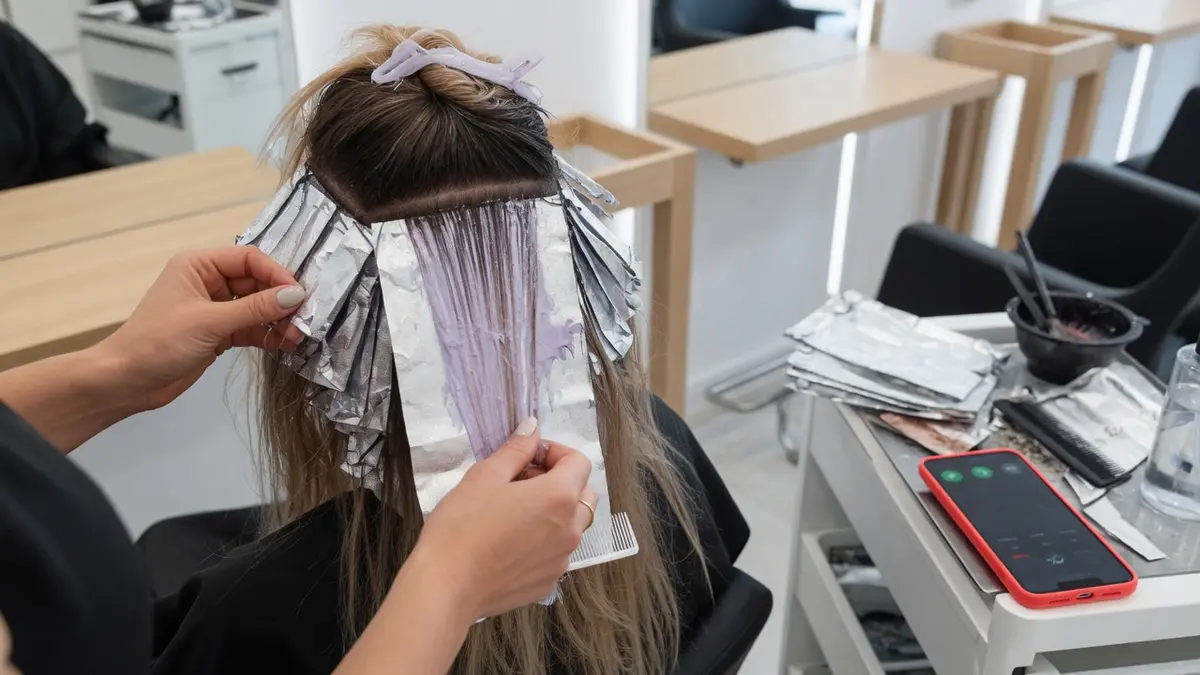
Someone rings to book a colour. The person who would write it in has both hands in the foils, or is walking someone to the dryer. The caller wants a time today or Saturday. They will not hold for a ring-back.
The first question cannot be “what time would you like?” A cut, a colour and a set of nails go to different people and take different times. How long colour takes depends on the hair, not the card in the window. Offer two o’clock before those two facts exist and a two-and-a-half-hour colour lands in a blow-dry gap. Everyone after that runs late.
A client who wants to move Saturday’s colour is not asking for a new chair. They already have one. Find that booking, release it, and place the new time as one change. Do it as a cancel and then a new booking, and their own booking is still holding Saturday while the assistant looks for Thursday. If Thursday is gone, Saturday is gone too.
Walk-in hours and booked colour share the same Saturday. The assistant has to be told which is which, in the setup.
A confirmation for a time nobody wrote down is a client at the door with wet hair, and a chair that was never in the book.
Service, then length, then time
That is the order. Nothing goes into the book until those two facts exist. Time is the third question, never the first.
Cut and blow-dry. Forty-five minutes for a cut, sometimes less. You can still take these as a walk-in on a quiet morning. Once the assistant knows who cuts, it can offer these times without asking length.
Colour work. Roots, a full colour, foils, balayage, a toner, a correction. They are done at the same basin and they are not the same appointment. Roots on a bob and a correction on hair to the waist need different people and a different stretch of the afternoon. The assistant asks which of those the caller means. Then it asks how long the hair is. Then it looks at the book.
Nails. Another desk, often another person. A gel fill on the colourist’s Saturday is a booking you will move by hand at 10:00. If you have no nail desk, say so.
Write the length question down. “Above the shoulders, past the shoulders, or longer?” is enough. That answer is how long the chair is held. Skip it and two colours land in a gap that fits one, and the 15:00 cut starts when the dye is still on.
A toner is not a full colour. Highlights are not roots. If the caller cannot name the work, the assistant asks again. If they still cannot name it, it does not pick the short time to sound helpful. It takes a callback, or it books a consultation.
Who can take the work
The assistant has to put the work on a person, not on “someone”. Anna colours. Melina cuts and colours. Maria does nails. If only Anna does balayage, Saturday balayage can only go on Anna’s hours. If the junior blow-dries and does not put foils in, the assistant must not offer the junior for highlights.
Write who is in, who colours, who does nails, who is off. The assistant follows a list. An empty list is how it offers times that nobody can take.
Days off belong next to the times. Alternate Saturdays, a teaching day, the colourist who will not take a correction — if those are not in the book, the assistant will offer them. Melina only cuts, so her empty hour is not a colour hour. Lunch is the same kind of mark: nobody at the desk offers 13:00 if that is when Anna eats. Leave it unmarked and a long-hair colour starts when she was meant to leave the floor.
Cut and colour on the same visit
A caller who wants both is not asking for a cut with a colour squeezed after it. It is the longer of the two, in the right order, on a person who does both — or on two people whose hours actually meet.
You write the order once. Colour first, then the cut, is the usual rule, because you do not cut hair that still has dye on it. If only Anna colours and Melina only cuts, the assistant has to see both diaries before it offers Thursday at 17:00. A free hour on Melina and a busy hour on Anna is a cut with no colourist.
Walk-in hours stay off the colour book
If you take walk-ins, mark the hours. Saturday late morning is the usual window: cuts can walk in, colour cannot. Those hours stay off the colour book. The assistant has to see the mark, or it will treat every empty Saturday hour as a colour it can sell.
“Are you taking walk-ins this morning?” is not a request for Thursday at 16:00. The caller wants to know whether to push your door. Yes until the time you set. No, here is the next colour time. Yes for a cut, no for colour. Someone who wants a Saturday colour inside those hours has to be offered a time outside them, or a queue of trims and a booked balayage meet at the same basin at noon.
If you do not take walk-ins, write one sentence the assistant can say. Leave Saturday unmarked and the gaps look like colour, so it sells them as colour. At noon you have a queue you meant to keep and a balayage you should have refused.
A walk-in must not push a booked colour off the book. The client who took two hours in the afternoon is still coming. Describe the window. Do not give away their chair.
Moving a colour is one change
Find the booking. Release it. Place the new time. That is one change, in that order.
Reversed, or split into two separate steps, their booking is still on Saturday while the assistant hunts for Sunday. Sunday you are closed. The assistant then says Saturday is unavailable, because it is looking at the booking it has not released.
Test this with a real name before it runs on the book you use. Pick a client who already has a Saturday colour. Ask to move it. Watch whether their own chair blocks them. If it does, fix the order.
A move still has to obey the rest of the rule. Someone who booked a root touch-up and now wants balayage is asking for different work. The assistant asks, then looks for the longer stretch, then offers. If the new time is not free, Saturday stays until the client agrees to let it go.
Four hours’ notice
Say it when the booking is made. Four hours is the figure most salons already use. People ring in the morning to say they are not coming at two.
A cancel inside that window is a chair that goes back on offer, to the next inbound call or to the person who was told Saturday was full. A cancel after the window is still worth taking — you would rather know than find an empty basin — but it is not a refill you should promise.
If the cancel rule only hears yesterday, a cancelled two o’clock stays empty. The cancel has to go back into the calendar, not into a note for Monday.
Deposits are a different rule. If you already take them and actually collect them, the assistant can mention that. If you only mention a deposit when you are angry, leave it out of the script. Four hours said out loud fills more Saturday chairs than a deposit you will not collect.
A price nobody can give from a description
A caller says the hair is dark, they want it softer, there is old box dye. The easy answer is a number. The assistant does not give one. Length, what is already on the hair, and whether this is a correction all change the work. A figure said before anyone has seen the hair is a figure the desk then has to take back.
It may repeat a published menu item you gave it — a blow-dry, a gel fill. Colour work nobody has seen cannot have a list price. Book a consultation or a colour time, depending on what you allow. Do not put a colour tariff in the notes. The assistant will read it aloud.
What stays off the book, at least at first
Colour corrections. Old box dye. A caller who cannot say foils or toner. Bridal trials. Any visit where the time is a conversation, not a fact. On those calls it still takes the name, what is on the hair now, the length, and puts a consultation in front of you — not a made-up stretch of afternoon.
A caller asks if they need a patch test. Use the rule you wrote. Some salons book the test visit first. Some book the colour and remind the client to come in for the test. The assistant follows that rule.
Last week’s colour went wrong. Take the name, take what they said, put it in front of you. Do not offer a free redo from the phone.
A mole, a rash, “what cream should I use” is not a booking question. It can book the facial or wax you offer. It cannot say what a mark is. Those calls are a note. They are never advice.
How CITT handles it
- Service, then length, then time. Cut, colour or nails first. For dye, how long the hair is. Only then does it look at the book.
- It books against the salon you described. Who colours, who cuts, who does nails, Saturday walk-in hours, lunch, who is off.
- It reads the calendar you already use before it offers a time, and writes the booking into that same book.
- A move is one change. Find the existing booking, release it, place the new time. It does not cancel first and then hunt.
- A cancel inside four hours puts the chair back and can offer it on the next call. The window is said at the end of every new booking.
- It texts the confirmation in the language of the call — 70+ languages — and can remind the day before.
- What the call cannot finish becomes a note — a correction that needs eyes, a skin question, a complaint, a moment nobody can reach the calendar. Not a guess.
What it will not do
It will not look at the hair, so it will not price unseen colour. Box dye to a soft brown is a consultation or a callback.
It will not say what a mole is, what a rash is, or which cream to use.
It will not invent the duration. If the caller cannot say foils or a toner, it does not take the short time to be nice.
It will not sell walk-in hours as booked colour. You mark the difference.
It will not decide a patch test, a correction, or a redo. It takes the request. You decide.
It will not confirm a time nobody wrote down. If it cannot reach the calendar, it takes a callback.
What these calls sound like
Work first. Then length. Then a time that is free. Then four hours said out loud. No colour price. No “we can squeeze you in at twelve” over hours you kept for walk-ins. No advice about hair it cannot see.
A mixed booking names both pieces of work and the person who can do them. A move names the old time and the new one, and says Saturday is free again. If it is friendly and still books the wrong length of time, Saturday runs late. The person who rang at 11:10 about a long-hair colour should be on the book.
What you set up first
Forward unanswered calls from the number on the window, so whoever is free at the desk still picks up. Then:
- The three families and who does which. Cut and blow-dry, colour, nails — and how long each takes on short hair and on long hair.
- The length question, required, on every colour type, including toners and foils.
- Saturday walk-in hours, or one sentence that you do not take walk-ins.
- The four-hour cancel, said at booking, written back to the calendar, not left in a transcript.
- Who is in, who is off, where lunch is. Alternate Saturdays and the junior who only blow-dries belong here, not on a scrap by the till.
- When to take a callback — corrections, a colour price, any moment nobody can reach the calendar.
Then read the first fifty bookings yourself. Service, person, duration, whether length was asked. You are looking for the work nobody entered: the dry cut, the toner-only blonde, the colourist who is off the first Saturday of the month.
Give it the published prices it may repeat — blow-dry, gel fill, listed cut — and no colour figure it would read out. One line: no skin, mole or rash advice. Opening hours, where to park, how to find the door.
Rates live on the pricing section of the home page. They are not repeated here.
AI receptionist, in-house staff, or a call centre
| CITT | In-house | Call centre | |
|---|---|---|---|
| Asks cut, colour or nails first | Yes — before it looks at the book | Yes | Often jumps to what time |
| Asks hair length before a colour time | Yes, if you require the question | Yes — they can see why | Uses a flat menu time |
| Checks the book before offering | Yes | Yes | Usually takes a message |
| Treats a move as one change | Releases, then places | Yes | Rarely has the book |
| Four-hour cancel, chair back on offer | Yes | If someone is free to rebook | Notes it for Monday |
| Protects walk-in hours | If you marked them | Yes, if they remember | Treats Saturday as one book |
| Quotes unseen colour work | No — books a time or a consultation | Can look, then quote | Reads a price list |
What a four-hour cancel is worth if the chair is offered again
Worked from these assumptions — change any of them and the answer changes:
- Four chairs, about 90 booked services a week.
- A same-week cancel rate of 7% — check your own book; salons vary.
- Half of those cancels arrive more than four hours ahead.
- An unrefilled colour chair is worth about €85. Use your own figure — this is the number to change first.
- Offering the freed chair on the next inbound call refills about one in three of those early cancels. Challenge this first.
- 90 × 7% = about 6 cancels a week.
- Half arrive in time — 3 chairs that can still be sold.
- One in three refilled = 1 colour saved.
- 1 × €85 × 48 weeks.
Roughly €4,080 a year, from treating a cancel as a chair you can still fill rather than a line through the book.
What it costs
CITT is pay as you go: no packages, no minimum, no contract. The current rates — the monthly fee per number and the per-minute rate — are on the pricing section of the home page, which is the only place they are published.
Frequently asked questions
Can it put a balayage into a cut time?
Not if you configured the service families and the length question. It asks cut, colour or nails first, then hair length for colour work, and it only offers a stretch of time that matches. If that longer stretch is not free, it takes a callback rather than forcing the work into the next short gap.
Someone wants to move Saturday's colour to Thursday. What happens?
The existing booking has to be found and released as part of the same change. Done as “cancel, then book”, their own booking is still holding Saturday while the assistant looks for Thursday — and if Thursday is closed, they have lost Saturday too. Test this with a real name before you let it run on the book you use.
Should it book a colour correction?
Most salons should say no at the start. A correction needs eyes on the hair and a duration nobody should invent on the phone. The assistant takes the name, asks what is already on the hair, and hands you a consultation. Roots, cuts, blow-dries and gel fills are the work it should finish alone first.
We do not take walk-ins. Does that change anything?
Yes: say so, in one sentence, so the assistant does not tell anyone to come down now. Every Saturday hour then belongs to the book. The length question and the four-hour cancel still apply. The walk-in window is simply not created.
Who sends the confirmation?
The assistant, by SMS, in the language of the call, at the moment the time is written. A reminder can go out the day before — useful on Friday for Saturday colour, which is when people change their minds. Neither needs anyone at the desk typing a number.
Can it take a deposit over the phone?
Only if you already have a way to take one, and only if you actually collect it. Many salons mention a deposit on Saturday colour and never follow through. Do not let the assistant promise a rule you do not enforce. A four-hour cancel said out loud recovers more chairs than a deposit you are embarrassed to mention.