AI phone receptionist for plumbers
Quick summary
- You are under a sink or on a wet floor. The published number rings. That is when someone else has water in the kitchen.
- Burst, no hot water, and a leak under the kitchen are three jobs. The first question is whether they have shut the stopcock.
- If they mention gas, the assistant never tells them to open or close a gas valve. That call goes to you.
- A burst will not leave a voicemail. They open the building list and ring the next plumber.
- It checks your book before it offers a water-heater visit or a mixer change, writes the hour in, and texts the confirmation.
- After a freeze, or on a Monday when two stacks have let go, several people ring at once. It answers every line at once.
TL;DR
Water is on the floor. You are under a kitchen sink in a Greek block. Someone else is ringing about a burst, a cold tank, or a leak under their own kitchen. Those are three different jobs. An assistant answers when you cannot put the wrench down. It asks whether they have shut the stopcock. It never tells anyone to touch a gas valve. It does not invent when you will arrive. It books a water-heater visit only if that hour is free, and it puts a burst on your phone.
Key takeaways
- Put the assistant on the number on the van and the Google listing, with a forward-on-no-answer rule, so free hands still take the call.
- Teach it the first split: burst, no hot water, or a leak under the kitchen — and the stopcock question before anything else.
- Give it the sentence: if they mentioned gas, it does not tell them to open or close any gas valve.
- Let it book water-heater visits and mixer changes. A burst and a floor that is still filling ring a phone you actually hold.
- After a freeze or a Monday stack failure, shorten the ring-time so the third wet kitchen is not listening to a busy tone.
- Forbid invented arrivals. How long is a question you answer when you know which street and whether the water is still running.
What an AI phone receptionist does for a plumber
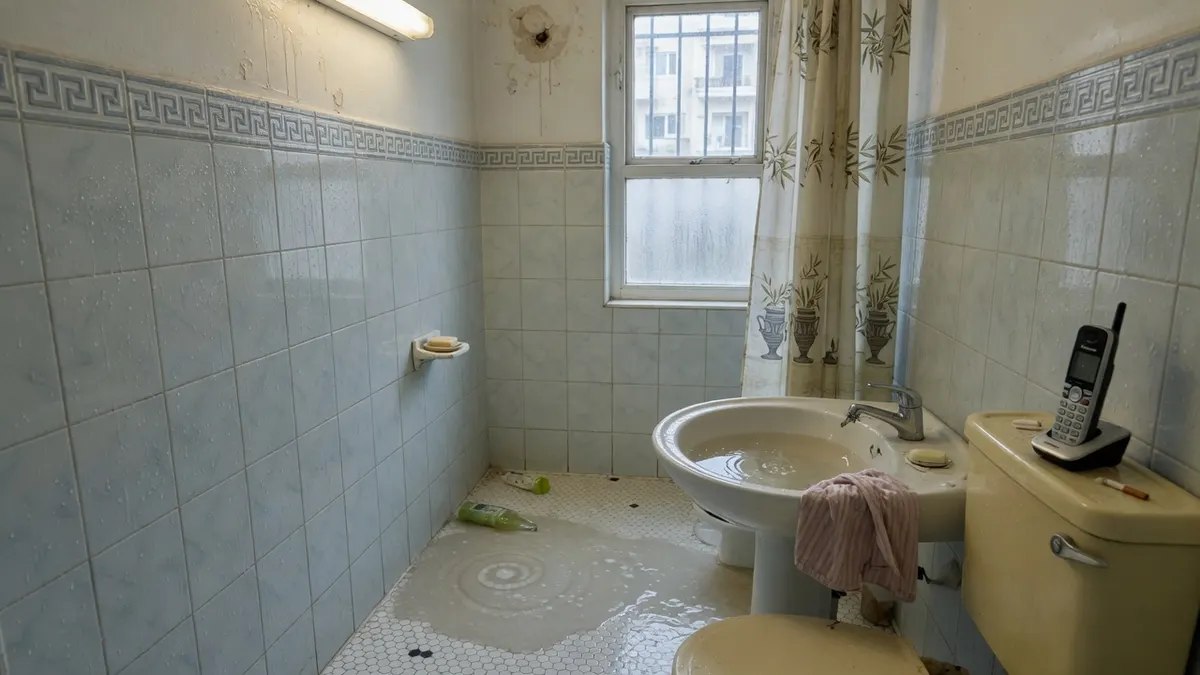
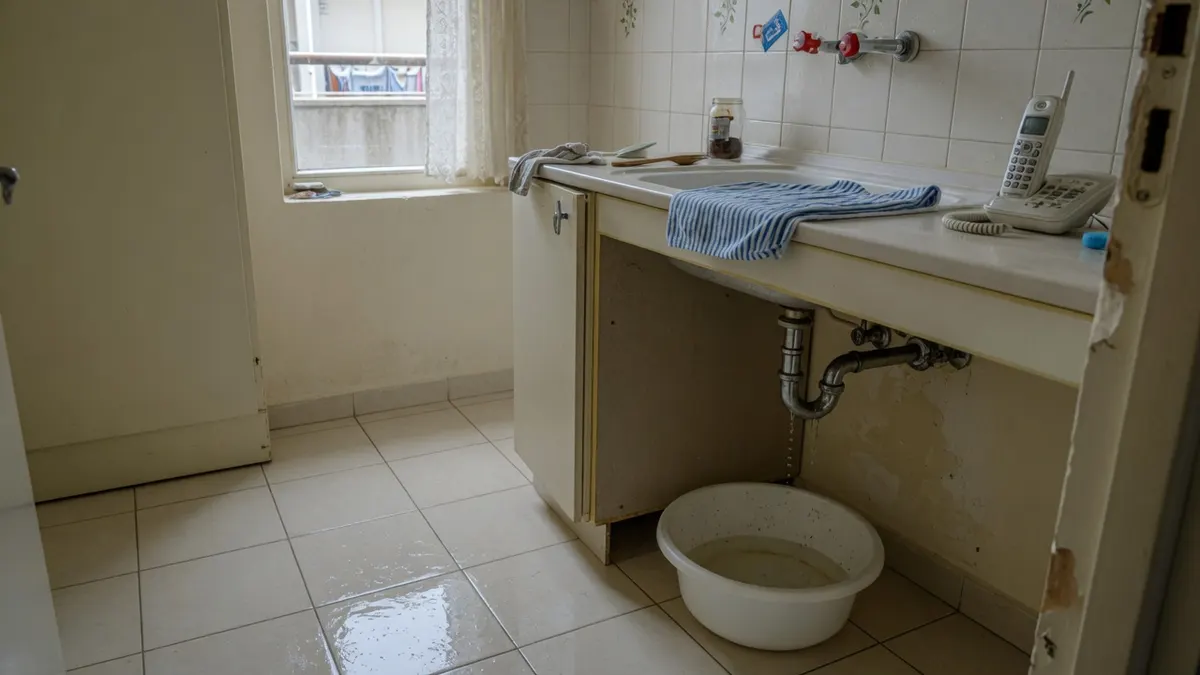
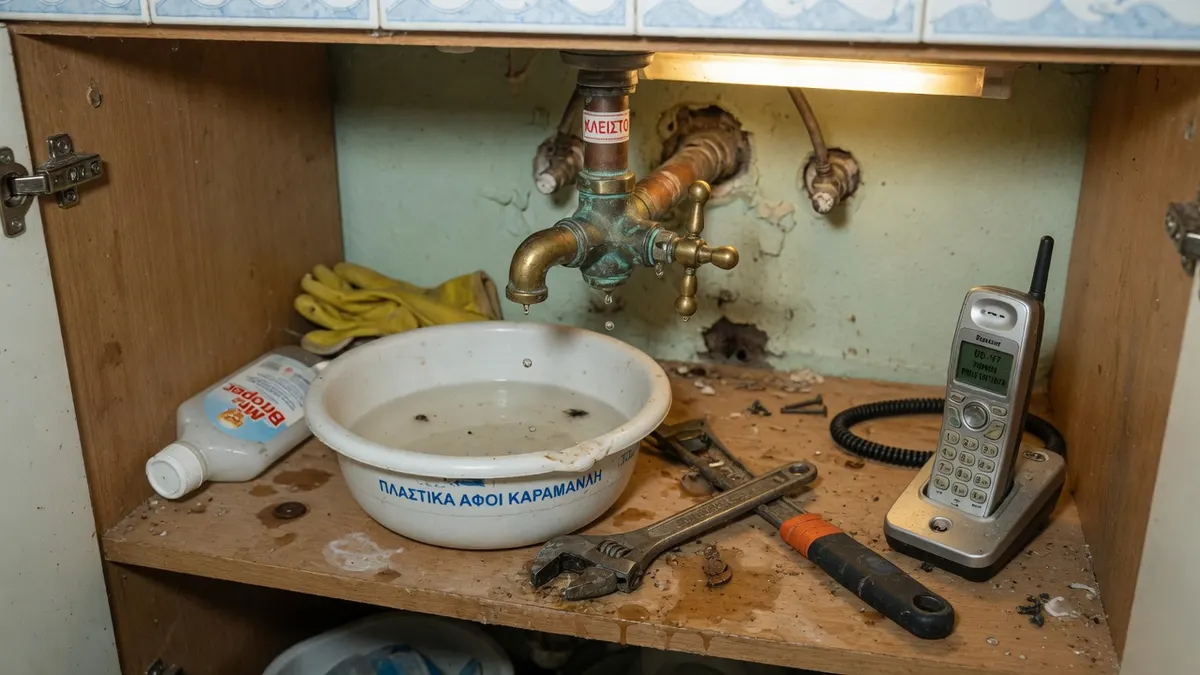
You are under a kitchen sink in a Greek block. The cabinet floor is wet. Both hands are on a joint. The published number rings. Someone else has water on their tiles. You cannot put the wrench down. There is no second pair of hands in the van.
You put the assistant on the number already on the side of the van and on the card under the intercom. It answers when you cannot. Then it does one of two things. It puts a burst or a gas mention on your phone. Or it books a visit that is actually free — a cold water heater, a mixer, a cistern that will not stop filling.
The first question is whether they have shut the stopcock, then which job this is. A burst is not a cold tank. A cold tank is not a slow leak under the kitchen. An assistant that opens with “what time would you like?” will put running water into Thursday’s mixer hour and leave a gas sentence on the recording.
A caller who rang in English gets the confirmation in English. A caller who rang in Greek gets it in Greek. The assistant works in 70+ languages. The SMS follows the language of the call.
Water on the floor, and the van number ringing
The puddle is already at the cabinet edge. You are on your side with a torch. That is the room this phone lives in.
The published number still rings. It is a burst after a freeze, or a Monday when two stacks in the same block have let go, or the afternoon three rentals reported no hot water at once. A second SIM in the same wet pocket still leaves the third caller on a busy tone.
The person standing in water will not wait on voicemail. They have your card and two other plumbers in the building list. They hang up and dial the next name. The person who mentioned gas by the balcony heater will not leave a message either. They want someone who will come, not a beep.
Clients who already have a mixer in the book will often wait. A burst will not. If that call waits behind the joint you are already holding, the next van on the list is already in their kitchen.
Whoever takes the burst often takes the heater and the bathroom later. That is why a missed wet floor is not only a missed hour.
Stopcock first — then burst, no hot water, or a kitchen leak
Burst. Water is running or has just been running. Kitchen, bathroom, a pipe in the shaft. The assistant asks whether they have shut the stopcock, where the water is, and whether it is still moving. It takes the address and the floor. It does not say you will be there in twenty minutes. It does not walk them through a shared cupboard full of wheels. If they mention gas, a smell, or a boiler valve, that call goes to a phone you hold. A floor that is still filling also rings you. It does not book a burst into a mixer hour.
No hot water. The tank is cold, the balcony heater is quiet, the shop has no wash water. The assistant names that job, takes the address, and either books a visit or puts it on your phone, depending on the rule you wrote. It does not tell them to open the gas to the heater. It does not say “it is just the element” from a description of a cold tank.
Leak under the kitchen. Slow. Cabinet wet. They can still stand in the room. The assistant takes where it is and whether the stopcock is holding. It books a short visit or rings you. It does not quote from a photo of a puddle. It does not tell them to undo the trap.
People remember the street and the floor. They do not remember the riser number. Ask for the address first. If they offer the cupboard where the stopcock lives, take that too.
A sentence the assistant is not allowed to say
“Shall I open the gas so we have hot water tonight?” is the question on this phone. It comes after a burst, after a cold night, after someone has shut the water and wants the heater back.
The assistant does not answer it with a valve. Not open. Not close. Not “the small one next to the heater”. A sentence that sounds like gas-valve advice, said on the recorded line, is a sentence the van now owns, and the assistant cannot see the heater, the coupling, or whether anything is lit.
The line you give it is short: do not open or close any gas valve. The plumber will look at the heater. This call takes the address and puts you through.
“Can I relight it?”, “the neighbour said turn that tap”, “is it safe to leave the gas on if the water is off?”, and “just open it a little” are still gas questions. The assistant names the topic so the callback is useful, and refuses the instruction.
Do not put a lighting sequence in the notes. It will read the sequence out.
After a freeze, and everyone at once
A cold night. By eight, people have started ringing about split pipes and empty tanks. You are already under the first sink. The pad is already a list of streets.
Monday is a smaller version of the same hour. Weekend bursts they lived with. A shop that opened and found the floor wet. Three rentals with no hot water.
The assistant has to treat that burst of calls as several conversations, not as a queue behind the joint you are already holding. Running water in that hour is a note and a ring to you. A mixer in the same hour is a booked visit or a callback. If the assistant parks the person who wants a heater visit behind the tenth wet floor, that person rings the next plumber.
Shorten the ring-time before forwarding on those mornings. After a freeze the third kitchen should not hear a busy tone. A Tuesday in August is people asking for mixers, and one person left in the van.
A price nobody can give from a photo of a puddle
When someone sends a photo of water on tiles and asks what a leak costs, the tempting answer is a number. The assistant does not give one.
The joint, the floor build-up, whether the stopcock is holding, whether the damage is one cabinet or the flat below, all change the work. A number quoted before anyone has been under that sink is a number you then spend the visit taking back.
It can repeat a published call-out figure you typed in and marked as speakable. Unseen shaft work, a stack, a heater on a balcony you have not stood on — those do not get a number on this call. The assistant takes the request and books the visit. A neighbour’s price from last year is not this year’s price.
If they press — “just a round figure, the landlord is on the other line” — the assistant still refuses. Book them as soon as an hour is free. Flag it if water is still running.
Gas by the heater, water still running
Some of these callers are on the balcony with the heater cover already half off. They want to know whether to open the gas, whether to relight, whether the noise is “just air”.
The assistant is not on the balcony. It cannot see the coupling. It cannot see a flame.
What it can take: the address, the floor, whether anyone is in the flat, whether they mentioned gas or a smell, whether water is still moving, and a number. What it must not say: open the gas, close the gas, relight, try the hot tap to bleed it. Those are yours, after you have seen the heater.
If they also say the board in the hall is wet, that is still your water note, and it is not a sentence about resetting a main. The assistant does not send them to flip a breaker.
A caller who is already dry, with a slow cabinet leak and a stopcock that is holding, is a short visit or a note, depending on the rule you wrote.
Stacks, cisterns, and the building manager
Stack. The manager wants the third-floor soil pipe. The assistant takes the building address and who is calling. It does not invent a cause from a smell in the yard. It books a look or puts it on your phone. Access to the shaft is a question for the manager, not a promise on this call.
Cistern. It will not stop filling. They can hear it from the hall. The assistant names that job. It does not tell them to bend a float they have not seen. It books a short visit.
Mixer. Bathroom or kitchen, next week. This is the visit the book can hold. The assistant checks the hour, writes it in, and texts what to leave free under the sink.
August needs its own dates. Do not let the assistant book a heater visit into a week when the van is on the island.
How CITT handles it
- Your number stays on the van and under the intercom. A forwarding rule sends what you do not answer. Calls you pick up never leave the van.
- Every line is answered at once. A freeze morning is several conversations, not a stack of busy tones.
- It knows the van you described. What you take, whether you do heaters this month, how a gas mention should be handled, who is on Monday.
- It asks stopcock, then burst, no hot water, or kitchen leak, then the address, and only then looks at the book.
- It takes a burst as a note and a ring to you, never as a gas-valve sentence.
- It checks the real book before it offers a heater visit, and writes the hour into the same calendar the van already uses.
- It confirms by SMS, in the language of the call — 70+ languages — and can remind them what to leave clear under the sink.
- It escalates gas, water still running, and “how long” as a tagged note or a transfer.
- You get the transcript, the summary, the address, and what the caller asked for.
What it will not do
It will not tell them to open a gas valve. It will not walk them through lighting a heater. It will not invent when you will arrive. It will not invent a price from a photo of a puddle. It will not treat a burst, a cold tank and a mixer as the same visit. It will not diagnose a smell in the yard as a blocked stack. It will not tell them to reset a wet electrical board that is not yours.
What these calls sound like
The order is the stopcock, then the split, then the address, then the note or the visit, then the refusal said out loud. There is no “open the gas”. There is no round figure over a puddle nobody has stood in. There is no “twenty minutes” from a van that is still under a sink on the other side of the city.
If the assistant is friendly and still answers the gas question, you own that sentence. Put the person who rang about the wet kitchen at 11:10 on your phone, not on the next van’s pad.
What you set up first
Put the assistant on the number on the van with a forward-on-no-answer rule, so a free pair of hands still takes the call. Then the stopcock question, the three-way split, and the sentence that forbids a gas valve.
Write down what you actually take and whether you are doing heaters this month. Give it the fields you want on every burst note: address, floor, stopcock shut or not, water still running, gas mentioned or not, a number. Mark two kinds of visit: a heater or mixer that needs a booked hour, and a short leak visit.
Give it the same-day phone list: burst, water still running, gas, a shop with a wet floor. Do not give it a heater tariff it would read out. Write one line that forbids gas-valve advice and invented arrivals. Add the hours you actually run, who is on Monday, August dates, and how a building manager should identify themselves.
Rates live on the pricing section of the home page. They are not repeated here.
AI receptionist, in-house staff, or a call centre
| CITT | In-house | Call centre | |
|---|---|---|---|
| Answers while you are under a wet sink | Always | Only if they can let go | Yes |
| Several bursts after a freeze | Every line at once | One, then a busy tone | Depends on the roster |
| Asks stopcock, then burst / hot water / leak | Yes — before it looks at the book | Yes, if they heard the start | Often jumps to what time |
| Tells them to open a gas valve | Never — puts that call on your phone | Not if they heard gas | Must not; a script sometimes does |
| Invents when you will arrive | Never | Sometimes, to get off the call | Risk, if the sheet wants a time |
| Quotes a hidden leak from a photo of a puddle | Never — takes the address | Prices after they have seen the pipe | May read a list figure |
| Speaks the caller's language | 70+ languages | One or two | Whoever is on that shift |
| What it will not do | Gas-valve advice, arrival, or a price it cannot see | Can look at the pipe | Reads whatever is on the sheet |
What one unanswered Monday costs a one-van plumber
Worked from these assumptions — change any of them and the answer changes:
- One van, a Monday after a cold weekend, roughly 26 inbound calls before early afternoon.
- About a third arrive while you are under a sink or on a wet balcony with a heater.
- Of the calls nobody reaches, 5 are bursts or first water-heater jobs.
- A first job that stays — a burst call-out or a heater visit that turns into work — is worth about €190 to the van. Put your own figure in.
- This example assumes 3 of the 5 never leave a message and ring the next name on the building list.
- 5 burst or heater calls reach nobody on a normal cold Monday.
- 3 of them do not call back.
- 3 × €190 = €570 of first work, that Monday.
- Cold Mondays and ordinary burst mornings, over a 44-week year — this example counts 20 such windows.
About €11,400 a year, from the same unanswered window repeating. Put your own weeks in.
What it costs
CITT is pay as you go: no packages, no minimum, no contract. The current rates — the monthly fee per number and the per-minute rate — are on the pricing section of the home page, which is the only place they are published.
Frequently asked questions
Do I have to give up the van number?
No. You keep the number on the side of the van, the card under the intercom and the Google listing. You set one forwarding rule — every call, or only the ones still ringing after the seconds you choose. If you pick up with a free hand, the call never leaves the van and is never charged.
Can it tell them to shut the stopcock?
It can ask whether they already have, and it can repeat a line you wrote if you want that question asked every time. It does not walk them to a valve they cannot find, and it does not tell them which wheel in a shared cupboard is theirs. If they mention gas — a boiler, a smell, a valve next to the heater — it stops and puts the call on a phone you hold. It never tells them to open a gas valve to get the hot water back.
Can it quote a leak from a photo of the puddle?
No. A photo does not show the joint, the floor build-up, or whether the stopcock is holding. A number said before anyone has been under that kitchen is a number you then spend the visit taking back. It takes the address and whether the water is still running. If a starting figure must not be said until you have seen the pipe, do not give the assistant that figure.
What if I am already under a sink?
That is the usual hour. The assistant answers the overflow. A burst becomes a note with the address and whether the stopcock is shut, and it rings you. A cold tank becomes a visit on a time that is actually free, or a callback. After a freeze, shorten the ring-time so the third kitchen is not listening to a busy tone.
Someone says they can smell gas by the heater. What then?
That is a transfer. The assistant does not tell them to open or close any gas valve, to relight a boiler, or to “just try the hot tap”. It takes the address, whether anyone is in the flat, and a number, and it puts the call on a phone you hold. Water on the floor can wait behind that sentence.
What do we actually see afterwards?
A transcript, a short summary, whether this was a burst, no hot water, or a kitchen leak, the address and floor if they gave them, and whatever was booked or left for you. Confirmations go out by SMS in the language of the call.