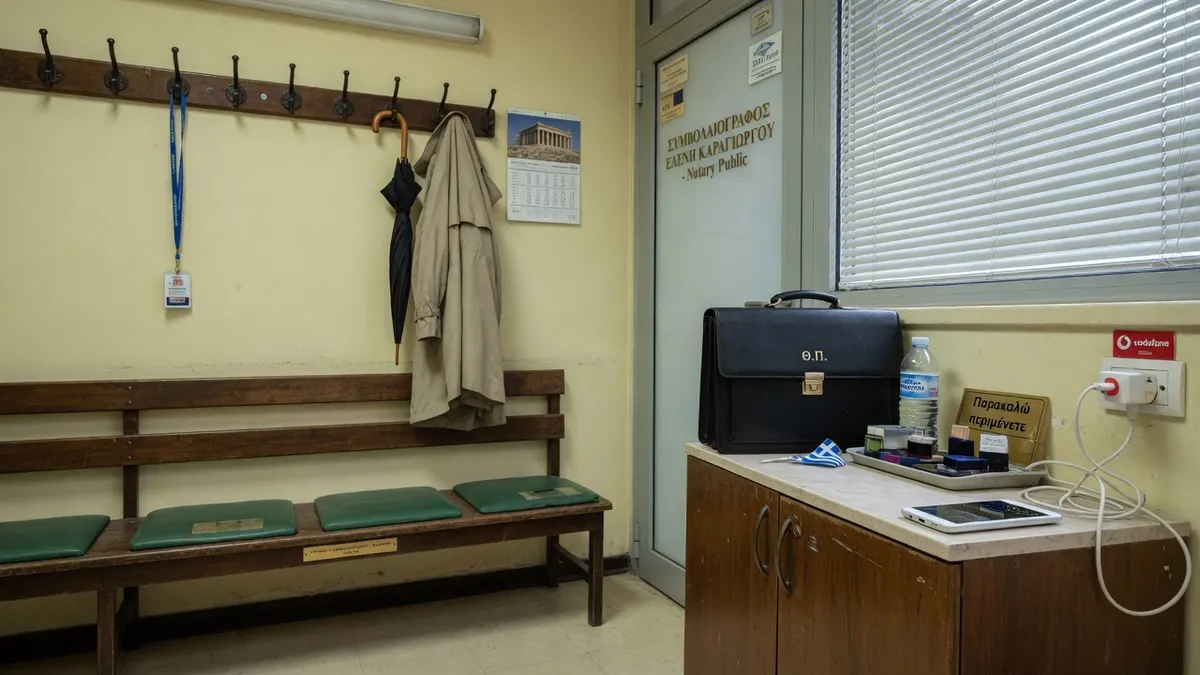
AI phone receptionist for notary offices
Quick summary
- You are reading a deed aloud. The waiting room is full. That is when the published number rings.
- The first question is a new deed, papers for a file you already have, or a time to sign — those are three different jobs.
- It takes what they want done and a time that is free. It never says which contract form, and it never names the tax on a transfer.
- Someone who was just told they need a deed this week will not wait on voicemail. They ring the next notary on the list.
- It checks your diary before it offers a slot, writes the time in, and texts what papers to bring.
- A morning of signings is several conversations at the cream phone, not a busy tone from the waiting room.
TL;DR
You are in the inner office reading a purchase deed aloud. The waiting room still has three people on the red chairs. The phone on the side table rings. The person who was just told they need a parental gift this week will not leave a message. The person whose bank wants a deed by Thursday will not leave one either. They ring the next notary. An assistant answers in the caller's language, asks whether this is a new deed, papers on a file, or a signing already booked, takes the request and a time that is actually free, and never says which contract form to use. It does not name the tax on the transfer. It does not tell them what the papers mean.
Key takeaways
- Put the assistant on the published number with a forward-on-no-answer rule, so a free pair of hands in the waiting room still takes the call.
- Teach it the first split: new deed, papers on an existing file, or a signing already in the diary — and do not let it jump to a time before that split.
- Give it the sentence verbatim: it cannot say which form to use, and it cannot name the tax on a transfer. The notary decides at the appointment.
- Let it book papers-checks and signing slots. Keep form, tax, and what the deed means as a callback or the appointment itself.
- On a morning of back-to-back signings, shorten the ring-time so the third caller is not listening to a busy tone from the waiting room.
- Mark two kinds of visit: a short papers check, and a signing that needs the inner office and a locked slot.
What an AI phone receptionist does in a notary office
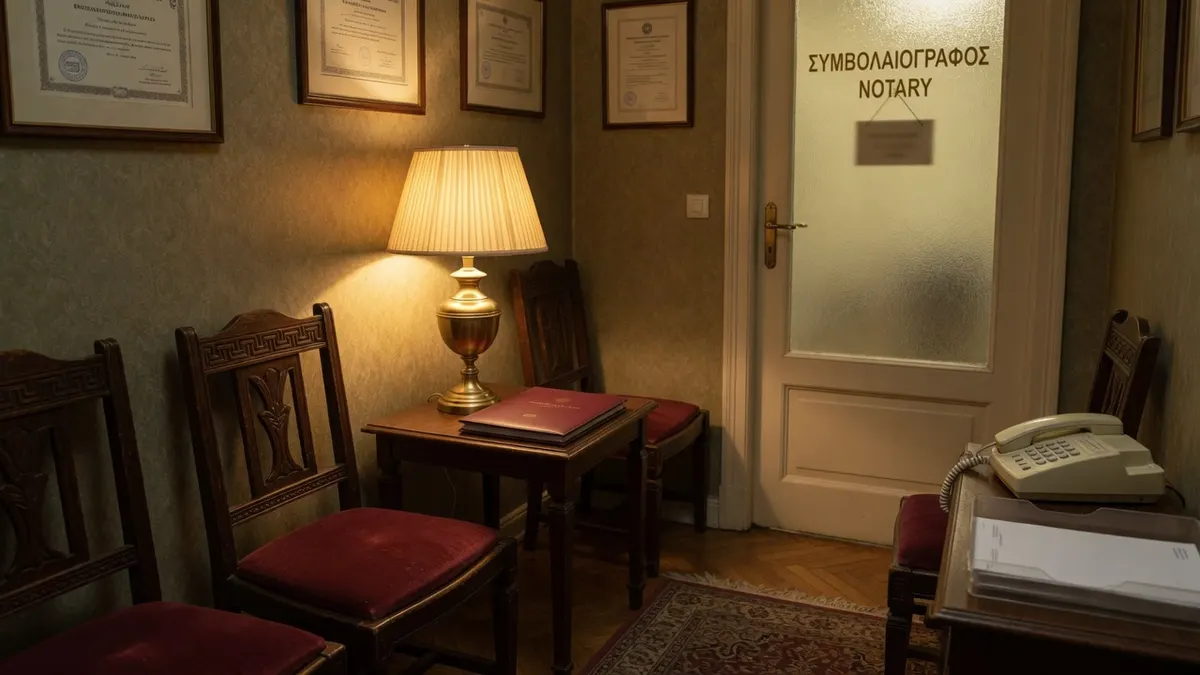
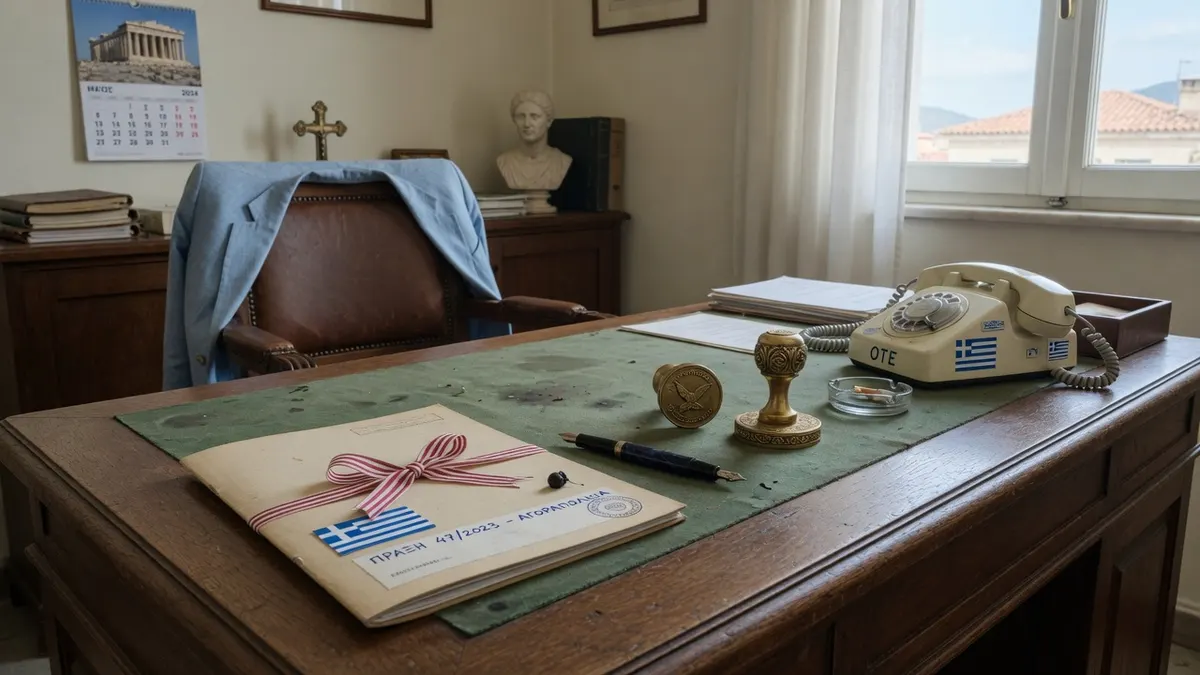
You are in the inner office reading a purchase deed aloud. Across the waiting room three people sit on the red chairs under the certificates. The cream telephone on the side table rings. You cannot stop the reading. The colleague cannot leave a file mid-check. There is no third pair of hands.
You put the assistant on the number already on the frosted door and on the letterhead. It answers when you cannot. Then it does one of two things. It books a time that is actually free. Or it takes a request and puts it in front of you.
The first question is whether this is a new deed, papers on a file you already have, or a signing already in the diary. A parental gift they thought of this morning is not a Friday slot you already locked. A missing cadastre paper is not a will. An assistant that opens with “what time would you like?” will put a tax question into a signing hour and leave the person with a power of attorney without a note.
A caller who rang in English gets the confirmation in English. A caller who rang in Greek gets it in Greek. The assistant works in 70+ languages. The SMS follows the language of the call.
Reading a deed, and the phone still ringing
One of you is already in the inner office, on a deed that cannot be paused. The other is at the waiting-room desk with a stack of identity cards and certificates. The published number still rings.
It is a burst. A morning of three signings. The afternoon a bank sent two buyers out with your card. The week before a holiday, when everyone wants a power of attorney. A second line with the same two hands still leaves the third caller on a busy tone that the waiting room can hear.
The person who was just told they need a deed this week will not wait on voicemail. They have your name and two other notaries from the same search. They hang up and dial the next office. The person whose bank wants a deed by Thursday will not leave a message either.
Clients whose files are already here will often wait. A person who cannot start a new deed, and a person who cannot get a power of attorney before a flight, will not. If those two wait behind the reading you are already in, the new file is gone, and the Friday signing arrives angry — or the next notary has already taken the papers.
Whoever takes the first appointment often takes the deed. That is why a missed call from the waiting-room line is not only a missed note.
New deed, papers on a file, or a signing — then a time
New deed. They do not have a file with you yet. A purchase, a parental gift they named, a will, a power of attorney, a company paper. The assistant asks which of those they said, in their words, then books a papers check if that time is free. It does not choose the form. It does not name a tax. It does not say the gift is better than a sale. If you have closed new work this month, it says so on the first call, from the line you typed in.
Papers on a file. A certificate is missing. A cadastre extract arrived. They want to know if Friday is still on. The assistant asks for a name, a date of the appointment if they have it, or a file reference if you use one. No reference is still a note, not a guess at the wrong family. A ten-minute drop of a paper is not a signing slot. Mark them as two kinds of visit.
Signing. The deed is ready, or they think it is. The assistant finds the slot, or books one if you said it may. It does not promise that the deed will be ready because the bank asked for Thursday. It does not move a locked signing to squeeze a new file.
People remember the property. They do not remember a file number. Ask for the name first, then what they said they want done. One identifier is enough to put the note on the right pile. None is still a request, not a guess that it is the Alexandrou purchase.
A sentence the assistant is not allowed to say
“Is the gift cheaper?” is the question on this phone. It comes after a parent decides to pass a flat. It comes after a cousin sold last year. It comes on a Monday when someone has two notaries on the same piece of paper.
The assistant does not answer it. Not with yes. Not with “people usually do the gift”. Not with a tax rate, even a round one. A sentence that sounds like advice on the form, or like a tax on the transfer, said on the recorded line, is a sentence the office now owns, and the assistant cannot see the papers, the cadastral status, or what you will actually do.
The line you give it is short: the notary will go through the form at the appointment. This call takes the request and a time.
“Which contract should I use?”, “what is the tax if I buy from my father?”, “can I skip the cadastre?”, and “will the bank accept this deed?” are still advice questions. The assistant names the topic so the appointment is useful, and refuses the decision.
Do not put a tax table in the notes. It will read the table out.
Signings, Fridays, and everyone at once
A morning of three deeds. By ten, the waiting room is full. You are already reading. The pad is already a list of names.
Friday before a holiday is powers of attorney. People leave. They want a paper today.
A bank afternoon is two buyers with a Thursday deadline they did not mention when they first rang.
The assistant has to treat that burst as several conversations, not as a queue behind your reading. A new deed in that hour is a papers check or a first slot. A missing paper is a note. If the assistant parks the person who wants a new will behind the tenth “is Friday still on?”, that person rings the next notary.
Shorten the ring-time before forwarding on those mornings. During a signing the third caller should not hear a busy tone. A Tuesday in August is people asking for a slot in a week the office is dark.
A tax nobody can give from a description of the flat
When someone describes a property on the phone — a third-floor flat, they think eighty square metres, from the father, in a suburb — the tempting answer is a rate. The assistant does not give one.
Value, relationship, whether it is a gift or a sale, what the cadastre actually shows — all of those change the work, and none of them are yours to announce on this line even if you think you know. A number quoted before anyone has seen the papers is a number you then spend the appointment taking back.
It can repeat a published list of what to bring, and a line you typed about how you charge for a simple power of attorney, if you marked that line as speakable. Unseen purchases, gifts, wills, company papers — those do not get a tax figure on this call. The assistant takes the request and books the time. Last year’s neighbour is not this file. The assistant does not quote them.
If they press — “just a round figure, the other notary named one” — the assistant still refuses. Book them as soon as a slot is free. Flag it if they leave the country on Friday.
Standing at the waiting-room door
Some of these callers are already in the building, or on the pavement outside, with a folder, asking whether they are in the right place and whether they can go in without an appointment.
The assistant is not at the door. It cannot see the folder. It cannot decide that their papers are complete.
What it can take: the name, whether they have a slot, and what they said they brought. What it can repeat, if you typed the line in: sit in the waiting room if they have a time; if they do not, take a callback rather than promise the next gap after the deed you are reading.
If they say a signing is this hour and they are late, that is a flag to a phone you actually hold. The assistant does not tell them to come in, go away, or sign anyway.
A caller who is at home, with a question about the form, is a request and, if a time is free, a papers check. It is not a legal conversation.
Powers of attorney, wills, and “is Friday still on?”
Power of attorney. They leave on Friday. The assistant takes the date and books a slot if one is free. It does not say what the paper must contain, who can sign for whom, or whether a bank abroad will accept it. Mark how many days you need if a draft has to be prepared. If it cannot be done before Friday, say so from the line you typed — do not invent a Thursday at 19:00.
Will. Two people, often. The assistant books a time that can hold them. It does not tell them what to put in the will, or whether a will is “needed”.
Purchase deed. Papers check first, signing later, unless you said a single visit is enough for a named type. The assistant does not collapse them because they are in a hurry.
Cadastre paper missing. That is a note and, if they have a signing, a flag. It does not say they can sign without it. It does not say the registry will wait.
August needs its own dates. Do not let the assistant book a signing into a week when the office is dark.
How CITT handles it
- Your number stays on the frosted door and on the letterhead. A forwarding rule sends what you do not answer. Calls the waiting room picks up never leave the office.
- Every line is answered at once. A signing morning is several conversations, not a stack of busy tones.
- It knows the office you described. What you take, whether you take new deeds this month, how a papers check should look, who is in on Monday.
- It asks new deed, papers, or signing first, then a name, and only then looks at the diary.
- It takes a form or tax question as a request, never as advice.
- It checks the real diary before it offers a time, and writes the slot into the same calendar the office already uses.
- It confirms by SMS, in the language of the call — 70+ languages — and can list the papers you typed in for that type.
- It escalates form, tax, “can I sign without the paper”, and a late signing this hour as a tagged note or a transfer.
- You get the transcript, the summary, the name, and what the caller asked for.
What it will not do
It will not say which contract form to use. It will not name the tax on a transfer. It will not say a parental gift is cheaper, better, or the usual way. It will not tell them what a deed means, or whether the bank will accept it. It will not say they can skip the cadastre. It will not promise a deed by Thursday because a bank asked. It will not treat a papers check, a signing and a will as the same slot.
What these calls sound like
The order is the split, then the name, then a time the diary can honour, then the refusal said out loud. There is no “do the gift”. There is no rate over a flat nobody has seen the papers for. There is no “you can sign without that certificate”.
If the assistant is friendly and still answers the tax question, you own that sentence. Put the person who rang about the gift at 11:10 on a papers check, not on the next notary’s pad.
What you set up first
Put the assistant on the number on the frosted door with a forward-on-no-answer rule, so a free pair of hands in the waiting room still takes the call. Then the three-way split, the name question, and the sentence that forbids form and tax.
Write down what you actually take and whether you are taking new deeds this month. Give it the fields you want on every note: name, what they said they want, date they mentioned, whether papers are already here. Mark two kinds of visit: a papers check, and a signing that needs the inner office.
Give it the same-hour phone list: they are late for a signing, they are at the door, the bank deadline is tomorrow. Do not give it a tax table it would read out. Write one line that forbids form, tax and “what the papers mean”. Add opening hours, who is in on Monday, August dates, where to wait.
Rates live on the pricing section of the home page. They are not repeated here.
AI receptionist, in-house staff, or a call centre
| CITT | In-house | Call centre | |
|---|---|---|---|
| Answers while a deed is being read aloud | Always | Only between signings | Yes |
| Several callers during a signing morning | Every line at once | One, then the waiting room hears it | Depends who was rostered |
| Asks new deed, papers, or signing first | Yes — before it looks at the diary | Yes, if they heard the start | Often jumps to what time |
| Names the tax on the transfer | Never — takes the request | Not on the first call either | Must not; sometimes does |
| Advises parental gift versus sale | Never | The notary, at the appointment, if at all | Risk, if the script wants to be helpful |
| Speaks the caller's language | 70+ languages | One or two | Whoever is on that shift |
| What it will not do | Legal advice, a contract form, a tax figure | Opens the file, still does not advise on the phone | Reads a script |
What one unanswered signing morning costs a two-person notary office
Worked from these assumptions — change any of them and the answer changes:
- Two people, a weekday of back-to-back deeds. One of you is reading a deed aloud. The other is in the waiting room with papers.
- About 22 inbound calls that morning. A third arrive while both of you are in a signing.
- Of the calls nobody reaches, 4 are people who want a first appointment for a deed or a power of attorney.
- A first appointment that becomes a signed deed is worth about €450 of work to the office — put your own figure in, this is the number to change first.
- This example assumes 2 of the 4 never leave a message and ring the next notary on the list.
- 4 first-appointment requests reach nobody on a normal signing morning.
- 2 of them do not call back.
- 2 × €450 = €900 of work, that morning.
- Signing-heavy weekdays, over a 42-week year — 42 × €900.
About €37,800 a year, from the same morning window repeating. Change the ticket and the conversion.
What it costs
CITT is pay as you go: no packages, no minimum, no contract. The current rates — the monthly fee per number and the per-minute rate — are on the pricing section of the home page, which is the only place they are published.
Frequently asked questions
Do I have to give up the office number?
No. You keep the number on the frosted door, the letterhead and the Google listing. You set one forwarding rule — every call, or only the ones still ringing after the seconds you choose. If someone in the waiting room picks up, the call never leaves the office and is never charged.
Can it tell a caller whether a parental gift is better than a sale?
It must not. That is a form and, often, a tax question. It takes what they said they want — a deed, a power of attorney, a will — in their words, collects a name and a callback number, and books a papers check or a signing if that time is free. Which form to use, and what it costs in tax, is not a sentence on this line.
Can it name the tax on the transfer if they describe the property?
No. A floor, a neighbourhood and “it is from my father” are not a tax figure. A number said before the notary has seen the papers is a number the office then owns. It books a time to bring those papers. If a figure must not be said until you have the file, do not give the assistant that figure.
What if I am already reading a deed aloud?
That is the usual morning. The assistant answers the overflow. A new deed becomes a papers-check or a first slot that is actually free. A missing certificate becomes a note. After a run of signings, shorten the ring-time so the third caller is not listening to a busy tone from the waiting room.
Someone's bank wants the deed by Thursday. Can it promise that?
It can take the date they named and flag you. It cannot promise that a deed will be ready by Thursday, or that a missing cadastre paper will arrive in time. If the slot they need is free, it books it. If it is not, it takes a callback. It does not invent a Friday because the bank asked.
What do we actually see afterwards?
A transcript, a short summary, whether this was a new deed, papers on a file or a signing, the name they gave, and whatever was booked or left for you. Confirmations go out by SMS in the language of the call, with the list of papers you typed in for that type.