AI phone receptionist for veterinary clinics

Quick summary
- Neither vet can pick up during a consult — both hands are on the animal, and the nurse is restraining.
- The first three facts on every call are species, age, and what is wrong in the owner's words — not a diagnosis.
- Poisoning, trauma and difficulty breathing mean bring them in now or transfer. The assistant never says what to give the animal.
- Vaccines and neuter consults can be finished on the phone. An owner describing collapse cannot.
- An AI receptionist answers every line at once, checks the real calendar before it offers a time, and texts the confirmation.
- The assistant stays warm, because the person on the line is often more frightened than the animal — and it still will not act as a vet.
TL;DR
In a two-vet clinic the rooms fill, and the person who would answer is holding an animal still. On the same number you then get a first-vaccine booking and an owner whose dog just ate chocolate. An AI receptionist answers every line at once, asks species, age and what is wrong in the owner's words, checks the real calendar before it offers a vaccine time, texts the confirmation, and on poisoning, trauma or difficulty breathing tells them to come in now or puts a nurse on the line. It will not say what is wrong. It will not tell them what to give the animal. A vet decides.
Key takeaways
- Put the assistant on the existing clinic number with a forward-on-no-answer rule so a free nurse still picks up.
- Require species, approximate age, and the owner's description before it looks at a time or gives directions.
- Write a short bring-them-in-now list — poisoning, trauma, difficulty breathing — and send those calls to a person, not to an evening note.
- Let it book vaccines, rechecks and neuter consults; keep first work-ups and anything on your emergency list off the open book.
- Forbid any sentence about what to give the animal. One line the assistant cannot talk around.
- Tell owners it is an assistant. A frightened person who feels tricked will not hear the rest of the sentence.
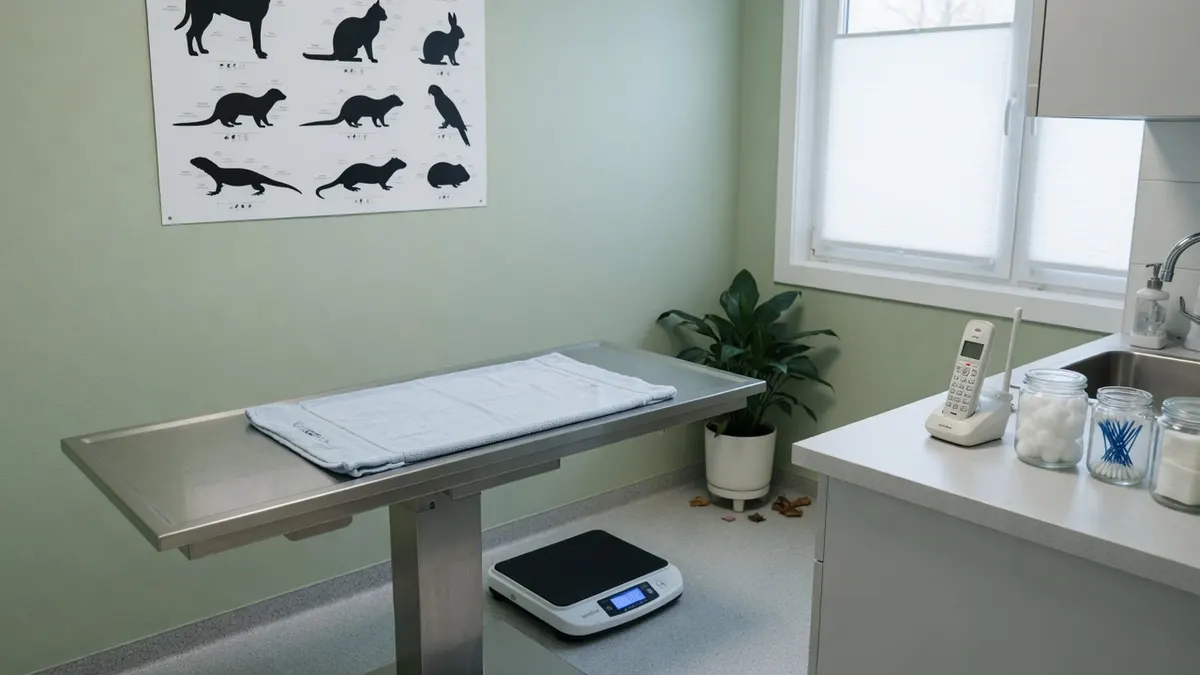
Both consult rooms are full. One vet is drawing blood. The other is in a dental. The nurse who answers the phone on a quiet Tuesday is holding the second dog still so the sample can be taken. The phone on the desk rings. Then it rings again.
On the same number you get a kitten’s first vaccines and an owner who just watched a Labrador swallow a chocolate bar. One of those calls can be booked. The other cannot. Nobody in the room can pick up either of them.
An AI receptionist answers those calls while the gloves stay on. It books the work you have allowed, or it gets the animal moving toward a vet without pretending to be one.
What the assistant does on this number
It asks what animal, how old, and what is wrong, in the owner’s words. It writes those words down exactly. It does not turn them into a diagnosis.
On a short list you wrote — poisoning, trauma, difficulty breathing — it says come in now, or it transfers. On first vaccines, boosters, a neuter consult, a routine recheck, it checks the calendar your team already uses, offers a time that is actually free, books it, and texts the confirmation. On everything else it takes a request and puts a human on it.
The assistant has to stay warm. These callers are often more frightened than the animal. That does not mean telling them it will be fine. It means: I have heard you, I cannot advise, please come, I have told the team.
Why nobody can pick up
The person who would answer is already using both hands. The vet is in consult. The nurse is restraining. If you have a receptionist, they are often that same nurse, now in the room.
Lunch is not lunch. It is the overflow from the morning consults, plus the owner who waited until they got home to look at the dog. You run three jobs on one number: the book, the emergency, and the call nobody wants to make about putting an animal to sleep.
Three things follow.
The most frightened caller will not wait. Someone whose cat was just hit, or whose dog is breathing badly, or who is standing over a chewed packet, will not record a message. They will ring the next clinic, or they will start searching for something to give the animal.
Routine work and emergency work arrive in the same burst. First vaccines, a neuter enquiry, a nail clip, and a collapse, in the same ten minutes. One person can hold one of those conversations. The vaccine client hears a busy tone and books at the next practice that answers. The emergency hears a busy tone and panics. A second nurse helps the first call. It does not help the third.
The words on the line are not a diagnosis. “He’s not himself.” “She ate something, I think it was a plant.” “He’s breathing funny.” Those sentences are what you have. Anyone who upgrades them into “gastro” or “probably fine” has started practising. You own that sentence. The only safe record is the owner’s words, timestamped, next to species and age.
A kind person at the desk can also break the day. They try to fit someone in because the owner is crying. The fitted-in emergency lands on top of a vaccine clinic. The puppy waits. The emergency did not get a work-up. Everyone is late.
Species, age, then the owner’s words
Configure the assistant the way you brief a new nurse on their first weekend.
Species first. Dog, cat, rabbit, bird, something else. A “he” that turns out to be a rabbit changes every interval you thought you knew, including whether you see them at all. If you do not see a species, say so early, and give the number for somewhere that does, if you have one.
Age next, even roughly. Eight weeks, three years, “old, we think about fifteen”. Age is not a diagnosis. It is the difference between a first-vaccine conversation and a collapse in a fifteen-year-old cat. “Puppy” and “kitten” are not ages. Ask.
Then what is wrong, in their words. Not a menu of symptoms. A space for a sentence. “She ate the chocolate. It was dark. It was just now.” “He’s been being sick since last night and he won’t drink.” “We found him, his eye looks wrong.” The assistant reads that sentence back, so the owner hears that it was heard, and writes it down unchanged.
Only after those three facts does it look at a book — and only if the sentence is not on the list you wrote for bring them in now.
Bring them in now. Never say what to give.
Poisoning. Trauma. Difficulty breathing. You may add a tomcat straining in the tray, a dog that cannot stand, a seizure that has not stopped. Keep the list short enough that it still means something.
Owners do not arrive with those labels. They say “he’s been in and out of the litter box” or “he can’t pee” or “I think he’s constipated”. The assistant does not decide blocked versus constipated. If the words match your list, it tells them to come in now. If they do not, it takes the sentence for a nurse.
On those calls the assistant has three allowed moves: tell them to come to you now; transfer to the nurse or the on-call vet; or, if you are closed and you do not take emergencies, give the emergency clinic you actually use and stop. It does not say try milk, try salt, try oil, take him for a walk, wait an hour, give the leftover painkiller from last year.
Owners ask for that. They ask nicely. The assistant still refuses. An instruction spoken on the clinic’s number is a clinical act. A vet has to say it.
The same rule applies to “should I wait and see?” On your emergency list, the answer is please do not wait. Off the list, the answer is I have given the nurse your words. “That can probably wait” is a vet’s sentence.
Vaccines and neuters are the work it should finish
First vaccines, boosters, a neuter consult, a routine recheck, a nail clip if you offer them, a scheduled admission. These are administrative on the phone even when they are medical on the table. The assistant takes the species and age — a kitten at eight weeks and a dog at sixteen weeks are not the same conversation — checks the calendar, offers a real time, books it, and texts.
It does not invent the course. If the owner asks which vaccines he needs, the assistant says the clinic will go through that at the visit, or it repeats a sentence you wrote. It does not pick a brand or skip a booster because the owner is in a hurry.
Neuter enquiries can be booked as consults or as pre-op assessments, depending on how you work. They should not be booked as “the operation on Thursday” unless a vet has already seen the animal and the calendar has an explicit surgical time. The assistant takes the request. A human puts the surgery on the list.
A stray is not a vaccine booking. “Are you open, we found a dog, his eye looks wrong” needs hours, whether you take strays, and — if you do not — the municipality number you actually use. Write that number down.
Two books, not one list
A vaccine clinic and a consult list are not the same resource. Twenty minutes for a booster is not twenty minutes for a first work-up. A blocked cat is not a gap between two puppies. If any free time counts as a booking, the assistant will put a collapse behind a booster. Both look booked. Both fail in the morning.
Setup starts with the appointment types you already use. First vaccines. Booster. Recheck. New-client consult. Neuter consult. Admission. Nail clip, if you offer it. Each type has a duration and a clinician. The assistant may offer a time only when both match. First work-ups and anything on your emergency list stay off the open book. The assistant still takes the enquiry. It does not invent a forty-minute gap.
Euthanasia is not a nail clip
The call nobody wants to make still uses the clinic number. The assistant hears it, takes the owner’s name, the animal’s name, and a number that will be answered, and makes a human the next voice they hear.
It does not ask why. It does not offer Tuesday at four. It does not put them on a waitlist next to a booster. If you have a quiet room and a same-day path, a person offers that path once they have the call. “I’m so sorry” is enough. “He’s in a better place” is not allowed.
After hours, weekends, August
August thins the staff. Saturday is first vaccines and the dog that ate something overnight. Friday at twenty to eight is the owner who waited until they got home.
The assistant answers those hours the same way it answers a Tuesday at ten. What changes is what you allow. Out of hours it should book less: more callbacks, fewer times on a Monday the vet has not yet seen, and a lower threshold for ringing the on-call mobile when breathing or trauma is mentioned. If you do not take emergencies after closing, it gives the clinic on your own door sign and stops. It does not guess the nearest all-night number.
Monday morning then starts with a list rather than a voicemail pile: which animals ate something, which kittens need first vaccines, which owner asked about putting a cat to sleep.
Bloods, histopathology, the ward
It will not read blood results or a histopathology report over the phone. Speaking the owner’s language does not change that. It records that the owner asked, and a vet calls back.
It will not invent a ward update. “How is he this morning?” is a request for a nurse. It takes the name and a number, and a person who has seen the inpatient rings back.
How CITT handles it
- Your number stays on the door. A forward at the provider sends what you do not answer. Calls a nurse picks up never leave.
- Every line is answered at once. A lunchtime burst is a set of conversations, not a stack of busy tones on top of a consult.
- It knows the clinic you described. Species you see, new clients, hours, parking, the emergency clinic you use when you are closed, whether you take strays.
- It asks species, age, and the owner’s words before it looks at a book.
- The emergency list goes to a phone, not to an email. Transfer if a person is free.
- Routine work into the real calendar, confirmed by SMS, in the language of the call. 70+ languages, including the mix a Greek clinic actually hears in one week.
- No sentence about what to give, no diagnosis, no “it can wait”. Those lines are blocked, not discouraged.
- You get the transcript, with the owner’s sentence intact.
What it will not do
It will not tell them what is wrong.
It will not tell them what to give, what not to give, whether to make the animal sick, whether the plant is toxic, whether the chocolate was “enough”. Those are case questions. The case is the animal in front of a vet.
It will not say “I’m sure he’ll be fine”. It will not book euthanasia like a trim. It will not put a collapse into a vaccine clinic because the vaccine list happened to have a gap. It will not pretend to be a nurse.
What these calls actually sound like
The exchange in the panel above is the shape to expect. The fear is acknowledged, the question about what to give is refused, species and age are collected, they are told to come now, the team is told in the owner’s words. There is no dose. There is no appointment at 16:30 for a dog that is already in the car.
A first-vaccine call is species, age, what they want, a real time, an SMS. If they ask which vaccines, the sentence you wrote. A blocked-cat call is not either of those. If the owner’s words match your list, come in now. If they do not, a nurse gets the sentence.
What you configure before the first live call
Give it the facts the desk already recites. Species you see, and the sentence for the ones you do not. New clients this month. Hours. Parking. Strays, and the municipality number if you do not take them. The emergency clinic on your door sign. Appointment types and durations. Who owns which type. The phrases that must ring a phone: ate something, hit by, cannot breathe, cannot pee, seizure that has not stopped.
Then the forwarding rule. Fifteen to twenty seconds is the usual start: the desk keeps what it can reach, the assistant takes what is still ringing. Immediate forward is for evenings, Sundays, August.
Tell owners it is an assistant. A caller who asks “are you a real person?” should get a straight answer.
Rates are on the pricing section of the home page.
AI receptionist, in-house staff, or a call centre
| CITT | In-house | Call centre | |
|---|---|---|---|
| Mid-consult burst | Every line answered at once | After the consult, if at all | Depends on the nurse roster |
| Species, age, owner's words first | Required before a time is offered | Yes | Often just a name and "sick" |
| Poisoning, trauma, difficulty breathing | Come in now or transfer — nothing to give | Triage by training | Script, then a message |
| Vaccines and neuter consults | Booked against the real calendar | Yes | Usually a callback |
| Speaks the owner's language | 70+ languages | One or two | Whoever is on shift |
| Evenings, weekends, August | Same as any other hour | On-call, if you run one | At a surcharge |
| What it will not do | Diagnose, dose, or tell them what to give | A vet decides | Must not either |
What one missed new-puppy call costs a two-vet clinic
Worked from these assumptions — change any of them and the answer changes:
- Two vets, a normal weekday, roughly 45 inbound calls.
- About a quarter arrive while both consult rooms are full.
- Of the calls nobody reaches, 4 are new clients wanting first vaccines or a first consult.
- A new registered client is worth about €160 in the first year of routine care — YOUR figure will differ, and this is the number to change first.
- Three of those four owners book at the next clinic that picks up; they do not leave a voicemail about a puppy.
- 4 new-client enquiries reach voicemail during a full consult block.
- 3 of them register somewhere else.
- 3 × €160 = €480 of first-year routine work, from one afternoon.
- One such afternoon a week, over 46 weeks — 46 × €480.
About €22,080 a year, from new owners who rang while both rooms were busy.
What it costs
CITT is pay as you go: no packages, no minimum, no contract. The current rates — the monthly fee per number and the per-minute rate — are on the pricing section of the home page, which is the only place they are published.
Frequently asked questions
Do I have to give up the clinic number?
No. You keep the number on the door, the site and the last invoice. You add one forwarding rule — every call, or only what has still rung after the seconds you choose. If a nurse or receptionist picks up, the call never leaves the clinic and is never charged.
Can it tell an owner whether the animal needs to come today?
It does not make that judgement. What it does is collect species, age and the owner's words, and match them against a short list you wrote. Poisoning, trauma, difficulty breathing — come now, or transfer to whoever is taking emergencies. Everything else is a request a vet or nurse sees. It will not say that can wait until Thursday.
What if they ask what to give the animal?
It refuses. No milk, no salt, no oil, no human painkiller, no "keep an eye on him". A confident instruction from a voice on the clinic number is a clinical act, and the clinic owns it. The assistant says it cannot advise, tells them to come in if the problem is on your emergency list, and otherwise takes a number for a nurse to call back.
Will it put an emergency into a vaccine gap?
Not if you configured two books. Vaccines, nail clips and routine neuter consults live on the open calendar. Anything that sounds like an emergency is not a time in the book. It is a come-in-now, a transfer, or a callback a person will make. Mixing those is how a blocked cat sits behind a booster.
We also do euthanasia. How should it speak?
Warmly, and without booking it like a nail clip. The assistant takes the name, the animal's name, and a number, and puts a person on it. It does not ask for a reason, it does not say "gap in the book", and it does not offer a waitlist. If you have a quiet room and a same-day path, a human offers that path.
What do we see after a call?
A transcript, a short summary, species, age, the owner's own sentence about what is wrong, and whatever was booked or marked for a person. Bring-them-in-now calls should hit a phone, not an evening digest. The record is the words they used, not a cleaned-up diagnosis.