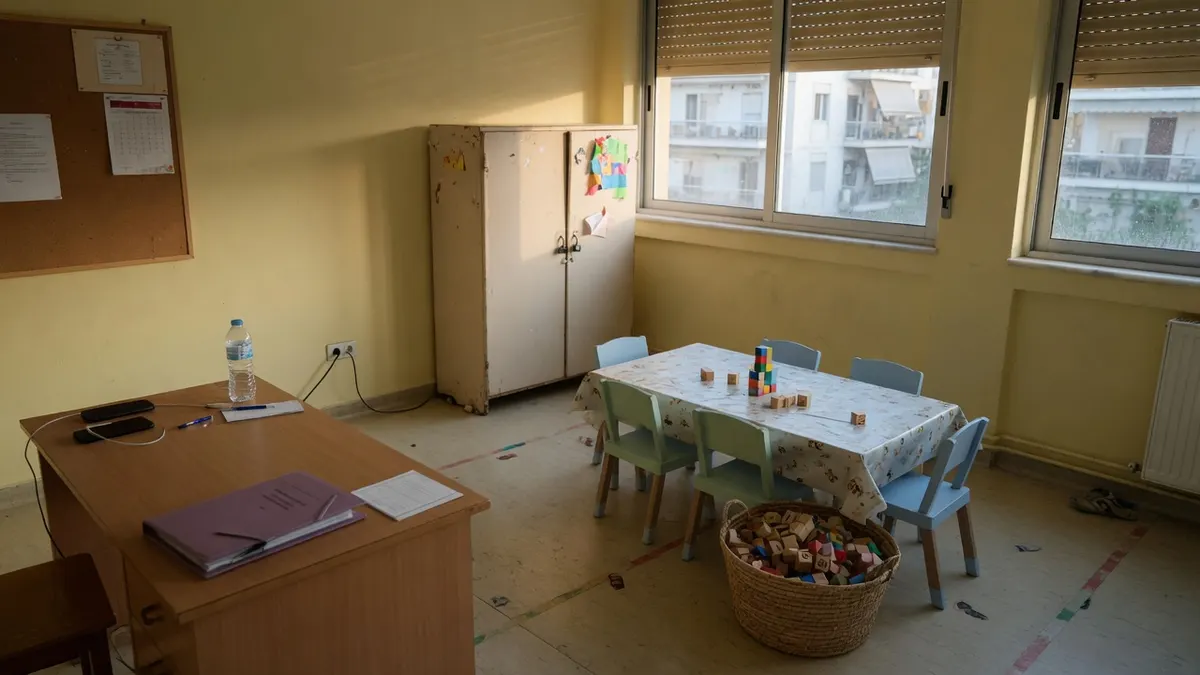
AI phone receptionist for kindergartens
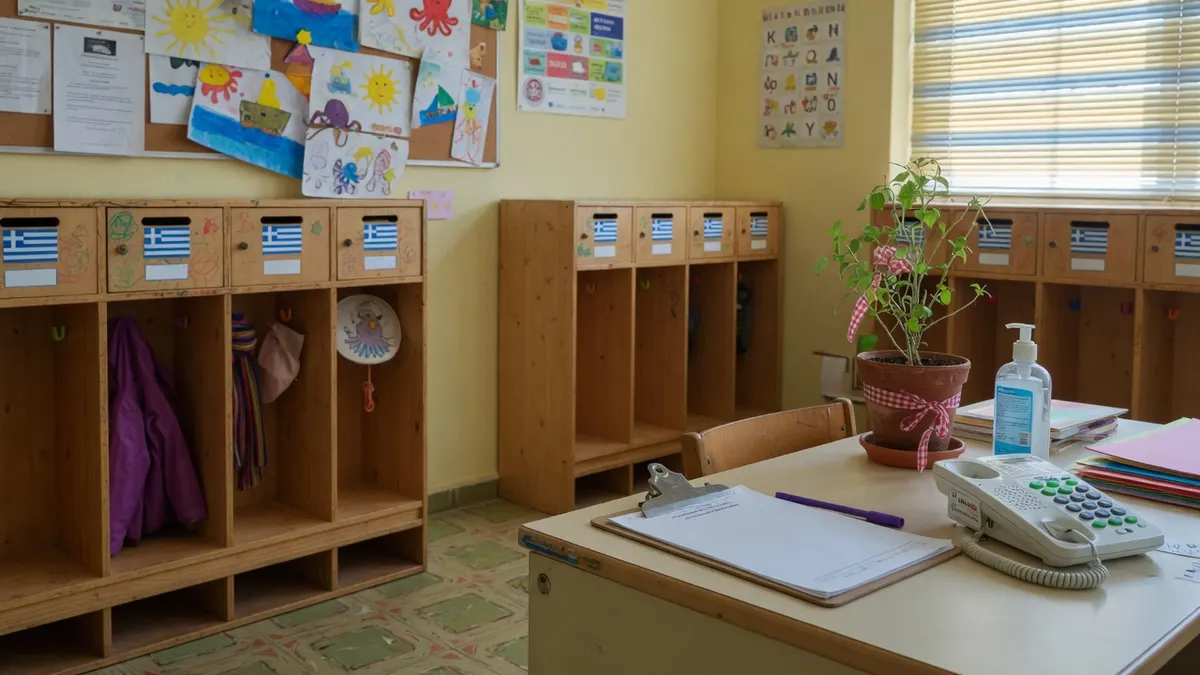
Quick summary
- At drop-off the door is a queue. The person who would pick up is holding a child and a late book.
- The first question is place, illness, pickup time, or who may collect — those are four different jobs.
- A place in a room is a counted cot. If the room is full, the honest answer is the waitlist.
- It takes the child's name and the request. It never says how to raise the child, and it never gives a fever a treatment.
- It checks the diary before it offers a visit to the director, writes the time in, and texts the parent.
- Monday illness and 16:40 pickups arrive together. It answers every line at once.
TL;DR
The door is a queue. You have a child on a hip and a parent signing the late book. The phone rings. They want a place for September, or they want yiayia to collect at 16:30, or they want to say the child will not come because of a fever. They will not wait on voicemail. An assistant answers in the caller's language, asks whether this is a place, an illness, a pickup time, or who may collect, takes the child's name and the request, writes a waitlist only if that room is full, and never tells them how to raise the child or what to give for a fever. It does not invent a place. It does not add a name to the collect list unless you already wrote that name down.
Key takeaways
- Put the assistant on the published number with a forward-on-no-answer rule, so a free pair of hands at the door still takes the call.
- Teach it the first question: place, illness, pickup time, or who may collect — and do not let it jump to a time before that split.
- On a place it takes the child's name, age or room, and the month they want. Give it the sentence: it cannot invent a cot.
- Let it book a visit to the director for enrolment papers. Keep pedagogy and anything about the child's health as a callback.
- After a Monday illness burst, or in September, shorten the ring-time before forwarding so overflow is caught before the third ring-out.
- Give it the line verbatim: only the names already on the collect list may take the child. It does not add a neighbour because they sound sure.
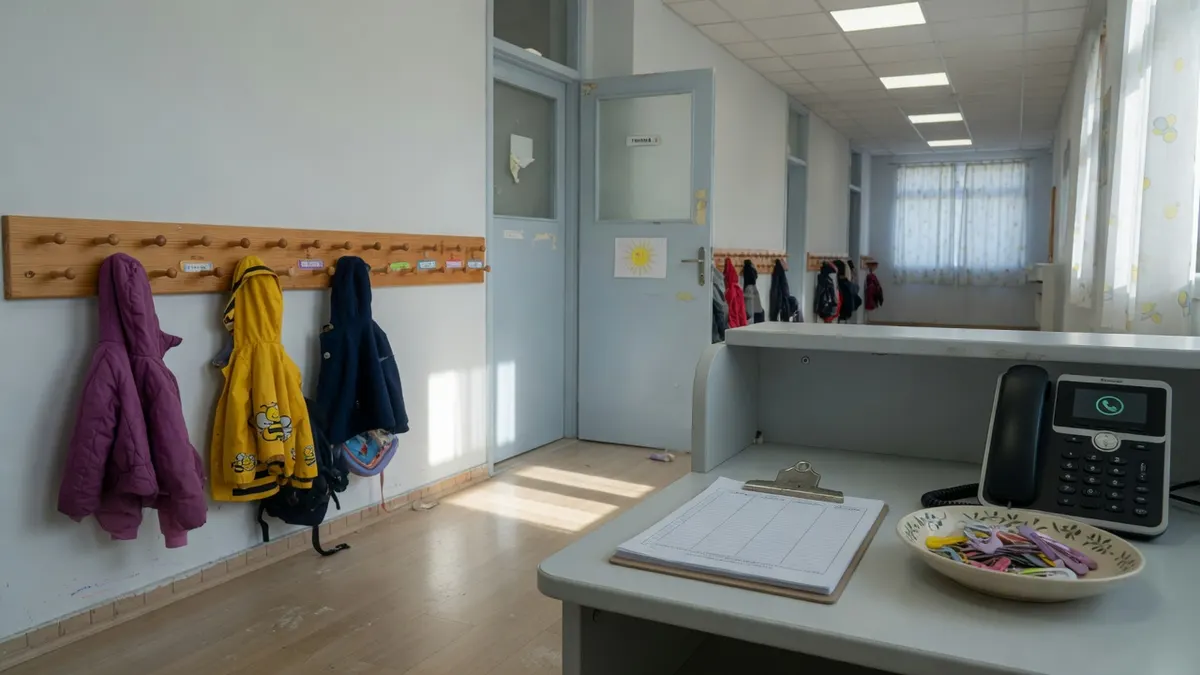
What an AI phone receptionist does in a kindergarten
You are at the glass door with a child on a hip. The parent in front of you is signing the late book. Across the corridor the other person is already in the toddler room. The phone rings. You cannot put the child down. The colleague cannot leave six two-year-olds. There is no third pair of hands.
You put the assistant on the number already on the gate and on the flyer in the paediatrician’s waiting room. It answers when you cannot. Then it does one of two things. It takes a name and a request. Or it books a visit that is actually free.
The first question is whether this is a place, an illness, a pickup time, or who may collect the child. A fever is not a first visit. A first visit is not yiayia at 16:30. An assistant that opens with “what time would you like?” will put a waitlist into a director hour and leave the parent at the gate without a note.
A parent who rang in English gets the confirmation in English. A parent who rang in Greek gets it in Greek. The assistant works in 70+ languages. The SMS follows the language of the call.
At the door, and the phone still ringing
One of you is already holding a child whose parent is still finding a parking space. The other is in a room. The published number still rings.
It is a burst. Monday after the weekend fevers. The first week of September. The last twenty minutes before close, when three parents ring to say they are in traffic. A second line with the same two hands still leaves the third caller on a busy tone.
The parent who wants a place for September will not wait on voicemail. They have your flyer and the flyer from the station on the next hill. They hang up and dial. The parent whose child has a temperature and will not come today often will leave a message. So will the parent who already has a child with you and wants to change Friday’s collect. Those two do not cost the same.
Families whose children are already here will often wait. A family who cannot get a name on a waitlist will not. If that call waits behind the door you are already holding, the place is gone, and the child starts somewhere else in October.
Whoever takes the waitlist often takes the enrolment. That is why a missed place is not only a missed note.
Place, illness, pickup, or who may collect — then the name
Place. They do not have a child with you yet, or they want a sibling in the infant room. The assistant asks the child’s name, the age or the room, and the month they want to start. It checks the list you already keep. If that room is full, it says so and writes a waitlist. It does not invent a cot. It does not say “come on Monday, we’ll find a chair.” If you have closed a room this year, it says so on the first call, from the line you typed in.
Illness. The child will not come today, or they are collecting early because of a paediatrician. The assistant takes the child’s name, that they will be absent, and a number. It does not ask what the temperature was in order to decide anything. It does not name a syrup. It does not say they may return tomorrow. If you have a house rule you want repeated — a written line, marked speakable — it can repeat that line. It still does not treat the child.
Pickup time. They will be late. They want an early collect. They want a different hour on Fridays. The assistant takes the child’s name and the time. It does not change the published close because one parent is on the ring road. If the time they want is after you lock the gate, it says the close you entered and takes a note for you.
Who may collect. A grandmother, a nanny, a neighbour, a taxi, a parent who is not usually on Fridays. The assistant looks at the collect list you already keep for that child. If the name is on it, it confirms the time. If the name is not on it, it takes a request and flags you. It does not add a name because the caller is in a hurry.
People remember the child’s first name. They do not always give the surname. Ask for both. One identifier is enough to put the note on the right list. None is still a note, not a guess.
A sentence the assistant is not allowed to say
“Will she settle?” is the question on this phone. It comes with a first place, with a child who still uses a dummy, with a parent who wants to know whether three days a week is enough.
The assistant does not answer it. Not with yes. Not with “they all cry the first week.” Not with “at two they are ready for the toddler room.” A sentence that sounds like pedagogy, said on the recorded line, is a sentence the kindergarten now owns, and the assistant cannot see the child.
The line you give it is short: the director will talk to you. This call takes the name and the request.
“What should I give her for the fever?”, “can he come if he has a cold?”, “is the cough infectious?”, and “does she need the extra vaccine before she starts?” are still questions about the child’s body. The assistant names the topic so the callback is useful, and refuses the decision. It does not read a paediatric line off the internet.
Do not put a development table in the notes. It will read the table out.
A place is a counted cot
You already know how many cots are in the infant room and how many names are on the wall. Twelve was the number you set because thirteen means the extra child sits on a teacher’s lap. A place is a name that is not there yet, under a maximum you actually allow.
If the assistant cannot see today’s count, it cannot offer a place. It takes a waitlist note. A “yes” said to keep a September parent on the line is a yes you then spend October taking back, in the yard, with a child who was promised a cot that does not exist.
A trial morning is not an enrolment. A visit to leave papers is not a first day. Mark them as different visits, or the overflow will fill Thursday with people who only needed to show an AMKA, and the family who needed the director will be given ten minutes at the gate.
August needs its own dates. Some of you close for three weeks. Some of you run a short day. The published number still rings. Set the closure. Do not let the assistant book a first day into a week when the rooms are dark.
Who may collect the child
This is the call that must not go wrong. The person at the gate is not always the person on the list.
The assistant repeats only names you already wrote down for that child. Mother, father, a named grandmother, a named nanny. If someone new rings — a neighbour, a taxi, “her aunt from Volos is in town” — it takes the name and a number and puts that in front of you. It does not tell them to come. It does not tell them not to come. It does not invent an ID check it cannot do on the phone.
If they say they are already at the gate, that is a transfer. You give the assistant a short list: stranger at the gate, the child is crying, the named parent cannot be reached. It collects a name and a number while it is connecting. It does not tell the person at the gate to wait in a way that sounds like permission.
A parent who wants to remove the other parent from the collect list is also not a phone decision. Take the request. Flag a person. The assistant does not referee a family.
Illness is a name on today’s list
Monday morning the phone is fevers. By eight you already have three absences on the pad and a parent at the door asking whether the room is “safe.”
The assistant takes names. It does not take temperatures in order to decide. It does not say the room is safe. It does not say the room is not safe. “How many children are off?” is a number you may allow it to repeat if you typed today’s count. If you did not, it takes a note.
Early collect for a paediatrician is a pickup time plus an absence for the rest of the day. Still not advice. Still the child’s name first.
If they ask whether the child may come with a rash, a cough, or conjunctivitis, the assistant does not diagnose the rash. If you wrote a house rule — stay home with a fever, bring a note after three days — it can repeat that rule. A rule is not a diagnosis.
Someone who says the child is having trouble breathing, or will not wake, is not an absence. That is a transfer to a phone you hold, and you already know to tell them to call emergency services. Write that escalation as a short list. Do not let the assistant fill the wait with a calming sentence about kindergarten.
How CITT handles it
- Your number stays on the gate and on the flyer. A forwarding rule sends what you do not answer. Calls the door picks up never leave the building.
- Every line is answered at once. A Monday illness morning is several conversations, not a stack of busy tones.
- It knows the kindergarten you described. Which rooms you run, whether the infant room is closed to new names this year, who may collect, how a waitlist should look, who is in on Monday.
- It asks place, illness, pickup or collect first, then the child’s name, and only then looks at the diary.
- It takes a place as a waitlist or a counted cot, never as a promise the wall cannot support.
- It checks the real diary before it offers a visit, and writes the time into the same calendar the director already uses.
- It confirms by SMS, in the language of the call — 70+ languages — and can remind them which papers to bring.
- It escalates pedagogy, anything about the child’s body, and a stranger at the gate as a tagged note or a transfer.
- You get the transcript, the summary, the child’s name, and what the parent asked for.
What it will not do
It will not say the child is ready for the next room. It will not advise on dummies, sleep, toilet training, or language. It will not name a medicine or a dose. It will not say when a feverish child may return, unless you typed a house rule. It will not invent a place in a full room. It will not add a name to the collect list. It will not tell a stranger at the gate to take the child. It will not treat a waitlist, an absence, and a director visit as the same call.
What these calls sound like
The order is the split, then the child’s name, then the waitlist or the absence or the collect check, then the refusal said out loud. There is no “she will settle in a week.” There is no syrup. There is no “yes, send the neighbour.”
If the assistant is friendly and still answers the pedagogy question, you own that sentence. Put the parent who rang about a September place at 08:10 on a waitlist, not on the next station’s pad.
What you set up first
Put the assistant on the number on the gate with a forward-on-no-answer rule, so a free pair of hands at the door still takes the call. Then the four-way split, the child’s name, and the sentence that forbids pedagogy and a treatment.
Write down the rooms you actually run and whether you are taking new names this month. Give it the waitlist fields you want on every note: child’s name, age or room, month they want, sibling already here or not. Mark two kinds of visit: a sitting with the director, and a short time to leave papers.
Give it the same-day phone list: stranger at the gate, the child is not well in a way that is not an absence, a parent removing the other parent from the collect list. Do not give it a development chart it would read out. Write one line that forbids pedagogy and medical advice. Add opening hours, Friday close, August dates, where to park at drop-off.
Rates live on the pricing section of the home page. They are not repeated here.
AI receptionist, in-house staff, or a call centre
| CITT | In-house | Call centre | |
|---|---|---|---|
| Answers while you are at the door with a child | Always | Only between drop-offs | Yes |
| Several parents at once | Every line at once | One | Depends on the plan |
| Asks place, illness, pickup or collect first | Yes — before it looks at the diary | Yes | Often jumps to what time |
| Invents a place in a full room | Never — waitlist or a note | Not if they can see the list | Sometimes says yes to be helpful |
| Tells them what to give for a fever | Never — takes the absence | The director still does not treat | Must not; sometimes does |
| Speaks the parent's language | 70+ languages | One or two | Whoever is on that shift |
| What it will not do | Pedagogy, a treatment, or an extra collect name | Talks to the parent in the yard | Reads a script |
What one unanswered September week costs a two-room kindergarten
Worked from these assumptions — change any of them and the answer changes:
- Two people, a September week of morning drop-off and afternoon pickup, roughly 40 inbound calls before early afternoon.
- About a third arrive while one of you is at the door and the other is already in a room.
- Of the calls nobody reaches, 4 are parents asking for a place in the infant or toddler room.
- A place that stays is worth about €280 a month to the kindergarten — put your own figure in, this is the number to change first.
- This example assumes 2 of the 4 never leave a message and take a place on another street.
- A child who starts in September typically stays through June — ten months. Put your own stay in if it is shorter.
- 4 new-place requests reach nobody in that September week.
- 2 of them do not call back.
- 2 × €280 × 10 months = €5,600 of that year's fees, gone before October.
- September is not the only week. Use the same arithmetic on any week you actually miss.
About €5,600 from one September week of unanswered place calls — only the children who never started.
What it costs
CITT is pay as you go: no packages, no minimum, no contract. The current rates — the monthly fee per number and the per-minute rate — are on the pricing section of the home page, which is the only place they are published.
Frequently asked questions
Do I have to give up the kindergarten number?
No. You keep the number on the gate, the flyer, and the Google listing. You set one forwarding rule — every call, or only the ones still ringing after the seconds you choose. If someone at the door picks up, the call never leaves the building and is never charged.
Can it tell a parent the child is ready for the next room?
It must not. Readiness, toilet training, language, and “will they settle” are conversations with you in the yard, not a sentence on the phone. It takes the name and the request. It can book a visit with the director. It does not say the child is ready, not ready, or how many hours will help.
Can it tell them what to give for a fever?
No. Illness on this phone is an absence. It takes the child's name, that they will not come today, and a callback number. It does not name a medicine, a dose, or how many hours without a fever before they may return, unless you typed a house rule and marked it as speakable. Even then it repeats the rule. It does not examine the child.
What if I am already at the door with a late parent?
That is the usual morning. The assistant answers the overflow. A place becomes a waitlist note with the child's name and age. An illness becomes today's absence. A pickup change becomes a name already on the collect list, or a flag to you. After a Monday burst, shorten the ring-time so the third parent is not listening to a busy tone.
Someone unknown wants to collect the child. Can it say yes?
No. Only the names you already put on that child's collect list may take them. If the caller is not on the list, the assistant takes a name and a number and puts the request in front of you. It does not add a neighbour, a taxi, or a sibling's friend because they sound sure. If the child is already at the gate with a stranger, it puts the caller through to a phone you actually hold.
What do we actually see afterwards?
A transcript, a short summary, whether this was a place, an illness, a pickup time or a collect question, the child's name if they gave one, and whatever was booked or left for you. Confirmations go out by SMS in the language of the call.