Missed calls at a veterinary clinic
Quick summary
- Nobody can pick up during a consult — both hands are on the animal, and the nurse is restraining.
- An owner whose dog just ate something does not record a message. They dial the next clinic, or they start searching for something to give.
- The same ten minutes bring first vaccines and a collapse — one person can finish only one of those conversations.
- The messages on the box are booster moves. The new puppy and the poisoning hang up.
- An assistant that answers every line writes down species, age, and the owner's own sentence instead of a silent ring.
- Count unanswered calls against consult blocks, not against the open sign.
TL;DR
Both consult rooms are full, and the person who would answer is holding an animal still. On the same number a first-vaccine enquiry and an owner whose dog just ate chocolate arrive together. Neither waits. The puppy owner registers wherever someone picks up. The chocolate owner hangs up at the beep and either rings the next clinic or looks up what to give. The booster reschedule leaves a message, so that is the miss you hear. An AI receptionist answers every line at once, asks species, age and what is wrong in the owner's words, books the routine work, and on poisoning, trauma or difficulty breathing says come in now. It will not tell them what to give the animal.
Key takeaways
- Pull unanswered calls by hour and lay them next to the consult diary, not next to the open sign.
- Do not judge the week by the messages on the box — the chocolate owner and the new-puppy owner leave nothing.
- Forward after a short ring so a free nurse still takes the call; the assistant takes what is still ringing.
- Tag come-now separately from new-client vaccines. They fail differently, and they cost differently.
- Route poisoning, trauma and difficulty breathing to a live phone, never to a digest after evening surgery.
- Re-count unanswered calls after four weeks. If they have not dropped, the forward is wrong, not the warmth of the script.
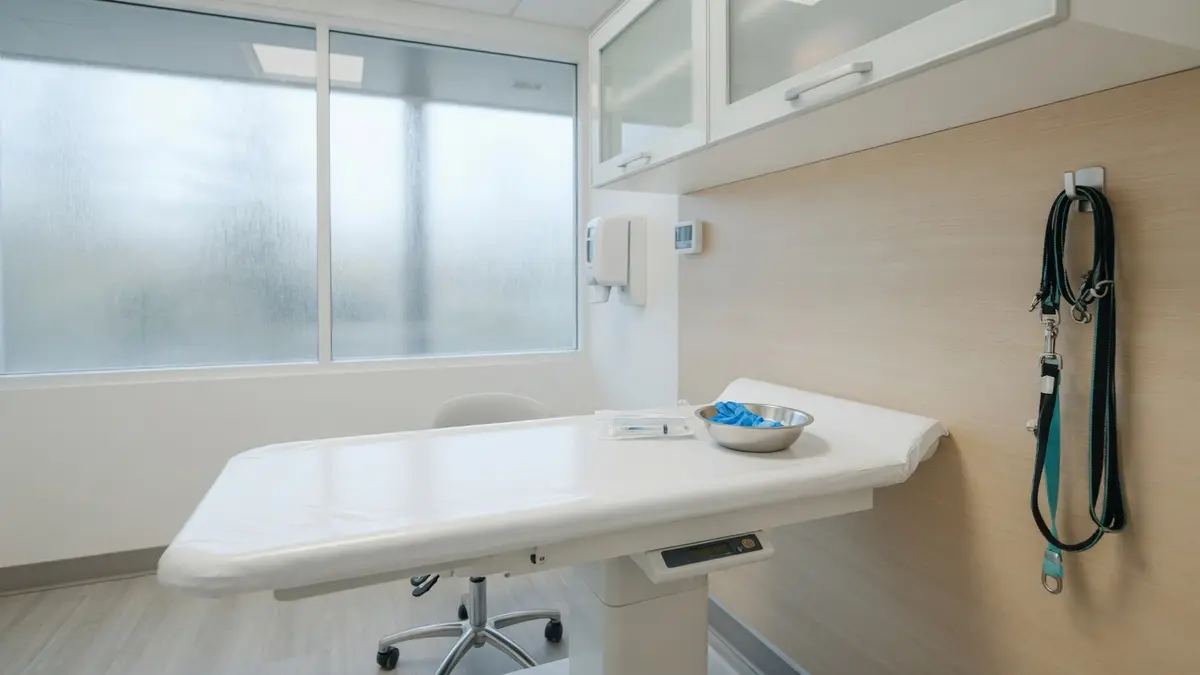
The dental has another twenty minutes. The blood sample still needs the second tube. The nurse’s hands are on the dog. The phone rings. Nobody in either room can take a glove off.
By the time someone is free, two callers have gone. One wanted first vaccines for a kitten. The other was standing over a chewed chocolate bar. The booster reschedule left a message. Those two did not. The week then looks like one polite move, not like a full block in which nobody could pick up.
Who cannot pick up
The vet is in consult. Both hands are on the animal. The nurse is restraining. If you employ a receptionist, they are often that same nurse, now in the room.
What you call lunch is the overflow from the morning consults, plus the owner who waited until they got home to look at the dog. The lights are on. The door is unlocked. Nobody can pick up, because the person who could answer is holding a dog still.
Friday at twenty to eight is the same shape: the last consult running long, and the owner who waited until they got home. Saturday is first vaccines and the dog that ate something overnight. August is fewer people in the building and the same phone.
You already measure consult numbers, vaccine compliance, the theatre list. A caller who rang for fourteen seconds at 13:40, while both rooms were full, is in the provider’s log. Nobody opens that log. They were in with a dog.
Four unanswered calls, four different costs
They are not worth the same. They are not equally safe. If you pile them into one number called “missed”, you will staff the wrong problem.
The booster reschedule. Already a client. Already on a protocol. Calling to move Thursday. They will wait for the beep and say their name. They will call back if nobody rings them. These are the calls the practice manager hears when they play the box at the end of the day. They shape the sense of the problem.
The new-puppy or new-kitten enquiry. No file. No species recorded. They had your name and two others from a search. They hear ringing and assume you are closed. They register wherever a voice says yes. The first year of vaccines, a neuter, preventatives goes with them. Nothing in the PMS. The unanswered log still has that call.
The frightened owner. Chocolate. A lily. A bike. A dog that cannot breathe. They do not record a message. They try the next number, or they type the plant into a phone. Sometimes they give the animal whatever the first result suggests. You never met them. The animal spent another twenty minutes in a kitchen.
The euthanasia call. Rare. Heavier than the rest of the day. An owner who had to say that sentence to a beep, or to nobody, will not come back, and they will tell the story. The job on that call is not a time in the book. It is a warm voice that takes a name and gets a human on the line.
A stray is a different unanswered call. “Are you open, we found a dog, his eye looks wrong.” If nobody picks up they try another number or the municipality. Write down whether you take strays, and the municipality number if you do not. The assistant can read that number out.
Why the message box is the wrong count
The person willing to record a message is the person whose animal can wait, or who already trusts you. The person holding a packet, or a carrier, or a puppy, hangs up at the beep.
So if you judge the week by the box, you count the booster moves. You miss the new clients and the come-now calls. Owners and managers who only play the messages conclude they missed a couple of boosters. The unanswered log, laid next to the consult diary, is a different afternoon.
Ask the provider for unanswered calls by hour, four weeks back. Print the consult blocks for the same days. The unanswered calls pile up in those hours. Average the week and the consult-block peak disappears, and you keep staffing the phone as if you needed a morning receptionist.
People who will fill in a website form are the people who can wait. The person who wants a neuter in three weeks will type. The person in the kitchen at 13:40 will not. A form does not tell you who rang while both rooms were full.
What they do after they hang up
Three paths, and none of them leave a file on your side.
They ring the next clinic that answers. For a first-vaccine enquiry that is the end of it. For a come-now call the animal may still get seen, and you still become the clinic that never picked up in the story they tell the emergency centre at ten o’clock.
They search. Chocolate, lily, “dog breathing funny”, “cat can’t pee”. The sentences they find are not yours. Sometimes they give the animal whatever appears first.
They walk in without a call. That is the calmer ones, later, if they live close. It is not the chocolate bar, and it is not the new owner comparing three clinics from a phone.
If you catch the come-now call, they come to you. If you catch the new-puppy call, the first year has a file. If you do not, there is nothing in the report, because there was never a client.
Two jobs in the same ten minutes
First vaccines, a neuter enquiry, a nail clip, and a collapse, in the same burst. One person can hold one of those conversations. The vaccine client hears ringing and books at the next practice that answers. The owner whose dog has collapsed hears ringing and panics.
A second nurse helps the first collision. It does not help the third ring. These calls are not one job arriving in a line. They are the bookable week and the come-now minute on the same number. Staffing as if it were one conversation at a time leaves the frightened caller as the one still ringing.
If you then forward everything at once, regulars never hear the nurse they know, and a frightened owner is not told they are speaking to an assistant. Tell them. A scared person who feels tricked will not hear the come-now sentence. Forward after fifteen or twenty seconds so the desk keeps what it can reach. Calls a nurse picks up never leave the clinic and are never charged.
A kind person at the desk can also break the afternoon they just saved. They fit someone in because the owner is crying. The emergency lands on a vaccine clinic. The puppy waits. The collapse did not get a work-up. Everyone is late. Picking up is not the same as putting a collapse behind a booster.
Closed at night is not the same miss as full at lunch
When you are closed at 21:00, the callers who hang up are not the same people who hang up when both rooms are full at 13:40. The sentences have to be different.
When you are closed, collect species, age and the owner’s words. If those words are on the come-now list, read out the emergency clinic you actually use, or the on-call number if you run one. If they are not, take a request for the morning. Do not invent “keep an eye on him overnight”. If the voice on this number tells them what to do at home when you are closed, you own that sentence in the morning.
When you are open and full, answer, then the same three facts, then come-now to your own door or a transfer to the nurse. Owners can see a closed sign. They cannot see that both rooms are full at lunch. The unanswered log should separate out-of-hours from consult-block unanswered. Mixing them produces a number that looks like “we should staff evenings” when nobody could pick up at 13:40 because both people who could answer were already in a consult.
New-client vaccine calls that miss at 13:40 are not emergencies and still should not wait for the evening messages. They will have registered somewhere else by the time anyone listens.
Saturday and August change the roster, not the rule. The assistant answers those hours the same way it answers a Tuesday at ten. What you change is what you allow: fewer times on a Monday the vet has not yet seen, a lower threshold for ringing the on-call mobile when breathing or trauma is mentioned, and the emergency clinic on your own door sign if you do not take cases after closing. It does not guess the nearest all-night number.
The rule on the overflow
Answer. Then collect species, age, and the owner’s words, in that order, before it looks at a time or a direction. A “he” that turns out to be a rabbit changes whether you see them at all. “Puppy” is not an age. “He’s not himself” stays “he’s not himself”. Anyone who upgrades those words into “gastro” or “probably fine” has started practising. You own that sentence.
Only after those three facts does it look at a book — and only if the sentence is not on the list you wrote for bring them in now.
Poisoning. Trauma. Difficulty breathing. You may add a tomcat straining in the tray, a dog that cannot stand, a seizure that has not stopped. Keep the list short. Owners say “he can’t pee” or “I think he’s constipated”. The assistant does not decide blocked versus constipated. If the words match your list, it tells them to come in now. If they do not, it takes the sentence for a nurse.
On those calls the assistant has three allowed moves: tell them to come to you now; transfer to the nurse or the on-call vet; or, if you are closed and you do not take emergencies, read out the emergency clinic you actually use and stop. It does not say try milk, try salt, try oil, take him for a walk, wait an hour, or give last year’s painkiller. Owners ask for that. The assistant still refuses. An instruction on the clinic’s number is a clinical act. A vet has to say it.
On “should I wait and see?”: if it is on your list, please do not wait. If it is not, the nurse has the owner’s words. “That can probably wait” is a vet’s sentence.
If those words are a vaccine, a neuter, a recheck, a nail clip, the assistant may look at the open book, offer a time that is actually free, book it, and text. If it is unsure, it takes a callback. An appointment the owner believes in and the clinic has not seen is a second kind of miss — they arrive, and there is no time.
Come-now must ring a phone. If the nurse only reads the poisoning after the last consult, the animal still waited.
Euthanasia is not a nail clip. The assistant takes the owner’s name, the animal’s name, and a number that will be answered, and makes a human the next voice they hear. It does not ask why, offer Tuesday at four, or put them on a waitlist next to a booster. “I’m so sorry” is enough. “He’s in a better place” is not allowed.
How CITT takes what you do not answer
- Your number stays on the door. A forward at the provider sends what you do not answer. Calls a nurse picks up never leave.
- Forward on no-answer while the desk is staffed. Fifteen to twenty seconds is the usual start. Immediate forward is for evenings, Sundays, August.
- Every line is answered at once. A lunchtime burst is a set of conversations, not a stack of busy tones on top of a consult.
- It asks species, age, and the owner’s words before it looks at a book.
- The emergency list goes to a phone, not to an email. Transfer if a person is free.
- Routine work into the real calendar, confirmed by SMS, in the language of the call. 70+ languages.
- No sentence about what to give, no diagnosis, no “it can wait”.
- You get the transcript, with the owner’s sentence intact.
What it will not do
It will not tell them what is wrong. It will not tell them what to give. It will not say the plant is toxic, or that the chocolate was “enough”, or “I’m sure he’ll be fine”. It will not book euthanasia like a trim, or put a collapse into a vaccine gap, or guess an all-night number you did not write down.
What you configure first
- The consult-block slice of the call log. Unanswered calls by hour, four weeks back, laid next to the diary. Separate out-of-hours from 13:40.
- Forward on no-answer, not always. Fifteen to twenty seconds while someone is in the building.
- Three tags: come-now, new client, routine. If you keep one pile called “missed”, you will not see the puppy and the poisoning.
- The come-now list, short, routed to a phone. Ate something, hit by, cannot breathe, cannot pee, seizure that has not stopped. No sentence about what to give.
- A human path for euthanasia, so that call never ends as a beep or a booked “consult”.
- Species you see, strays, the municipality number if you do not take them, the emergency clinic on your door sign.
- Re-pull the log after four weeks. Compare unanswered calls, not assistant volume.
Tell owners it is an assistant. A caller who asks “are you a real person?” should get a straight answer.
After four weeks
Pull the same unanswered-by-hour report. Lay it next to the consult diary again. If the consult-block unanswered have not dropped, the forward is wrong, or the desk is still sending people back to the phone for a vaccine the assistant already booked. Put your own first-year figure into the worked example. Count unanswered calls against the rooms. Then count them again.
Rates are on the pricing section of the home page.
AI receptionist, in-house staff, or a call centre
| CITT | In-house | Call centre | |
|---|---|---|---|
| Owner who will not leave a message | Yes — it answers | Only between consults | Yes |
| First vaccines and a collapse in one burst | Both conversations at once | One of those two | Depends on who is logged in |
| Species, age, owner's words | Required, written down | If they had time to ask | Often "dog, sick" |
| A full consult block at 13:40 | Yes | After the consult | If that hour was staffed |
| Tells them what to give at home | Never | A nurse or vet, if anyone | Must not |
| Cost of the calls it does not take | None — you answered them | Wages whether the phone rings or not | Often a minimum fee |
What the messages miss in one consult block
Worked from these assumptions — change any of them and the answer changes:
- Two vets, one weekday, 45 inbound calls.
- 16 of them arrive across a three-hour consult block.
- The desk reaches 7 of those 16. The rest ring out.
- Of the 9 unanswered, 2 leave a message and 7 leave nothing.
- A new registered client is worth about €160 in first-year routine care — put your own figure in before you trust the answer.
- The messages on the box show 2 unanswered callers. That is the number the clinic believes.
- The provider's log shows 9. The other 7 are hang-ups.
- Assume three of those seven were new clients — puppies, kittens, a first consult.
- 3 × €160 = €480 from one consult block, with no file in the PMS and no line on the till.
- One such afternoon a week, over 46 weeks — 46 × €480.
About €22,080 a year that never appears in a report, if that afternoon happens once a week.
What it costs
CITT is pay as you go: no packages, no minimum, no contract. The current rates — the monthly fee per number and the per-minute rate — are on the pricing section of the home page, which is the only place they are published.
Frequently asked questions
How do I find out how many calls we are actually missing?
Ask your telephony provider for unanswered calls by hour, for the last four weeks, and lay that file next to the consult diary. Then play the messages from the same days. The gap is the owners who hung up at the beep — the chocolate, the lily, the new puppy. Do not start from the box. Start from the log.
Would a second nurse not solve this?
It helps the first collision. It does not change the burst. A booster move, a new-kitten vaccine and a collapse arrive in the time it takes to finish one conversation. One extra person changes capacity by one. The third caller still hears ringing, and the third caller is often the frightened one.
Does the website form not catch them?
The person who wants a neuter in three weeks will fill in a form. An owner standing in the kitchen with a chewed packet does not open a laptop and wait for an email. They try the number on last year's invoice. If it rings out, they try another number, or they type the plant into a search. A form counts the people who could already wait.
What happens to the calls the desk does answer?
Nothing, and nothing is charged. The forward only sends a call onward when it has rung for the seconds you choose. A call a nurse picks up never leaves the clinic.
Will regulars mind talking to an assistant?
Regulars with a booster to move will mind a ringing tone more. Frightened first-time callers will mind a busy tone and then a beep. The assistant introduces itself the way you configure, and it does not pretend to be a vet if asked. Tell them it is an assistant. A scared owner who feels tricked stops listening.
How soon can we tell it worked?
Four weeks, against the same unanswered-call figure you pulled at the start. Measure unanswered calls, not "calls the assistant handled". Only one of those numbers tells you whether an owner is still ringing out while both rooms are full.