AI phone receptionist for waterproofing
Quick summary
- You are on a terrace with membrane, or in a wet cellar after rain. That is when the number on the van rings.
- A photo of a stain is not a diagnosis. The assistant books a look. It does not say it is the roof, the terrace, or the tanking.
- Wet cellar, terrace leak, bathroom membrane — those are three jobs, not one free morning.
- Someone with water on the cellar floor will not wait on voicemail. They ring the next crew.
- It checks the book you already use before it offers a morning, writes the visit in, and texts the window.
- After rain, several people ring at once. It answers every line at once.
TL;DR
You are on a terrace in a Greek block with membrane in both hands. Last night's rain is still in the forecast. The phone in your pocket rings. Someone has sent a photo of a stain on a bedroom ceiling and wants to know if it is the roof. They will not leave a message. They will ring the next crew on the listing. An assistant answers in the caller's language, asks whether this is a wet cellar, a terrace, or a bathroom membrane, takes the address, and books a look only if that morning is free. It does not diagnose from a photo of a stain. It does not say bitumen or membrane from a picture. The cause is yours, after you have stood in the room.
Key takeaways
- Put the assistant on the number on the van and the card, with a forward-on-no-answer rule, so a free pair of hands still takes the call.
- Teach it the first split: wet cellar, terrace, bathroom membrane, or a move of a visit already in the book.
- Give it the sentence verbatim: it cannot diagnose from a photo of a stain. Someone has to see the wet.
- Let it book looks. Keep the cause, bitumen versus membrane, and the figure as a callback or a second booking after you have been there.
- After rain, shorten the ring-time so the third cellar is not listening to a busy tone.
- Mark two kinds of visit: a look that needs you at the stain, and a terrace day that needs a dry window.
What an AI phone receptionist does for a waterproofing crew
You are on a terrace in a Greek apartment block. Both hands are on a roll of membrane. Last night’s rain is still sitting in the forecast. The phone in your pocket rings. Across town the other person is in a cellar with water on the floor. There is no third pair of hands at the phone on the van dash.
You put the assistant on the number already on the van and on the card you leave with the manager. It answers when you cannot. Then it does one of two things. It books a look that is actually free. Or it takes a request you will name after you have stood at the wet.
The first question is not “what morning would you like?”. The first question is what kind of visit this is. A photo of a stain is not a diagnosis. A wet cellar after rain is not a terrace day. A bathroom membrane before the tiler is not a leak. An assistant that opens with a free hour will put a stain-photo into a terrace morning and leave the person with water on the cellar floor without a note.
A caller who rang in English gets the confirmation in English. A caller who rang in Greek gets it in Greek. The assistant works in 70+ languages. The SMS follows the language of the call.
On a terrace after rain, and the phone still ringing
One of you is on a terrace that still has to stay dry. The other is in a cellar with a torch. The published number still rings.
It is a burst. The morning after rain. The week a building manager sends three flats out with your card because the communal terrace marked the ceilings below. A second line with the same two hands still leaves the third caller on a busy tone.
The person who sent a photo of a stain this morning will not wait on voicemail. They have your number and two other crews in the same search. They hang up and dial the next one. The person with water on the cellar floor will not leave a message either.
People whose terrace you already started will often wait. A person who cannot get a look at a new stain, and a person who cannot start a cellar, will not. If those two wait behind the membrane you are already on, the new job is gone, and the cellar arrives as an angry call at five — or the next crew has already stood in that wet.
Whoever takes the look often takes the job. That is why a missed stain-call is not only a missed note.
Wet cellar, terrace, bathroom membrane — then where they see the water
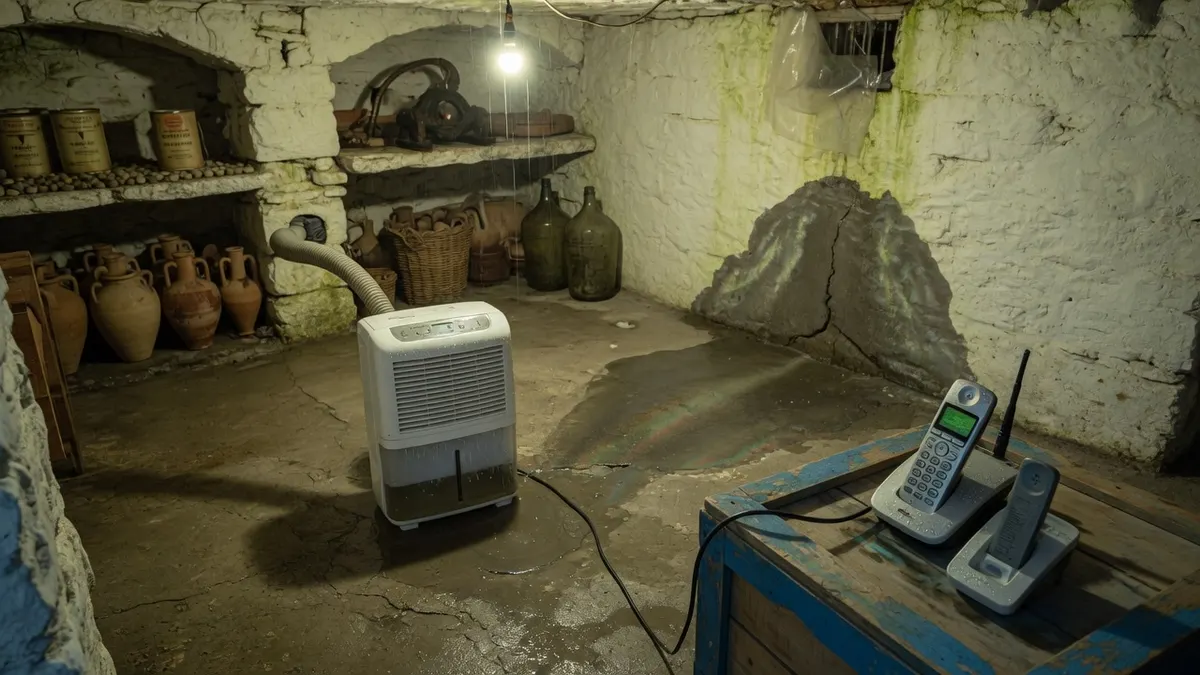
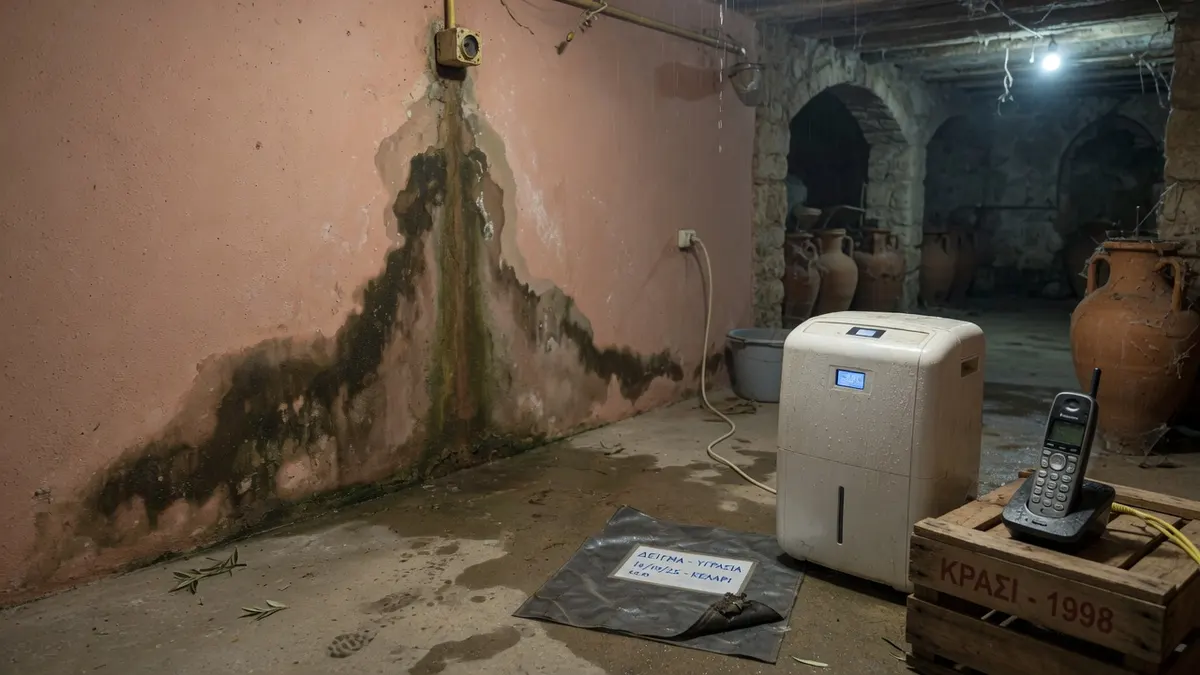
Wet cellar. Water on the floor after rain, a smell, a stain on the lower wall. The assistant asks where they see it, which floor, and the address. It books a look only if that morning is free. It does not say rising damp, a pipe, or the tanking from a description. It does not say the neighbour’s terrace is the cause.
Terrace. A Greek block terrace, often over a bedroom. Membrane or bitumen is yours after you have been up there. The assistant takes the building and which terrace. It does not pick a system from a photo. It does not put a terrace day on a morning rain is still falling.
Bathroom membrane. Before the tiler, or after a leak in a wet room. This is not a cellar. It is not a roof. The assistant takes whether the tiler is booked, and the address. It does not say the fall is wrong from a photo of the floor.
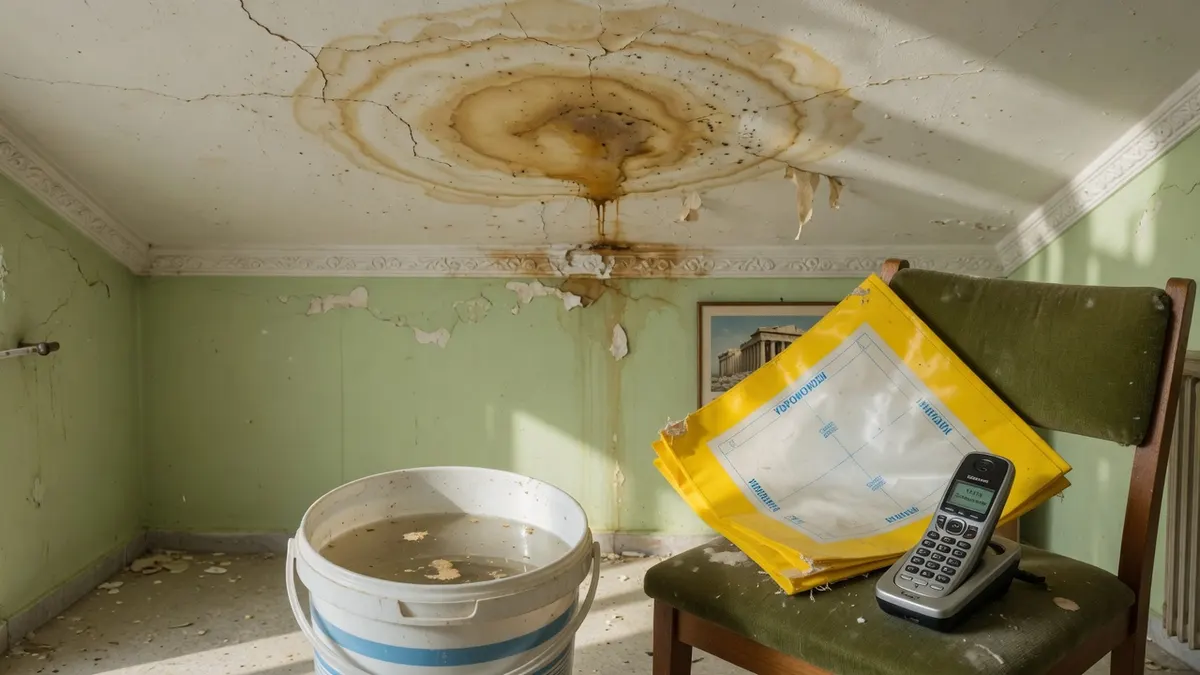
Stain on a ceiling. They photographed a mark. They want to know if it is the roof. The assistant does not answer that. Roof, terrace, pipe, or condensation — those are yours after a look. A stain photo is a request for a look, not a cause.
People remember the bedroom. They do not remember whether the terrace above is theirs, or the communal one. Ask where they see the water first. Then cellar, terrace, or bathroom. Then the address. One place is enough to put the visit on the right wet. None is still a request, not a guess from a yellow mark on a photo.
A sentence the assistant is not allowed to say
“Is it the roof? I sent a photo” is the question on this phone. It comes the morning after rain. It comes in August from a holiday flat. It comes on a Tuesday from a manager who photographed three ceilings in the block.
The assistant does not answer it. Not with “it is the terrace”. Not with “that looks like rising damp”. Not with “bitumen will fix it”. A cause said before you have stood at the wet is a cause the crew then has to take back when the stain is a pipe, the terrace is sound, or the cellar needs a different system.
The line you give it is short: someone has to see the wet. A photo of a stain does not show the source.
“Is it bitumen or membrane?”, “will it stop this winter?”, and “the neighbour says it is the roof” are still cause and system questions. The assistant names the topic so the callback is useful, and refuses the diagnosis.
Do not put a cause table in the notes. It will read the table out. Do not put last year’s terrace system in the notes either. It will read it as this stain.
After rain, and everyone at once
Rain in the night. By eight, people have started ringing about cellars and ceiling stains. You are already on a terrace. The pad is already a list of addresses.
A building-manager morning is three flats in the same block, all wanting a look at the communal terrace, all expecting a cause from the same photo of a landing ceiling.
The assistant has to treat that burst as several conversations, not as a queue behind your membrane. A look in that hour is a morning in the book. A bathroom-membrane call is a different visit. If the assistant parks the person with water on the cellar floor behind the tenth stain photo, that person rings the next crew.
Shorten the ring-time before forwarding on those mornings. After rain the third caller should not hear a busy tone. A Tuesday in August is people asking about holiday-flat terraces, and one person left on a membrane that cannot take more rain.
A cause nobody can give from a stain
When someone describes a mark on the phone — yellow, they think from the terrace, they sent a picture from the bed — the tempting answer is a cause. The assistant does not give one.
Where the wet is, whether it is still coming, a pipe in the floor, a door threshold on the terrace, tanking that has given up — all of those change the work. A cause named before anyone has stood there is a cause you then spend the look taking back.
It can repeat a published visit fee you typed in and marked as speakable. Unseen cellars, a communal terrace, a bathroom membrane — those do not get a system or a figure on this call. The assistant takes the request and books the look. Last year’s neighbour is not this stain. The assistant does not quote it.
If they press — “just tell me if it is the roof, I have the other crew on the other line” — the assistant still refuses. Book them as soon as a morning is free. Flag it if water is still coming in.
Water still coming in
Some of these callers are standing in a cellar with water on the floor, or they have a bucket under a bedroom stain, with the manager waiting. They want to know whether you can come now, whether a temporary cover will do, whether it is safe.
The assistant is not in the cellar. It cannot see the water. It cannot decide a cause.
What it can take: the address, where they see the water, whether it is still coming, and whether anyone is in a room that is wet. What it can repeat, if you typed the line in: someone from the crew will call back as soon as they can see the van. Come-now or this-afternoon is yours, after you know where the crew is.
If they say water is running in, that is a transfer. You give the assistant a short list: water on the floor, still coming, cellar or bedroom. It collects a name and a number while it is connecting. It does not tell them it is the roof. It does not tell them to open a wall.
A caller who is already dry, with a photo of an old stain, is a look request and, if a morning is free, a time.
Bitumen, membrane, and “can you do it Thursday?”
Bitumen or membrane. They want a system named on the phone. The assistant does not name one. That is yours after the terrace.
Bathroom before the tiler. The assistant takes the date the tiler is booked, if they have one, and offers a look. It does not promise the membrane will be in before that date. It does not say the fall is ready from a photo.
Thursday on the terrace. They have already had a look, or they think they have. The assistant does not put a terrace day in the book because someone is in a hurry and rain is on the forecast. If a signed offer exists, that is a different visit type, from a list you control. If it does not, this is still a look.
Building manager. Communal terrace, three ceilings below, keys. The assistant takes the building and who will be there. It does not invent a communal cause from a landing photo. It does not book a shaft the manager opens on Tuesdays as if it were a private terrace.
August needs its own dates. Do not let the assistant book a terrace day into a week of storms, or a look into a week when the crew is dark.
How CITT handles it
- Your number stays on the van and on the card. A forwarding rule sends what you do not answer. Calls the crew picks up never leave, and are never charged.
- Every line is answered at once. A morning after rain is several conversations, not a stack of busy tones.
- It knows the crew you described. Terraces only or cellars as well, whether you take bathroom membranes, whether you take communal work, who is out on Monday.
- It asks cellar, terrace or bathroom first, then where they see the water, then the address, and only then looks at the book.
- It takes a stain photo as a look request, never as a cause said out loud, and never as bitumen or membrane from a picture.
- It checks the real book before it offers a morning, and writes the visit into the same calendar the crew already uses. It does not offer a terrace day you have closed because of rain.
- It confirms by SMS, in the language of the call — 70+ languages — and can remind them to leave access to the terrace or the cellar.
- It escalates water still coming in, a cause question, and a system named from a photo as a tagged note or a transfer.
- You get the transcript, the summary, the address, and where they said they see the water.
What it will not do
It will not diagnose from a photo of a stain. It will not say it is the roof, the terrace, a pipe, or rising damp. It will not pick bitumen or membrane from a picture. It will not invent a price for unseen tanking. It will not promise Thursday’s terrace day before you have seen the wet and the forecast. It will not treat a look, a terrace day and a bathroom membrane as the same morning. It will not book a communal terrace as if it were a private cellar.
What these calls sound like
The order is the split, then where they see the water, then the address, then a morning the book can honour, then the refusal said out loud. There is no cause over a stain nobody has stood under. There is no “it is the roof” to a person who sent a picture from the bed. There is no “bitumen will fix it” to a terrace nobody has walked.
If the assistant is friendly and still names the leak, you own that sentence. Put the person who rang about the stain at 11:10 on a look, not on the next crew’s pad.
What you set up first
Put the assistant on the number on the van with a forward-on-no-answer rule, so a free pair of hands still takes the call. Then the cellar-terrace-bathroom split, where they see the water, and the sentence that forbids a diagnosis from a stain photo.
Write down what you actually take and whether you do cellars this month. Give it the fields you want on every note: address, floor, cellar or terrace or bathroom, where they see the water, whether it is still coming, whether they sent a photo. Mark two kinds of visit: a look that needs you at the wet, and a terrace day that needs a dry window.
Give it the same-day phone list: water still coming in, cellar floor wet, a manager waiting at a communal terrace. Do not give it a cause table it would read out. Write one line that forbids stain-diagnoses, system names from photos, and terrace days before the look. Add opening hours, who is out on Monday, August dates, the rain days you already closed.
Rates live on the pricing section of the home page. They are not repeated here.
AI receptionist, in-house staff, or a call centre
| CITT | In-house | Call centre | |
|---|---|---|---|
| Answers while you are on a terrace with membrane | Always | Only if they can leave the roll | Yes |
| Several callers after rain | Every line at once | One, then a busy tone | Depends who was rostered |
| Asks cellar, terrace or bathroom first | Yes — before it looks at the book | Yes, if they heard the start | Often jumps to what morning |
| Diagnoses from a photo of a stain | Never — books the look | Can refuse until they have seen the wet | Often names a cause |
| Says bitumen or membrane from a picture | Never | After they have been on the terrace | Tempted, if the script wants a system |
| Speaks the caller's language | 70+ languages | One or two | Whoever is on that shift |
| What it will not do | Name the leak, or price unseen tanking | Can look at the wet | Reads whatever is on the sheet |
What one unanswered morning after rain costs a two-person waterproofing crew
Worked from these assumptions — change any of them and the answer changes:
- Two people, the morning after a night of rain. One of you is on a terrace. The other is in a cellar two streets over.
- About 14 inbound calls that morning. Five arrive while both pairs of hands are in wet work.
- Of those five, 3 are new cellars or terraces that want a look. 1 is a bathroom membrane. 1 is a stain on a ceiling they photographed.
- A terrace or cellar job that becomes work is worth about €2,400 here — put your own average ticket in first. This is the number to change.
- This example assumes 2 of the 3 look callers do not leave a message and ring the next crew on the listing.
- 3 new look requests reach nobody on a morning after rain.
- 2 of them do not call back.
- 2 × €2,400 = €4,800 of work that morning that never reached the book.
- A morning like that after rain, eight such weeks a year — 8 × €4,800.
About €38,400 a year on those assumptions. Change the ticket, the conversion, and how often a rain morning like that happens.
What it costs
CITT is pay as you go: no packages, no minimum, no contract. The current rates — the monthly fee per number and the per-minute rate — are on the pricing section of the home page, which is the only place they are published.
Frequently asked questions
Do I have to change the number on the van?
No. The number on the van, the cards, and the Google listing stays yours. You add one forwarding rule — every call, or only the ones still ringing after the seconds you choose. If you pick up, the call never leaves and is never charged.
Can it tell them what the stain is if they send a photo?
It must not. A photo of a stain does not show whether the wet is coming from the terrace, the roof, a pipe, or the tanking. It takes the address and where they see the water, and books a look if that morning is free. You name the cause after you have stood there. If a cause must not be said until you have seen the wet, do not give the assistant a cause.
What is a look, and what is a terrace day?
A look is you, the stain, the cellar, the terrace. A terrace day is membrane or bitumen and a dry window that rain can still close. The assistant books the first. It does not put Thursday's terrace in the book because someone sent a picture of a mark. After you have seen it, you — or the assistant, from a list you gave it — book the days.
We only do terraces. What happens to a wet cellar?
Say so in the notes. A caller with water on the cellar floor gets a clear no, and, if you want, a name you actually recommend. Do not let it book tanking onto a crew that only does terraces. The same if you do not do bathroom membranes, or you do not take communal roofs.
Water is still coming in. Can it send you now?
It can put the call in front of a human who can see where the van is. It will not invent “we will be there in twenty minutes”. A cellar with water on the floor is a flagged note or a transfer, not a guessed arrival. You decide whether to leave the terrace you are already on.
What do we actually see afterwards?
A transcript, a short summary, whether this was a cellar, a terrace, a bathroom membrane or a move, the address and where they see the water, and whatever was booked or left for you. Confirmations go out by SMS in the language of the call.