AI phone receptionist for handymen
Quick summary
- You are on a step holding a shelf. The published number rings. Someone else has a door that will not close and a tap that drips.
- Door, shelf and dripping tap are three small jobs. A live board is not a fourth. That call is a refusal and a referral.
- One van, many small jobs. The assistant bundles two in the same block if the book allows it. It does not invent a price from a WhatsApp photo.
- A dripping tap will not always wait. They ring the next small-jobs number on the building list.
- It checks your book before it offers an hour, writes the jobs in, and texts the confirmation.
- On a Saturday morning several flats in the same block ring at once. It answers every line at once.
TL;DR
You are on a step in a Greek flat, holding a shelf. The published number rings. A door that will not close, another shelf, a dripping tap — those are the jobs this van takes. A live board is not one of them. An assistant answers when you cannot put the level down. It asks which small job it is. It never books a consumer unit. It does not invent when you will arrive or a price from a photo. It books an hour only if that hour is free, and it can put two small jobs in the same block on the same visit if you marked that.
Key takeaways
- Put the assistant on the number on the van and the Google listing, with a forward-on-no-answer rule, so free hands still take the call.
- Teach it the first split: door, shelf, dripping tap — and a live board is a refusal, not a booking.
- Give it the sentence: it does not take electrical boards, mains, or anything that needs a licensed electrician.
- Let it book small jobs and bundle two in the same block. A dripping tap that is flooding still rings a phone you hold.
- On Saturday morning shorten the ring-time so the third flat in the block is not listening to a busy tone.
- Forbid invented prices from a photo of a hinge. You price what you have seen.
What an AI phone receptionist does for a handyman
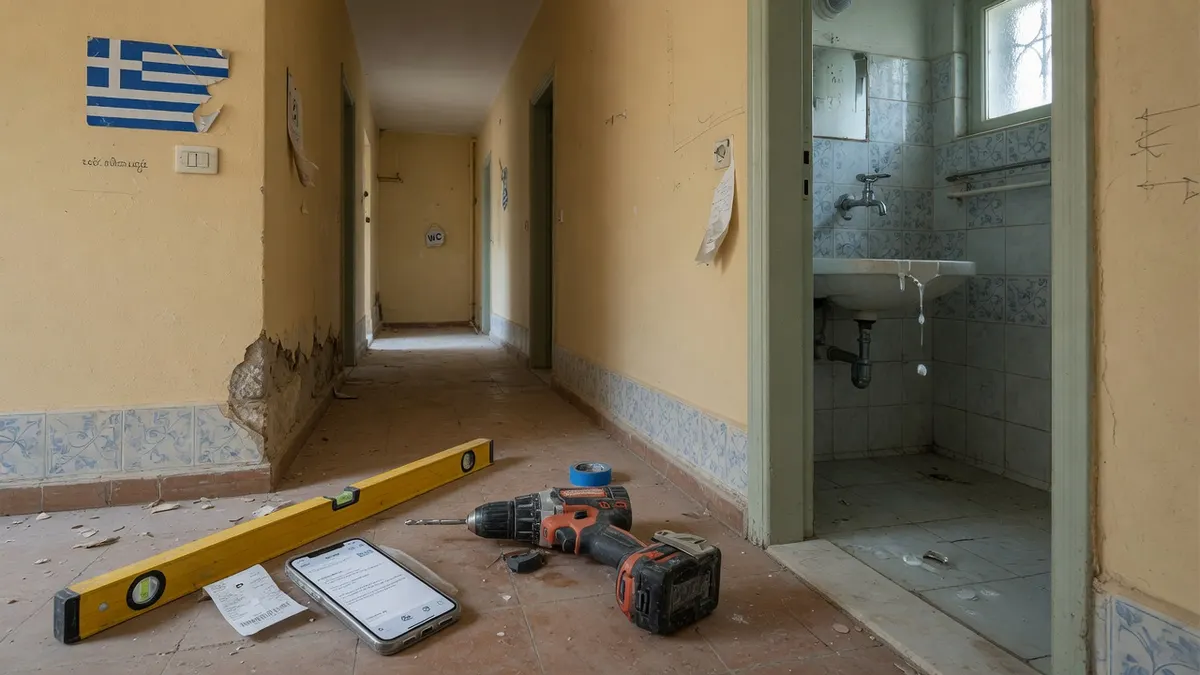
You are on a step in a Greek living room, holding a shelf against the wall. The level is on the sofa. The published number rings. A door two floors down will not close. A tap in the next block drips. You cannot put the shelf down. There is no second pair of hands in the van.
You put the assistant on the number already on the van and on the card under the intercom. It answers when you cannot. Then it does one of two things. It books a small job that is actually free — a door, a shelf, a dripping tap, silicone, a flat-pack. Or it refuses a live board and gives the electrician line you wrote.
The first question is which small job this is. A door that will not close is not a shelf. A shelf is not a tap. A dead consumer unit is not a small job on this van. An assistant that opens with “what time would you like?” will put a board into Saturday’s shelf hour.
A caller who rang in English gets the confirmation in English. A caller who rang in Greek gets it in Greek. The assistant works in 70+ languages. The SMS follows the language of the call.
One van, many small jobs
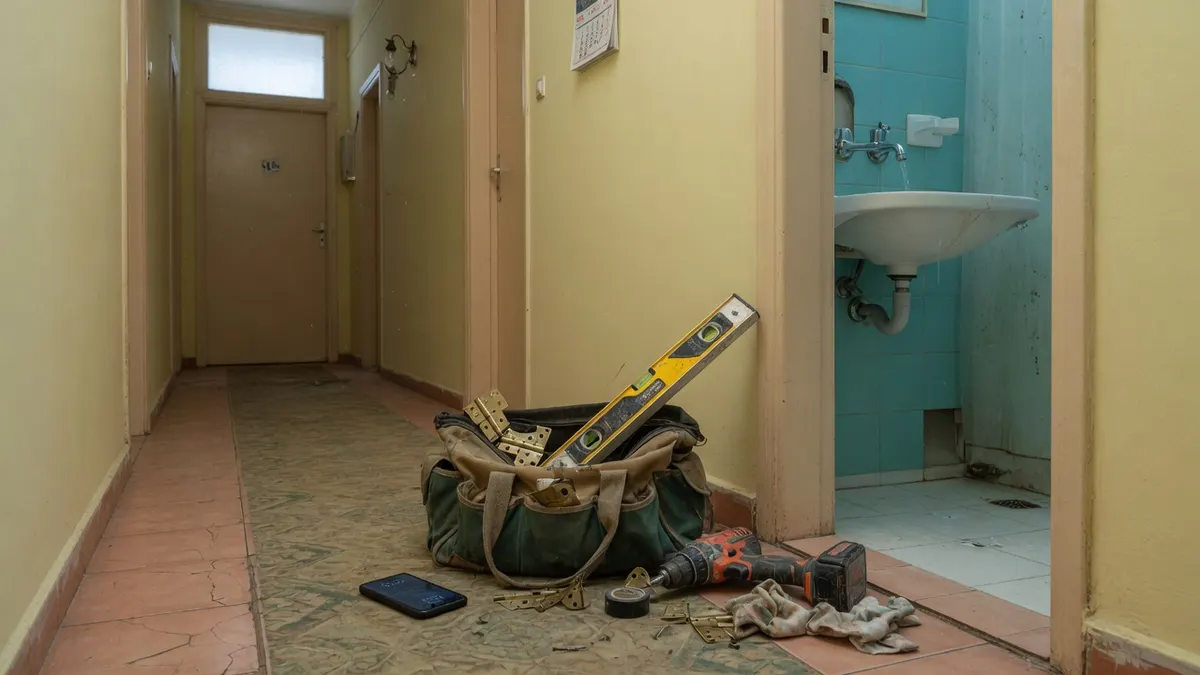
The bag holds screws, silicone, a spare mixer washer, hinges. That is the room this phone lives in.
The published number still rings. Saturday morning in a block. Three flats, three small jobs, the same stairwell. A second SIM in the same pocket still leaves the third caller on a busy tone.
The person with a dripping tap will not always wait on voicemail. They have your card and another small-jobs number on the building list. They hang up and dial the next name. The person whose door will not close before they leave for work will not leave a message either.
Clients who already have a wardrobe in the book will often wait. A tap that has started to flood will not. If that call waits behind the shelf you are already holding, the next van on the list is already in their kitchen.
Whoever takes the door often takes the shelf later in the same block. That is why a missed small job is not only a missed hour.
Door, shelf, dripping tap — and a board you do not take
Door that will not close. Hinge, closer, leaf that sits low. The assistant names that job, takes the address, and books an hour or bundles it with another job in the same block if you marked bundling. It does not quote from a photo of a hinge. It does not tell them to plane the leaf.
Shelf. Brackets they already have, or a rail, or a curtain pole. Short visit. Access is a clear wall and someone in the flat. The assistant does not guess the fixings from a picture of plaster.
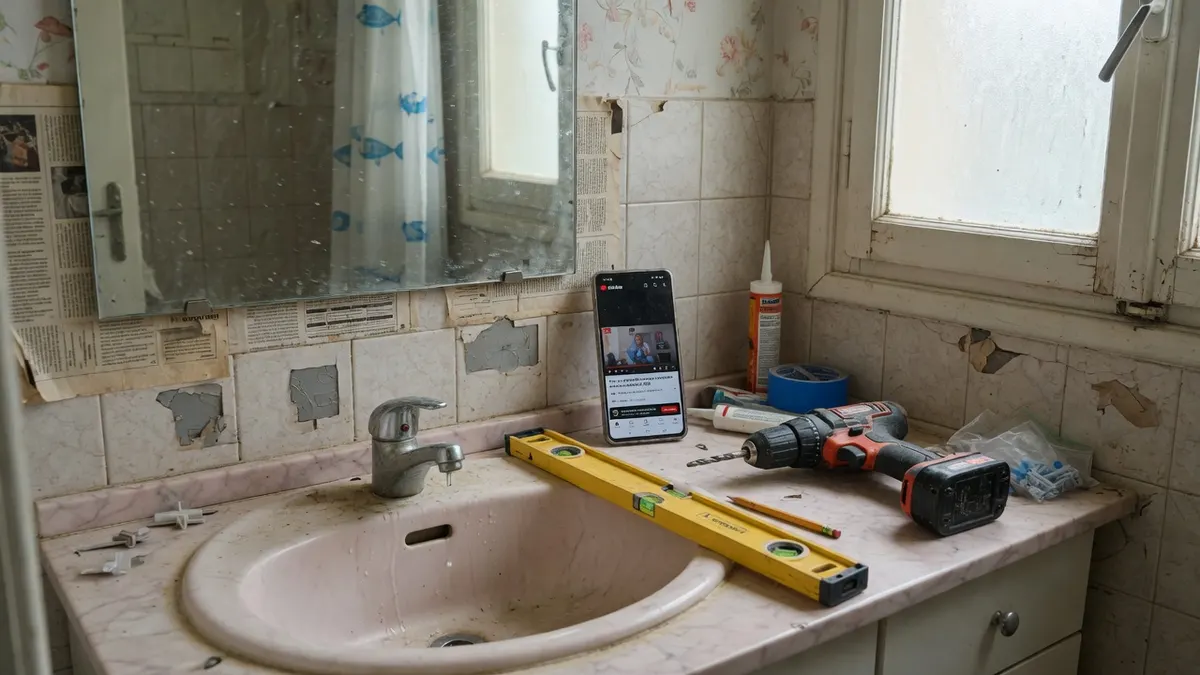
Dripping tap. Kitchen or bathroom. Slow drip, or flooding. A slow drip is a booked short visit. A tap that is flooding rings you. The assistant asks which. It does not tell them to undo the mixer. It does not tell them to open a gas valve on a heater they mentioned in the same breath.
Board. Live or dead consumer unit, main switch, RCD, “just reset it”. The assistant refuses. It gives the electrician line you wrote. It does not take the board because they also want a shelf. It does not tell them to flip a main.
People remember the street and the floor. They do not remember a job number they have never had. Ask for the address first. Ask which small jobs. Ask whether anything is flooding.
A sentence the assistant is not allowed to say
“Can’t you just reset the board while you’re here?” is the question on this phone. It comes after a shelf, after a door, on a Saturday when they want three things done in one visit.
The assistant does not take the board. Not as a favour. Not as a bundle. A sentence that sounds like electrical work, said on the recorded line, is a sentence the van now owns, and this van is not a licensed electrician.
The line you give it is short: we do not take consumer units or live boards. Here is the electrician line. This call can book the door, the shelf, or the tap.
“It’s only the main”, “the neighbour does it”, “just flip it”, and “you must have a tester in the bag” are still board questions. The assistant names the topic so the referral is useful, and refuses the job.
Do not put a reset sequence in the notes “for the easy ones”. It will be read out.
Saturday morning in the same block
By nine, people in the same stairwell have started ringing. You are already on a step. The pad is already a list of floors.
The assistant has to treat that burst as several conversations, not as a queue behind the shelf. A flooding tap in that hour is a note and a ring to you. A door two floors down is a bundle if you marked it. A board in the hall is a refusal.
If the assistant parks the person with the door behind a long flat-pack enquiry, that person rings the next small-jobs number. If it books the board because they sounded friendly, you own the board.
Shorten the ring-time before forwarding on Saturday morning. The third flat should not hear a busy tone. A Tuesday in August is people asking for silicone, and one person left in the van.
A price nobody can give from a photo of a hinge
When someone sends a photo of a door leaf and asks what it costs to make it close, the tempting answer is a number. The assistant does not give one.
The frame, the floor, whether the closer is tired, whether the tap is a washer or a mixer, all change the work. A number quoted before anyone has stood in that hall is a number you then spend the visit taking back.
It can repeat a published call-out figure you typed in and marked as speakable. Unseen flat-packs, a curtain rail on a hollow wall, three jobs they want in one hour — those do not get a number on this call. The assistant takes the list and books the hour.
If they press — “just a round figure, I have three things” — the assistant still refuses. Book them as soon as an hour is free. Flag it if a tap is flooding.
Bundling two jobs in the same block
This van lives on small jobs. Two in the same stairwell is how the hour pays. The assistant can offer to add a second job on a floor you are already visiting, if you marked bundling and if the duration still fits.
It does not add a board. It does not add a gas heater. It does not stretch a twenty-minute tap into a wardrobe because they asked at the end of the call.
The confirmation names both jobs and the floor for each. A bundle that arrives as “Saturday, small jobs” is how you forget the tap on the fourth.
Silicone, flat-pack, curtain rail
These are still small jobs. They still need an hour that is free. They still do not get a price from a photo.
A wardrobe they bought last night is a duration you mark, not a hole between two doors. If you do not do flat-pack, the assistant says so on the first call, from the line you typed in.
August needs its own dates. Do not let the assistant book a wardrobe into a week when the van is on the island.
How CITT handles it
- Your number stays on the van and under the intercom. A forwarding rule sends what you do not answer. Calls you pick up never leave the van.
- Every line is answered at once. A Saturday morning in a block is several conversations, not a stack of busy tones.
- It knows the van you described. Small jobs you take, boards you refuse, whether you bundle in the same block, who is on Monday.
- It asks door, shelf or tap first, then the address, and only then looks at the book.
- It refuses a consumer unit, even when it arrives with a shelf.
- It checks the real book before it offers an hour, and writes the jobs into the same calendar the van already uses.
- It confirms by SMS, in the language of the call — 70+ languages — and can name both jobs in a bundle.
- It escalates a flooding tap and “how long” as a tagged note or a transfer.
- You get the transcript, the summary, the address, and what was refused.
What it will not do
It will not take a live board. It will not reset a main. It will not invent when you will arrive. It will not invent a price from a photo of a hinge. It will not treat a door, a shelf, a tap and a board as the same visit. It will not tell them to open a gas valve. It will not plane a door over the phone.
What these calls sound like
The order is the small-job split, then the address, then the hour or the refusal, then the board line said out loud if they asked. There is no “I’ll reset it while I’m there”. There is no round figure over a hinge nobody has stood at. There is no “twenty minutes” from a van that is still on a step on the other side of the city.
If the assistant is friendly and still books the board, you own that visit. Put the person who rang about the door at 10:10 on a small-job hour, not on a consumer unit you are not licensed for.
What you set up first
Put the assistant on the number on the van with a forward-on-no-answer rule. Then the three small jobs, the board refusal, the electrician referral line, and whether you bundle in the same block.
Write down what you actually take: doors, shelves, taps, silicone, flat-pack or not. Give it the fields you want on every note: address, floor, which small jobs, flooding or not, board mentioned or not. Mark two kinds of visit: a short tap or shelf, and a longer door or wardrobe.
Give it the same-day phone list: flooding tap. Do not give it a board tariff. Do not give it a reset sequence. Add the hours you actually run, who is on Monday, August dates, and the electrician line in the languages you hear.
Rates live on the pricing section of the home page. They are not repeated here.
AI receptionist, in-house staff, or a call centre
| CITT | In-house | Call centre | |
|---|---|---|---|
| Answers while you are on a step with a shelf | Always | Only if they can let go | Yes |
| Several flats in the same block on Saturday | Every line at once | One, then a busy tone | Depends on the roster |
| Asks door, shelf or tap first | Yes — before it looks at the book | Yes, if they heard the start | Often jumps to what time |
| Books a live board | Never — refuses and refers | You refuse if you heard board | Must not; a script sometimes books it |
| Invents a price from a photo of a hinge | Never | Prices after they have seen the door | May read a list figure |
| Bundles two small jobs in the same block | If you marked bundling | Yes, if they remember | Rarely sees the street |
| Speaks the caller's language | 70+ languages | One or two | Whoever is on that shift |
| What it will not do | Boards, arrivals, or a price it cannot see | Can look at the door | Reads whatever is on the sheet |
What one unanswered Saturday costs a one-van handyman
Worked from these assumptions — change any of them and the answer changes:
- One van, a Saturday morning in a Greek block, roughly 24 inbound calls before early afternoon.
- About a third arrive while you are on a step or under a tap.
- Of the calls nobody reaches, 6 are small jobs — door, shelf, tap — in buildings you already visit.
- A first small job that stays is worth about €85 to the van. Put your own figure in.
- This example assumes 4 of the 6 never leave a message and ring the next small-jobs number on the list.
- 6 small-job calls reach nobody on a normal Saturday morning.
- 4 of them do not call back.
- 4 × €85 = €340 of first work, that Saturday.
- Saturday mornings, over a 44-week year — this example counts 36 such mornings if you take them.
About €12,240 a year, from the same unanswered window repeating. Put your own weeks in.
What it costs
CITT is pay as you go: no packages, no minimum, no contract. The current rates — the monthly fee per number and the per-minute rate — are on the pricing section of the home page, which is the only place they are published.
Frequently asked questions
Do I have to give up the van number?
No. You keep the number on the van, the card under the intercom and the Google listing. You set one forwarding rule — every call, or only the ones still ringing after the seconds you choose. If you pick up with a free hand, the call never leaves the van and is never charged.
Can it book a dead consumer unit if they also want a shelf?
No. A live or dead board is not a small job on this van. The assistant refuses the board, even if they also want a shelf in the same call. It can book the shelf. It can give the line you wrote for an electrician referral. It does not take the board “just this once” to keep the caller.
Can it quote three jobs from a WhatsApp photo?
No. A photo of a hinge, a wall, or a tap does not show the frame, the plaster, or the stopcock. A number said before anyone has stood in that flat is a number you then spend the visit taking back. It takes the list of small jobs and books an hour. If a starting figure must not be said until you have seen the work, do not give the assistant that figure.
What if I am already on a step with a shelf?
That is the usual hour. The assistant answers the overflow. A dripping tap that is flooding becomes a note and a ring to you. A door that will not close becomes a booked hour, or a bundle with another job in the same block if you marked that. On Saturday morning, shorten the ring-time so the third flat is not listening to a busy tone.
Someone says the tap is dripping and the board in the hall is dead. What then?
Two jobs. The tap can be yours. The board is not. The assistant books or notes the tap, refuses the board, and gives the electrician line you wrote. It does not tell them to reset a main. It does not tell them to open a gas valve. It does not mix the two into one visit.
What do we actually see afterwards?
A transcript, a short summary, whether this was a door, a shelf, a tap, or a refused board, the address and floor if they gave them, and whatever was booked or left for you. Confirmations go out by SMS in the language of the call.