AI phone receptionist for electricians and plumbers
Quick summary
- You are on a ladder or under a sink — both hands wet or above your head — when the phone rings.
- A burst pipe or a dead board is not a booking. It goes to a human who knows where the van actually is.
- A new bathroom, extra sockets, or a communal look can wait for a free hour in the book.
- The assistant must not invent when you will arrive, and it must not invent a price from a phone description.
- It answers every line at once, checks the calendar before it offers a time, and texts the confirmation.
- It speaks the caller's language — Greek most days, English or Albanian when the building needs it.
TL;DR
You are on a ladder or under a sink in a Greek apartment when the phone rings. Water is coming through a ceiling, or a board is dead, or someone wants two sockets and a bathroom quote. The first two are not bookings — they go to a human who knows where the van is. The rest can wait for an hour that is actually free. An assistant answers every line at once, asks whether water is still running or the power is still out, and puts those calls on your phone. It will not invent when you will arrive. It will not invent a price. It checks the calendar before it offers a time, writes the job in, and texts the confirmation in the language of the call.
Key takeaways
- Put the assistant on the number on the van and the Google listing, with a forward-on-no-answer rule, so you still take the call if your hands are free.
- Write the emergency list first: water running, no power, smell of burning — those ring a human. Do not let the assistant book them.
- Tell it what you actually take: electrical only, plumbing only, or both — and whether you do communal building work.
- Forbid invented arrival times. An emergency gets you, not a promise that someone will be there in twenty minutes.
- Forbid quotes from a description. It takes the address and what they want done, and you price what you have seen.
- Mark the hours you actually run, including evenings and weekends if you take them, and the hours you do not.
What an AI phone receptionist does on a trade number
An AI phone receptionist answers the number on the van. A leak or a dead board goes to a human. A bathroom, extra sockets, or a look at a communal roof tank goes into the book you already keep, or it becomes a callback so you can see the job.
The first question is which of those two calls this is. An assistant that opens with “what time suits you?” on water coming through a ceiling has already failed. It asks whether the water is still running, or whether the power is still out. If yes, it takes the address and rings you. It does not offer Thursday at 11:00. It does not say someone will be there in twenty minutes.
For work that can wait, it asks what they want done, takes the address, checks the calendar you already use, offers only a time that is free, writes the job in, and texts the confirmation. The assistant works in 70+ languages. The SMS follows the language of the call.
On a ladder or under a sink
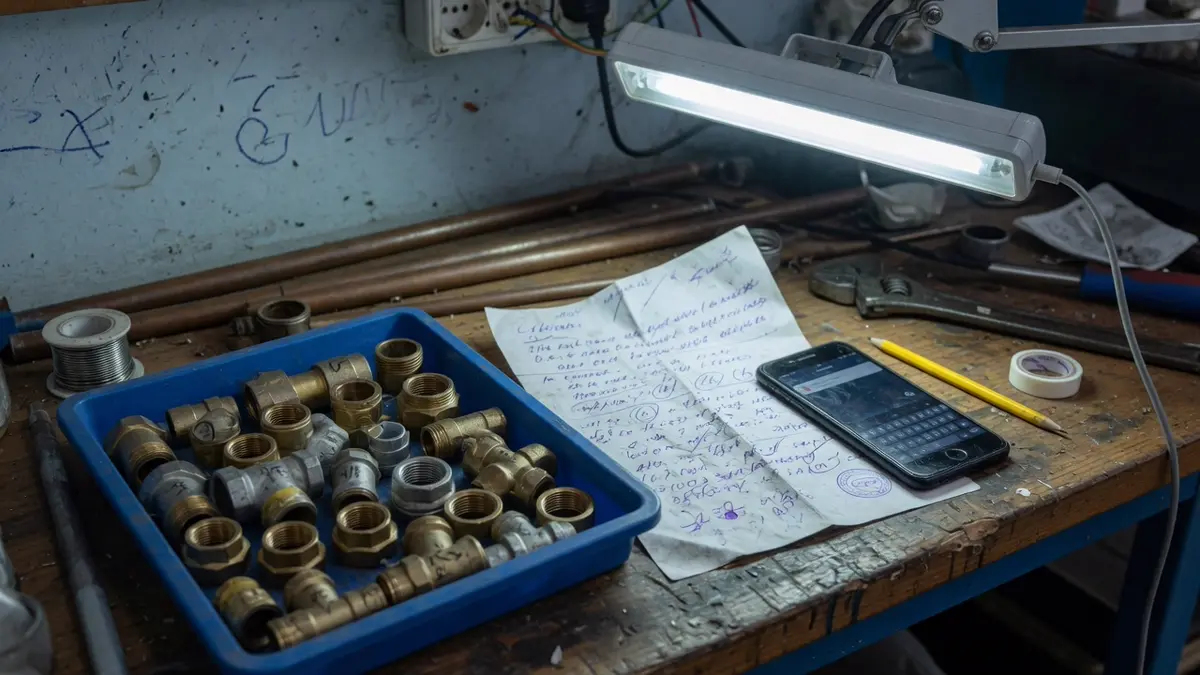
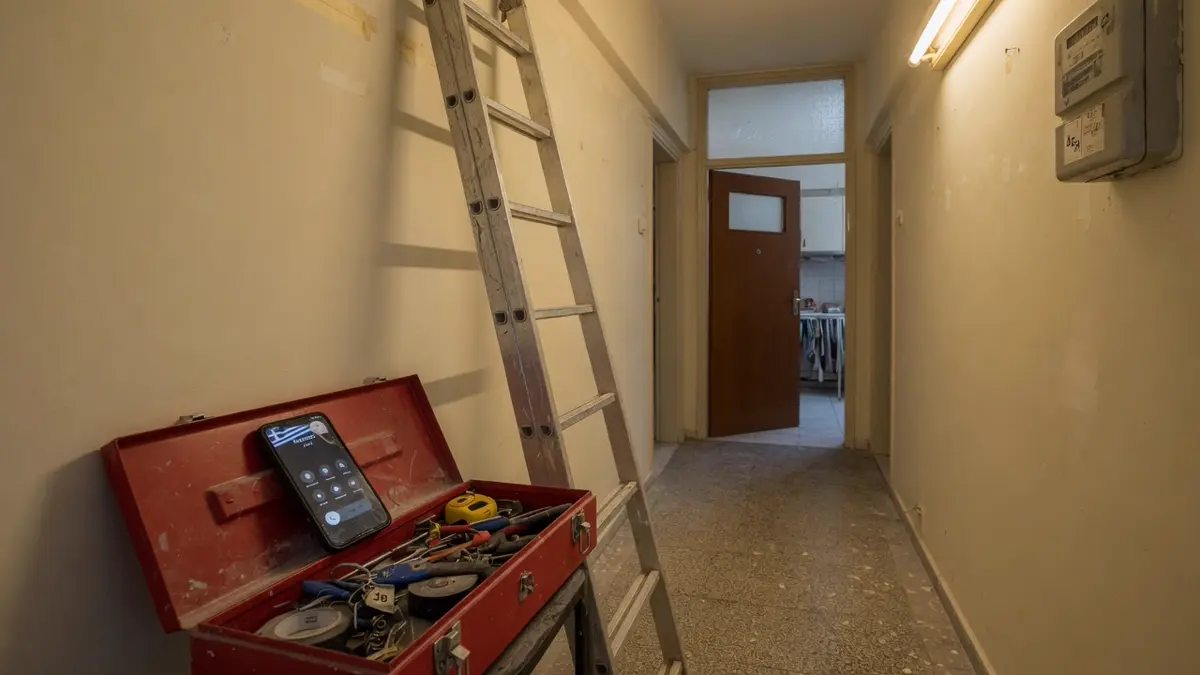
You are on your back under a kitchen sink in a Greek apartment. The trap is off. Both gloves are wet. Or you are on a short ladder in a hallway, both hands above your head at a fuse board. The phone is in your pocket, or on the cabinet floor, or on the dash of the van two floors down.
You cannot pick up. There is no desk. There is no second person waiting to take the number. The person who would have answered is the person whose hands are in the work.
These calls do not arrive in a neat line. People ring when they get home and the water is cold, or in January when the boiler dies, or in August when the air-conditioning trips the board, or on a Sunday when a pipe goes during lunch. A second pair of hands you take on for Wednesday mornings is not standing next to you on Sunday. A second number that rings the same wet pocket does not help the third caller. You still cannot let go. The caller with water through a ceiling will not wait on voicemail. Neither will the one who wanted two sockets for a kitchen. Both dial the next number they found.
Emergency or booked — ask that first
Emergency. Water still running. No power in the flat. A smell of burning. Gas, if you do gas. These are not appointments. The assistant takes the address, the floor, what the caller can see, and whether it is still running or still dead, and it puts that on the phone you named. You decide whether to leave the job you are in. The assistant does not decide that a dark flat is just a fuse. It does not decide that water on a ceiling is the upstairs neighbour’s problem.
Booked work. A new bathroom. Extra sockets. Move a water heater. A building manager who wants the stairwell lights and a look at the roof tank. A kitchen that will be ready in two weeks, once the tiles are in. These can wait for an hour that is actually free.
Write the emergency list the way you would tell a new hire on their first Saturday. Short. Concrete. If it is on the list, ring a human. If it is not, treat it as a job. Do not let the assistant “fit in” a leak at 14:00 over a booked kitchen. The kitchen then runs late and the leak still waits.
A caller who says “can you come now?” is not always an emergency. They want the water heater looked at this afternoon because they are home. The assistant still asks whether anything is running, whether anything is dead, whether they smell burning. If the answers are no, this is a booked look, not a now.
Do not invent when you will arrive
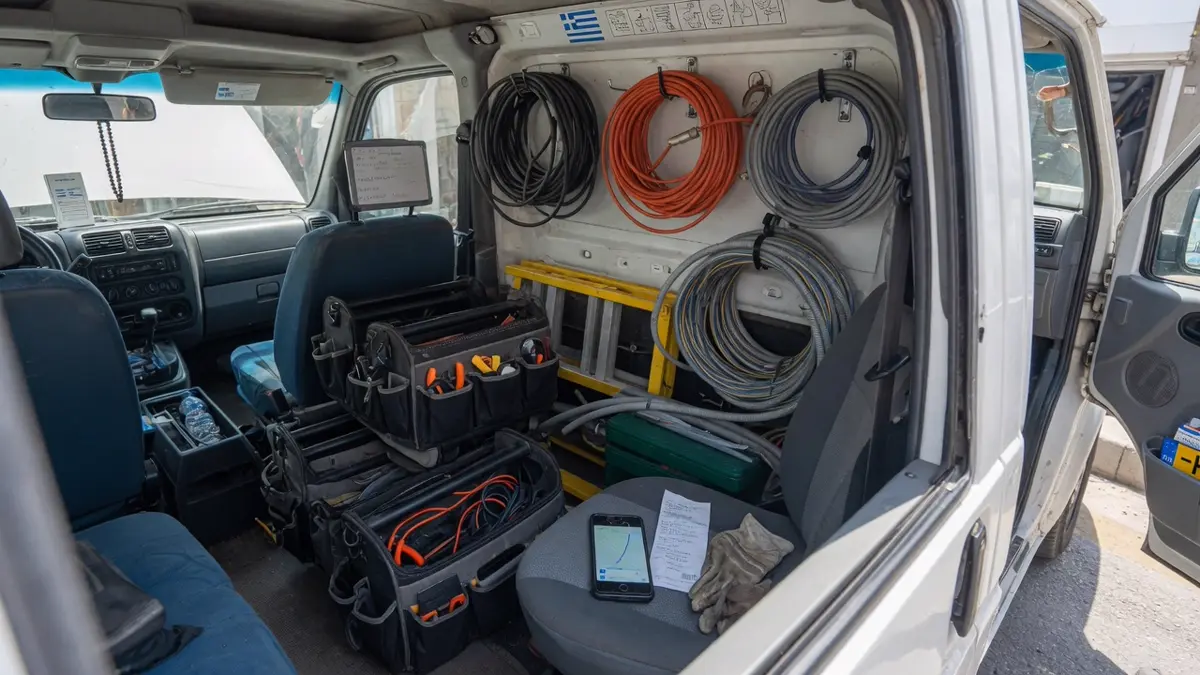
You know this already. You are under a sink in one building. The part may not be in the van. The street may be pedestrian. The building manager may have the only key to the shaft, and they are not there until the morning. “Twenty minutes” said from a script is a number the caller will hold you to.
The assistant never names an arrival. On an emergency it says someone who can see where the van is will call. That is you, or the second pair of hands, looking at the map and at the job you have open. On booked work it offers a window you actually use — a morning, an afternoon, a dated hour if that is how you write the book — only after the calendar says that window is free.
If you run a “between nine and twelve” window, write that window down. The assistant repeats it. It does not tighten it to 9:20 to sound helpful.
A price you cannot give from a description
A leak under a sink and a new bathroom are not the same job. A “new socket” in a 1970s block may be twenty minutes or a morning of chasing. A water heater on a balcony is not the same as one in a shaft you have not seen.
The assistant does not quote. It can repeat a published call-out you gave it, if you actually publish one and you want that number said. Unseen work does not get a figure. It takes the address, what they want done, and, if you ask for them, photos by SMS. Then a callback or a visit. You price what you have seen.
Whatever figure you type into the notes, the assistant will say. A caller who heard it on your number will hold you to it. Keep bathroom and rewire figures out of the notes until you have opened the wall. A building manager who wants “a price for the stairwell and the tank” is the same rule: a visit, the keys, a time you can stand in the shaft. Not a number for a riser nobody has seen.
Electrical, plumbing, or both
Some of you are electricians. Some are plumbers. Some do both. Some will look at a communal riser. Some will not do gas. Some will change a tap and will not touch a board.
The assistant has to know the list. A gas boiler should not be booked onto an electrician who does not touch gas. A plumbing-only van should not take a dead board as if it were theirs — unless you have written that you will look, and then send it on. Say it the way you would tell a neighbour who keeps giving out your number. If the list is empty, it will take work you then have to refuse from the landing.
The job you are already in
You are in the middle of a pipe, or in the middle of a board, in someone else’s kitchen. A second emergency arrives. Only you know whether you can leave. The assistant must not treat the second now as a booking. It rings you. You say you are coming, or you say you cannot leave, and a human calls the second caller back.
A booked job that is already in the book is not less real than a new leak. The assistant does not cancel Thursday’s bathroom because a caller sounded urgent. It flags you. You move the book, or you do not.
If a caller needs to move a booked job — the tiles are not in, the kitchen is delayed — that is a change in the calendar, not an emergency. The assistant checks what is free and writes the new time. It does not offer the old Thursday to the next person until the change is in the book.
After hours
Plenty of you take evenings and Saturdays. Some of you take a leak at eleven at night. Some of you do not, and you have always said so. Write the hours. After-hours emergency still goes to a human. It does not become a promise that you will be there at midnight if you are already in bed, or already in another building. If you do not run nights, the honest answer is the next hour you do run, and a note on the phone you named so you see the leak at seven.
A Saturday booked look is not an emergency just because it is Saturday. Water running or board dead: you. A bathroom quote: the next free window, which may be Tuesday.
Buildings, keys, and where to leave the van
Greek apartment blocks. A street-door code. A fuse board on the landing. A water heater on a balcony. A roof tank the building manager opens on Tuesday mornings. A pedestrian street where the van needs ten minutes to find a place.
The assistant should take the address, the floor, the code if there is one, and who will be in. It should not promise that you can get into the shaft, or a parking space. Those are two more reasons it must not invent “twenty minutes”.
A tenant who is not Greek will often ring in English, Albanian, or Russian. The building manager may ring in Greek about the same riser. The assistant answers in the language of the call. The note still has to name the building and the floor, not a summary that lost the code.
How CITT handles it
- Your number stays on the van. A forwarding rule at the provider sends what you do not answer. Calls you pick up never leave, and are never charged.
- Every line is answered at once. A morning burst is a set of conversations, not a stack of busy tones.
- It knows the trade you described. Electrical, plumbing, or both. Whether you take communal work. Whether you run evenings. The emergency list. The hours.
- It asks emergency or booked first. Water still running, power still out, smell of burning — those ring a human. The rest wait for a free hour.
- It checks the real calendar before it offers a time, and writes the job into the same book you already use.
- It confirms by SMS, in the language of the call — 70+ languages — and can remind before a booked visit.
- It escalates what cannot be finished on the call — a leak, a dead board, a communal quote, a complaint about last week’s work — as a tagged note to the phone you named, not as a guess.
- You get the transcript, the summary, and the job the caller named.
What it will not do
It will not invent an arrival time. Someone who can see the van says when they can come.
It will not invent a quote. A bathroom, a rewire, a socket in an old block, a roof tank — those wait until you have seen the job. A published call-out is the only figure it may repeat, and only if you gave it that figure to say.
It will not diagnose. It does not say the capacitor, the riser, or the neighbour above. It writes down what the caller can see.
It will not book an emergency as a free hour on Thursday. It will not take gas, communal work, or the other trade if you said you do not. It will not decide that you will leave the job you are in. It rings you.
It will not give a safety lecture it invented. If you want a stopcock line, or a line that says stay away from the board if they smell burning, you write that line. The assistant repeats it.
What these calls sound like
The order is the emergency question, then the address, then — only if this is booked work — what they want done, then a time the calendar can honour, then the confirmation. No price for unseen work. No “we can be there in twenty minutes”. No “we can squeeze you in at twelve” over a job that is already open. If it books a leak into Thursday, the caller in Kypseli is still waiting and you still do not know. Put that caller on your phone while you are still under the sink.
What you set up first
Put the assistant on the number on the van with a forward-on-no-answer rule, so a free pair of hands still takes the call. Then the emergency list, what you actually take, the hours — including the hours you do not run — and the two refusals: no invented arrival, no invented quote. Give it a published call-out only if you want that number said. Add how you write the book, who is the second pair of hands if there is one, and the phone that should ring when a leak comes in.
Rates live on the pricing section of the home page. They are not repeated here.
AI receptionist, in-house staff, or a call centre
| CITT | In-house | Call centre | |
|---|---|---|---|
| Hands on a ladder or under a sink | Every line answered at once | Only if they can let go | Depends who was rostered |
| Water running or a dead board | Rings a human now — not a booking | Yes, if they hear the phone | Often takes a message |
| Invents an arrival time | Never | Sometimes, to get off the call | Risk, if the script wants a time |
| Quotes unseen work | Never — takes the request | Can refuse until they see it | May read a list price |
| Booked bathroom or extra sockets | Checks the book, offers a free time | Yes, if they can pick up | A message, usually |
| Building manager, communal work | Visit or callback — not a phone price | Yes | A note |
| Speaks the caller's language | 70+ languages | One or two | Whoever is on that shift |
| What it will not do | Name an arrival or a price it cannot see | Can look at the job | Reads whatever is on the sheet |
What one unanswered weekday morning costs a one-van trade
Worked from these assumptions — change any of them and the answer changes:
- One van, a normal weekday. You are on a ladder or under a sink for a long stretch of the morning.
- About 12 inbound calls that day. Four arrive while both hands are busy: one leak, two quotes, one water-heater look.
- A booked half-day that becomes work is worth about €220 of labour here — put your own average ticket in first.
- An emergency call-out, before parts, is about €80 here. Replace that with what you actually charge to walk in the door.
- This example assumes the leak caller and one of the quote callers do not call back.
- Four calls reach nobody in one morning.
- The leak caller dials the next van. One quote caller does the same.
- €80 + €220 = €300 of work that morning that never reached you.
- A morning like that once a week, 46 weeks — 46 × €300.
About €13,800 a year on those assumptions. Change the ticket, the call-out, and how often a morning like that happens.
What it costs
CITT is pay as you go: no packages, no minimum, no contract. The current rates — the monthly fee per number and the per-minute rate — are on the pricing section of the home page, which is the only place they are published.
Frequently asked questions
Do I have to change the number on the van?
No. The number on the van, the cards, and the Google listing stays yours. You add one forwarding rule — every call, or only the ones still ringing after the seconds you choose. If you pick up, the call never leaves and is never charged.
Will it tell someone you will be there in twenty minutes?
No. On a leak or a dead board it puts the call in front of a human who can see where the van is. That person says when they can come, or that they cannot leave. On booked work it offers a window the calendar can honour, and nothing tighter to sound helpful.
Can it give a price for a new bathroom or extra sockets?
It can repeat a published call-out you told it to say, if you actually publish one. It must not invent a bathroom price, a rewire, or “a socket is usually this”. A 1970s block and a new build are not the same morning. It takes the address and what they want done. You price what you have seen.
What counts as an emergency, and who decides?
You write the list. Water still running, no power in the flat, a smell of burning — those are the usual three. Add gas if you do gas. The assistant does not decide that a dark flat is “just a fuse”. It takes the address, what they can see, and rings you. You decide whether to leave the job you are in.
We only do electrical. What happens to a leak?
Say so in the notes. A plumbing call gets a clear no, and, if you want, a name you actually recommend. The same in reverse if you only do plumbing. Do not let it book a leak onto an electrician who will have to send them on.
What do we see after a call?
A transcript, a short summary, and the facts it collected — emergency or booked, address, floor, door code if they gave one, whether a time was written in. Confirmations go out by SMS in the language of the call. An emergency is flagged to the phone you named.