Outbound salon calls that refill Saturday colour
Quick summary
- Friday afternoon the assistant texts Saturday colour — the service, the stylist, the time, and the four-hour cancel line.
- A cancel inside four hours should start a call to the next person who asked for that chair.
- Keep three short waitlists: colour, cut, nails. A freed colour block is not a gel fill.
- It only offers a time the calendar has just shown as free, or it does not call.
- A colour refresh follows the last service and how that hair grows, not a printed interval on a card.
- It will not quote a colour price before anyone has seen the hair, and it will not talk about skin.
TL;DR
Saturday colour is decided late. People cancel on Friday night and Saturday morning. A client who rings at ten to drop a two o'clock colour is still inside the four-hour window, and that chair can still go to the person who asked last week. The stylists cannot ring them. Both hands are in the foils. The assistant texts tomorrow's colour book on Friday, checks the calendar when a cancel lands, and offers that exact time to the next matching name. It will not quote a colour price, give skin advice, or offer a walk-in hour as booked colour.
Key takeaways
- Turn on Friday texts for Saturday colour before you turn on any other outbound.
- Keep a short waitlist per service family — colour, cut, nails — so a cancel has someone to call.
- Only offer a time the calendar has already shown as free.
- Build the refresh list from the last colour date and the work that was done.
- Write one sentence they can use to be taken off the list, and honour it.
- Never use outbound to suggest creams, peels, or anything that sounds like a skin examination.
Saturday at ten, a two o’clock colour gone
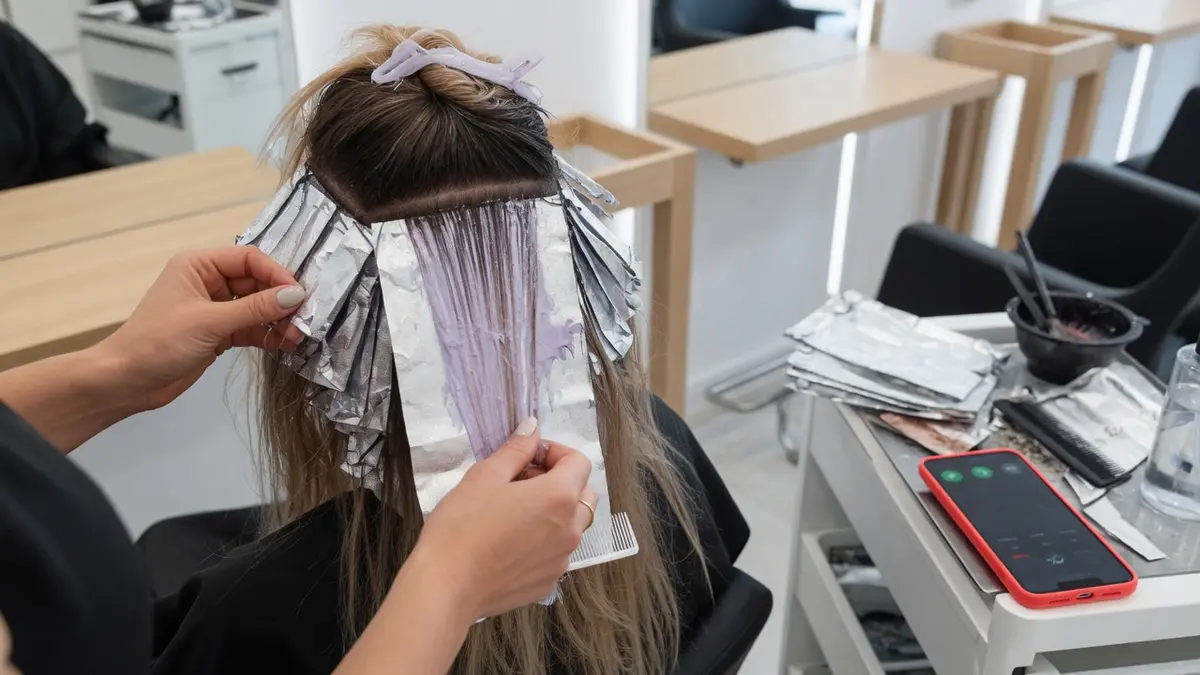
Saturday at ten. A client rings to cancel colour at two. The four-hour window most of you already say out loud still covers that chair. The person who asked for Saturday last week is in a notes app on the desk. Anna cannot ring them. Both hands are in the foils. The colour on the next client is still on. Someone is walking a client to the dryer.
That is the outbound job in a salon. Three things the stylists cannot do with wet gloves: text tomorrow’s colour book on Friday, ring the next matching name when a cancel lands inside four hours, and later offer a time to people whose last colour is actually due. It is not a Tuesday ring-round of everyone in the book.
The first rule is the same on every one of those calls. The assistant only offers a time the calendar has just shown as free. A call that says “we can do Saturday” without looking is how you get two clients for Anna at two, or a voice offering a walk-in hour you had closed. The offer is easy to refuse. Nobody is told they are overdue.
What goes wrong when you try it by hand
The Friday text does not go out because the person who would send it is still finishing a toner at close. People then walk in on Saturday having had no reminder. They cancel when they see the weather, when a child is ill, when they simply change their mind. You hear about it at two, when the basin is already empty.
The next name is a note under the till, or a name in the Instagram inbox. When the cancel lands, nobody can pick the phone up. By the time a pair of hands is free, the person who wanted Saturday has sat down two doors down, or has made other plans. A four-hour window with nobody to ring is an empty chair you already knew about.
When someone does ring out, the wrong offer is easy. A freed colour block goes to someone who wanted a gel fill. A long-hair full colour is offered into a gap that was a root touch-up. Anna’s Saturday is offered as if the junior could take foils. A walk-in hour is offered as booked colour, and at noon a queue and a balayage meet at the same basin.
Friday afternoon, tomorrow’s colour book
Saturday colour is decided late. A reminder on Friday afternoon — SMS first — cuts the no-show, and it moves the indecisive cancel into the four-hour window in time for you to offer the chair.
Voice is optional here. Many clients would rather have a text. The message names the service and the stylist, and it repeats the four-hour line.
“Colour with Anna, Saturday 14:00. If you need to change it, please tell us at least four hours ahead so we can offer the chair.” That is the whole script. Do not put a shampoo under it. Friday night is not the moment to mention retail.
Send the batch before the team leaves. A text at 21:00 can still reach the client. A cancel after close can still be offered by the assistant. What you do not want is a reminder so late that the first person who could have filled the chair has already gone home, and the calendar cannot be written.
Name the work. “Colour” is not enough if Anna is doing a root touch-up for one client and a full colour for another. The Friday text should match what is in the book: root touch-up, full colour, foils, toner, cut and blow-dry, gel fill. If the book is wrong, the four-hour cancel lands on the wrong waitlist.
The next name after a four-hour cancel
A client who rings at ten to cancel a two o’clock colour is still inside the window. That chair can still go to the next person who already asked for that service and that day.
Keep three lists: colour, cut, nails. Offering a freed colour block to someone who wanted a gel fill wastes the only hours you had. Permission belongs on the list: they asked to be told if something appeared. A name copied from the Instagram inbox is not permission.
When the cancel lands, the assistant checks the chair is actually free, rings the first matching name, offers that exact time, and writes the booking only after they say yes. If they say no, it tries the next name. If the chair is taken while it is ringing — a walk-in sat down, someone at the desk booked it — it says so and stops. Do not confirm a time that has already gone. Both people arrive.
Do not call the same person about two different gaps in the same week. Do not call anyone who asked to be left alone. Write a one-line opt-out and treat it as a real instruction.
The waitlist entry has to carry the facts you already need on the way in. What they asked for: cut, colour or nails. Which colour, if it is colour: root touch-up, full colour, foils, toner. How long the hair is — above the shoulder, past the shoulder, mid-back. Which stylist they will accept. A list that is only a name and a number is how a long-hair colour is offered into a forty-five-minute gap.
If those facts are missing, the assistant asks before it offers the time. Long hair that has never been dyed is not a root touch-up. If the freed chair is a root touch-up on short hair, and the next name is a full colour past the shoulders, that name is not next. If the stretch is too short, offer the next colour time that fits, or take a callback.
Who does the work still matters. Anna takes colour. Someone else takes cuts. If only one person does balayage, a Saturday balayage can only go on that person’s hours. If the junior does blow-dries and not foil work, the assistant must not offer the junior for highlights. A cancel on Anna’s colour book is Anna’s chair, not a spare hour on the nail desk.
A mixed booking is the longer of the two, in the right order, on a person who does both — or on two people whose hours actually meet. If the freed chair is only long enough for the cut, the assistant says so. Write who is in, who does colour, who does nails, who is off, and the last start for a full colour. The assistant will honour a list it can see.
Hours you must not offer
If you protect a Saturday walk-in window, the assistant has to know it exists on the way out as well as on the way in.
A cancel that frees 11:00 on a Saturday you have marked as walk-in is not a colour chair to sell down the waitlist. Those hours stay off the colour book. The assistant can tell the next name you are taking walk-ins until a time you set, or offer the next bookable colour time outside that window.
A cancel that frees 17:30 is a different problem. The waitlist is thinner. People have already made other plans. A long-hair colour at that hour may not fit before you stop. Put a last-start time on colour, separate from close. Cuts can often run later. A full colour on long hair cannot. If the freed chair is too late for the work, the assistant says so and offers the next real colour block, or it texts the waitlist instead of promising the evening.
Mark those hours in the calendar the way you mark a stylist’s lunch. The assistant will honour a mark it can see.
After the team has gone
The reminder batch should go out before the team leaves, not at 21:00. Voice refills after close are possible — the assistant does not need a pair of free hands — but the confirmation still has to land in the book you already use. If the calendar cannot be reached at 20:00, it does not confirm a Saturday colour. It takes a callback for first thing.
A cancel at 21:00 for a Saturday at 11:00 is still inside four hours. The chair is free. The next name can still be offered. What must not happen is a yes that never reaches the book, so the desk opens and finds two names on the same chair.
The confirmation is always a text, in the language of the original booking. A caller who booked in Greek gets the SMS in Greek. A caller who booked in English gets it in English. The assistant works in 70+ languages. If they say yes on the voice call and then the text fails, the desk still needs the booking: the transcript, the service, the hair length, the time, the stylist.
When the last colour is due
Colour grows out. A root touch-up, a balayage and a toner-only blonde are not due at the same interval, and some clients will tell you they never want to be called. Build the list from the last service you actually did, the interval you use for that work, and an explicit willingness to hear from you.
The call offers a time, or it offers to find one. It does not say “you are overdue”. It does not diagnose the roots it cannot see. “It’s been about six weeks since Anna did your roots — she has Thursday at 16:30 or Saturday at 11:00, would either work?” The times have already been checked. If neither works, it takes a callback.
Skip anyone whose last visit was a correction, a complaint, or a bridal trial that has not yet turned into the day. You take those. A first colour that still needs a patch test is not a refresh. Follow the patch-test rule you wrote down.
Do not pour every past colour into one list called “due”. A toner at four weeks and a balayage at twelve are not the same invitation. If you are not sure of the interval, do not call. If they say no, take them off. If they say not this month, leave them alone until the date they gave you.
What the assistant must not say
It does not recommend creams, peels, or a check of a mark. If the client raises a skin question — a rash, a mole, a cream — the assistant takes a note and gets off the line. Beauty work is not a skin examination. It can book the facial or wax you actually offer. It cannot say what a mark is, what cream to use, or whether something needs a doctor.
It does not quote a colour price to win the booking. The offer is a chair and a time. Hair length, previous colour, and whether this is a correction all change the work. It can repeat a published menu item you gave it — a blow-dry, a gel fill, a listed cut. Do not give a number for colour nobody has seen. If a figure must not be said until someone has seen the hair, do not give the assistant that figure. It will read the number out.
It does not chase a no-show with a lecture about the four-hour window. One new offer, once, to a regular. Then try the next name. It does not ring the whole book on a quiet Tuesday to see if anyone wants a cut. That is how people start ignoring the number.
A complaint about last week’s colour is the same on the way out as on the way in: take the name, take what they said, put it in front of you. Do not offer a free redo from the phone. You look at the hair.
What these calls sound like
The order is who you are, why you are ringing, the exact time, then the length of the hair if you do not already have it, then the booking, then the four-hour window said out loud. There is no colour price.
If she asks what it costs, you cannot give a colour price before someone has seen the hair. The time is held for the work she named. If she says no, thank her and try the next name. If she says yes, write it in, text the confirmation, say the four-hour line. Then stop.
What you set up first
- Friday SMS for Saturday colour, with stylist, service, time, and the four-hour sentence.
- Three waitlists, permission-based, by service family — colour, cut, nails — with hair length and who they will accept stored on the colour names.
- The cancel-to-call path: a chair released inside four hours becomes an outbound to the first matching name, after a calendar check.
- The hours it must not offer: the Saturday walk-in window, and the last-start time for colour, separate from close.
- A refresh list built from last colour and your interval, with anyone who said no taken off, and corrections, complaints and bridal trials left for you.
- The refusals — no retail, no skin, no invented colour prices, no second call in a week, no lecture after a no-show.
Give the assistant the published prices it may repeat — the blow-dry, the gel fill, the listed cut — and do not give it a colour figure it would read out. Write one line that forbids skin, mole and rash advice. Add opening hours, who is in on Saturday, where to park, how to find the door.
Then listen for a week. Every outbound transcript, Friday through Sunday. Check that every offered time existed, and that the voice still sounds like the salon.
Rates live on the pricing section of the home page. They are not repeated here.
AI receptionist, in-house staff, or a call centre
| CITT | In-house | Call centre | |
|---|---|---|---|
| Friday reminder for Saturday colour | SMS first, voice if you want | If someone remembers at close | A scripted evening shift |
| Fills a four-hour cancel | Calls the next matching waitlist name | Rarely — they are in gloves | Slow, often next day |
| Offers a time already free in the book | Yes — or it does not call | Yes | Often says they will find something |
| Asks hair length before a colour offer | Yes, if you stored it or it asks | Yes — they remember the hair | Uses a flat menu time |
| Refresh from last colour | From your list and dates | From memory of regulars | A bought list |
| Colour price or skin on the call | Not permitted | Can look at the hair | Tempted to read a list |
Refilling one Saturday colour from the waitlist
Worked from these assumptions — change any of them and the answer changes:
- One Saturday colour book of 12 booked colour services.
- Say three of those cancel in a month with more than four hours' notice — put your own cancel count in.
- You keep a waitlist of people who asked for Saturday and were told it was full.
- The assistant reaches two of the three waitlist names and one of them takes the chair.
- That colour is worth about €85 to the salon — put your own chair figure in first.
- Three early Saturday cancels a month, one refilled from the waitlist.
- 1 × €85 = €85 recovered that month, from a call that happened because a chair became free.
- Over 12 months — 12 × €85.
About €1,020 a year from one refill habit, before counting the Friday texts that stop the no-show in the first place.
What it costs
CITT is pay as you go: no packages, no minimum, no contract. The current rates — the monthly fee per number and the per-minute rate — are on the pricing section of the home page, which is the only place they are published.
Frequently asked questions
Will clients find outbound calls pushy?
They find an unsolicited retail call pushy. They do not find “Anna has a colour chair at two tomorrow, you asked us last week” pushy, if they asked. Keep the waitlist permission-based, say in one sentence that they can be taken off it, and do not call the same person twice in a week about two different gaps.
Should it call or text?
Text first for reminders. Voice for a chair that has just become free, because four hours is not enough time to wait on a reply, and for the older colour list where a conversation beats a forgotten SMS. The confirmation of a booking they just made is always a text.
Can it sell retail on the call?
No. Outbound here is a chair, a time, a name. The moment the script starts recommending a shampoo or a cream it has left the job, and it is one step from skin advice. If a client asks what to buy, the assistant takes a note for the desk.
What about people who no-showed last Saturday?
A single, polite offer of a new time is reasonable if they are a regular. A chase is not. Do not let the assistant lecture them about the four-hour window on an outbound call. That conversation belongs to a human, if it belongs to anyone. One offer, then try the next name.
How do you know when a colour is due?
From the last service you actually did, and the interval you use for that work. A root touch-up, a balayage and a toner-only blonde are not due at the same time. Some clients will tell you they never want to be called. Build the list from those three facts. Do not tell anyone they are overdue. Offer two real times, or offer to find one.
What if the time is taken while it is ringing the waitlist?
It checks again before it offers, and if the chair has gone it says so and offers the next real gap or takes a callback. Confirming a time that disappeared during the call is how you get two people arriving for Anna at two.