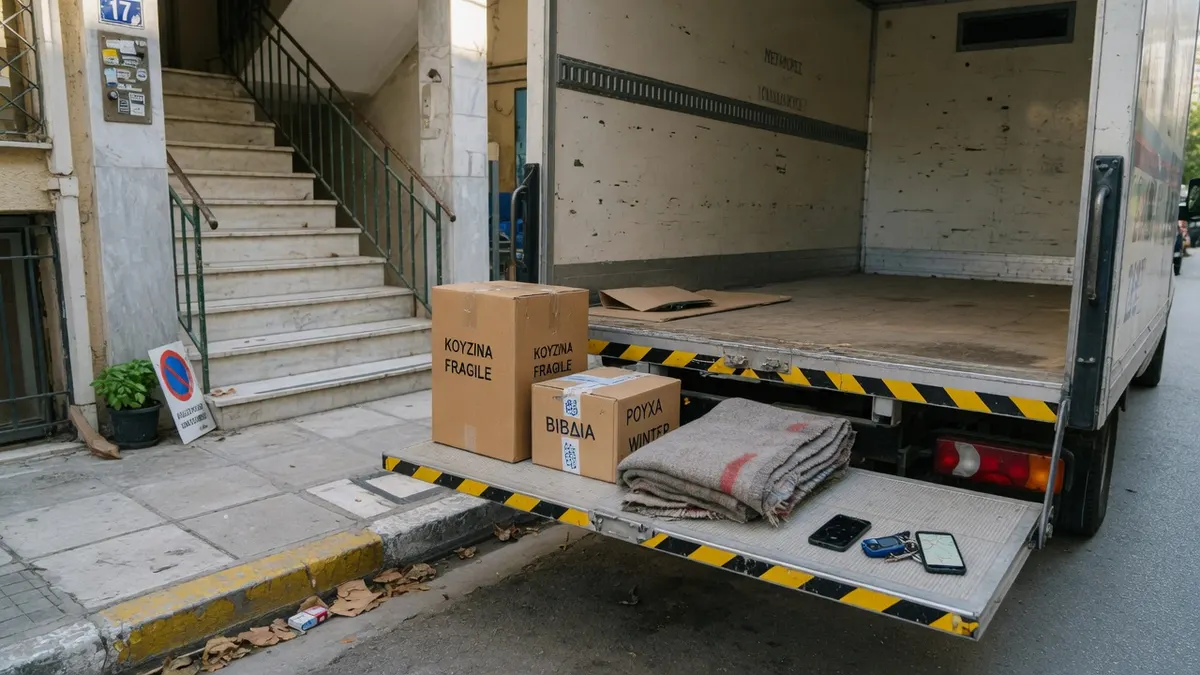
AI phone receptionist for moving companies

Quick summary
- The crew is already on a fourth-floor walk-up, or the truck is blocking a one-way street.
- Date, lift or stairs, street permit — those are three facts, not a price from a living-room photo.
- Packing still in boxes is a packing job plus a move. Saturday is not a van for loose clothes.
- A caller who needs the first of the month will not wait on voicemail. They ring the next firm.
- It checks your book before it holds a date, writes the job in, and texts the confirmation.
- It never names a figure from a WhatsApp picture. Volume is a visit or a room list you accept.
TL;DR
The sofa is on the stairs. The truck is in a one-way street. The phone rings. Someone needs the first of the month, the lift is not booked, the packing is still in wardrobes, and they want a price from a photo of the living room. Those are not one job. They will not leave a message. An assistant answers, asks the date, whether there is a lift, whether the street needs a permit, and whether packing is done. It holds a date only if that date is free. It never prices a picture. It does not invent a cubic metre from a sofa.
Key takeaways
- Put the assistant on the published number with a forward-on-no-answer rule, so a free pair of hands in the cab still takes the call.
- Teach it the first facts: date, from and to, lift or stairs — and do not let it jump to a price before volume is known.
- Then street access and packing. Give it the sentence: it cannot price a photo.
- Let it hold dates you marked and book surveys. Keep the figure, the piano, and a no-lift fourth floor as a callback after a visit.
- At month-end, shorten the ring-time before forwarding so overflow is caught before the third ring-out.
- Give it the line verbatim: the price comes after volume. It does not invent a cubic metre from a picture.
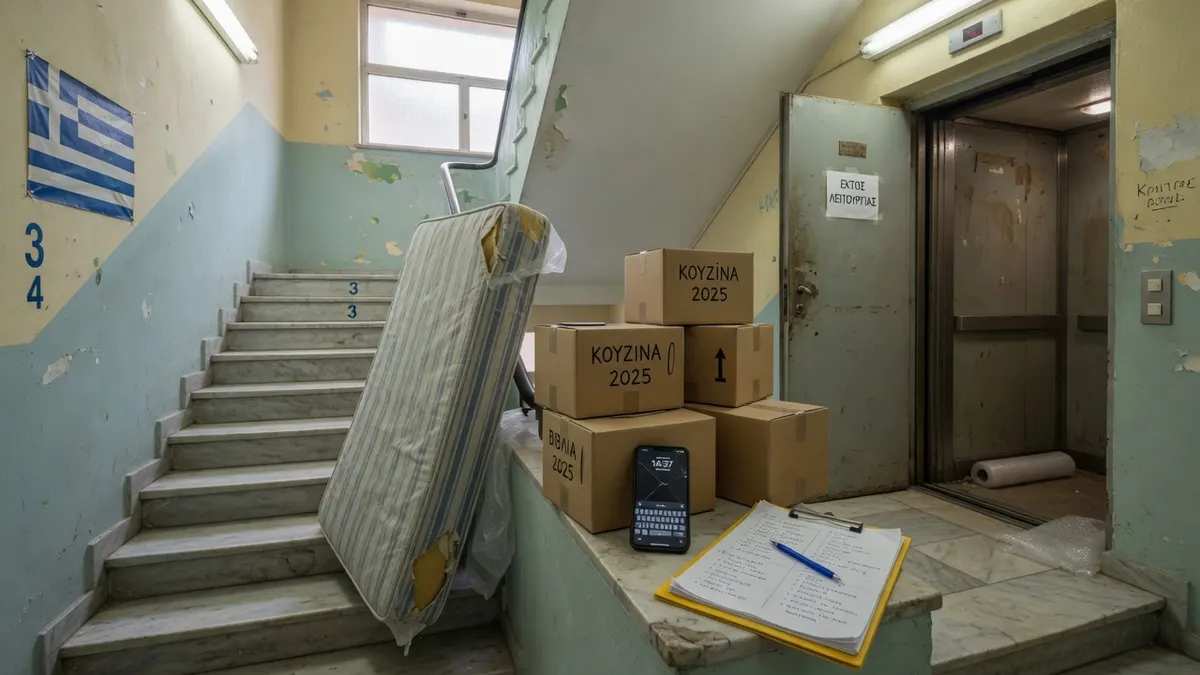
What an AI phone receptionist does in a moving firm
The sofa is on its side on the third landing. One of you has a shoulder under it. The other is in the street arguing with a motorbike about the tail-lift. The published number rings. You cannot put the sofa down for a ten-minute quote. The colleague cannot leave the truck across a one-way. There is no third pair of hands.
You put the assistant on the number already on the van and on the card in the mailbox. It answers when you cannot. Then it does one of two things. It books a survey that is actually free. Or it takes a note for a callback, with the date they asked for.
The first facts are the date, from and to, and whether there is a lift. A first-of-the-month two-bedroom is not a Saturday van for boxes already in the hall. A photo of a living room is not volume. An assistant that opens with “it usually costs…” will say a number you then spend the survey taking back, and will still not have asked whether the packing is done.
A caller who rang in English gets the confirmation in English. A caller who rang in Greek gets it in Greek. The assistant works in 70+ languages. The SMS follows the language of the call.
Sofa on the stairs, and the phone still ringing
One of you is already on a walk-up. The other is waiting for a building manager to free a lift that was booked for someone else. The number on the van still rings.
It is a burst. The last week of the month. The first of August, when leases turn. The Friday a landlord said the keys go back on Monday. A second line with the same two crews still leaves the third caller on a busy tone.
The person who needs the first will not wait on voicemail. They have your card and another firm’s card from the same search. They hang up and dial the next van. The person whose packing is still in the wardrobes, and who only realised that this morning, will not leave a message either.
Clients whose survey is already in the book will often wait. A person who cannot hold a date, and a person who cannot ask whether you pack, will not. If those two wait behind the sofa on the landing, the first of the month is gone, and the piano arrives as an angry call at six — or the next firm has already taken the flat.
Whoever walks the rooms often keeps the job. That is why a missed survey is not only a missed hour.
Date, lift, street — then packing
Date. The first of the month, a Saturday, the Friday the keys go back. The assistant asks the date first, then from and to. It does not hold a truck until it has checked the book you already use. A date that is already full is a callback, not a promise. Mark month-end weeks as their own load. A quiet Tuesday in February is not the same book as the last week of June.
Lift or stairs. Fourth floor without a lift is a different job from a ground-floor shop. The assistant asks which floor and whether there is a lift. It does not say the sofa will fit. It does not say how many extra hands. If they say the lift is reserved for another tenant that morning, write that on the note. The survey decides access. The phone does not.
Street permit. Centre streets, pedestrian lanes, a truck that cannot sit on a corner for two hours. The assistant asks whether the building is on a street that usually needs a permit. It does not tell them which office to call, and it does not say the police will tolerate the truck. It flags access for the survey. If you already know a street needs a permit, put that street in the notes as “ask about access”, not as a legal instruction.
Packing. Still in the wardrobes is packing plus a move. Boxes in the hall is a move. The assistant asks which. It does not say how many cartons they need. It does not tell them how to wrap a marble top. Mix packing and moving on the same Saturday without asking, and you send a van for a job that is still in drawers.
People remember the date. They do not remember to mention the piano until the morning. Ask date, lift, packing. One missing fact is still a survey, not a guess.
A sentence the assistant is not allowed to say
“I’ll send a photo — how much?” is the question on this phone. It comes from a living room, from a WhatsApp of a sofa, from a video of a hallway.
The assistant does not answer it. Not with a range. Not with “flats like that are usually…”. Not with a cubic metre invented from a picture. A sentence that sounds like a price, said on the recorded line, is a sentence the firm now owns, and the assistant cannot see the back rooms, the marble, the walk-up, or the street.
The line you give it is short: the price comes after volume. This call books a survey. It does not price a picture.
“Does the piano fit in the lift?”, “can two men do a fourth floor?”, “is € something enough?”, and “can you just look at the photo and tell me?” are still volume questions. The assistant names the topic so the callback is useful, and refuses the figure.
Do not put a tariff table in the notes. It will read the table out.
Month-end, Saturday, and everyone at once
Leases turn on the first. By the last week, people have started ringing about vans. You are already on a walk-up. The pad is already a list of surveys.
Saturday is a smaller version of the same hour. People who work all week want the van on Saturday. The book fills. A caller who has not packed is not a Saturday van unless you marked packing crews.
The assistant has to treat that burst as several conversations, not as a queue behind the sofa. A date in that hour is a hold only if the book is free, or a survey. If the assistant parks the person who needs the first behind the tenth photo-price question, that person rings the next firm.
Shorten the ring-time before forwarding in that week. The third caller should not hear a busy tone. A Tuesday in November is people asking about a Christmas move, and one person left in the office.
A volume nobody can give from a living-room photo
When someone sends a photo of a sofa and a bookcase, the tempting answer is a number. The assistant does not give one.
Rooms you have not seen, a basement they forgot, a marble table, a piano, packing not started, a street that will not take the truck: all of that changes the work. A number quoted before anyone has walked the flat is a number you then spend the morning of the job taking back.
It can repeat a published starting figure you typed in and marked as speakable — for example that a survey is free, or that you do not quote without a visit. Unseen fourth floors, pianos, island houses — those do not get a job price on this call. The assistant takes the request and books the survey.
If they press — “just a round figure, I have to tell the landlord” — the assistant still refuses. Book the survey as soon as a time is free. Flag it if the keys go back on Monday.
Piano, marble, island, ferry
Some of these callers have a piano, a marble table, a safe, or a house on an island the truck will not reach without a ferry.
The assistant is not on the landing. It cannot see the stair turn. It cannot see the lift door.
What it can take: piano or not, which floor, lift or not, from and to, whether the destination is on the mainland or an island. What it can repeat, if you typed the line in: a survey is required before a piano or a marble top is accepted. What it must not say: it fits, it does not fit, crane, how many extra hands, which ferry, or a price.
If they say the island has no truck, or the street is stairs only, that is still a survey flag, not a refusal invented on the phone — unless you wrote a hard no for that island. Do not let the assistant invent shipping.
A caller who is already packed, with a ground-floor shop and a date next month, is a survey that can be short, and a hold if the book is free.
Permits, keys, and “the lift is booked for someone else”
Street permit. They are in a pedestrian street in the centre, or a narrow island lane. The assistant takes the street and flags access. It does not tell them which form to file, and it does not say the truck can sit there for two hours.
Keys. The landlord wants the keys at twelve. The new tenant arrives at four. The assistant takes both times. It does not say you will finish by twelve. Duration is the survey.
Lift booked for someone else. Write it down. Do not let the assistant say “then we use the stairs” as if that were free. Stairs instead of a lift is a different job. The survey prices it. The phone records it.
August needs its own dates. Island weeks, ferries, crews already off. Do not let the assistant hold a first-of-August truck into a week when both vans are on a different island.
How CITT handles it
- Your number stays on the van and on the card in the mailbox. A forwarding rule sends what you do not answer. Calls the cab picks up never leave the firm.
- Every line is answered at once. A month-end morning is several conversations, not a stack of busy tones.
- It knows the firm you described. Local moves, packing or not, whether you take pianos, how a survey note should look, who is in on Saturday.
- It asks date, from and to, lift or stairs first, then packing and access, and only then looks at the book.
- It takes a photo-price as a refusal, in the caller’s words, and never as a cubic metre.
- It checks the real diary before it holds a date, and writes the survey into the same calendar the office already uses.
- It confirms by SMS, in the language of the call — 70+ languages — and can remind them who must be there with the key.
- It escalates photo-price, piano, no-lift fourth floor, and a Monday key-back as a tagged note or a transfer.
- You get the transcript, the summary, the date, lift or stairs, packing, and what the caller asked for.
What it will not do
It will not price a photo. It will not invent a cubic metre from a sofa. It will not say the piano fits in the lift. It will not say two men can do a fourth floor. It will not hold a Saturday the truck already has. It will not tell them which permit to file. It will not treat packing-still-in-wardrobes as a van for boxes in the hall. It will not confirm a ferry for an island house.
What these calls sound like
The order is the date, then lift and packing, then the survey or the hold, then the refusal said out loud. There is no figure over a WhatsApp living room. There is no “it fits” about a piano. There is no Saturday promised from a list of rooms.
If the assistant is friendly and still answers the photo with a number, you own that sentence. Put the person who rang about the first at 11:10 on a survey note, not on the next firm’s pad.
What you set up first
Put the assistant on the number on the van with a forward-on-no-answer rule, so a free pair of hands in the cab still takes the call. Then the date, the lift question, packing, and the sentence that forbids a price from a picture.
Write down what you actually do and whether you are taking new jobs this week. Give it the fields you want on every note: date, from, to, floor, lift or stairs, packing done or not, piano or marble, street access, island or mainland, who has the key. Mark two kinds of visit: a survey that needs you, and a job already priced after a walk-through.
Give it the same-day phone list: keys back tomorrow, a piano they only just mentioned, a truck already on that Saturday, an island with no ferry that week. Do not give it a tariff it would read out. Write one line that forbids photo-prices and invented volume. Add Saturday hours, month-end load, August island dates.
Rates live on the pricing section of the home page. They are not repeated here.
AI receptionist, in-house staff, or a call centre
| CITT | In-house | Call centre | |
|---|---|---|---|
| Answers while the sofa is on the stairs | Always | Only between carries | Yes |
| Several callers at month-end | Every line at once | One | Depends on the plan |
| Asks date, lift and packing first | Yes — before it looks at a figure | Yes | Often jumps to a range |
| Prices a living-room photo | Never — books a survey | Not from a picture either | Must not; sometimes does |
| Holds a Saturday the truck already has | Never — checks the book | If they remember the week | Often from last week's sheet |
| Speaks the caller's language | 70+ languages | One or two | Whoever is on that shift |
| What it will not do | Price a photo, invent volume, or book a street without asking about a permit | Sees the rooms, still does not quote from a picture | Reads a script |
What one unanswered month-end morning costs a two-truck crew
Worked from these assumptions — change any of them and the answer changes:
- Two trucks, the last week of the month, roughly 24 inbound calls before early afternoon.
- About a third arrive while both crews are already on a stairwell or waiting on a lift.
- Of the calls nobody reaches, 4 are local moves that still need a date this week or next.
- A local move that stays is worth about €380 to the firm — put your own figure in, this is the number to change first.
- This example assumes 3 of the 4 never leave a message and ring the next firm.
- 4 date requests reach nobody on a normal month-end morning.
- 3 of them do not call back.
- 3 × €380 = €1,140 of local work, that morning.
- Month-end weeks, over an 11-month year — 11 × €1,140.
About €12,540 a year, from the same month-end window repeating.
What it costs
CITT is pay as you go: no packages, no minimum, no contract. The current rates — the monthly fee per number and the per-minute rate — are on the pricing section of the home page, which is the only place they are published.
Frequently asked questions
Do I have to give up the dispatch number?
No. You keep the number on the van, the card in the mailbox and the Google listing. You set one forwarding rule — every call, or only the ones still ringing after the seconds you choose. If someone in the cab picks up, the call never leaves the firm and is never charged.
Can it give a price from a photo of the living room?
It must not. A picture of a sofa against a wall is not volume. It takes the date, from and to, lift or stairs, whether packing is done, and books a survey or a callback. A number said before anyone has seen the rooms, the piano and the street is a number the office then has to take back on the morning of the job.
Can it hold the first of the month if they only send rooms on WhatsApp?
It can hold a date only if that date is actually free in the book you connected, and only as a survey or a provisional hold you marked as allowed. It does not confirm a truck from a list of rooms typed in a message. If a price must not be said until you have walked the flat, do not give the assistant that price.
What if we are already on a fourth-floor walk-up?
That is the usual morning. The assistant answers the overflow. A date request becomes a survey that is actually free, or a callback. A caller who has not packed becomes a packing-plus-move note, not a Saturday van. At month-end, shorten the ring-time so the third caller is not listening to a busy tone.
Someone asks if the piano fits in the lift. Can it answer?
No. It takes that there is a piano, which floor, and whether the building has a lift. It does not say it fits, it does not say crane, and it does not say how to tip it on the stairs. The survey decides access. If they say the lift is already reserved for another tenant that morning, write that on the note.
What do we actually see afterwards?
A transcript, a short summary, the date they asked for, from and to, lift or stairs, packing done or not, and whatever was booked or left for you. Confirmations go out by SMS in the language of the call.