AI phone receptionist for gyms and studios
Quick summary
- The person who would pick up is under a bar, spotting. The desk is empty and the phone is ringing.
- Ask class, personal training or membership first — those are three different answers, not one booking.
- A trial visit is a lead for whoever is free, not a seat the assistant invents in tonight's class.
- It does not quote a membership price, and it does not say a class has a space unless your book shows one.
- It checks your calendar before it offers a trainer time, writes the booking in, and texts the confirmation.
- Evening after work is when the floor is full and the calls arrive.
TL;DR
Evening, after work. The only person who answers is spotting a lift. The desk is empty. The caller wants a class, a session with a trainer, or to join — three different questions. A trial is a lead, not a free seat in tonight's class. They will not wait on voicemail; they will ring the next gym. An assistant answers every line at once, asks class, trainer or membership, takes a trial as a name and a time for you to confirm, checks the real calendar before it offers a trainer hour, texts the confirmation, and does not invent a class space or a membership price.
Key takeaways
- Put the assistant on the existing gym number with a forward-on-no-answer rule, so whoever is actually at the desk still takes the call.
- Give it the three questions first: group class, personal training, or membership — and who takes which.
- Tell it a trial is a lead: name, number, a time that works, then a note for whoever is free. It does not drop them into a class.
- Connect the class list and the trainer calendar. If the list does not show a space, it does not invent one.
- Do not give it a membership figure to read out. The price waits until someone has been in, or until you have written a published figure it may repeat.
- Tell it not to give injury or training advice — it books visits, it does not write a programme.
What an AI phone receptionist does in a gym
An AI phone receptionist answers the gym number, talks the way a person at the desk would, and then does something with what it heard. It books an hour with a trainer, writes a trial down for whoever is free to meet the person, or repeats the hours and the class list you actually gave it.
The first thing it has to get right is which of the three the caller means. A group class, an hour with a named trainer, and joining as a member are not one booking with three labels. They go to different people. They end in different places in your notes. An assistant that jumps to a time will put a stranger on a members’ mat and leave a real trial standing in the lobby with nobody expecting them.
A caller who rang in English gets the confirmation in English. A caller who rang in Greek gets it in Greek. The assistant works in 70+ languages. The SMS follows the language of the call.
The empty desk and the person spotting the lift
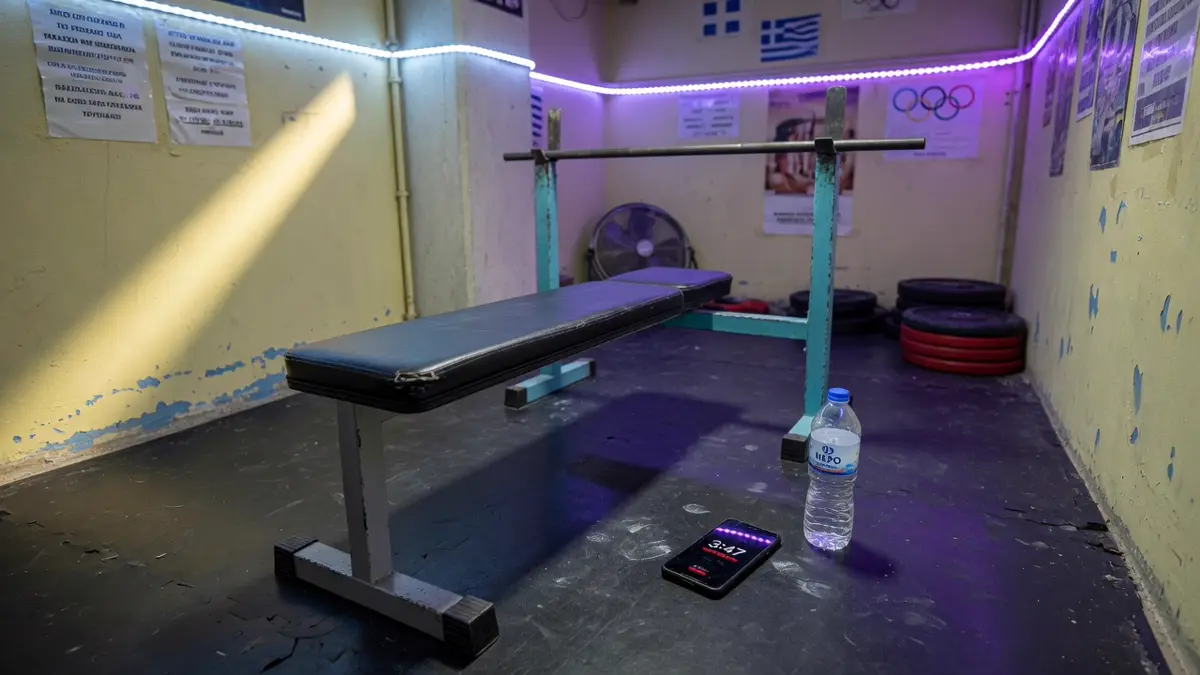
Half past six. Someone is under a bar. The only other person who works the floor has both hands on the steel, watching the elbows. The desk is empty. The phone rings.
Nobody can pick up. You do not take a call with a loaded bar over someone’s chest.
The calls come in the same hour the floor fills, after the offices close, when the people who would answer are counting reps or teaching. A second person hired for eleven in the morning does not touch that hour. A second line with the same two hands still leaves the third caller listening to a ring.
The person who wanted a trial is already scrolling. They have two other gyms on the same map. They are not going to leave a voicemail about wanting to start. They hang up and try the next number.
A small Greek gym often has no one whose only job is the desk. You train, you spot, you teach, you wipe the benches. The person who would have picked up is the person under the bar.
Class, trainer, or membership
Group class. A time, a room, an instructor, a cap. Pilates, spinning, functional, yoga — whatever you actually run. A member asking “is Thursday 19:00 full?” is asking about a list you can see, not about a guess. A stranger asking the same question is often asking for a trial and has not said so yet.
Personal training. A named person and an hour that person actually works. Kostas is not interchangeable with the next trainer on the board. If only one person takes new clients, a first session can only sit on that person’s hours. If someone is already with a client, that hour is gone.
Membership. This is not a booking. The caller wants to know whether you take people, what it costs, whether August is a freeze, whether a student rate still exists. None of that is a seat in tonight’s class. The first move is a trial or a callback with the person who closes members, not a time invented to sound helpful.
Ask which of the three it is before anyone looks at a clock. One sentence is enough: “Is this a group class, a session with a trainer, or are you looking to join?” The answer decides where the call goes. An assistant that skips it will treat every caller as a class booking, and you will spend the evening apologising to members who found a stranger on their mat.
A trial is a lead
A trial is how a small gym gets a new member. It is not a free seat the assistant invents in tonight’s hour so the call can end quickly.
If the assistant drops a stranger into a packed evening class, the members notice. The instructor did not plan a first-timer. Nobody is free to walk them through the floor. You never get the conversation that turns a visit into a member.
The assistant takes a name, a number, and a window that works. It writes that as a lead. It tells the caller someone from the gym will confirm the visit. You decide whether that visit is a short floor walk, an induction, or a first hour with a trainer. The assistant does not.
Do not tell the assistant to “just put them in a class if there is space.” It will hear that as permission to invent a space. If you do sometimes let a trial sit in a quiet morning class, mark those hours and those classes. The assistant will honour a mark it can see. If you do not mark them, it will fill the room.
A caller who already has a class pack, or who is already a member, is not a trial. Ask. “Are you already with us, or is this a first visit?” saves you from treating a paying member as a lead and a stranger as a member.
Who is on the floor
Write it down the way you would for a new evening hire. Who is in. Who teaches which class. Who takes personal training. Who takes a new person on a trial. Who is off. The assistant will honour a list it can see. If the list is empty, it will offer hours that nobody can actually take.
Many studios have one person who teaches pilates and another who only does strength. A Saturday pilates can only go on the pilates hours. A first trainer session can only go on the trainer who still takes new people. If the junior runs the floor at lunch and does not take trials, the assistant must not offer the junior for a first visit.
The person spotting the lift is often the same person who would have closed the trial. That is why the note has to land in front of them when the set is over, not disappear into a voicemail they will hear tomorrow.
If a class has no instructor in the building, mark it closed. An assistant that cannot see the change will keep offering a name who is not there.
Spaces you can see and spaces you invent
You cannot tell from the phone whether Thursday’s pilates still has a mat. Last week’s timetable is not a count. Inventing a space is how you get fourteen people in a ten-mat room, or a spinning class with no bike left.
The assistant only offers a class time if the list you connected shows a space. If it does not, it takes a request — name, class, a second choice — and puts that in front of whoever is free. It does not say “yes, come at seven” when the list does not show a space.
If you keep a waitlist, say so, and let the assistant add a name. If you do not, it should not invent one.
Drop-ins belong on the same rule. Some of you take them on quiet mornings and not on the evening peak. Mark the difference. An assistant that treats every hour as a drop-in will tell a stranger to come at 19:00 when the room is already tight.
Members moving a class are a booking change, not a new sale. The assistant checks the book and offers a time the list shows. It does not treat the freed hour as a trial seat unless you said it may.
A price nobody should read off the phone
When someone asks “how much is the monthly?”, the tempting answer is a number. The assistant does not invent one.
Student, couple, quarterly, a summer offer, a pause from last year that you no longer run — the figure changes. A number quoted before anyone has been on the floor is a number you then have to take back, often in front of the person you were trying to sign.
It can repeat a published item you gave it. A listed drop-in can have a board price. A class pack that is already on the wall can have a board price. An unseen membership cannot, not honestly, unless you have written one published figure and told the assistant that is the only figure it may say. Leave anything else to someone who can see the person and the current offer.
Do not put a membership tariff in the notes and hope the assistant will “use judgement”. It will read the number out. If a figure must not be said until someone has been in, do not give the assistant that figure.
A caller who wants to freeze for August, or stop, or move from a pack to a membership, is a request. The assistant takes the name and what they asked. It does not grant a freeze and it does not argue them into staying. You decide.
Injuries, programmes, and questions for a coach
A caller asks which class is safe for a sore knee. A caller wants a programme from the phone. A caller asks whether they should train through pain, or whether they need a clinician first.
The assistant does not answer those. A gym visit is not an examination, and a phone call is not a programme. It can book the class or the trainer hour you actually offer. It cannot say what a pain is, which exercise to do, or whether something needs a physiotherapist. Those calls are a note or a polite redirect. They are never advice.
For a first visit after a long break, follow the induction rule you wrote down. Some of you walk every new person through the floor before any class. Some of you put a first trainer hour in front of the classes. The assistant follows your rule. It does not invent one.
How CITT handles it
- Your number stays on the window. A forwarding rule at the provider sends what you do not answer. Calls the desk picks up never leave the gym.
- Every line is answered at once. An evening burst is a set of conversations, not a stack of rings.
- It knows the gym you described. Which classes you run, who trains, who takes a new person, whether you take drop-ins, where to park, how a trial works.
- It asks class, trainer or membership, then looks at the book. A time is offered only after that fact exists, and only if the list shows it is free.
- A trial is written as a lead, with a name, a number and a window, for the desk to confirm. It is not a class the assistant invented.
- It checks the real calendar before it offers a trainer hour, and writes the booking into the same book the team already uses.
- It confirms by SMS, in the language of the call — 70+ languages — and can remind before the visit.
- It escalates what cannot be finished on the call — an injury question, a freeze, a complaint, a membership they want to close now — as a tagged note, not as a guess.
- You get the transcript, the summary, and which of the three the caller named.
What it will not do
It will not invent a space in tonight’s class. If the list does not show a mat or a bike, it takes a request.
It will not drop a trial into a members’ hour so the call can end. A trial is a lead. You meet them.
It will not invent a membership price. A published drop-in or pack it may repeat. An unseen membership it may not, unless you wrote one figure and told it that is the only figure it may say.
It will not write a programme, name an exercise for a sore joint, or tell someone whether they need a clinician. That is a note, not advice.
It will not grant a freeze, a pause, or a cancellation. It takes the request. A human decides.
It will not offer a trainer who is off, or a class that has no instructor in the building. Mark the cover, or the assistant will keep selling a name who is not there.
What these calls sound like
The order is the three-way question, then the book, then the offer, then what happens next said out loud. There is no invented class space. There is no membership figure pulled from last year’s board. There is no “just come at seven, we’ll fit you in” over a full evening. There is no advice about a knee the assistant cannot see.
If the assistant is friendly and still puts a stranger on a members’ mat, you spend the evening on the floor sorting it out. Put the person who rang about a trial on the lead list, and put them in front of whoever is free once the bar is back on the pins.
What you set up first
Put the assistant on the number on the window with a forward-on-no-answer rule, so a free pair of hands at the desk still takes the call. Then the three questions and who takes which, the trial-as-lead rule, the class list, the trainer hours, and who is allowed to meet a new person.
Give the assistant the published prices it may repeat — a listed drop-in, a class pack already on the wall — and do not give it a membership figure it would read out. Write one line that forbids injury and programme advice. Add opening hours, who is in on a weekday evening, where to park, how to find the door, what you do in August.
Rates live on the pricing section of the home page. They are not repeated here.
AI receptionist, in-house staff, or a call centre
| CITT | In-house | Call centre | |
|---|---|---|---|
| Evening floor, empty desk | Every line answered at once | After the set, if at all | Depends who was rostered |
| Asks class, trainer or membership first | Yes — before it looks at a time | Yes | Often jumps to what time |
| Trial visit | Name, number, a window — you confirm | Yes, if someone is free to close it | Books a class or takes a message |
| Class space | Offers only a time the list shows | Yes — they can see the room | Reads last week's timetable |
| Membership price | Repeats only a figure you published | Can see the person and the offer | Reads a number from a sheet |
| Speaks the caller's language | 70+ languages | One or two | Whoever is on that shift |
| What it will not do | Invent a class space, quote an unseen membership, or write a programme | Can look at the person | Must not either |
What one unanswered evening costs a small gym
Worked from these assumptions — change any of them and the answer changes:
- One desk, one or two people on the floor, a normal weekday after work.
- Roughly 25 inbound calls. About half arrive between 18:00 and 20:30, when everyone who answers is already spotting, coaching, or teaching.
- Of the calls nobody reaches, 4 are new people asking for a trial.
- A new member who stays after a trial is worth about €220 on your books in those first months — YOUR figure will differ, and this is the number to change first.
- Three of those four callers ring another gym. They do not leave a voicemail about wanting to start.
- 4 trial enquiries reach voicemail on a normal evening.
- 3 of them join somewhere else.
- 3 × €220 = €660 of new-member work, from one evening.
- One such evening a week, over 46 weeks — 46 × €660.
About €30,360 a year, from people who rang while someone was spotting.
What it costs
CITT is pay as you go: no packages, no minimum, no contract. The current rates — the monthly fee per number and the per-minute rate — are on the pricing section of the home page, which is the only place they are published.
Frequently asked questions
Do I have to give up the gym number?
No. You keep the number on the window, the Instagram bio and the class posters. You add one forwarding rule with your telephony provider — every call, or only the ones still ringing after the seconds you choose. If someone at the desk picks up, the call never leaves the gym and is never charged.
Can it tell a caller what membership costs?
It can repeat a published figure you gave it — a listed drop-in, a class pack that is already on the board. It must not invent a membership price from a phone description. Student, couple, quarterly and summer offers all change the number. A figure quoted before anyone has been on the floor is a figure you then have to take back. It takes the request and books a trial or a callback, depending on what you allow.
Will it put a stranger into tonight's class?
Not if you connected the class list and told it a trial is a lead. It asks class, trainer or membership first. A new person who wants to try you is a name and a time for whoever is free, not a seat in a members' hour. If a member asks about a class, it only offers a time the list shows. If the list does not show a space, it takes a request rather than inventing one.
What happens when someone asks for a trial?
The assistant takes the name, the number, and a window that works for them. It writes that as a lead and tells them someone from the gym will confirm the visit. It does not drop them into a class from the call, and it does not close a membership on the phone. You meet them on the floor. That is how a trial becomes a member, or does not.
What if someone asks what to do about a sore knee?
The assistant does not answer that. A gym visit is not a physiotherapy consult, and a phone call is not a programme. It can book the class or the trainer hour you actually offer. It cannot say which exercise to do, whether they should train through pain, or whether they need a clinician. Those calls are a note or a polite redirect. They are never advice.
What do we see after a call?
A transcript, a short summary, whether they asked for a class, a trainer or a membership, and whatever was booked or left as a trial lead. Confirmations go out by SMS in the language of the call. You read the evening list the way you already read the paper book — except the people who rang while you were spotting are on it too.