AI phone receptionist for travel agencies
Quick summary
- One person is on hold with the airline. The person who would pick up cannot drop that line.
- Ask package, ferry or last-minute first — those go to different screens and take different times.
- A last-minute caller who gets voicemail hangs up and dials the next office on the street.
- It takes dates, how many people, and the names as on the passport. It does not invent a cabin or a fare.
- It checks your calendar before it offers a time to come in, writes the visit, and texts the confirmation.
- A caller who rang in English gets the reply and the SMS in English. Greek stays in Greek.
TL;DR
One person is on hold with the airline, waiting on a change. The office phone rings. The caller wants a package, a ferry, or a last-minute departure — three different jobs even in a two-person office — and they will not wait on voicemail. The next agency is on the same street. An assistant answers every line at once, asks which of the three it is, takes dates, how many people, and the names as on the passport, then either books a time to come in or takes a callback. It will not invent a free cabin or a fare. A human checks the system.
Key takeaways
- Forward unanswered rings from the number on the window. If someone at the counter is free, they still pick up.
- Split the greeting into package, ferry, or last-minute, and say who works each screen.
- Collect dates, headcount, ages of children, and names as on the passport before offering a time to come in.
- Do not let it confirm a seat, cabin, hotel room, or fare unless that figure is in what you typed and still live.
- Mark the late-morning hours you keep for ticket collects, so a long package visit is not dropped into them.
- No visa, entry, or insurance advice from this line. It takes the trip they asked for. A person decides the rest.
What an AI phone receptionist does in a travel agency
An AI phone receptionist answers the agency number and does something with what it heard: a request on the pad, a time to come in, or a callback once someone can open the live system.
A week in Crete, a Friday night boat, and a couple who want to leave tomorrow do not live on the same screen. If the assistant starts with a date, a cabin request lands on the package desk and you ring the wrong operator. It asks package, ferry or last-minute first. Then dates, how many people, the ages of children, and the names as they appear on the passport. After that it looks at your calendar. It offers a time that is free, or it says a person will check and call back.
English stays English through the SMS. Greek stays Greek. The assistant works in 70+ languages and follows the language of the call.
On hold with the airline
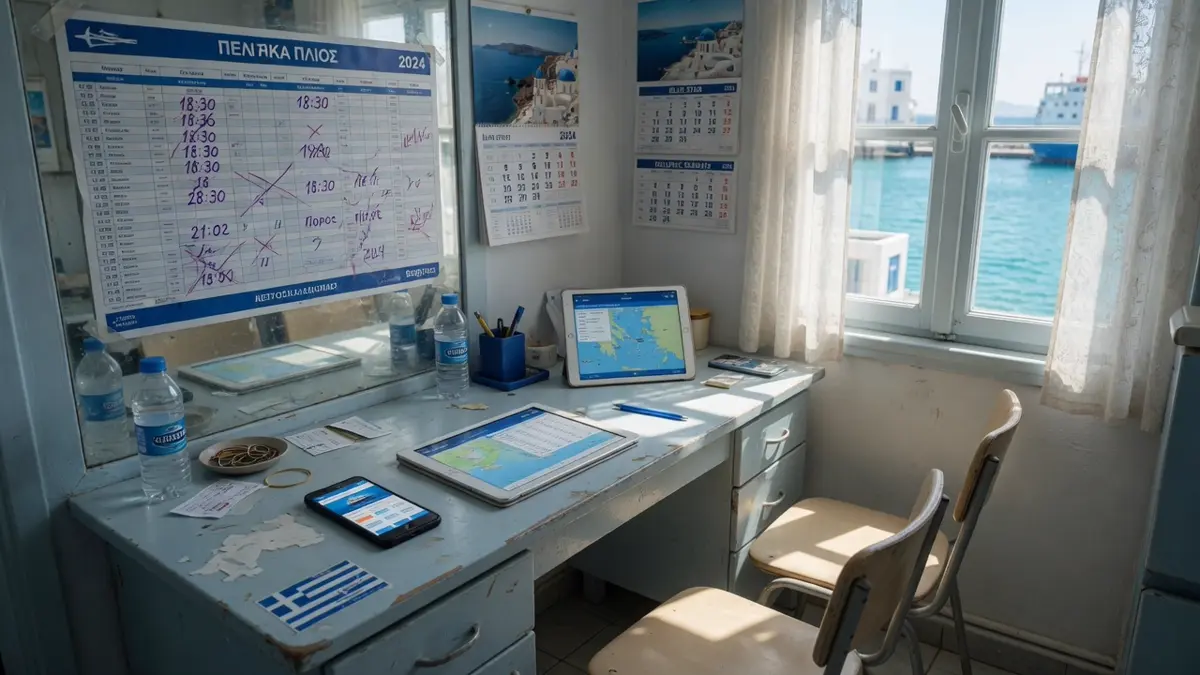
July, late morning. One of you is on hold with the airline. A couple’s outbound was cancelled and the hotel on the other side is already paid. You have the booking reference in front of you. You cannot drop that line. If you do, you go back to the queue.
The office phone rings.
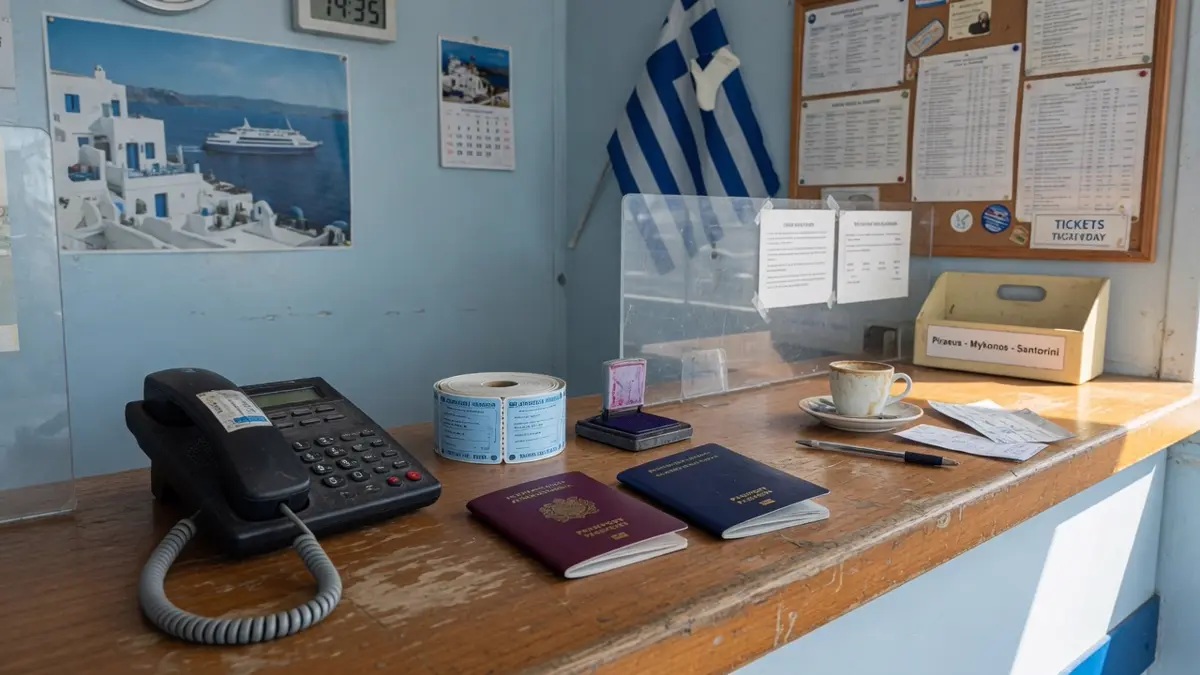
Nobody can pick up. The person who would have reached for it is listening to hold music. The other pair of hands, if there is one, is at the counter printing tickets.
The rush is the mornings the boats fill — July, August, the Friday before a long weekend, Easter week. Someone hired in February does not cover this Friday. A second number with the same two people still leaves the third caller on a busy tone.
The last-minute caller is often already on the street. Your window and the next agency share the same pavement. They hang up and dial the next number.
The airline call is the work. Someone has to stay on that line until a change is confirmed. The new caller will not hold with you.
Package, ferry, or last-minute
Package. Departure city, dates, how many rooms, board — room only, breakfast, half board, all inclusive — and the ages of children. A week in Crete from Thessaloniki is not a week from Athens. Two adults and a child of six is not two adults. The assistant writes those facts down. It does not invent a hotel that “should have space”, and it does not read out a brochure price from last spring.
Ferry. A route, a sailing date, cabin or seats, and the names as on the ID. Friday night to Naxos and Saturday morning to Naxos are two sailings. An outside cabin and a deck seat are two tickets. The assistant asks which they mean. It does not say there is a cabin left.
Last-minute. Either of the above, plus today or tomorrow. These callers will not hold and will not leave a name on voicemail. They have three agencies in the same block. The assistant takes the facts and either books a time to come in the same day, or says someone will check the system and ring back.
A ferry name list is useless against a tour operator. A package departure city is useless against tonight’s boat.
Who can actually finish the request
In a two-person office you are on the airline, or in the ferry system, or at the counter with a couple going through a quote. The person who would have picked up is the person whose other call cannot be dropped.
Say who does what. One of you works the ferry screen. The other builds packages. If only one person can issue a ticket, a same-day collect can only go on that person’s hours.
Write who is in, who does ferries, who does packages, who is at lunch. The assistant honours a list it can see. If the list is empty, it offers times nobody can take.
Ferry plus hotel is two checks, in the order you write once.
Last-minute, and the hours you keep for the counter
A lot of small offices still let people walk in and collect. Late morning, the hour before the afternoon boats, is often kept for that. Long package visits do not belong in it. Write the window down or the assistant will fill it.
“Can I come in this afternoon and pick up tickets?” is not a week in Rhodes. Short answers only: yes until a time you set; not now, come later; or yes for a ferry collect, no for a package that still needs building. If someone wants twenty minutes on a package in the collect hour, move them. Mark those hours the way lunch is marked.
Last-minute is a different pressure. They want Friday. You are still on hold about someone else’s Friday. Treat that call as next month and they are already speaking to the office next door. Take the names and the date. Say when you will ring back. Do not invent a yes.
Changes, cancels, and the operator’s rule
A caller rings with a booking reference and a cancelled morning flight. Another wants Saturday’s boat moved to Sunday. Another wants the hotel refunded because the airline moved them to Monday.
Change fees, no-shows, name corrections, and whether a hotel is refundable sit with the airline, the ferry company, or the tour operator. The assistant takes the booking reference, the names, what they want changed, and puts that in front of you. It can repeat a rule you wrote down — “name changes on this operator need twenty-four hours” — and nothing else.
You would rather hear a cancel than find out they bought the same boat at the next office. If they are inside a window you actually enforce, say so. If they are not, still take the reference.
Do not let the assistant move them onto the next sailing from memory. That sailing may be full. It may not exist.
A fare and a cabin nobody has checked
When someone describes a trip on the phone — two people, Friday night, a cabin if you have one — the tempting answer is a number, or a yes. The assistant does not give either. Inventory moves while you are on the other line. A cabin open at nine can be gone at ten. A fare you remember from Tuesday is not Tuesday’s fare.
It can repeat a published item you marked as live this morning. Unseen ferry inventory cannot. Unseen air inventory cannot. An unseen hotel room cannot. The assistant takes the request and either books a time to come in or takes a callback. A person who can see the screen says the number.
Do not paste last week’s fares into the notes. The assistant will read them as if they were still live.
A cabin confirmed from memory is worse than a missed call. They come in with cash, you open the screen, and the bed is gone. They walk to the next office and do not come back.
Passports, visas, and questions it must not answer
A caller asks if the passport has to be valid six months. Another wants to know if the child needs their own document on the boat. Another asks about Turkey, Egypt, a Schengen stay, or insurance.
The assistant does not decide entry rules and it does not sell cover from the phone. It cannot say what a stamp means, what a child needs, or whether a policy will pay. Those calls are a note. They are never advice.
It can repeat a line you wrote. “Passport valid six months from the return date.” “We sell a policy at the desk.” If you did not write the line, it does not invent one.
One letter off the passport and they will not board. The assistant asks for the names as they appear on the document, reads them back, and spells what it is unsure of.
A complaint about last week’s transfer, or a hotel that was not what they booked: take the name, the booking reference, what they said, and put it in front of you. Do not offer a free night from the phone.
How CITT handles it
- Your number stays on the window. A forwarding rule at the provider sends what you do not answer. Calls the desk picks up never leave the office.
- Every line is answered at once. July is conversations, not a stack of busy tones against the airline hold.
- It knows the agency you described. Who runs the ferry screen, whether late morning is for ticket collects, where to park, how a callback works.
- It asks package, ferry or last-minute, then the facts, then the calendar. A time to come in only after those facts exist. A fare only if you marked it live.
- It checks the real calendar before it offers a time, and writes the visit into the calendar the team already uses.
- It confirms by SMS, in the language of the call — 70+ languages — and can remind before they are due at the counter.
- It escalates what cannot be finished — an operator change, a visa question, a complaint, a fare — as a tagged note, not a guess.
- You get the transcript, the summary, and the job the caller named.
What it will not do
It will not open the live system. Friday’s cabin gets a callback or a time to come in, not a yes.
It will not invent a fare. A number that is not in what you entered, and not marked live, is not spoken.
It will not give visa, entry, or insurance advice. A stamp, a child’s document, or a policy question is a note.
It will not treat package hours and ticket-collect hours as the same calendar. Mark the difference, or a twenty-minute quote lands in the hour you keep for people already at the door.
It will not decide a change, a refund, or a name correction. It takes the booking reference. A human opens the operator screen.
It will not drop the airline for you. That line stays yours. The assistant takes the other one.
What these calls sound like
Job first, then the facts, then a time to come in or a callback, then the names read back. No cabin from memory. No fare from memory. No advice about a border the assistant cannot see.
If the assistant confirms a bed that is gone, they still come in with cash. Put Friday’s boat on a callback you can keep, not on voicemail while you wait for the airline.
What you set up first
Put the assistant on the number on the window, with a forward when nobody answers, so a free person at the desk still takes the call. Then the three families, who works which screen, the questions for dates and names, the counter hours, and the sentence for when a fare or a cabin cannot be confirmed.
Give it only the published items it may repeat — a transfer you sell, a museum ticket, a figure you marked live this morning. Leave last week’s fares off the notes. One line that forbids visa, entry and insurance advice. Opening hours, who is in on Saturday, where to park, how to find the door.
Rates live on the pricing section of the home page. They are not repeated here.
AI receptionist, in-house staff, or a call centre
| CITT | In-house | Call centre | |
|---|---|---|---|
| Desk on hold with an airline | Every line answered at once | One call, if they can drop the airline | Depends who was rostered |
| Asks package, ferry or last-minute first | Yes — before it looks at times | Yes | Often jumps to what date |
| Invents a cabin or a fare | Never — system or callback | Sometimes from memory | Reads a stale sheet |
| Last-minute caller | Takes the facts and a callback | If they are off the airline line | Takes a message |
| Time to come in and pay | Against the calendar you gave it | If they remember the counter | Usually a note |
| Speaks the caller's language | 70+ languages | One or two | Whoever is on that shift |
| What it will not do | Quote unseen inventory or give visa advice | Can open the live system | Reads last week's printout |
What one unanswered July morning costs a two-person agency
Worked from these assumptions — change any of them and the answer changes:
- Two people, a normal July morning. One of you is on hold with an airline for a cancelled outbound.
- About 12 inbound calls in that window. The person at the counter reaches perhaps 4.
- Of the 8 that ring out, 3 are last-minute ferry or package.
- A last-minute two-person booking is worth about €160 to the office in commission — YOUR figure will differ, and this is the number to change first.
- Two of those three callers hang up and dial the next office on the street instead of leaving a message.
- 3 last-minute enquiries reach nobody on one July morning.
- 2 of them do not call back and book somewhere else.
- 2 × €160 = €320 of that morning's commission, gone before the airline comes back on the line.
- Sixteen busy weeks in the year — 16 × €320. Put your own weeks in if August is quieter where you are.
About €5,120 a year, from one recurring morning window in the months the boats and charters fill.
What it costs
CITT is pay as you go: no packages, no minimum, no contract. The current rates — the monthly fee per number and the per-minute rate — are on the pricing section of the home page, which is the only place they are published.
Frequently asked questions
Do I have to give up the agency number?
No. You keep the number on the window, the Google profile and the cards you hand out. You add one forwarding rule — every call, or only the ones still ringing after the seconds you choose. If someone at the desk picks up, the call never leaves the office and is never charged.
Can it tell a caller a cabin is free, or what the fare is?
Only if that fact is in what you entered and you have told it the figure is still live. A ferry cabin and an air fare move while you are on hold with someone else. If the system is not in front of it, it takes dates, names and what they want, and leaves the fare for you. Inventing a free outside cabin is worse than a missed call — they come in to pay for a bed that went an hour ago.
Will it mix a week-long package with a Friday night ferry?
Not if you configured the three families. It asks package, ferry or last-minute first. A package needs departure city, dates, rooms, board, and the ages of children. A ferry needs a route, a sailing date, cabin or seats, and the names as on the ID. Last-minute is either of those plus today or tomorrow. If it cannot tell which job it is, it takes a callback.
Someone is already on the airline line. Can it still answer?
Yes. That is the point of putting it on the number. The person on hold with the airline must not drop that call. The assistant takes the new one, writes the request, and either books a time to come in or says someone will check the system and ring back. You finish the airline, then you open the transcript.
What if they ask about a visa, a PCR test, or travel insurance?
The assistant does not decide entry rules and it does not sell cover from the phone. It can repeat a line you wrote — “passport valid six months”, “we sell a policy at the desk” — and nothing else. A question about Turkey, Egypt, or a child’s document is a note. It is never advice.
What do we see after a call?
A transcript, a short summary, whether they asked for a package, a ferry or last-minute, the dates and names they gave, and whatever visit was booked or left for the desk. Confirmations go out by SMS in the language of the call. The ones nobody could pick up are on the pad with the rest.