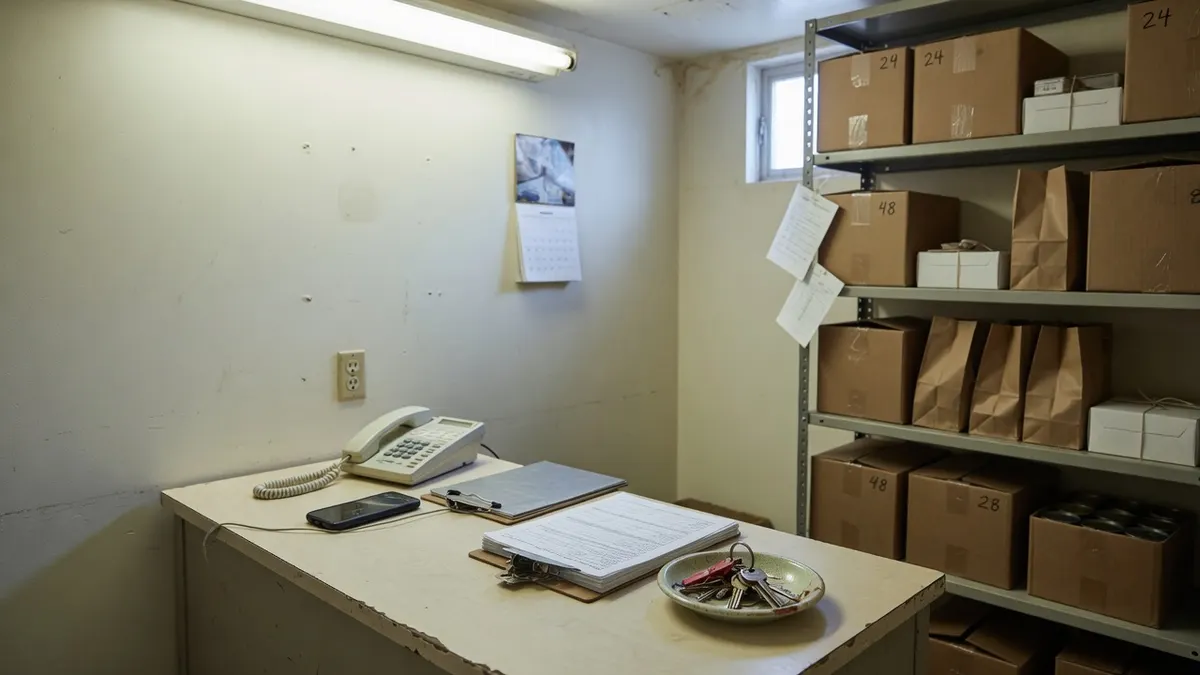
AI call receptionist for the empty front desk
Quick summary
- The job is the person at the desk: greet, ask who they need, book or take a name.
- Maria left in March. The chair is empty. The number on the door has not changed.
- It says the name on the door first. Then it asks who they rang for. Then it looks at the diary.
- If a pair of hands is free, it puts the caller through. If not, it takes a message they will actually get.
- A visitor who walks in and a caller who rings are the same desk. Both expect a greeting, not a menu.
- It does not pretend to be you. It does not work your outbound list. It sits where the receptionist sat.
TL;DR
The chair at the front desk is empty. Maria left in March. The number on the door still rings, and people still walk in expecting someone to say the business name and ask who they need. An AI call receptionist sits in that chair. It greets with the name on the door, asks who they called for, books a visit only if that time is free, takes a message if nobody can come, and puts the caller through when a pair of hands is actually free. It does not pretend to be you. It does not run an outbound list. It does not replace the box on the wall. It is the person at the desk.
Key takeaways
- Put the receptionist on the number already on the door, with a delay, so free hands at the desk still take the call.
- Teach the opening line first: the business name, then who they need — not what time they want.
- Let it book a visit only after it has checked the diary. An offered Thursday that is already taken is worse than a callback.
- Write the rule for putting someone through: which mobiles, at which hours, and when a message is enough.
- Give it the sentence that it is the receptionist, not the owner, not the technician, not you.
- Listen to week one for greetings that skip the name on the door. That name is why they rang this number.

What an AI call receptionist actually is
The chair at the front is empty. The nameplate is still there. Maria left in March and you have not put anyone in her place, because the hours do not justify a salary and the phone does not justify ignoring the work in the back.
People still ring the number on the door. People still walk up to the glass and look at the chair. They expect a person to say the business name, ask who they need, and either put them through or write a time that is actually free.
That is the whole job. An AI call receptionist is that person. It is not the clerk who writes the day up at half past six. It is not the agent who works a list of twelve names. It is not the box on the wall that asks them to press one. It sits where Maria sat.
You put it on the number that is already published. It answers when the chair is empty. When someone is in the chair and picks up, the call never leaves the building.
The empty chair, and the number still on the door
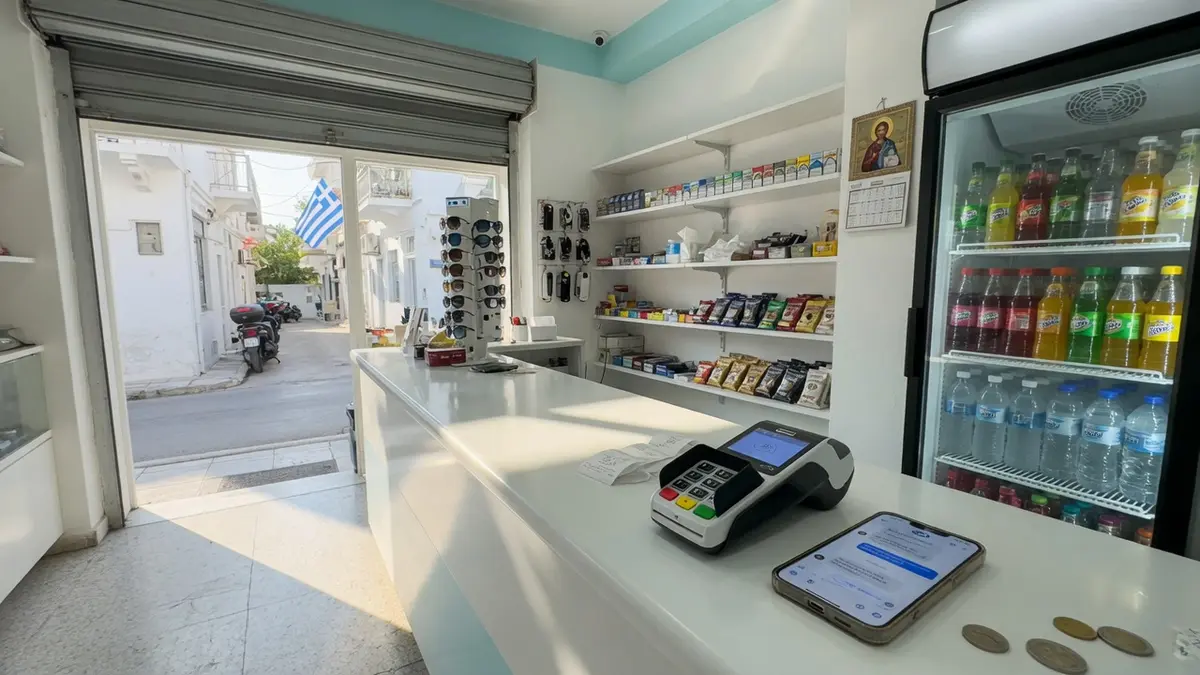
A Greek shop, a small office, a workshop with a glass door onto the street: the published number is on the glass, on the card, on the search result. That number is the desk. Whoever rings it thinks a person is sitting in front of the handset.
Four mornings after Maria left, the same number still rings. You hear it from the back. You have a part in both hands. You let it go. The person downstairs waits at the glass, decides the place is shut, and walks two doors along.
The empty chair is not a staffing theory. It is a Tuesday at 12:40 when both of you are at lunch, a Thursday when one of you is in the van, a Saturday when the shutter is up and nobody has sat down yet. It is also every evening after you lock the door, when the people who work your opening hours finally have a free hand.
A recording that says leave a message is not a receptionist. The person at the glass does not leave a message. They wanted a greeting and a time. They will get both from whoever answers next.
Keep the number. Change who sits in the chair.
Greeting, then who they need, then a time or a note
The opening line is the name on the door. Not “how can I help” on its own. Not a menu. The caller rang a specific place. If the first sentence could belong to any shop on the street, you have wasted the reason they chose this number.
Then: who do they need. Kostas. The owner. Anyone. Accounts. The person who ordered the part last week. A receptionist who jumps to “what time would you like” will put a delivery driver into a visit slot and leave the owner’s brother without a note.
Then one of three things.
A visit. It checks the diary before it offers a time. Friday at ten is a sentence only if Friday at ten is free. A Thursday offered from memory is how you get two people at the glass at four.
A message. Name, number, who it is for, the thing in their words. You write the sentence for when you will return the call. “Someone will call you” with no time is how the next door gets them.
A transfer. Only if a pair of hands is actually free, on a number you named, in an hour you named. Putting a caller through to a mobile that is in a toolbox is not reception. It is another empty chair, now in the van.
Hours, Saturday, the 15 August close, where to park, which bell: those are facts a receptionist may say if you wrote them down. A price you have not listed, a promise about a part you cannot see, a “yes he is in” when you have not said who is in — those are not reception. Those are guesses said in the doorway.
Putting a caller through, and when not to
The human receptionist knew who was in. She looked at the back room. She shouted. She knew that after three you do not put sales through to the bench because the adhesive is still wet.
The AI receptionist knows what you wrote. Write who may be tried, on which number, between which hours. Write the hours when a message is enough. Write the list that is always a transfer: someone at the door, someone hurt, a courier who will not wait.
If you do not write the transfer hours, it will either never put anyone through, or it will put everyone through, including the person who only needed Saturday hours while you are reversing into a loading bay.
“Hold, please” is a receptionist sentence. It is short. It is not a place to invent a status. If they have already been holding because the chair was empty, do not add another minute of silence. Take the name.
A caller who asks “is this Kostas?” hears the truth. It is the receptionist. Kostas can be tried. Kostas is not on this line unless you have said so.
Visitors who walk in and callers who ring
The desk has two doors. One is the glass. One is the published number. Both expect the same person.
The visitor can see the empty chair. The caller cannot, so they assume someone is there and they get angry when the ring-out is long. Shorten the ring-time on the hours the chair is usually empty. Lunch in this country is often a pulled shutter and a street that still thinks you are open. A receptionist that picks up at twenty past two and says the afternoon hours is the difference between a visit at six and a person who writes you off.
Walk-ins are still yours. The AI is not a body in the room. If you are at the desk, you take the visitor. The phone is already being answered. That is the only way one pair of hands can do both doors.
A tourist who rings in English gets the greeting in English and the SMS in English. A caller who rings in Greek gets both in Greek. The receptionist works in 70+ languages. The person who used to sit in the chair spoke one, sometimes two. The street outside a shop in Athens or a workshop near a port is not one language.
Do not let the greeting change into a menu because the caller paused. A pause is a person looking at the shutter. Say the name again. Ask who they need.
How CITT handles the desk
- The number on the door stays the number on the door. One forwarding rule. Everything, or only what the chair did not pick up. Calls a person takes are not forwarded and not charged.
- Every line is answered at once. Two people at the glass and a third on the phone is three conversations, not one greeting and two busy tones.
- It greets with the name you wrote, then asks who they need, then looks at the diary. It does not open with a time.
- It books only a time that is free, and writes that time into the calendar the desk already uses.
- It puts a caller through only on the numbers and hours you named. Otherwise it takes a message in their words.
- It confirms by SMS, in the language of the call, with who they should ask for when they arrive.
- You get the transcript and whether this was a greeting, a booking, a message, or a transfer. That is how you see the empty chair as a list of times, not as a quiet feeling.
What a receptionist will not do
It will not pretend to be you. It will not say Kostas is in unless you have given it that fact for that hour. It will not invent a price or a finish day. It will not work the outbound list of people you said you would ring. It will not replace the hunt group or the night service on the wall. It will not argue with a visitor. It will not decide a complaint. It will not tell a courier to leave a parcel in the street.
It will not become the person in the back. The moment it starts using words you never wrote — a part name, a “he usually is in on Thursdays”, a discount — it has left the chair and started guessing. Guessing in the doorway is how you spend Friday undoing Tuesday.
If they ask for a human by name and that human is not on the transfer list for that hour, it takes a message. That is reception. That is not a failure.
What these calls sound like
The exchange above is the shape. They are at the glass, or they think they are ringing a person at the glass. They want Kostas, or a time, or both. The receptionist says the business name, refuses to offer Thursday from memory, writes Friday at ten, and keeps the plate for the person they asked for.
A transfer should be even shorter. Name the person. Try the number you were given. If there is no answer, come back and take the message. Do not leave them in a silent hold while a mobile vibrates in a drawer.
“Is this Georgiou?” should be the most boring call on the tape. Yes. How can I help. Who did you need. If the name on the door comes out wrong, or hedged, or as a generic greeting, the file is wrong.
What you set up first
The opening line with the business name. The question “who do you need”. The diary. The transfer list with hours. The sentence that this is the receptionist, not the owner.
Then the boring facts the chair used to know by heart: Saturday hours, lunch, 15 August, where to park, which bell, whether the shutter is up at eight, who is in on Monday. Write two kinds of visit if you have them — a meeting that needs you, and a short drop at the glass.
Write the hours when a message is better than a transfer. Give it the same-day list: someone at the door, a courier, someone who will not wait. Do not give it a price list it would read out unless you mean every figure on that list to be said on a recorded line.
Listen to the first week for greetings that skip the name, times offered before the diary, and transfers to a mobile that never picked up. Those three are how an empty chair stays empty.
Rates live on the pricing section of the home page. They are not repeated here.
AI receptionist, in-house staff, or a call centre
| CITT | In-house | Call centre | |
|---|---|---|---|
| Greets with the name on the door | Every call, the line you wrote | When someone is in the chair | A shared script, often another brand |
| Asks who they need before offering a time | Yes — that is the first question | Yes, if they are not already mid-job | Often jumps to what time |
| Puts a caller through to a free pair of hands | Only on the numbers and hours you named | Shouts into the back | Transfers into a queue |
| Books a visit that is actually free | Checks the diary first | If they can see the book | A slot, then a confirmation later |
| Pretends to be the owner | Never — you write that sentence | They already know the voice | Sometimes, to sound local |
| Speaks the caller's language | 70+ languages | One or two | Whoever is on that shift |
| What it will not do | Sit the outbound list or replace the wall box | Leave the chair to go to the van | Know who is actually in today |
What an empty chair between twelve and two costs a two-person shop
Worked from these assumptions — change any of them and the answer changes:
- Two people, both in the back or at lunch, the front chair empty from 12:00 to 14:00 on a weekday.
- About 6 inbound calls in those two hours, plus 2 people who walk in, wait, and leave.
- Of the 8 who reach nobody, 3 would have booked a first visit.
- A first visit that stays is worth about €150 of work in this example — put your own ticket in, this is the number to change first.
- This example assumes 2 of those 3 never leave a name and go to the next door that answered.
- 8 people meet an empty chair in one lunch window.
- 2 of the 3 who would have booked do not come back.
- 2 × €150 = €300 of work, that lunch.
- A lunch like that three times a week, 46 weeks — 138 × €300.
About €41,400 a year on those assumptions — or much less if you put your own ticket and your own conversion in. Change both.
What it costs
CITT is pay as you go: no packages, no minimum, no contract. The current rates — the monthly fee per number and the per-minute rate — are on the pricing section of the home page, which is the only place they are published.
Frequently asked questions
Do I have to give up the person at the desk?
No. If someone is in the chair and picks up, the call never leaves the building and is never charged. The receptionist answers the ones that would have met the empty chair — lunch, the back room, the van, after Maria left and before you hired again.
Will it say it is me?
Not if you write the sentence. It greets with the business name and says it is the receptionist. Callers who ask for you by name get put through, or they get a message with a time you will return. A voice that pretends to be the owner on a recorded line is a voice you then have to unpick.
Can it put a caller through to my mobile?
Yes, on the numbers and hours you named. After 15:00 you may want the workshop mobile and not the house mobile. At lunch you may want a message, not a transfer into a sandwich. Write those hours. A transfer to a mobile that is face-down on a bench is just another empty chair.
What if someone walks in while it is on a call?
The person in the doorway is still yours. The receptionist is on the published number, not in the room. If you are at the desk, you serve the visitor. The caller is already being greeted. That is the point of the chair being covered when your hands are not.
Do I have to change the number on the door?
No. The number on the door, the card, and the search result stays yours. You add one forwarding rule: every call, or only the ones still ringing after the seconds you choose. People who already have you in their phone do not have to learn a new number.
What do I see after a call?
Who they asked for, whether they were greeted and booked or left a name, the time if one was written in, and the transcript. Confirmations go out by SMS in the language of the call. You see the empty-chair hours as a list, not as a feeling that the phone was quiet.