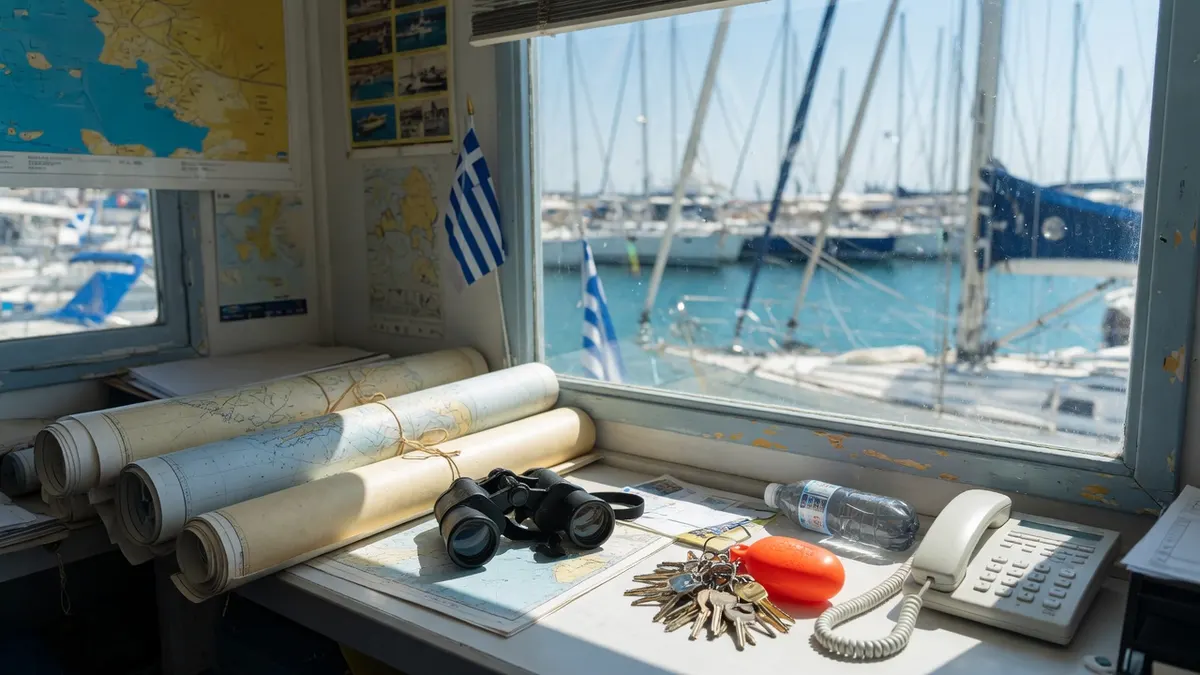
Deposit and briefing chase for yacht charter bases
Quick summary
- Tomorrow's briefings are on the sheet. Two licences never arrived. One deposit is still a question. Nobody rings them.
- This is not a new week. They already have a boat. The call asks whether the papers have been sent.
- A missing licence needs the rule you already use: show at the briefing, or flag the skipper question, never a yes on the phone.
- It does not say they are covered, return a deposit by voice, or promise they can go bareboat.
- It calls in the language on the booking. The SMS with what to bring follows that language.
- Set the hours it may ring before the first name goes out. Do not leave a contract clause on a voicemail.
TL;DR
Tomorrow six briefings are on the sheet. Two licence copies never arrived. One deposit is still unpaid. You are in a cockpit, or the fuel dock is still busy, and nobody is going to spend the afternoon ringing. An assistant works the list you give it: name on the booking, boat, one purpose. It asks whether the papers have been sent. It does not say those papers are enough, whether anything is covered, or what a deposit will do. If they ask, it writes the question down and says the base will look at the file. It can book a paper drop if that time is free. It will not ring a skipper's personal mobile about someone else's crew unless that number is on the file.
Key takeaways
- Build each list from your own bookings: name, the number on the file, the boat, and one purpose.
- Do not put a skipper's personal mobile on a crew chase unless that number is the number on the file.
- Write the purpose as a paper chase or a briefing reminder, not as a question about cover.
- If the client asks whether they are covered, the assistant ends that part and flags the base to call back.
- Check the diary before you speak a briefing time. Do not read Saturday off last week's pad.
- Keep deposit returns, licence yeses and legal advice off the script. The base will look at the file.
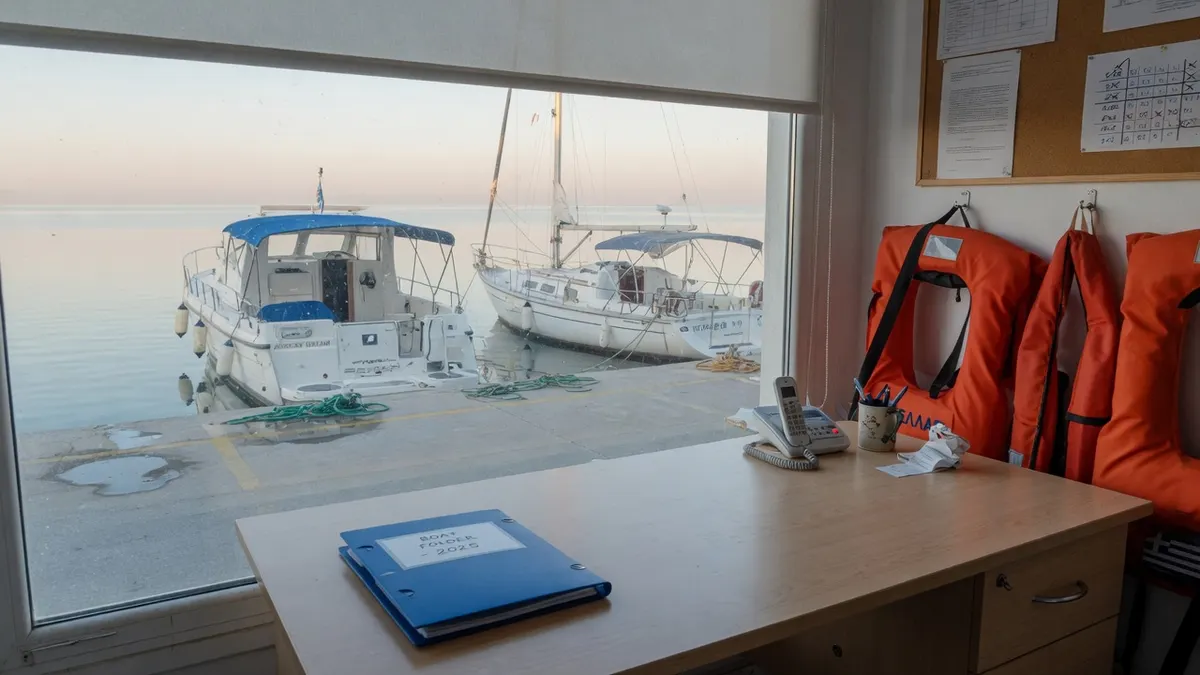
The list is Saturday’s sheet, not a second sales hour
Outbound on this base is not a hunt for new August weeks. The names are already on the briefing sheet. The work is to find out whether the licence copy arrived, whether the deposit is still a question, and whether anyone still thinks they are coming at ten.
You are in a cockpit. Six names wait. Two of those folders are empty of papers. If nobody rings, both crews arrive at nine and the briefing cannot start. The next crew waits on the finger. The Saturday you planned is gone.
So you hand the assistant a list you built: name as on the booking, number as on the file, boat as on the sheet, one purpose. The purpose is a paper chase, or a briefing reminder, or a missing deposit flag. It is not “see if they also want a second week”, unless that week is already a second line you wrote.
Start with the name and the boat, or stop
Every outbound call opens on the identity you already have. If they do not recognise the name or the boat, the call stops. It does not read the next row. It does not guess that the person who answered is the skipper on the same hull.
A skipper’s personal mobile is not the crew. Do not put that number on a paper chase unless the guest put it on the file. The skipper will confirm papers for the wrong family, or will take a cover question you did not want on that channel.
If a child answers, or a marina office that is not yours, stop. Leave a request for the name on the file to call you. Do not describe the deposit to whoever picked up.
Remind. Do not decide.
The tempting extra on a paper chase is a yes, because they ask. They ask because they sent a photo. They ask because a friend at another base told them a German ICC is always enough.
The assistant does not decide a licence on this call. It notes that a copy was sent, or was not. “Enough to go bareboat” is a decision for Saturday, with the papers in a hand, not with a photo on a chat.
“Are we covered once we pay the deposit?” is still cover. The assistant never says they are covered. It can say a deposit is still outstanding, if that is the purpose you wrote. It cannot say the money comes back.
“Can we go towards Turkey?” on a reminder call is still not legal advice. Take it as a question. Flag it. Do not answer it to finish the list.
Papers missing, briefing moved, extra crew
Papers missing. Take what they say they sent. Do not approve it. Flag if the folder is still empty. Saturday is not the hour to discover a photo of a card that cannot be read.
Briefing moved. They want earlier because of wind. Check the diary before speaking a new time. If the slot is there, write it and text. If it is not, flag. Do not promise an earlier start as a kindness. That kindness is how two crews meet at one cockpit.
Extra crew. A friend is coming. Take the new headcount. Do not say the berths are still fine. The diary and the inventory decide.
Provisioning or fuel. Repeat only lines you marked as speakable. Do not invent a supermarket, a fuel figure, or a rule about jerry cans.
Second week for friends. Different booking, or a note for you. Do not open a new week on a reminder call unless that is a type you wrote.
What must never go on the recording
A contract clause. A deposit-return promise. “You are covered.” A licence yes. A skipper’s personal number read out to a crew. If they offer to hear the small print, refuse it on this channel. The assistant asks for a number the base can use, not for a signature by voice.
Quiet hours are yours. Do not ring a family at 22:00 because the folder was opened late, unless you marked the list as same-day. Retries belong in the setup, not in the assistant’s improvisation.
The SMS after the chase
If the briefing time is unchanged, text what to bring, in the language on the booking — 70+ languages — without a yes on those papers. If the diary accepted a new time, text the new time. If the diary refused, do not text a hopeful hour. Flag a phone.
A reminder SMS that still says “licence received, all fine” is how they arrive without the original. The outbound call and the text have to match the folder, not the hope from this afternoon.
What you set first
- Build lists from the briefing sheet, not from a portal inbox you do not own.
- One purpose per list. Paper chase. Briefing reminder. Deposit outstanding. Do not mix a sales hour into a Saturday chase.
- Identity first. Name, boat, number on the file. Stop if they do not match.
- No skipper-mobile chase unless that number is on the file.
- No cover sentences, no licence yeses, no clauses on voicemail.
- Diary check before a new briefing time is spoken.
- Quiet hours and retries before the first name.
- Read the first week’s outbound transcripts for a cover sentence that appeared, a licence that was approved, and a skipper who was rung about someone else’s crew.
The point of the call is that Saturday’s pontoon matches Saturday’s folder. A fluent extra sentence about cover puts you back in the same trouble as an unanswered inbound: a sentence you now own, and a crew who believed it.
Rates live on the pricing section of the home page. They are not repeated here.
AI receptionist, in-house staff, or a call centre
| CITT | In-house | Call centre | |
|---|---|---|---|
| Licence chase before Saturday | Yes, from your list | When someone has time | If the list was sent |
| Briefing reminder | Time, boat, papers to bring — no cover sentence | Yes, if they are in the office | Often adds a comfort line |
| Starts with the name and boat on the file | Yes — stops if they do not recognise them | Yes | Sometimes reads the next row |
| Says they are covered on the chase | Never | Not on a reminder call either | Sometimes says it to close the call |
| Rings a skipper about someone else's crew | Only if that number is on the file | Sometimes tries the skipper first | Often tries whoever is on the boat |
| Language of the booking | 70+ languages | One or two | Whoever is on that shift |
| Contract clause on a voicemail | Never | Should not | Risk, if the script has it |
What an unchased licence costs when Saturday morning arrives
Worked from these assumptions — change any of them and the answer changes:
- Six briefings tomorrow. Two licence copies still missing.
- Nobody rings those two. Both crews arrive at 09:00 without papers.
- A week you then cannot release on time, and that blocks the next crew, is worth about €2,400 you cannot start — put your own figure in.
- This example assumes one of those two weeks slips a day or goes to an argument at the gate. Change the count.
- Two unchased licences arrive as a surprise on Saturday.
- One briefing cannot start. Count that as one week you cannot begin on time.
- 1 × €2,400 of a week that is now a gate problem, not a briefing.
- Saturdays like that, over a 20-week season — if it happens once a month, five times. 5 × €2,400. Put your own frequency in.
About €12,000 a season from unchased papers — and only if you accept the conversion. Change it.
What it costs
CITT is pay as you go: no packages, no minimum, no contract. The current rates — the monthly fee per number and the per-minute rate — are on the pricing section of the home page, which is the only place they are published.
Frequently asked questions
Who is allowed on the outbound list?
People who already have a booking on your sheet, with a number that is on that file. A skipper's personal mobile is not a crew. Do not chase papers through a skipper unless the guest put that number on the booking. A spouse's mobile about someone else's deposit is the same rule.
Can it tell them the deposit will be returned?
No. It can remind them that a deposit is still outstanding, if that is the purpose you wrote. It cannot say the money comes back, or that they are covered while it is held. That sentence belongs to you, after the file.
What if they ask whether the licence they scanned is enough?
That is still a licence decision. The assistant notes that a copy was sent, or was not. It does not say the copy is enough to go bareboat. If they press, it flags you. A yes on this call is a yes you own on Saturday.
Can it move the briefing to an earlier slot on this call?
If the diary shows a slot, yes, and then it texts the new time and what to bring. If the diary is full, or you are already in cockpits, it takes the request and flags you. It does not promise an earlier start as a kindness.
What about a provisioning list or a fuel reminder?
Same list rules, different purpose. Confirm they still come. Repeat only lines you marked as speakable. Do not turn a briefing reminder into a new week for friends on another hull unless that is a separate booking you have written.
Can it read a contract clause onto voicemail if nobody picks up?
No. A clause on a recording is a clause you cannot pull back, and it is legal language this line does not speak. The assistant leaves a callback request, not the contract. Quiet hours and retries are yours to set before the first name.