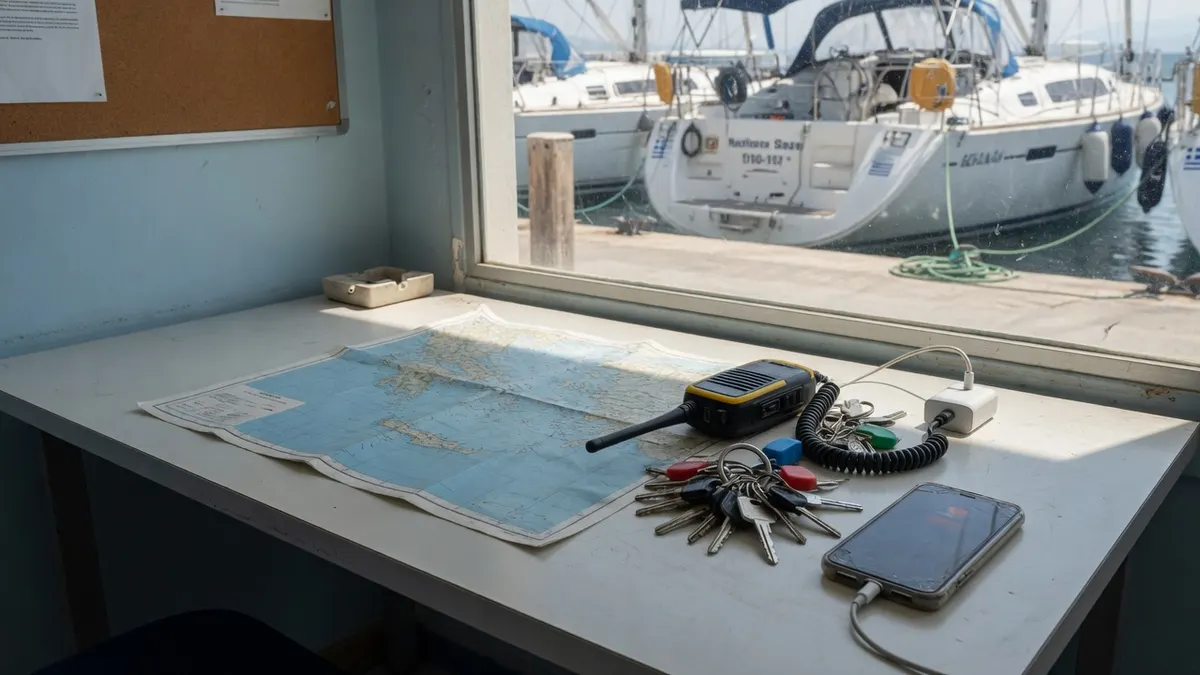
Missed yacht-charter calls on Saturday changeover
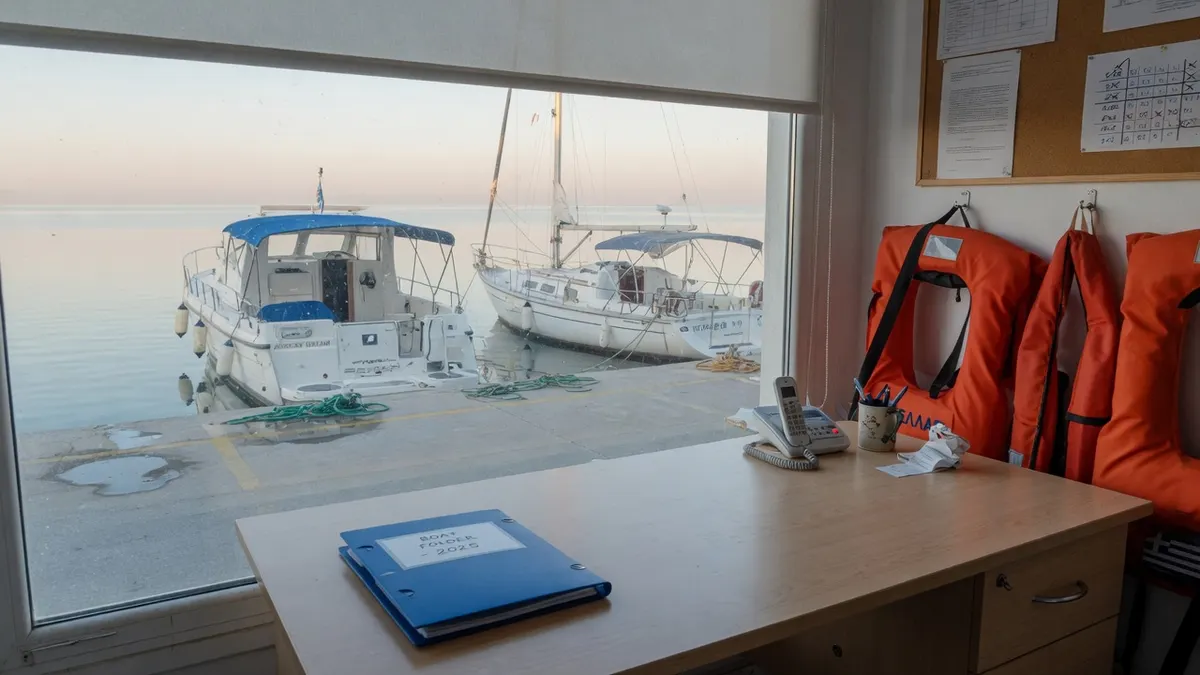
Quick summary
- You are in the cockpit on Saturday. The other person is on the fuel dock. That is when the published number rings.
- A family who wants August hangs up. So does the person who needs a skipper for that week.
- The voicemail holds briefings you already have. The new week and the skipper question leave nothing.
- The first split is week request or briefing. A week is dates and skipper or bareboat. A briefing is a boat already on the sheet.
- On changeover Saturday several people ring at once. It answers every line at once.
- It never says they are covered, never decides a licence, never invents a week's price.
TL;DR
You are in the cockpit going through the inventory. The published number rings. The family who wants the first week of August will not leave a message. The skipper question will not leave one either. They hang up and dial the next base on the same quay. An assistant answers, asks week or briefing, takes the dates, skipper or bareboat, and books a viewing only if that time is free. It does not say they are covered. It does not decide a licence. On changeover Saturday it takes several conversations at once.
Key takeaways
- Pull unanswered calls by hour from the provider, and mark changeover Saturdays on their own.
- Do not judge the loss by the voicemail. A first week and a skipper question leave nothing.
- Forward after a short ring so a free pair of hands in the office still takes the call. Shorten that on Saturday.
- Tag week and briefing separately. A crew on the pontoon is not a sales hour for August.
- Give it the sentence: the base will look at the week. It does not say they are covered, and it does not decide a licence.
- Re-count unanswered calls after four weeks. If Saturdays have not dropped, the ring-time is wrong, not the greeting.
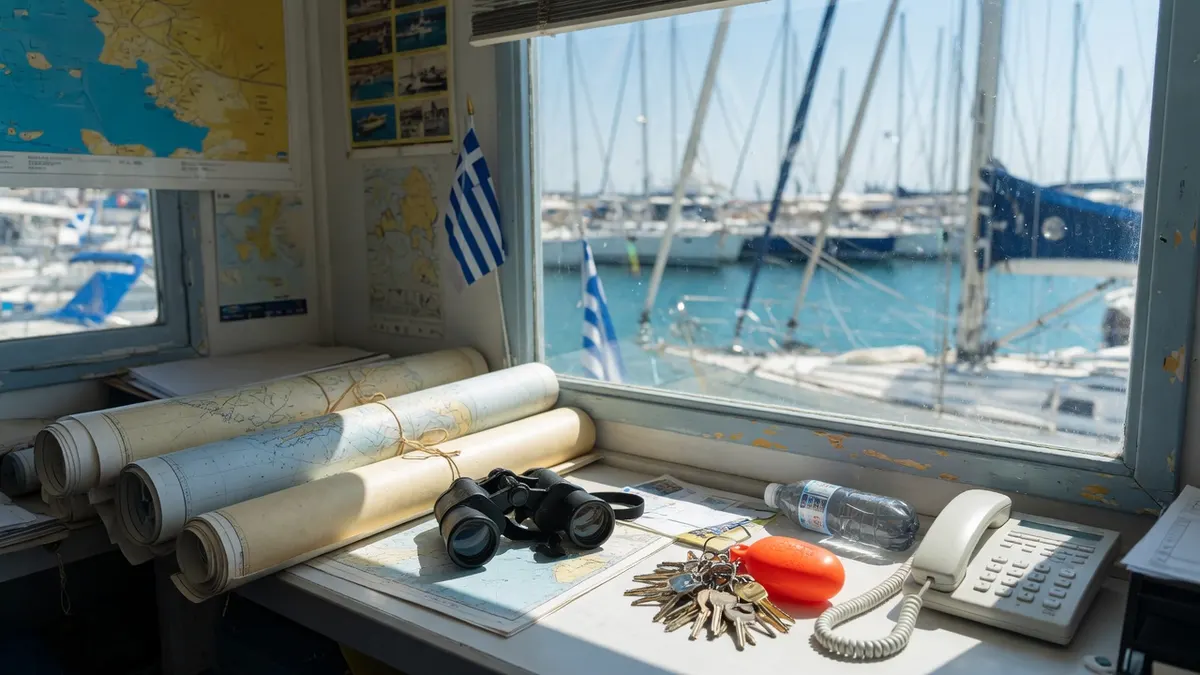
In the cockpit, and the phone still ringing
The inventory is open on the cockpit table. The crew wants to leave before the wind. You cannot climb back to the office. The colleague is on the fuel dock. The published number rings. You let it go. A few seconds later the number is gone.
This happens in the hours the website says the base is open. The listing says Saturday. The board at the gate says someone is there. The person calling already has two other bases on the same search. They wanted an answer. They hang up and dial that number.
You know which boats are in briefing and which skipper is on which hull. The number you usually do not have is how many people tried to reach you this morning and could not. That number is in the provider’s log. Pull it. Mark the Saturdays. Mark the Monday after a week of meltemi, when people want to move a start.
Those mornings are the ones you believe you are open and busy. One of you in a cockpit. The other on the fuel. The number on the site is ringing. Nobody is free for August, and nobody is free for a skipper question that will decide whether they book here or next door.
Who hangs up
Three things happen when nobody picks up. They do not cost the same.
Someone whose briefing is already on the sheet will often leave a message. They want to start earlier. They want a fender. They will still be on the pontoon. These are the voices you hear when you open the voicemail, so these are the voices that shape what you think the problem is.
Someone who found you overnight will not leave a message. Someone who needs a skipper for the first week of August will not. A German caller who asked whether you work in German and heard a busy tone will not. They hang up. The provider’s log has a short ring. Your voicemail has nothing.
Someone who already tried twice last Saturday, or whose flotilla leader told them you never pick up on changeover, never rings again. That one is not in the log either.
The people who hang up are usually calling about a first week or a skipper. Those are two different jobs. What they needed first was an answer. Cover, if any, is what you say when you look at the file — and not with the sentence “you are covered”.
Why the voicemail hides the new week
On Saturday you get two jobs on the same phone. When you open the voicemail you hear the wrong one.
The existing crew has a boat on the sheet and a reason to persist. They leave a message, or they wait on the pontoon. The family looking at August, and the person who needs a skipper, have neither. They cannot quote a booking code they have never been given. They cannot wait, because another base will answer.
So you finish the briefing, you open the voicemail, and you hear a start-time and a missing fender. You do not hear the catamaran for eight. You do not hear the licence question. Those people never spoke into the box.
The calls also arrive together. Changeover Saturday is not one missed call an hour. It is five in twenty minutes, and both of you are already on the pontoon. A second person in the office takes the first two. The third still hears a busy tone.
A caller rings about a week and also asks if they are covered for the dinghy and whether a German licence is enough. That is a week note and two refusals. If the note says only “Mr Kostas, question”, the week waits, and the next base has already taken a hold.
Someone is already on the water, a warning light, a skipper they cannot reach: those cannot wait in the evening list. They also cannot be finished by an assistant inventing a cover sentence to keep them calm. Take the boat name. Flag a phone. Say the base will look at the week. Do not say they are covered.
Changeover, meltemi Monday, and a portal afternoon
These are not the same overflow. If you teach the assistant one generic “busy Saturday” label, it will treat a crew on the pontoon like a viewing for October.
Changeover is briefings. By eight, people have started ringing about weeks they saw overnight. You are already in the first cockpit. The pad is already boats that have not been signed back in. A week request in that hour is a viewing or a callback. A briefing they already have is a note on that boat. If the assistant parks August behind the tenth start-time call, August rings the next quay.
A meltemi Monday is people who want to move a start, or who want weather advice this line must not give. Take the boat and the request. Do not say go or stay.
A portal afternoon is three enquiries that all want the same catamaran. They will not leave a message. They will try the next base in the same listing. Shorten the ring-time. The third caller should not hear a busy tone.
October needs its own dates. Some of you pull boats. Some of you leave a last week. The published number still rings. Set the closure. Do not let the assistant book a viewing into a dark base.
A week is a note. A briefing is a briefing.
The first question on the overflow is not which week they prefer. The first question is week or briefing.
Week. Dates, berths, skipper or bareboat, boat type if they said. The assistant takes those facts, then looks at the diary. It does not invent a price. It does not say they are covered. It does not decide a licence. If you have closed that week, it says so from the line you typed in.
Briefing. Boat already on the sheet, start time, something missing, who to call. If they are on the pontoon, flag a phone. It does not give seamanship. It does not say they can leave without the rest of the inventory.
A ten-minute pontoon problem is not a viewing for August. A day boat is not a week. Mark them, or the overflow will fill Thursday with people who only needed a start time, and the family who needed an hour on a catamaran will be given ten minutes at the gate.
People remember the week. They do not remember your booking code. Ask for the dates first, then skipper or bareboat. One week is enough to put the note on the right file. None is still a note, not a guess.
Calls that cannot wait until you climb back to the office
Four calls on this phone do not belong in a digest you read after the last briefing.
They are already on the water, or they name a warning light. That is a transfer. You give the assistant a short list: on the water, engine, skipper not answering. It collects a boat name and a number while it is connecting. It does not tell them to keep going. It does not tell them they are covered.
They are on the pontoon for a briefing that has not started. Flag it. Do not finish the intake as if it were next March.
They need a skipper this week and another base has asked for a hold. Flag stock. Do not say yes because that is how you keep the week. Do not say a licence makes the skipper unnecessary.
A deposit or cover question from a family who will book today if someone answers is still not a cover sentence. Take the week. Take the number. Say the base will look at the file. Never “you are covered”.
Everything else can wait for the transcript: a first viewing for next season, a day boat in July, a fuel-policy question from a crew that is not yet here.
What the assistant must do on the overflow
Answer. Nobody picked up. That is the loss. A family who would have hung up now has someone on the line.
Every answered call should already know the split: week or briefing; dates; skipper or bareboat; ordinary note or same-hour flag. A loss that used to be invisible becomes a list you can work when you come off the pontoon.
It does not say they are covered. It does not decide a licence. It does not invent a week’s price. “Are we covered?”, “is the deposit refundable?”, “is my ICC enough?”, “can we go to Turkey?” are written down and refused. The base will look at the week.
Week or briefing, first. If every name lands in one column you have a heap, not a callback list. A caller who is both — a week and a licence question — still gets two notes. Those are two conversations for you, even if they arrived as one call.
It books a viewing you can actually keep, or it writes the request down. It checks the diary before it offers a time. It never offers a briefing into an hour you are already in a cockpit. It confirms by SMS, in the language of the call — 70+ languages.
Already-on-the-water, pontoon-waiting, skipper-this-week remain a flag to a phone. The assistant collects a name and a number. It does not fill the waiting with a cover sentence.
What you set first
- Pull the call log first. Unanswered calls per hour and per day, a month back, with Saturdays marked. If you skip this you will never know whether anything improved.
- Forward on no-answer, not always. A short ring in a quiet week. Shorter on Saturday, so overflow is caught while you stay in the briefing. A call you pick up never leaves the base. See pricing.
- What you offer, and whether skippers are open that week. A base that is closed to new weeks should say so on the first call, not after a booked viewing.
- Require the week-or-briefing question on every new call, then dates and skipper or bareboat.
- Tag the categories you care about — week, day boat, briefing, skipper, licence question, on-the-water — so the weekly summary is a decision aid rather than a pile.
- Route on-the-water, pontoon-waiting and skipper-this-week to a phone, not into an email digest that gets read after the last boat has left.
- Enter the two kinds of visit. A viewing that needs you, and a briefing already on the sheet.
- Re-pull the call log after four weeks and compare unanswered calls, not “calls the assistant handled”.
A quiet Tuesday is not the test
A Tuesday in January is useful for checking that the greeting is right and that the assistant asks week or briefing. It will not tell you whether you are still losing the first week of August.
Saturdays are where the new-week leak hides, because that is when you believe you are open. Set the forwarding rule so that window is covered. Then look at Saturday and the rest as two columns. If quiet weeks go to zero unanswered and Saturdays do not, you have a ring-time problem on the burst, not a greeting problem.
After hours still exist. People ring from a listing at 21:40. Portals dump enquiries after dinner. Measure those calls as their own column.
Do not put a cover table or a licence list in the notes unmarked. It will read the table out. It will say they are covered.
How to read the provider’s log
Do this once, on paper, before you change the forwarding rule. Pull one Saturday and read it against the pad. Count three things.
Count the unanswered rings in the morning, when one of you is in a cockpit and the other is on the fuel dock.
Count the messages that came from people you already know. Those are the briefings and the missing fenders. They will still be on the pontoon. They are the only missed calls you can name without the log, because they left a voice.
Count the numbers that appear once, for a few seconds, and never again. You cannot tell from the log what they wanted, because nobody answered. A week, a skipper, a foreign family asking whether you work in German: all of those look the same when they hang up. The next Saturday, if the assistant took the overflow, those lines have a transcript and either a week note or a viewing.
The log will also show a number that rang four times in six minutes. That is usually someone on the pontoon, or a skipper question, or a crew already on the water. Send it to a phone.
After you have those three counts, look at the forwarding delay on a Saturday. A short ring is right when you can pick up. It is too long on changeover, when the fourth family is already gone.
What changes after it answers
A family who would have hung up now has a week note with dates, or a viewing on a time that is free, or your phone ringing because they are on the water.
It does not decide cover. It does not decide a licence. It does not invent a price to be helpful. Week and briefing are labels on the note, so the right person sees them. They are not a contract.
It does not replace the callback. An existing crew who asked about a fender still needs you. The difference is that you now call back a number written down at 09:42, instead of discovering at 16:00 that someone rang and said “boat”.
Finish a new-week request first. Treat a briefing as a note plus, if they are on the pontoon, a flag. A viewing is you, the boat, and an hour. A cover sentence is none of those.
The value of a week is yours to put in. The worked example above is arithmetic on stated assumptions. A base that lives on catamarans and a base that lives on day boats are not the same business. Put your own figure in.
Whoever takes the first week often takes the next season. That is why a missed Saturday call is not only a missed viewing.
AI receptionist, in-house staff, or a call centre
| CITT | In-house | Call centre | |
|---|---|---|---|
| Answers while you are in a briefing | Always | Only between briefings | Yes |
| Several callers on changeover Saturday | Every line at once | One, then a busy tone | Depends who was rostered |
| First split | Week or briefing, then skipper or bareboat | Yes, if they heard the start | Often jumps to which week |
| Says they are covered on the overflow | Never — takes the note | Not on the first call either | Must not; sometimes does |
| Decides a licence or invents a week's price | Never | After the papers | Often reads a range |
| Available at 09:40 while both of you are on the pontoon | Yes | No | At a surcharge |
| Speaks the caller's language | 70+ languages | One or two | Whoever is on that shift |
What Saturday's voicemail hid at a two-person charter base
Worked from these assumptions — change any of them and the answer changes:
- Two people, a changeover Saturday, roughly 30 inbound calls before the last briefing.
- About a third arrive while one of you is in a cockpit and the other is on the fuel dock.
- Someone at the office reaches 5 of those overflow calls. The other 5 ring out.
- Of the 5, 2 leave a message about a briefing they already have. 3 leave nothing.
- A week that stays is worth about €2,400 — put your own figure in, this is the number to change first.
- This example treats 2 of those 3 silent calls as a week that then went to the next base.
- The voicemail after the last briefing shows 2 people. That is the number the base believes.
- The provider's log shows 5 unanswered. The other 3 never left a word.
- 2 of those 3 were week requests. 2 × €2,400 = €4,800 of weeks, that Saturday.
- Changeover Saturdays, over a 20-week season — 20 × €4,800. Put your own weeks in if you pull boats in October.
About €96,000 a season, from the same Saturday window repeating — and only if you accept the conversion above. Change it.
What it costs
CITT is pay as you go: no packages, no minimum, no contract. The current rates — the monthly fee per number and the per-minute rate — are on the pricing section of the home page, which is the only place they are published.
Frequently asked questions
How do I find out how many calls we are actually missing?
Ask the telephony provider for unanswered calls by hour and by day, before you buy anything, including this. Mark changeover Saturdays on that list. Then open the voicemail for the same days. The numbers that rang for a few seconds and left nothing are the August week and the skipper question that went to the next quay.
Would another person in the office not solve this?
The calls do not arrive evenly. Two people take the first two briefings. The third still hears a busy tone if one of you is in a cockpit and the other is on the fuel dock. Adding a person changes how many can pick up by one. It does not change a Saturday, when five week requests ring in the same twenty minutes.
Does voicemail not catch them?
It catches the boats you already have. A crew whose briefing is already on the sheet, calling because the wind is up, will often leave a message. A family who found you overnight, and a person who needs a skipper for August, will not. They hang up and dial the next base. So the voicemail under-reports the calls that open a new week.
What happens to the calls we do answer?
They stay at the base. The forwarding rule only sends a call onward when it has rung unanswered for the number of seconds you choose. A call you pick up is never forwarded. See [pricing](/en/#pricing) for how that is treated.
Can it say they are covered so they do not hang up?
It must not. It takes the week, skipper or bareboat, and a number, and puts the note in front of you. Cover, deposit return, and licence are not sentences this line may speak to keep someone on the call. The base looks at the file.
How quickly can we tell whether it worked?
Four weeks, with the same call log you pulled at the start, split by changeover Saturdays and the rest. The measure is unanswered calls, not calls the assistant handled. A figure that only counts what the assistant did cannot tell you whether anyone is still ringing out while you are in a cockpit.