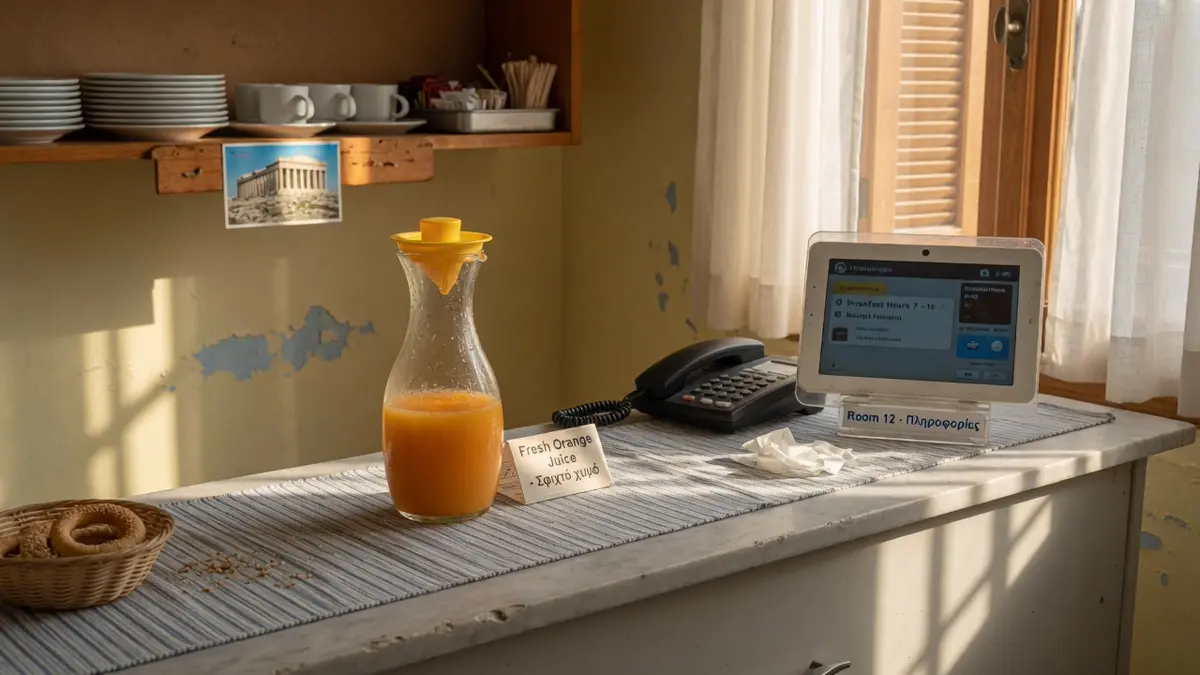
Pre-arrival and late check-in calls for hotels
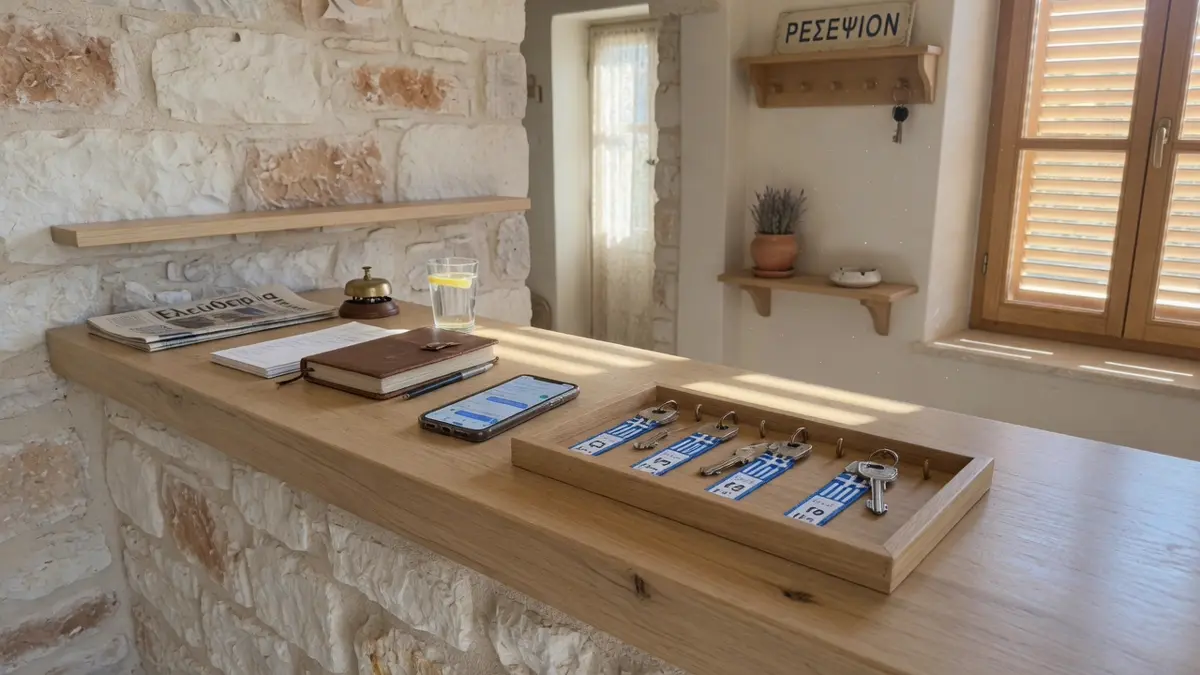
Quick summary
- Tomorrow's list is on the desk. Two names have no time. One wrote late ferry. Nobody rings them.
- This is not a new booking. They already have a bed. The call confirms they still come, and when.
- A late arrival needs the rule you already use: last check-in, key box, who to ring after the desk closes.
- It does not give the room to a walk-in, release the night, or promise a person at a locked door.
- It calls in the language on the reservation. The SMS with the night rule follows that language.
- Set the hours it may ring before the first name goes out. Do not leave a key-box code on a voicemail.
TL;DR
Tomorrow six people are due. Two gave no time. One wrote late ferry. You are checking someone in, or you have already locked the desk. Nobody rings those names. An assistant calls the guests who already have a bed. It confirms they still come, takes an arrival time, and says the late-arrival rule you actually use — last check-in, key box, who to ring after midnight. It will not release the room, invent a driver, or promise someone will wait. It speaks the language on the reservation — 70+ languages — and texts the rule in that language.
Key takeaways
- Start with tomorrow's arrivals that have no time, and with tonight's late arrivals.
- Confirm the stay that is already in the book. Do not open a new booking on this call.
- Write the late-arrival rule once: last check-in, key box or no key box, who still answers.
- Do not let it release a room, refund a night, or offer the bed to someone at the door.
- Call in the language on the reservation. The SMS follows that language — 70+ languages.
- Set quiet hours and retries before the first name. Never leave a key-box code on a recording.
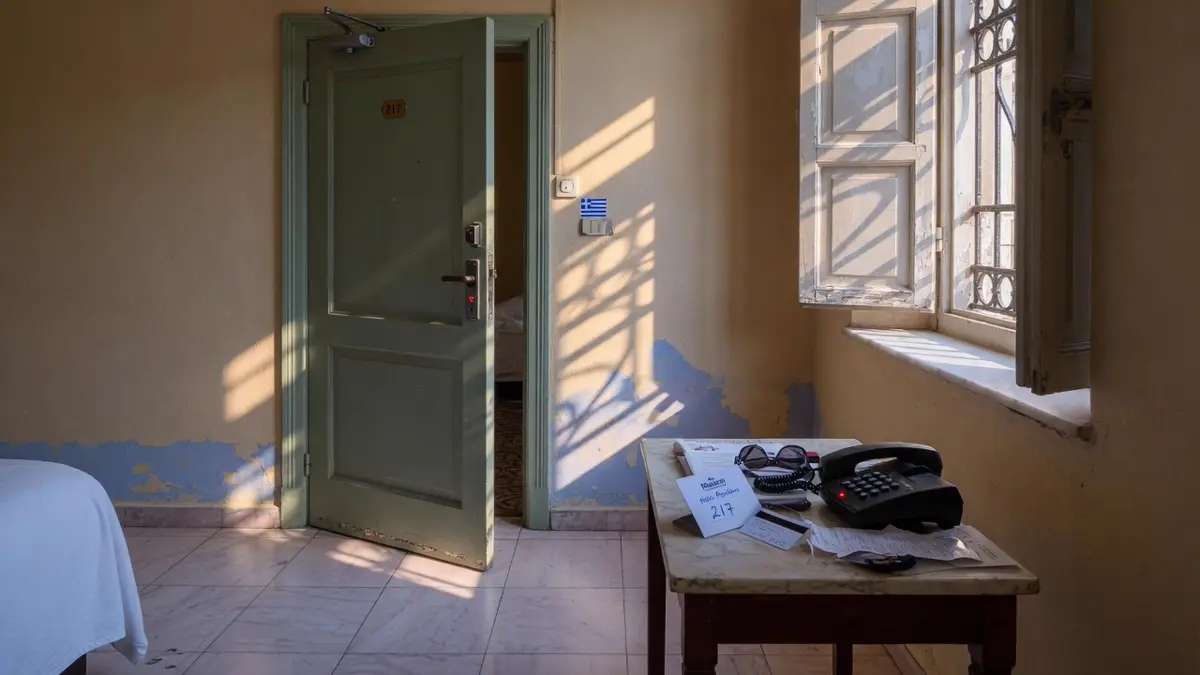
Tomorrow’s list, still uncalled
Tomorrow’s arrivals are on a list on the desk. Two have no time. One wrote late ferry. You will not ring them. A passport is open in front of you. You are writing a name into the book, finding a key, saying when breakfast starts. Or you are upstairs with a towel. Or you have already locked the desk and gone to dinner.
Tonight someone on the last boat will stand at a dark door if nobody told them the key box. Someone else will not come at all. You keep their room empty. A walk-in takes a bed two doors along.
These people already have a bed. They booked on your site, or on the channel, or they rang last week. They need a call that asks whether they still arrive, takes a time, and says the night rule you actually use. The person ringing in wants a double for Friday. This list is not that call.
Why those calls never get made
Nobody rings them because the person who would has both hands on a check-in. Passports, a card, two bags in the doorway. The phone that would make the outbound call is the same phone already ringing with a new availability question.
After this guest you are not free. You are taking a bag up. You are resetting a room that a taxi just emptied. You are at breakfast and you cannot leave the room. In the evening you have locked the desk. The late names are still on the paper.
A call-centre shift does not know your last check-in time, whether you have a key box, or whether you wait after the last boat. A sheet they were sent in May will say someone will wait. You are asleep. In the morning you find out who came. The ones who stood outside and left do not leave a note. The ones who never meant to come still have a line in the book.
Pre-arrival is not a new booking
The first fact on this call is the stay that already exists. Dates. Room type they booked. How many names are on it. The assistant names those facts and asks whether they still hold.
It does not open a fresh availability search. It does not ask “what dates would you like?” as if this were a stranger. That question turns a guest who is already on tomorrow’s list into a second booking, or it skips the late ferry and opens a new stay for a different night.
It takes an arrival time. Approximate is enough: afternoon, after the boat, after ten. If they do not know yet, it writes that down. It does not invent a time.
If they say the dates have changed, the call is no longer a confirm. It is a request. The assistant takes the new dates and a number. It does not move a stay that already lives on the booking site. It does not say another night is free unless the book you connected shows a free room of that type. You or the channel finish the change.
If they ask what the room costs, it may repeat a published rate you gave it for those dates and that room type. It must not invent a figure, round a sea-view down to the garden price, or guess what August costs this year. If you did not type a figure for that stay, reception gives the price when they can see the book.
Late check-in is a different call
A guest marked late is not the same call with a later time. They already have a bed, or they think they do. They want to know if anyone will still be there, and what to do if not.
The honest answers are short. Yes until a time you set. Here is how the key box works. Ring this number when you are at the door. Or no, we cannot take an arrival after that boat.
An assistant that answers with “someone will wait” when you are asleep has not heard the question. Write the night rule in the words you already send by text: when the desk closes, whether there is a key box, which mobile still rings. If those three lines are empty, it will promise a night welcome you do not staff.
It confirms they still come. Then it says the rule. Then it texts the same words. The text is what they will look at on the quay.
If they ask whether someone can stay up, the assistant does not decide. It takes the request. You decide whether a person waits.
If they are already on the water and the boat is late, that is still this call. Take the new time. Repeat the rule. Do not open a new stay. Do not release tonight’s room because the boat left Piraeus behind schedule.
A room it must not release
The bed stays theirs until a person who can see the book says otherwise. A missed call is not a cancellation. A voicemail with no reply is not a cancellation. “We might be delayed” is not a cancellation.
If they answer and say they are not coming, the assistant writes the words they used and stops. It does not offer the room to the next person who asked. It does not tell a walk-in the double is free. Two parties in the hall for one key is worse than an empty bed.
A no-show in the morning is a different job. The assistant does not release the night, refund it, or put it back on the site unless you wrote that down and a person has marked the stay as gone. Do not give it a sentence that sounds like permission. “We usually let it go after eleven” will be read out.
A stay that already lives on the channel is not something the assistant ends on the phone. Date changes, “can we come a day later,” and “we will only take the first night” are requests. You or the channel decide. A yes on your number for a room the channel still holds is a fight at the desk in the morning.
The language on the reservation
The reservation already has a language. English on a booking from the Athens flight. German on a paper in the hire car. French, Italian, Dutch, in the same week. Greek when a cousin reserved for someone else.
You are not free to ring them in that language at four, with a passport open, and you are not free at ten. The assistant starts in the language on the reservation. If they switch mid-call, it follows. The SMS goes out in the language of the conversation. You do not set a language per room.
A night rule in Greek, sent to a guest who booked in German, will not get them through the door. They will stand in the lane and ring the next house that answers in their language.
If a husband takes the phone and continues in English, it follows. The text still goes to the number on the reservation, in the language that just finished. On a small Greek hotel in summer, most of the outbound list is not in Greek. The call fails if the rule arrives in the wrong one.
The ferry, the flight, and the last boat
Plenty of arrivals on a Greek island or a coastal street are not a car pulling up at three. They are a boat that leaves when it leaves, or a flight into Athens and a road that takes longer than the map said.
The assistant may ask which they are coming off — boat, plane, or road — if that changes the night rule. It may take a flight number or a boat time if you asked it to. It must not turn that into a pickup promise. A transfer is a service you already run, with a person who is free. If you do not run it, it says so.
It must not invent a later last-check-in because the boat is late. The rule you wrote is the rule. If you sometimes wait for a named boat, write that exception down. If you do not, the guest needs the key box or the truth that you cannot take them tonight.
A guest who will miss the last boat and wants to arrive in the morning is asking to change the stay. That is a request. The assistant does not move tonight’s room to tomorrow unless the book shows that tomorrow is free and you allow that move. Tonight may still be theirs until you release it. Do not let it give a ferry time it guessed, or a promise that the boat will dock at eleven because it usually does.
Pickup, breakfast, and the questions that arrive on a confirm
A confirm call collects extra questions. Can you collect us at the port. What time is breakfast. Is there parking. How do we find the door from the quay.
Those answers live in the house facts you entered. The assistant may repeat them. It may not invent a shuttle, a breakfast terrace on the water, a parking space you do not have, or a driver who is not on the roster. If the entrance is around the corner from the name on the street, put that in the first things it can say.
A complaint about a stay last year is a note, not a free night from the phone. An extra bed or a third person who is not on the reservation is a request. The assistant does not say the room can take another adult unless you wrote that down for that room type.
How CITT handles it
- You give it the lists you already have. Tomorrow’s arrivals with no time. Tonight’s late names. Not people who already hold a key.
- It calls in the language on the reservation — 70+ languages — and introduces itself as an assistant for the house.
- It names the stay that already exists, then asks whether they still come and when they expect to arrive.
- It says the late-arrival rule you wrote and nothing you would take back at midnight.
- It checks the book you already use before it agrees a date change. If the book does not show a free room, it takes a request.
- It confirms by SMS, in the language of the call, including the night rule and, only after they have said they are coming, a key-box code you told it to send.
- It escalates a date change on a channel booking, a pickup you have not confirmed, a “we are not coming,” or a complaint, as a tagged note. You get the transcript, the arrival time, and whether the night rule was sent.
What it will not do
It will not release a room because nobody answered. It will not refund a night. It will not offer the bed to a walk-in from this call.
It will not invent a driver, a person waiting at a locked door, or a key box you do not have. Pickup is only if you offer it. A night welcome is only the rule you wrote.
It will not move a stay that already lives on the booking site. It will not invent a rate. It will not read a key-box code into a voicemail. A complaint is a note. A human decides.
What these calls sound like
The order is the stay that already exists, then whether they still come, then a time, then the night rule said out loud. There is no new booking and no promise that someone will wait when you have gone to bed. A “we are not coming” goes on a note you can act on with the book open.
What you set up first
Give it tomorrow’s arrivals with no time, and tonight’s late list. Connect the book you already use. Write the late-arrival rule in the words you already send: last check-in, key box or no key box, who still answers.
Give it only the published rates and house facts it may repeat — breakfast hours, parking, how to find the door from the port. Write one line that forbids a released room, a refund, a free night, and a key-box code on a voicemail.
Set the hours it may ring, and how many times it tries. Then listen to three late-arrival calls before you add a day-before confirm for every name on the list.
Rates for the service live on the pricing section of the home page. They are not repeated here.
AI receptionist, in-house staff, or a call centre
| CITT | In-house | Call centre | |
|---|---|---|---|
| Rings tomorrow's arrivals | Yes, from the list you give it | If they finish the guest in front of them | If you export the names |
| Asks whether they still come, and when | Yes — that is the call | Yes, when they have a free minute | Often just reads the dates |
| Says the late-arrival rule | The rule you wrote, nothing else | If they are still awake | A generic “someone will wait” |
| Releases the room if they do not answer | Never | Sometimes from a guess | Risk, if the sheet says no-show |
| Invents a pickup or a person at the door | No — only what you already offer | Can see who is still in the house | Tempted to sound helpful |
| Language of the reservation | 70+ languages | Greek, and English if they have it | Whoever is on that shift |
| Key-box code | SMS after they confirm, never on a voicemail | If they remember to send it | Often read aloud to a machine |
What unconfirmed late arrivals cost a small guesthouse
Worked from these assumptions — change any of them and the answer changes:
- One person at reception. A house of about eight rooms, a normal July week.
- About six arrivals on a typical day. Two of them have no time. One is marked late.
- Over a 20-week summer this example counts 40 late arrivals with no time confirmed. Put your own weeks and your own count in.
- Of those 40, this example assumes 8 reach a locked desk, cannot get in, and take a room on the same street for that night. Change the 8 if yours is lower.
- One night is worth about €80 to the house — YOUR figure will differ, and this is the number to change first.
- 8 locked-door nights in one season.
- 8 × €80 = €640 that went to the house two doors along, from guests who already had a bed with you.
- Separate from that, some names never come. If a guest would have cancelled when asked, you decide whether to release the room. The assistant does not.
About €640 a season from the locked door alone — and only if you accept the eight nights above. Change them.
What it costs
CITT is pay as you go: no packages, no minimum, no contract. The current rates — the monthly fee per number and the per-minute rate — are on the pricing section of the home page, which is the only place they are published.
Frequently asked questions
Who should it call first?
Tomorrow's arrivals who never gave a time, and anyone due tonight after the desk closes. Those two lists are short and the facts are already in the book. Do not start with last year's guests or with people who already hold a key. Add a day-before confirm for every arrival only after you have watched the late list for a week.
Can it give the room to someone else if they do not pick up?
No. A missed outbound call is not a cancellation. The bed stays theirs until a person who can see the book decides otherwise. If they answer and say they are not coming, the assistant writes that down and leaves the release to you.
Will guests mind a software call the day before they arrive?
They mind a sales call. They do not mind “you have a room tomorrow, what time do you arrive, here is how you get in after nine,” if they booked the room. The assistant says it is an assistant, names the house, and stops if they ask not to be called again. You set the hours.
What if they want to come a day later, or add a night?
That is a request, not a confirm. The assistant takes the new dates and a number. It does not move a stay that already lives on the booking site, and it does not say a different night is free unless the book you connected shows it. You or the channel finish the change.
Can it send the key-box code?
Yes, by SMS, after they have said they are still coming, and only if you put that code in and told it to send it. It must not read the code into a voicemail. If you have no key box, it must not invent one. The sentence is the night rule you already send: last check-in, key or no key, who to ring at the door.
What happens when they do not answer?
You set the retries and the message. A short recording that names the house and asks them to ring back is enough. The key-box code does not go on that recording. After the tries you chose, the name stays on a list the desk can see, still holding the room.