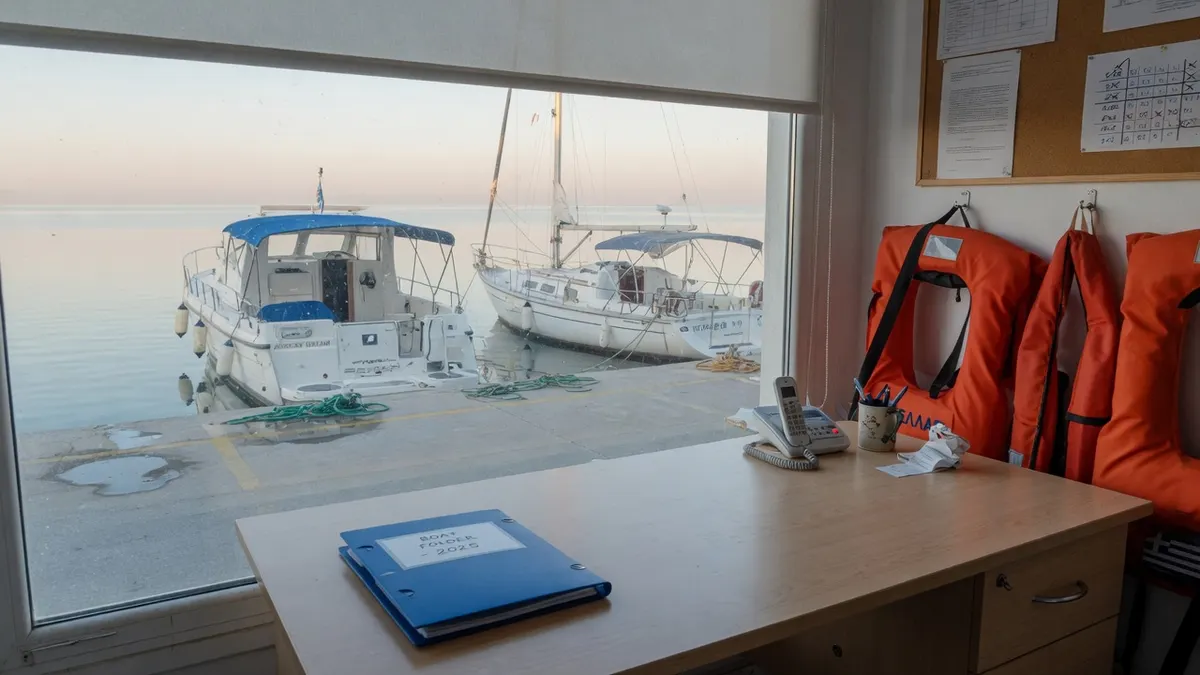
Book yacht viewings and briefings without mixing weeks
Quick summary
- The assistant reads the diary before it offers a time, so a Saturday briefing is never offered as a sales viewing.
- A week-charter viewing and a day-boat slot are different bookings. Get that wrong and eight people sit in a four-hour gap.
- Week, day boat or briefing first. Then dates, skipper or bareboat, berths. Then the diary.
- Cover, licence, deposit and a week's price stay a callback unless you typed a published figure.
- If the assistant cannot read the diary, it takes a callback. It does not guess a free catamaran.
- The assistant texts the time, the type, and which papers to bring, so the licence that arrives is a licence you can see.
TL;DR
You are in a cockpit. A caller who wants a time will not wait for a callback just to learn whether Thursday is free. An assistant can book those times if it reads the diary first, treats a viewing as different from a Saturday briefing, and asks week, day boat or briefing before it places anything. A week is dates and skipper or bareboat. A cover question is not a new visit type. If the diary cannot be reached, the assistant does not guess. It takes the request and says so. The assistant texts the time, the type, and what papers to bring.
Key takeaways
- Give the assistant the types and their real durations before you let it book — viewing, Saturday briefing, day boat, skipper meet.
- Mark changeover hours and pulled-boat weeks in the same diary it reads, including October.
- Test a move on an existing briefing and on a viewing, separately, before you test a new August week.
- Turn on the SMS at the moment of booking, with the paper list for that type.
- If the diary cannot be reached, the only answer is a callback.
- Check the first fifty bookings by hand. That is when you find the briefing that was put into a viewing hour.
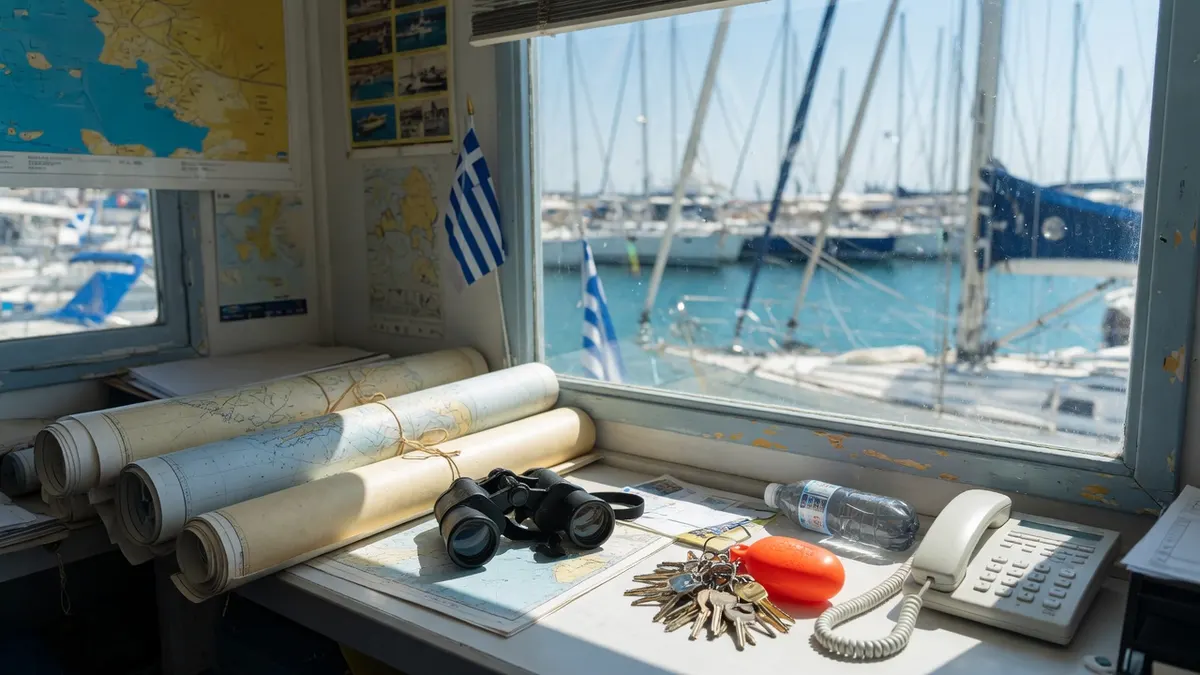
A week is not an empty Saturday
A hotel books a night. A charter base books a hull against a week, and a person against a briefing. Those are not the same diary.
The caller says Saturday 09:30 as if that were a square you can write in. 09:30 on changeover is a briefing. The skipper is in a cockpit. The catamaran they want to view may still have last week’s crew in it. An assistant that treats “Saturday morning” like a showroom slot will put eight people at a gate you cannot leave.
So the first job is not to be helpful with a time. The first job is to know what kind of visit this is, then to read the diary you already use.
Week, day boat, briefing — then the facts that belong to it
Week viewing. Dates, berths, skipper or bareboat, boat type if they said. Without those, there is nothing to check. “A catamaran in August” is not a week. First week of August, eight berths, is a week. A hold is not a viewing unless you wrote a hold rule.
Day boat. Hours, people, whether you run days at all. A four-hour Saturday is not a week on a forty-foot hull. If you mark them as the same type, the assistant will offer a week viewing in a gap that was meant for a small boat.
Briefing. Boat already on the sheet, name of the crew, start time they were given. A briefing is not a new week. Opening a second visit for the same crew blocks an hour you still need on the pontoon.
Only after that split does anyone look at a clock. An assistant that opens with “which week would you like?” will put a pontoon problem into next August and leave a crew standing by a fuel hose.
The diary, not a memory of which hull is in
Connect the diary the base already works from. If that diary shows a free viewing of the type they need, the assistant may offer that slot. If the diary is silent, stale, or unreachable, the assistant does not guess. It takes the request and says the base will confirm.
Guessing is how you get a family at a gate while you are still counting fenders. It is also how you promise a catamaran that a portal already optioned.
Mark changeover hours, in the same place the assistant reads. Saturday morning is not Thursday. October is not July. If boats are pulled, the honest answer is that boats are pulled — said on the first call, not after a text that already went out.
Skipper weeks need a mark too. A hull that looks empty on a bad export still needs a skipper if they asked for one. The assistant should see the same truth the pontoon sees.
Dates, skipper or bareboat, berths — the three that must be on the note
People remember the week. They remember how many they are. They know whether they wanted a skipper. They do not remember your booking code.
Write those three on every new week, even when the diary refuses the slot. A refused slot with dates is a callback you can make. A refused slot with “family, boat” is a voicemail you will not return in time.
Berths are not decoration. Eight is not six. The assistant does not downsize the hull to make the diary look free. If they need a boat you do not have that week, that is a callback or a no — not a squeeze.
Skipper or bareboat on the same line. An assistant that writes “August, catamaran” has not booked anything you can keep.
What must not be booked as if it were a visit
Cover is not a visit. If they ask whether they are covered, the assistant does not create a “cover appointment”. It records the question. It never says they are covered.
A licence decision is not a visit. Note what they say they hold. Book a time to show papers if that is a type you use. Do not write “licence OK”.
A deposit figure is not a visit. A published figure you marked as speakable may be repeated. “It is refundable” may not.
A week’s price from a description is not a visit. Take the request. Do not invent a number to make the time feel real.
A hold on a hull is not a viewing unless you wrote the rule. Do not let the assistant speak a hold to keep them off the next quay.
Legal questions — Turkey, fault, who may skipper — are notes. They are not slots.
Viewings and Saturday briefings are different types
If you give the assistant one type called “yacht”, it will treat the viewing and the briefing as interchangeable hours. They are not.
A viewing starts from the office or the gate. The clock is an hour you can leave the pontoon. The risk is eight people and no boat to stand on.
A briefing starts from a hull that already has a crew. The clock is changeover. The risk is a second family walking down the finger.
Put different durations on them. Put Saturday morning on briefing unless you marked a viewing window. Test a move on each type before you let the assistant touch a new August week. The first fifty bookings are where you find the viewing that landed on the briefing.
Day boat is a third type if you actually run it. Do not let a week request be “fitted” onto a four-hour gap. Do not let a day request be promised a catamaran because the greeting was friendly.
If the diary cannot be reached
The only honest sentence is that the diary cannot be reached. Take the dates, skipper or bareboat, berths, a name and a number. Say the base will confirm. Do not offer Saturday from last week’s memory.
This is the failure that looks like success on a transcript. The assistant was polite. It wrote a time. The hull was never free.
Give it a short outage line so it does not improvise. Outage is a callback, not a best guess, and not “you are probably fine for that week”.
The SMS is part of the booking
A viewing that is not texted is a viewing the family will ring again from the gate. Turn the SMS on at the moment the diary is written, not an hour later.
The text follows the language of the call — 70+ languages. It should carry dates, type of visit, and which papers to bring. It should not say those papers are enough. It should not say they are covered.
No diary, no text. A confirmation of a guess is worse than silence.
Do not put a deposit amount into the first SMS unless that figure is a published one you marked as speakable.
What you configure first
- Types and durations. Viewing, Saturday briefing, day boat, skipper meet as a separate type if the skipper is a different hour. Real minutes, including the walk from the gate.
- Changeover hours and pulled-boat weeks, in the same diary, with October as its own row if it is different.
- The three fields required before a slot — dates, skipper or bareboat, berths.
- Speakable prices only, if any. Everything else is a callback.
- Licence and cover language. Question, not yes. Never “you are covered”.
- SMS template with papers to bring, in the language of the call, without a licence decision.
- Outage behaviour. Diary unreachable means callback.
- Hand-check the first fifty. Briefing in a viewing hour, day boat written as a week, licence treated as yes.
A booking assistant that still says they are covered is not a booking assistant. It is a second person on the recorded line saying a sentence you will own when the dinghy is gone.
Rates for CITT itself live on the pricing section of the home page. They are not repeated here.
AI receptionist, in-house staff, or a call centre
| CITT | In-house | Call centre | |
|---|---|---|---|
| Reads the diary before offering a time | Yes, the diary the base works from | Yes | Usually not — takes a message |
| Books evenings and pre-season viewings | Yes, if you marked them | If they are still on the pontoon | Sometimes |
| Treats a briefing as different from a viewing | If you marked the two types | Yes | Rarely sees the week |
| Starts with week, day boat or briefing | Yes — before it looks at the diary | Yes | Often jumps to which week |
| Books a cover or licence decision | Never — the base looks at the file | After the papers | Sometimes books "a cover chat" |
| Sends the confirmation and what to bring | Automatically, by SMS | If they remember | A generic text |
| Speaks the caller's language | 70+ languages | One or two | Whoever is on that shift |
What a mixed Saturday costs when a viewing lands on a briefing
Worked from these assumptions — change any of them and the answer changes:
- One skipper on Saturday from 09:00, already in briefings on the sheet.
- A new August viewing is offered 09:30 because the types were not marked.
- A week that then goes to the next base is worth about €2,400 — put your own figure in.
- This example assumes that mix happens twice in a busy month. Change the count if yours is lower.
- Two viewings are written onto hours that cannot take them.
- Both families ring the next quay when nobody is at the gate.
- 2 × €2,400 = €4,800 that month, plus two crews waiting on the pontoon with no briefing.
- Busy months, over a 5-month season — 5 × €4,800. Put your own months in.
About €24,000 a season from mixed times alone — and only if you accept the conversion. Change it.
What it costs
CITT is pay as you go: no packages, no minimum, no contract. The current rates — the monthly fee per number and the per-minute rate — are on the pricing section of the home page, which is the only place they are published.
Frequently asked questions
Can it book a viewing if the diary is down?
No. If it cannot read the diary you already use, it takes the dates, skipper or bareboat, and berths, and leaves a callback. A time spoken without the diary is how a family meets you in a cockpit that already has a crew, or how a briefing is promised after the last boat has left.
What does it need before it offers a time?
The type — week, day boat, or briefing — then the dates, skipper or bareboat, how many berths. A time without those facts is a guess. Licence and deposit are questions on the same note, not a reason to skip the diary.
Can it put a hold on a catamaran from this call?
Only if you typed a hold rule and the diary shows that boat still open. It must not invent a hold to keep them off the next quay. A hold that is not on your sheet is a week you will explain twice.
Will it text which papers to bring?
Yes, if you turn the SMS on at booking. The text follows the language of the call — 70+ languages — and should carry the paper list you actually want for a viewing, not a licence decision. It does not say those papers are enough.
What if they want a skipper meet on the same slot as a viewing?
That is two types if the skipper is a different hour. The assistant notes the skipper request and still checks the diary for the viewing. It does not say the skipper is free unless that week is marked free.
How do I know the first week's bookings are right?
Read the first fifty by hand against the diary. Look for a briefing in a viewing hour, a day boat written as a week, and a licence question that was treated as a yes. That is the week the types were wrong, not the week the greeting was wrong.