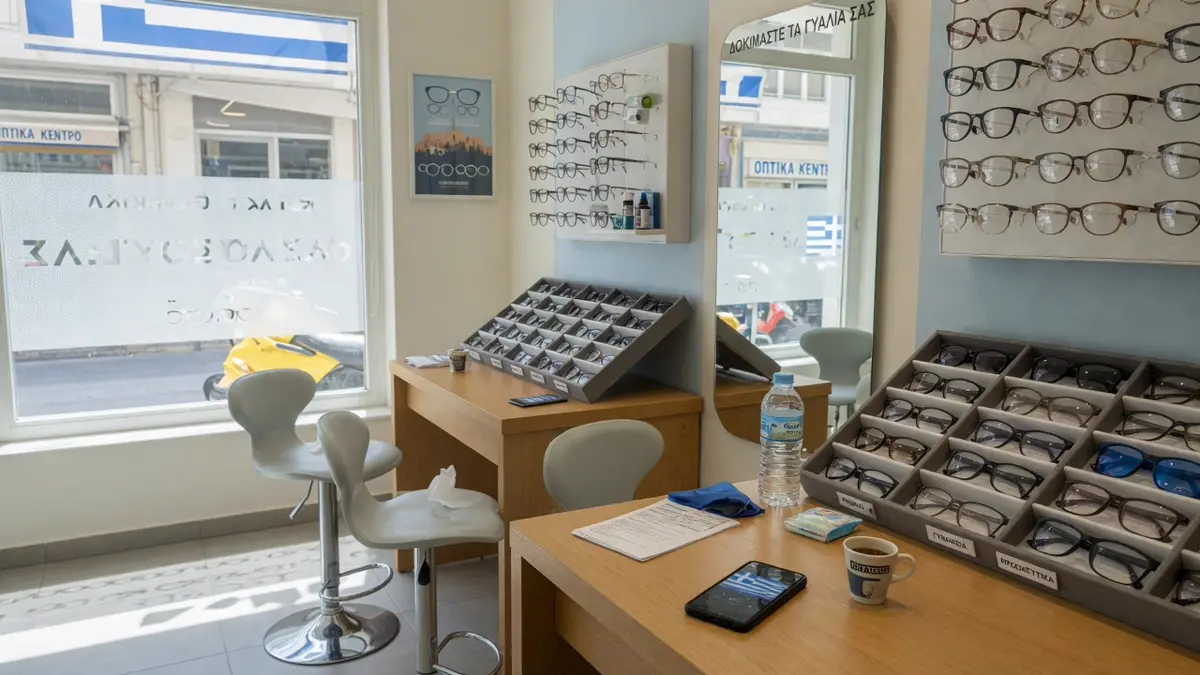
Ready-pair and test-reminder calls for opticians
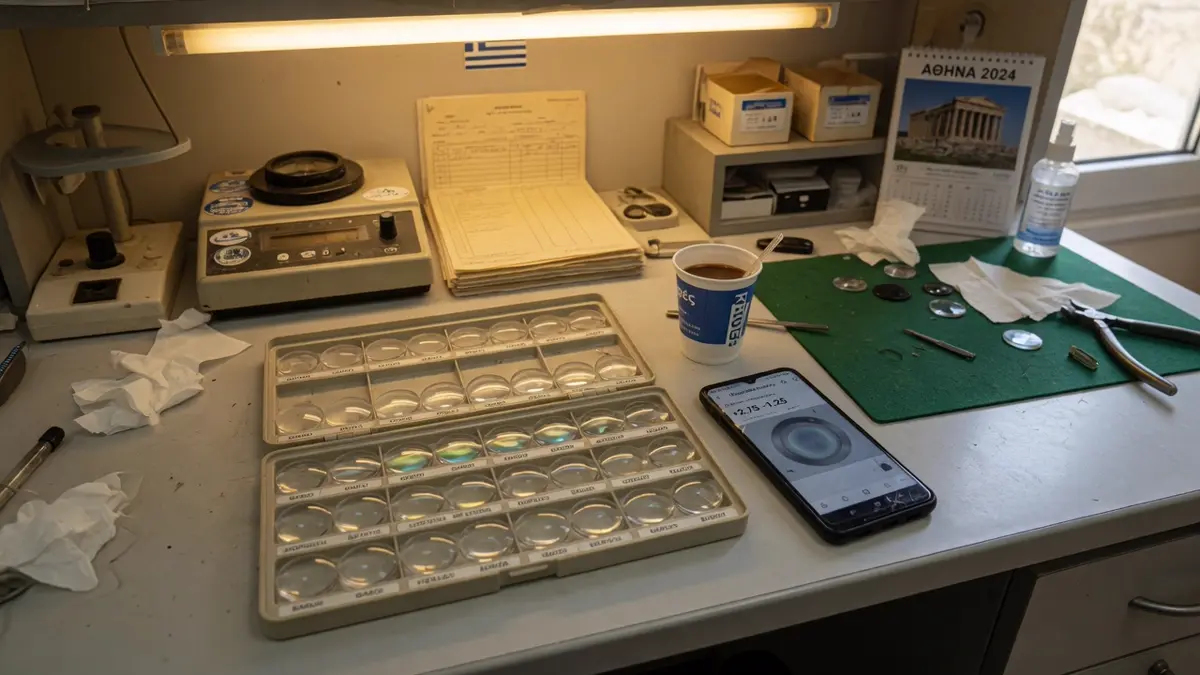
Quick summary
- The last fitting of the day is still on the table. Two lists are on the desk. Nobody will work them tonight.
- Remind tomorrow first — eye tests from the tester's book, drop-ins you actually booked. Those are not one list.
- Collection comes off the tray. Ring only the pairs you have marked ready. Do not invent Friday from a promise.
- People who tried frames this morning get three honest endings: come back, a call from the desk, or leave it.
- The assistant will not say a pair is ready, invent a prescription, or speak a frame price, unless that fact is in what you marked.
- Last month's almost-buyers are a different call from this morning. Mix them and you ring people about a pair they already bought next door.
TL;DR
The last fitting is still on the table. Tomorrow's eye tests have not been reminded. The marks on the tray say who is ready. This morning someone tried frames, said they would think, and went home. Nobody rings them, because the hour those calls belong to is the hour both hands are still on a temple. The assistant works the lists you already keep: it reminds tomorrow's times, rings only pairs you marked ready, and asks the people who sat in the chair whether they want to come back. It will not invent a status. It will not invent a prescription. It will not invent a frame price.
Key takeaways
- Turn on tomorrow's reminders first, from the live diary — tests with the tester, not a sheet exported on Wednesday.
- Build the ready list from pairs you have marked, not from everyone who was promised this week. Ring only those names.
- Add the same-evening follow-up next: come back, a desk callback, or leave it. Do not pitch a pair they have not seen.
- Write the outbound script so it cannot say ready, invent a prescription, or speak a frame price unless the mark is on that row.
- Take any number off the list that asks not to be called, the same day, before the next pass.
- Listen to the first fifty outbound recordings for a ready you did not mark, a figure, or advice about an eye.
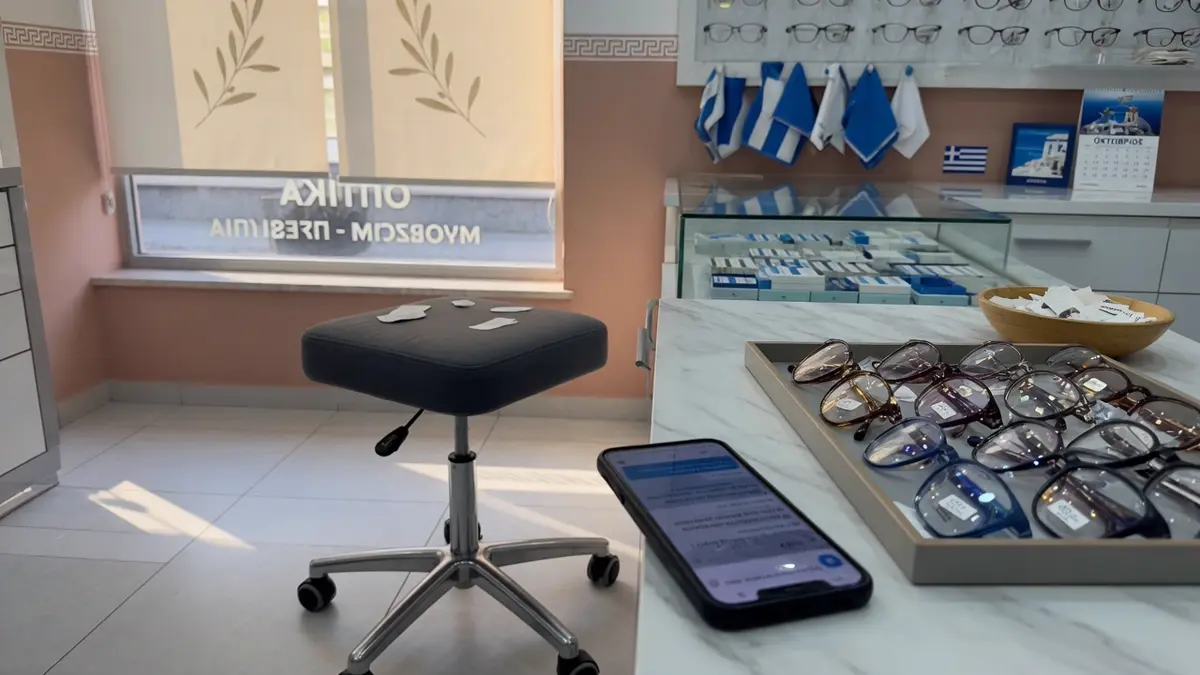
The last fitting is still on the table. The lists are not.
Saturday, 18:30. The last client has left. The heater is still warm. In the workshop a pair is in the tray with a name on it. Someone at the desk is tagging a bag for Monday. On the same desk are two sheets nobody will touch tonight.
One is ready. You marked the pair this afternoon. They were told this week. They have not collected. The names are already yours. They came from the tray, not from a bought list.
The other is this morning. Three people tried frames. One of them sat with the thin metal pair and said they would talk to a partner. They went home. They are on the sofa with a photo of the boards. The next shop on the street is still lit. They will answer the first number that rings.
Tomorrow four people are booked with Anna. Two more said they would drop a broken pair. None of them have been reminded.
You will not make those calls. The hour they belong to is the hour both hands are still on a temple, or a screwdriver is still on a hinge.
That is outbound on this number. Not a campaign. Not “we have something you might like”. The names the tray already marked ready. The people who already have a time tomorrow. The people who already sat in the chair.
Tomorrow, the tray, this morning
Four piles. Turn them on in this order. Do not mash them into one pass.
Tomorrow’s times. Friday evening, or Saturday morning if Sunday is a test day. The list is short because it comes from the diary you already use, not from a sheet someone exported on Wednesday. Anna’s book for a test. The walk-in note only if you actually booked a fitting, not every person who said they might come down. Time still good? They found another shop on Friday night? If they need to move a test, release the stretch, take the new time only if the tester is in, then send the SMS. Do not park a collection on a test hour. Do not put a walk-in against Anna.
A reminder can confirm that the time is in the book. It cannot confirm that a pair is ready. If the pair had come in, you would have marked it. This call is the reminder. The SMS follows the language of the booking — 70+ languages — and names the hour, not a tray status.
Ready. From the mark you already made. Name on the bag. Pair on the tray. Ring only those names. Tell them they can collect, how, and until when. Do not ring a promised Friday that you have not marked. Do not sell a second pair on that call. Do not invent a prescription for the spare they mentioned in passing.
This morning’s fittings. The same evening, once they could reasonably be home. Not a pitch. Three honest endings: they want to come back, they want someone at the desk to call them, or they want you to leave it. Write down which. If they want to come back, the same rules as any visit — a free stretch, the boards or a short fitting, SMS only then. If they ask what the thin metal pair will cost with their numbers, the assistant writes the words and flags you. It does not speak a figure.
Names that went quiet. Last month’s tests. Last spring’s almost-buyers. The person who tried frames in April and then stopped answering. These are not this morning’s call. Shorter. Faster opt-out. Ask whether they still want to come in, which of the three they still mean. Do not describe a thin metal pair. Description is how you claim a pair is on the board.
After they sat in the chair
This is the call desks mean to make and do not.
They remember the sit, the weight on the nose, the shape they almost chose. They also remember the next shop they looked at from your door. Tonight they will pick which number to answer.
If nobody from your shop rings, the decision happens without you. Monday you send a polite text. They have already sat down somewhere else, or they have gone quiet, which on a high street usually means the same thing.
The assistant can make that evening call because it is not holding a temple. The script is small on purpose.
You tried frames this morning, this hour. Do you want to come back? Do you want someone at the desk to call you? Or shall we leave it?
That is the whole useful conversation. Anything longer starts to sell, and selling on this call is how a price, a “yes those numbers are still fine”, or “we have another thin metal pair” gets into their evening from a voice that cannot see the face.
Do not run this call against a name that never showed. The diary already shows who sat down. Thanking a no-show for the fitting is how you look careless before you have said a useful sentence.
Do not run it against a pair that left this afternoon with someone else, if you only had one of that shape in that size. If the board no longer has what they sat in, the honest call is a person, not a machine asking whether they want to come back for a pair you cannot put on their face.
Two people who sat in the same hour this morning must not hear about each other. “The other customer loved that shape” is pressure. So is “someone else is coming tomorrow, so you should decide”. The assistant does not say either. You can, with the pair in your hand.
Open Saturday on the street is a different evening. People walked in during the advertised hours. They did not all have a booked test. The assistant can ask whether they want a booked hour if one can be confirmed. It should not speak as if each of them had sat for a test.
A pair you put on the line
On an inbound call they chose you. On an outbound call you chose the moment. You put a status or a figure into their evening. If that pair is not marked ready, or that figure was a guess, you wrote the card.
The usual version is “your glasses should be in” and then a day. A promised Friday is not a mark. If the tray has no name on it, that paragraph cannot be spoken. Telling someone to come in for an empty tray is worse than a missed call. They walk down, you apologise, and they book the next pair next door.
The other version is the price. “The thin metal ones are around this.” “We’ll do better if you decide tonight.” Those sentences belong on a call where a person can see the pair on the face. The assistant can say that the desk needs them, and it can book that call. It cannot be the messenger of a deal.
A third version is the ready call that turns into clinical advice. “Yes, last year’s numbers are still fine.” “That’s just dryness.” The assistant does not say what the eye is. It offers a visit, or it puts the words in front of you.
A fourth is the mix. A ready name gets offered a new test they did not ask for. A Saturday fitting gets asked for a bag number and a collection. The person at the desk already keeps those piles separate. The assistant has to be told, or Saturday evening will have a collection customer holding a sales conversation and a tester waiting for someone who was only asked about a tray.
A fifth is a remake, offered on a follow-up because it sounds helpful. The assistant does not offer a free remake. It takes what they said. You look at the frames on the face.
Ready is a tray call
The cleanest outbound job in the shop, if you let it stay a tray job.
The name is already yours. The mark is one you already made. The offer is come and collect, during hours you are actually open. The assistant reads that mark before it rings. If the mark is not there, it does not ring.
It is not a test call. If they ask whether they need a new test while they are in, that becomes a request for you, not a confirmation that last year’s paper is current.
Glazing you sent out follows the same mark. If the workshop note is empty, the assistant must not promise Friday because that is what you said last month. A pair that is still out is not ready. Do not store a usual turnaround and let it read that out.
August: if you close and the tester is not in, ready collections wait for the hours you marked open. Do not offer a Saturday collect in a week you marked shut.
A caller who wants to move a test that is already in follows the tester’s book, not the tray. A cancel should free the stretch the way you already free it, so the next person who asked can take Thursday. Set the notice you already say.
“My eye has been red since last night, can I wait until the test?” is not a reception answer. Stop offering the routine hour. Take the words. Offer a sooner note for you, or follow the short redirect you wrote. A human looks at the eye.
Published ready-reader figures follow the same file rule as inbound. The assistant can repeat a figure you typed in. Unseen complete pairs cannot have a price from the phone. Do not store a “from” figure for the whole board and let it read that out on a follow-up.
What the assistant may not say
Outbound keeps the inbound bans, and adds one.
No saying a pair is ready unless you marked it. No prescription invented from an old paper. No complete-pair price from a description. And no invented pair — not “we have another thin metal one in that size”, not a description that would only be honest if a specific frame were still on the board.
A follow-up after a fitting is a question about the next step. The assistant does not re-describe the frames. They sat in them. A ready call offers a collection. It does not sell a second pair, a test they did not ask for, or a remake. It does not say the paper is current.
Which of the three still matters on the way out. A name from last month’s ready list is not offered Thursday with Anna for a test they have never booked. Get the first field wrong and every field after it is filed against the wrong pile.
A promised day is not a mark. Last week’s note is not a mark. The assistant says ready only when your own tray says so at that moment. If the mark is silent, stale, or unreachable, it takes the name and leaves the confirmation to you. It does not say yes because Friday was the promise.
A price asked on the evening call is the same trap as on the way in. Shape and “not too heavy” are not a figure. The assistant takes that they want a price when they come back. It does not speak one. You look at the pair on the face.
The partner who could not come
A lot of Saturday follow-ups are this, and only this: another person has to sit in the same frames. The partner who was at work. A parent driving down on Tuesday. Someone who has to choose because they will wear the pair.
Book that the way you book any visit. The first hour in the diary does not entitle them to a second one if the table is held for Anna, or if the only free hour is a walk-in window you already filled. If the tester is not in, the next visit is not at 11:10 just because a gap looks free.
If you have not configured a longer second visit — two people, more frames, a second sit — take the request. Do not promise the same person as this morning unless that person’s day says so. Do not promise a same-day glaze unless you actually offer one.
If two people want the same 18:30 at the same table, that is your call. The assistant offers the next real hour, or takes a request. It does not put two strangers in one chair and hope.
Write how a return visit works the way you already run a first one: length, who can take it, whether it is a walk-in or a short fitting. The assistant can repeat that. It cannot invent a test on a day Anna is off.
What you set up first
- Tomorrow’s lists, from the live diary. Tests and any booked fittings separately. Not a spreadsheet from Wednesday.
- Ready from the marks you made, not a dump of everyone who was promised this week. Name on the bag, pair on the tray.
- Today’s follow-up list, from fittings that actually happened. Name, what they tried, hour. Not the no-shows.
- A hard stop on ready, prescriptions and prices unless the mark or the published figure is attached to that row. One line that forbids ready off a promised day. One line that forbids a figure from a description. One line that forbids clinical advice about an eye.
- Quiet hours, retries, and an opt-out that writes the same day, before the next pass of the list.
- The tester’s days and the walk-in window marked separately. August, if you close. How a return visit works.
Then listen to the first fifty outbound recordings, including the short ones. You are listening for a “yes they should be in”, a figure, a second pair that was not on the board, advice about an eye, a remake that was not offered by you. If any of those appear, stop the list until the script is tighter.
Give it the published ready-reader and stock-sunglass figures it may repeat, if you have them, and do not give it a complete-pair figure it would read out.
April is not this morning
A number that sat in the chair this morning is a continuation. A number you have not spoken to since April is a cold call, even if they once tried frames and left a paper on the desk. Shorter script. Faster opt-out. If they still want to come in, they will give you which of the three they still mean. Mixing those two groups in one pass is how you ring people about a pair they already bought ten metres along.
A number that asked not to be called comes off before the next pass, not after a complaint.
Telling last month’s almost-buyers that something new matches should wait. If you do it, do it as a permission question: we have a shape in the size you already gave us; someone at the desk can call you about it; do you still want that. No description. No “it’s the thin metal pair, still on the board”. Do not attach a live board record to every quiet name so the assistant has something to say.
The language of the last conversation stays the language of this one, if you have it on the record. A visitor who sat in the chair in English should not get a Greek reminder about Saturday. A customer who booked in Greek should not get an English call about their pair. If you do not know, start in Greek and switch. Seventy-plus languages. The SMS follows the language of the call.
They do not pick up, and the test is still tomorrow. Do not leave a message that restates a pair and whether it is ready. A short “please call us back about tomorrow’s appointment” is enough, plus the SMS from the calendar. Three failed reminders on the same number is not a reason to try a fourth with a livelier script. Take them off tomorrow’s list and let a person decide whether the hour can be released. On a follow-up: one more try the next morning, then a note for the desk. On ready: the retries you set, then a note for the tray.
Saturday evening is a good hour for the people who just tried frames. It is a bad hour to start a ready pass at names who work early, and a worse hour to start a “still looking” pass at names from April, unless you choose that on purpose.
Before you give it a number
The facts you already use when you ring from the desk. Which lists, in which order. The sentence for “I cannot say that pair is ready from this call”. The sentence for a price that is not on the board. The tester’s days. Where to park when they come back. How a return visit works. The opt-out that actually writes.
Then the three forbidden sentences, written so nobody improves them later: we do not say a pair is ready unless it is marked; we do not invent a prescription; we do not give a figure that is not a published ready-reader or stock-sunglass number. And the fourth, for outbound only: we do not invent another pair that would fit.
If those are in place, the first week of recordings will be usable. Listen to the first fifty yourself.
Rates live on the pricing section of the home page. They are not repeated here.
AI receptionist, in-house staff, or a call centre
| CITT | In-house | Call centre | |
|---|---|---|---|
| Evening-before reminder | Yes, from the tester's book | If they remember after the last fitting | If you sent them the list |
| Ready only if you marked the pair | Rings only those names | When someone has an evening | Repeats the promised day |
| Same-evening call after they tried frames | Come back, desk callback, or leave it | When they get off the table | If you wrote a script |
| Says the pair is ready | Only if the mark is on that row | Checks the tray | Risk, if the sheet is stale |
| Speaks a frame price or a prescription | No — flags a person | Yes, if they can see the pair | Should not |
| Mixes a ready name onto a new test offer | No — two lists, two facts | Keeps the piles apart | One script, both jobs |
| Stops when the person says stop | If you configure the list | If they note it | If the list is clean |
What an uncalled ready list leaves on the tray
Worked from these assumptions — change any of them and the answer changes:
- A one-table shop. About 18 pairs are marked ready this month that nobody has collected.
- The desk reaches about 8 of them by hand. 10 names are still on the list.
- Of those 10, this example assumes 4 would have come in this week if someone had said the pair was ready. Put your own take-up in here.
- A collected pair is worth about €160 to the shop in this example — put your own figure in before you trust the answer.
- A pair that sits on the tray for a month is often collected somewhere else after they get tired of waiting.
- 4 uncalled ready pairs × €160 = €640 still on the tray in one month, or already collected next door.
- Over eleven working months — 11 × €640. Put your own months in if you close in August.
- That figure ignores the Thursday tests nobody reminded. Those sit on a different list.
About €7,040 a year of pairs that were already marked ready, waiting for a phone call. Change the take-up and the pair figure.
What it costs
CITT is pay as you go: no packages, no minimum, no contract. The current rates — the monthly fee per number and the per-minute rate — are on the pricing section of the home page, which is the only place they are published.
Frequently asked questions
What should it call about first?
Tomorrow's times. The list is short, it is already in the diary, and silence has a concrete cost: a tester and a chair. After that, pairs you have marked ready. This morning's people who tried frames come third. Leave “we have a pair you might like” until you have watched those three run without inventing a status.
Can it tell them the pair is ready?
Only if you have marked that pair ready. A reminder can confirm that Thursday's test is in the book. That is a fact about the diary, not about the tray. A promised Friday is not a status. If you cannot live with that sentence, send the SMS from the calendar and keep a person on anything that might become a collection question.
What does the call after they tried frames actually ask?
Whether they want to come back, whether they want someone at the desk to call them, or whether you should leave it. It does not re-describe the frames. They sat in them. It does not say another customer loved that shape, and it does not invent a price. Those belong to a person who can see the pair.
Can it tell them last year's numbers are still good until they come back?
No. That is not a reception answer. The assistant offers a visit if the diary has one, or it puts their words in front of you. It does not say the paper is current, and it does not say what a red eye is. A human looks at the eye.
What if someone says they do not want these calls?
They come off the list the same day, and they stay off. Outbound only works if the desk is careful with the names it already has. A complaint about a call they did not ask for will cost more goodwill than the pair you might have collected.
Will it quote a frame price on the follow-up?
It repeats a figure only when that figure is a published ready-reader or stock-sunglass number you typed in. It will not estimate a complete pair, round, or agree that their guess is close. The assistant takes the request and flags you. You look at the pair on the face.