Pharmacy callbacks for stock notes and ready creams
Quick summary
- The notes next to the till are already a list: a named tin to confirm, a cream that is done, a pickup you looked up.
- This is not a new sale on a cold number. They already rang. The call returns the fact you now have.
- “We have the tin you asked about” is allowed only if that item is still on the list you marked.
- “The cream is ready for collection” is a pickup fact. It is not a dose, and it is not a substitute.
- It will not say an e-prescription is issued, waiting in a bag, or ready, unless a person marked that pickup.
- Set the hours it may ring before the first name goes out. Do not leave a dose, or another brand, on a recording.
TL;DR
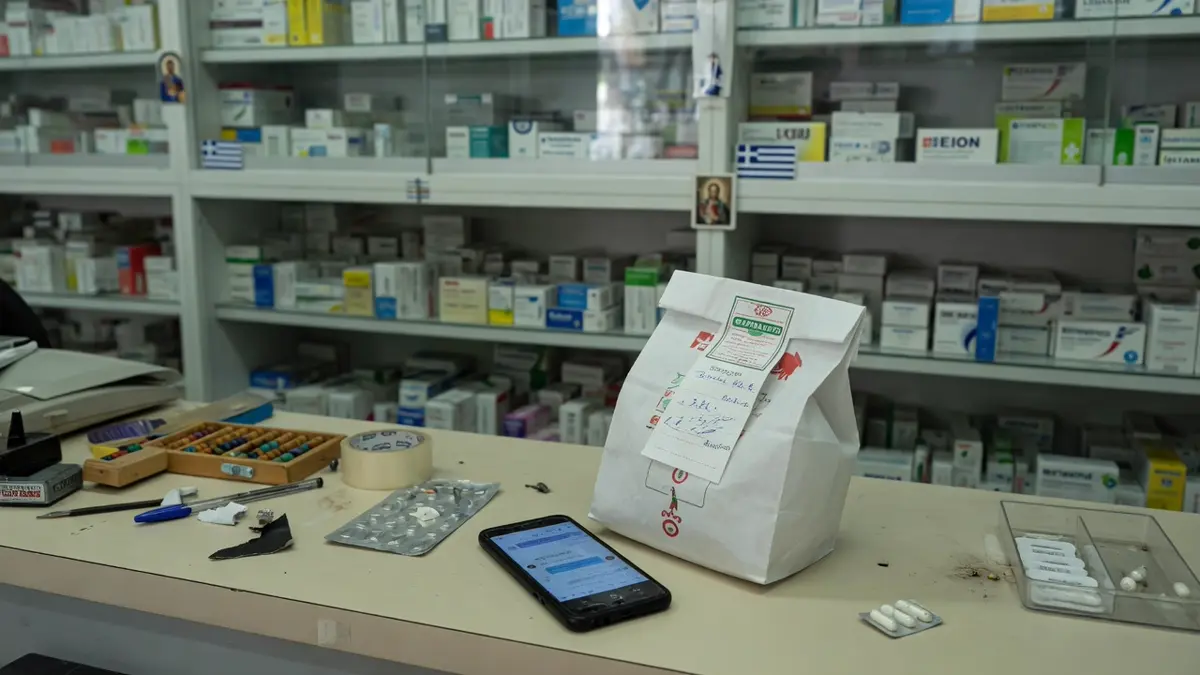
The queue is at the glass. Next to the till sit the notes from this afternoon: Maria asked about Aptamil, the compounded cream is done, a pickup name is waiting for a look on the screen. Nobody can ring them. You are sealing a bag. An assistant that can ring out works those notes. It says the tin is on the list, or that the cream is ready to collect, or that you are open until the time you entered. It never gives a dose. It never names a substitute. It never says a medicine is ready unless a person marked that note. It speaks the language of the original call — 70+ languages — and texts the hours or the collection fact in that language.
Key takeaways
- Start with today's stock notes and with creams a person has marked done. Do not export a month of names.
- Confirm a tin only if it is still on the list. If the drawer has changed, take the note back to the till.
- A ready cream is a collection sentence. It is not a dose, and it is not “put this on instead.”
- An e-prescription callback may say you looked, or ask them to come in. It may not say the medicine is issued.
- If they ask for a substitute on a call you started, stop the list work and write a note for the pharmacist.
- Set calling hours and retries before the first name. Never leave another brand, or a dose, on a voicemail.

The notes next to the till that nobody rang
You are sealing a bag. The person in front of you still has a question. On a pad next to the till, or on a screen beside the phone, the outbound work already has names. Maria asked about Aptamil at 18:40. The compounded cream for Dimitris is done. You looked up one pickup and still have not said so. Two people asked whether you open again after midday, and you said you would text.
The person at the counter meant to start ringing between customers. Then the evening queue filled. Then a duty question landed on a Sunday. At half past eight you lock the door. The list is still there.
The names are there. The pair of hands that would dial them is on a box.
Those names are not one job. Some of them need a yes or a no on a named tin. Some of them need a collection sentence for a cream a person has finished. Some of them need you, because the caller asked what to take. If you put those on the same list with the same script, the assistant will name a second brand to someone you only meant to confirm a tin for, or say a medicine is ready because a pickup note sat next to a cream note. Each list needs a reason you chose, wording that stops at hours and stock and collection, and a rule for when the call ends.
Start with the notes whose next sentence is a fact you have
Today’s stock notes. The caller already named a box. A person has looked, or the item is still on the list you marked. The assistant rings, names the tin as they named it, says it is on the list, says the hours you entered, and texts those two facts in the language of the original call.
If the drawer has changed since the note was written, the assistant does not guess. It does not say yes from memory. It does not say “we should have it.” It takes the note back to the till. A wrong yes on a callback is worse than a late yes: they walk in after you called them, stand in the queue, and leave without a bag.
Put compounded creams on that list next, if a person has marked the jar done. The sentence is that the cream is ready for collection, and the hours. It is not when to put it on. It is not how much. It is not what to use if they run out.
Do not open with everyone who asked a stock question this month. That pile contains the people who already bought the tin, the people who asked not to be telephoned, and the notes that were never a tin — they were a cough. A person looks at a list before a machine rings it. The first week should be names someone in the shop would have been willing to dial themselves.
In August the pad fills with English hour questions and foreign brand names. The tourist who rang at 15:10 about the midday close is now a note you never returned. They bought the tin on a street that stayed open. Do not empty a month of August names onto the first Monday in September. Dial a handful a person has read, then another.
A ready cream is a collection sentence, not a dose
You finished the jar. Someone has to say so. The assistant may say: the cream you asked us to prepare is ready for collection, we are open until this time, here is the number if you need to ask the pharmacist something else.
It may not say how much to use. It may not say how often. It may not say what to do if the skin looks worse. It may not say “use this until the other one comes in.” Those sentences are the pharmacist’s, at the counter or on a callback you make yourself.
Colleagues will ask for a shortcut. Just tell them it is ready, and if they ask, give the usual line. That shortcut is how an automated voice becomes the person who delivered the dose, and leaves the hard questions even later. If a sentence must not be said from the phone, do not put that sentence on the list.
A cream that is not done yet is still not a sentence the assistant may improvise. “Tomorrow afternoon” from a voice that cannot see the bench is a guess. Leave the name. Let a person who can see the jar call.
The SMS, if you send one, repeats the collection fact and the hours. It does not repeat a dose. It follows the language of the original call.
Stock on the callback is still the list, not the catalogue
“We have the tin you asked about” is allowed only if that item is still on the list you marked, at the moment of the call. A list from this morning is not the drawer at 19:40.
If the item has come off the list, the assistant says it cannot confirm stock, takes a number if you do not already have one, and puts the note back in front of you. It does not fill the silence with another brand. “We also have…” is a substitute. It is not availability. It is not kinder because you started the call.
Baby formula, a specific cream, a blood-pressure cuff — these are the callbacks where a stale yes wastes a walk you invited. Check the list the way you would before you picked up the phone yourself.
If they have already bought the tin elsewhere, that is information. Thank them. Close the note. Do not offer a second name so the call feels useful.
Pickup callbacks, and what “ready” is allowed to mean
Someone left an AMKA, or a barcode, or a name. You looked, or you did not.
If a person has marked that pickup as looked-up and ready to collect, the assistant may use the sentence you wrote for that case. Keep that sentence small. Collection, hours, the name as they gave it. Not “issued.” Not “waiting in a bag” unless you actually bagged it. Not the name of the medicine if you would not say that name to whoever might be holding the phone.
If nobody has looked, the assistant may say you have the request and someone will look, or ask them to come in when you are open. It may not infer readiness from a name on a pad.
A pickup note is a request. A callback is still not a dispense.
If they ask whether a repeat is already at your door because a doctor sent it, take what they said. Do not tell them it is already there unless a person marked it.
If they ask for a substitute on a call you started
People tell outbound callers things they would not walk in with. You ring about the tin and they ask what to give instead. You ring about the cream and they ask what to put on until they come in. You ring about hours and they describe a cough.
That sentence ends the list work.
Record it, in their words. Stop offering the original tin as if that closed the matter. Write a note for the pharmacist. Do not name a second brand so the call feels finished. Do not give a dose because they asked nicely on a line you opened.
You started the contact. The duty is at least as high as on an inbound advice call, and the person did not even mean to present. Tell them it is an assistant. A person who does not know may hear a captured acknowledgement as advice.
You keep a short list of phrases that stop the conversation and reach a human immediately. Whatever you decide for this shop — a child who is not right, a breathing phrase, the words you already use at the till. The list has to be short, or it fires on everything. And it has to go to a phone, not to an email someone opens after you lock the door.
It does not tell the caller what the symptom means, or to wait, or to take anything. It captures what they said and it rings the number you named.
Any conversation you would not leave with a new hire stays off these lists. The assistant clears the stock and collection notes so those calls can be made by the people who should make them.
Hours, the message, and the list you must not dump
Late afternoon reaches people who work. Early evening reaches the people who asked about a tin they wanted tonight. After you lock the door is a choice you make in writing, and it has to end before you would be embarrassed to have made the call yourself. Sunday night about a cuff is how a sensible setup becomes a complaint.
In a street pharmacy the second busy window is the evening queue. That window is for inbound capture, not for ringing people about yesterday’s note. Set the outbound hours so they do not collide with the till you are trying to work.
Before it names even a tin, it confirms it has the person — the name on the note, or the number they left. A family phone is normal. If a child or someone at their work has picked up, the assistant asks for the person or offers to call back. It does not leave the reason with whoever answered if that reason names a medicine you would not discuss on a shared handset. “Papadopoulos Pharmacy called” is enough. “We have your cream” is already a choice. “We have your [named medicine]” is over it for some households.
A message names the shop, says it is an assistant, and gives the reason at the level of the tin you asked about, the cream, or please call us. No dose. No second brand. No “take this until you come in.” If you cannot agree a message that is safe, do not leave one. Retry, then a note.
Retries: two or three the same day for stock notes they wanted tonight. A cream a person marked done should not wait on that rhythm overnight if you would have walked it to the phone yourself. After the attempts, a line the till can see, not a fourth try at ten in the evening.
Lists this assistant must not run
A reminder that someone should take their tablets is not a stock note. It is medicine advice dressed as a service. Do not build that list.
A list of people whose named tin was missing, with a script that offers another brand, is a substitute list. Do not build that either. The missing tin is a missing tin. The next name comes from you.
A flu-jab reminder can be a time offer, if you book jabs, if the type exists, and if the wording is an invitation, not an argument about whether they still need it. Those questions are yours. A person who raises a concern is a callback, not a debate.
Do not export every pickup from this week and let the assistant sort them. The sort is the check on the screen. You mark the name for a collection sentence, or you keep the name. Everything else stays off the machine.
A duty announcement to the neighbourhood is not an outbound list. The assistant can answer “are you on duty tonight” inbound, from the line you entered. It cannot ring a pile of numbers to say you are the green cross still lit. That is how you wake people who did not ask.
If you remind people that a collection they already know about still stands, use the sentence on the original note. Do not add a local reading. If you would not let a new hire improvise that sentence, do not let the assistant.
The first of the month is not a reminder list
On the first of the month the pad fills with chronic scripts and people who want to know if their box is at the door. That pile looks like an outbound list. It is not.
The assistant must not ring a column of names to say the tablets are ready, or that they should come in for this month’s box, or that they are due. Those sentences are a dispense, or they are advice about whether someone should still be taking the thing. Neither belongs on a machine.
If a person has looked at a specific pickup and marked it, that one name may get the collection sentence you wrote. The rest stay on the pad until you have looked. A first-of-month export is how you train people to believe the shop called to tell them to take something.
The same rule covers “your repeat is at the pharmacy.” The assistant never says that step has happened unless a person marked that exact name. Hours and the stock list are still allowed. A monthly nudge is not.
What you configure first
One list: today’s stock notes, items still on the list. Hours attached. SMS on. Quiet hours set. The advice ban live on the outbound path, pointed at a note and, for the phrases you chose, at a phone a person actually holds. A rule the shop can see: collection scripts contain no dose, no substitute, and no “issued” unless a person marked it.
Tell whoever works the till what the assistant will not do, in writing, before the first name goes out. Agree the substitute rule and the ready rule before a caller hears a medicine word from a voice that cannot explain it.
Look at the first twenty completed calls — tin confirmed, tin no longer on the list, cream collected, no answer, asked for a substitute — before you add pickup callbacks. Add those only when a person is marking files with that reason, not when someone has exported every name from the pad.
Outbound does not change the rates. They live on the pricing section of the home page.
AI receptionist, in-house staff, or a call centre
| CITT | In-house | Call centre | |
|---|---|---|---|
| Rings today's stock notes | Yes, from the list you give it | When they can leave the till | If you export the names |
| Confirms the named tin | Only if it is still on the list | Yes — they can see the shelf | Reads a catalogue |
| Your cream is ready | Collection only — no dose | The pharmacist decides the words | Risk of extra advice |
| Says the e-prescription is issued | Never, unless a person marked it | After they looked at the screen | Must not |
| Substitute asked on the callback | Stops, writes a note | Takes over | Script-dependent |
| Quiet hours | As you set them | Variable | Shift-dependent |
What unworked stock notes cost the evening till
Worked from these assumptions — change any of them and the answer changes:
- On a normal weekday about 5 stock notes sit by the till by 19:00. Put your own count in.
- This example assumes 3 of those 5 are never returned before the caller buys the tin somewhere else. Replace 3.
- A typical named-item sale is about €17 — YOUR figure will differ, and this is the number to change first.
- 3 notes not returned × €17 = €51 of that evening's counter.
- Weekday evenings, over a 48-week year — 5 × 48 × €51.
About €12,240 a year, from notes that already had a name and a number, waiting for a pair of hands to leave the till.
What it costs
CITT is pay as you go: no packages, no minimum, no contract. The current rates — the monthly fee per number and the per-minute rate — are on the pricing section of the home page, which is the only place they are published.
Frequently asked questions
Can it tell them what to take when we call back?
No. Not on outbound, not as a courtesy, not to finish the note. A dose, a substitute, or “take this instead” is still medicine advice, even if they asked for it on a call you started. The outbound sentence is hours, stock on the list, or a collection fact a person marked. Everything else is a note for you.
What lists are safe to start with?
Today's stock notes, and compounded creams a person has marked done. Add pickup callbacks only when someone has looked at the screen and written what may be said. Leave any list that would remind people to take tablets, or that would offer another brand when the first tin is gone.
Can it say the e-prescription is ready?
Only if a person marked that pickup as looked-up and ready to collect, and only with the sentence you wrote. It cannot infer readiness from a name on a note. “Come in, we will look” is the honest line when nobody has checked. “It is waiting in a bag” is a dispense you have not done.
What if they ask for a substitute while we are ringing about the tin?
The outbound job ends. The assistant records the words, stops offering the original tin as if that closed the matter, and writes a note for the pharmacist. A callback that names a second brand is worse than not having called.
Will people accept a machine calling from the pharmacy?
They accept it when the call is honest, short, and at a decent hour. The assistant says it is an assistant, says why it is ringing — the tin you asked about, the cream, the hours — and leaves a message that contains no dose and no second brand. Hiding what it is is how these calls become a trust problem.
What about people who never pick up?
You set the retries. Two or three attempts the same day for a stock note, then a line the till can see, is the usual shape. A cream that is actually ready does not sit in that loop overnight if you would have walked it to the phone yourself. Silence after honest attempts is information.