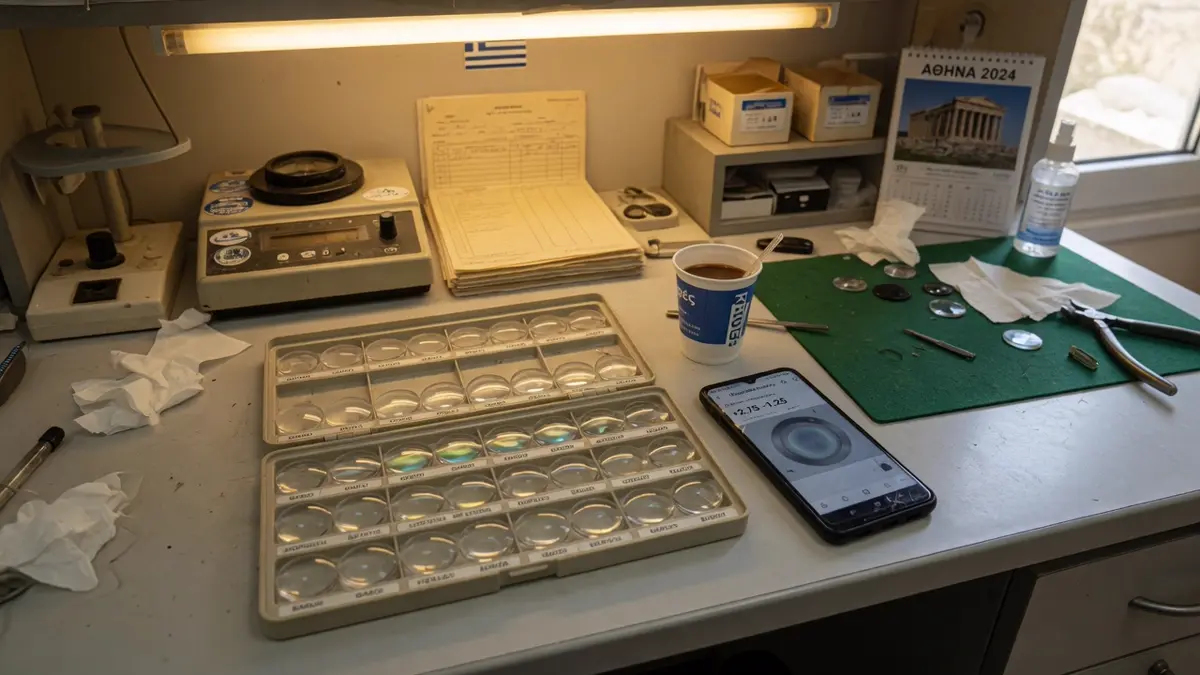
Missed calls at an optician — who hangs up
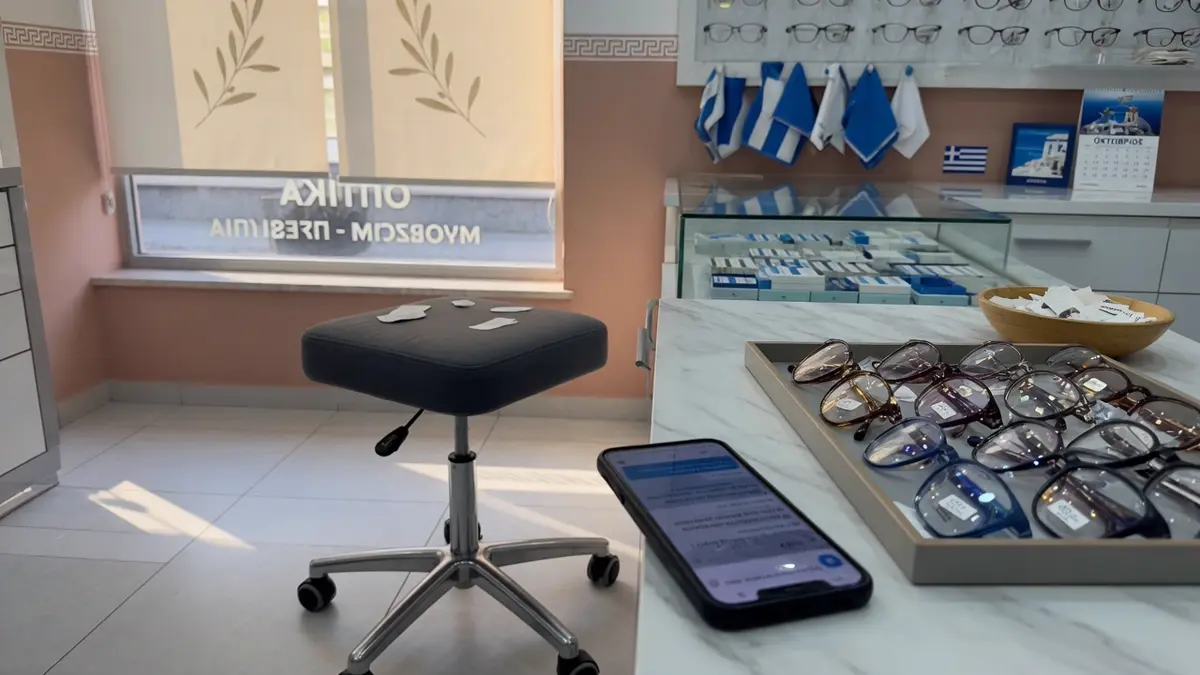
Quick summary
- Both hands are on a fitting — heating a temple, checking the sit — and nobody at the desk can pick up.
- The person who wanted an eye test this week hangs up at the beep and walks into the next shop on the street.
- A collection or a small repair often leaves a name. The test enquiry and the ready-reader walk-in leave nothing.
- Calls arrive together at lunch, after school and Saturday late morning — the same hour the table is already full.
- The assistant answers every line at once, asks ready glasses, an eye test or a repair, and does not invent a prescription or a frame price.
- Pull unanswered calls by hour from the provider before you change the forward. Isolate Saturday late morning.
TL;DR
The temple is in the heater and the glasses are half on the client's face when the phone rings. The person who wanted an eye test this week will not leave a message. They hang up and walk into the next shop on the street. Collection and a small repair leave a name. The assistant answers every line at once, asks ready glasses, an eye test or a repair, looks at the real diary, and texts the confirmation. It does not invent a prescription. It does not invent a frame price. It does not give clinical advice about an eye.
Key takeaways
- Ask the provider for unanswered calls by hour, four weeks back. Look at Saturday late morning on its own.
- Do not judge the week by the tape. Eye-test enquiries and ready-reader walk-ins leave nothing.
- Forward after a short delay so a free hand at the desk still takes the call.
- Tag ready glasses, eye test, repair and collection separately. They are not one unanswered pile.
- Never say a pair is ready, invent a prescription, or speak a frame price, unless that fact is in what you marked.
- Pull the same Saturday window after four weeks. If it has not dropped, the forwarding rule is wrong.
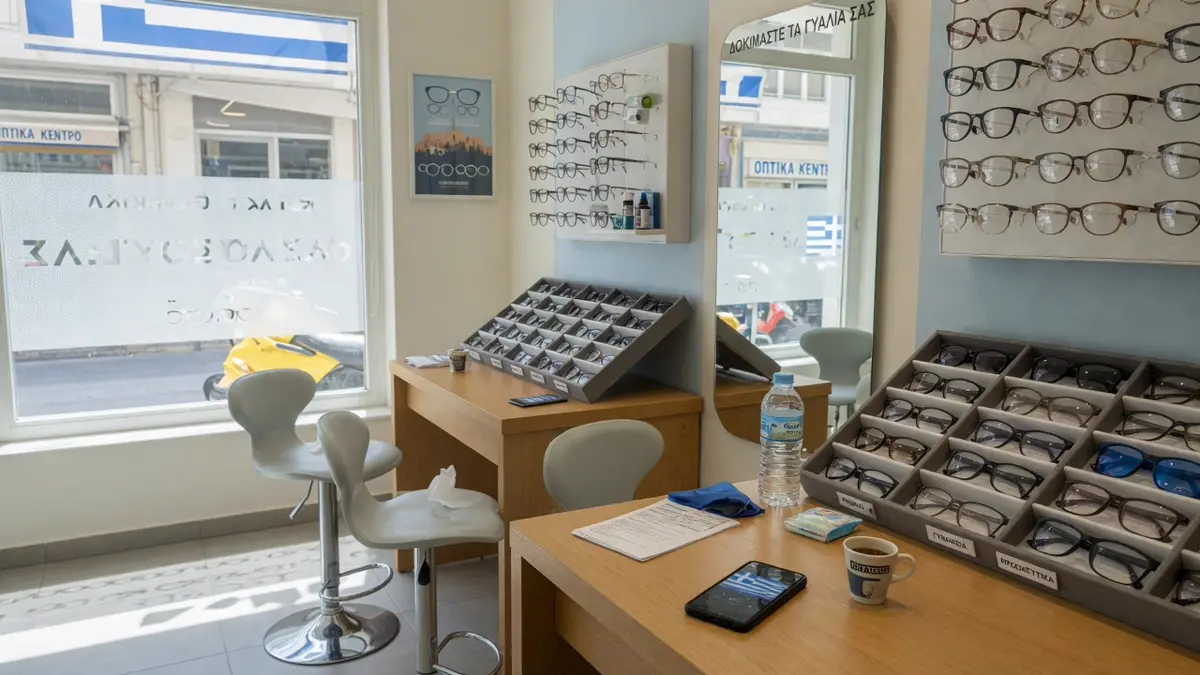
Nobody can pick up. Both hands are on a fitting.
Saturday, 11:10. The client is in the chair. One hand is on the heater, the other is on the temple. The glasses are half on their face. You are watching how the frame sits on the nose and whether the pupil sits in the lens. You cannot leave them with the pair half on.
The phone on the desk rings.
Nobody can pick up. Both hands are on the frames. If there is a second person they are at the lensometer, or in the workshop with a screwdriver on a hinge, or walking someone along the boards.
The caller is often already downstairs. They can see your name and the next shop from the same pavement. They wanted an eye test this week, or they wanted to know if they can come in this afternoon for ready-readers. They will not wait through the beep. They hang up and walk ten metres.
That is a normal Saturday on a Greek high street with one fitting table. You already measure tests booked, pairs that left, and repairs that came back. The thing you usually cannot see is the person who rang at 11:12, listened to four rings, and sat down next door. That caller is in the telephony log, which nobody at the desk has ever asked to see.
Who hangs up, and who you hear on Monday
Not every unanswered call costs the same.
The person who leaves a message already knows you. They left a pair last week. They want to know if it is ready. They want Thursday’s test moved. They will wait until you play the tape. These are the voices that shape the story of “we don’t miss much”.
The person who wanted an eye test this week does not leave a message. They wanted a yes and a time with whoever does the tests. A beep is a no. They are still on the pavement. The next shop is ten metres.
The parent who wanted ready-readers this afternoon does not leave a message either. The child is already with them, or will be after school. They will walk into the next shop that has boards they can see from the street.
Then the caller who already tried twice. They are not in this week’s unanswered log as a new miss. They have decided you do not pick up. Inbound volume can drift down for a season and you will look for the cause on the test book, where it will not be.
If you judge the week by the tape, you staff for collection and for the booking moves. You miss the test enquiries. Those are the ones with a pair attached.
Saturday late morning, lunch, after school
Look at the log by hour before you look at it by day. The unanswered calls sit in a clump: late morning on Saturday, when people are already on the street; lunch, when a parent can leave work; after school, when a child can sit in the chair.
Monday at 10:30 often looks fine. Someone can step off a quiet board. The people who can actually sit for a test after work are not free at 10:30 on a Monday. They are free on Thursday at 17:30, or on Saturday. Those hours are also when both hands are already on a fitting.
Hiring someone for the quiet Tuesday does not put a pair of hands on the Saturday phone. A second person still has one pair of hands. When four people ring in twelve minutes — a test, a collection, a broken arm, a tourist at the boards — callers two to four hear ringing that nobody will take.
The same hour is when walk-in ready glasses and small repairs arrive, if you take them. A caller who is already downstairs will not wait on a tape about ready-readers. If the assistant is not on that number, they walk ten metres.
Pull Saturday from ten to one on its own before you look at the rest of the week. Then look at 13:00 to 14:30 on a weekday, and at the hour after school. If those windows are quiet in the log, you are not looking at a typical high-street shop, or the log is the wrong line. If they are loud, start here.
Three kinds of miss, one number
The number on the window, the bag and the Google listing is one number. A caller who wants an eye test, a caller who wants ready-readers this afternoon, and a caller who sat on their glasses all dial it. If nobody picks up, those three misses go into one pile.
If you treat every unanswered call as a test, you will staff Thursday for Anna and leave the boards empty on the walk-in afternoon. If you treat every unanswered call as a repair drop-in, you will hire for the workshop and still lose the person who wanted a first test after work.
Tag them. Ready glasses. Eye test. Repair. Collection. Adjustment. The weekly total is useless if those are one number.
A caller who is already a customer — they left a pair last week, they said “ready”, they named the bag — belongs on the collection list. A caller who asked for a test this week belongs on Anna’s book. A caller who asked if they can come in this afternoon for ready-readers belongs on the walk-in window you actually run. The person at the desk already hears that split without thinking. The log will not, unless you make the assistant ask ready glasses, an eye test or a repair first.
A written prescription in a pocket is still not a test, and it is still not a miss you can staff as one. They want to choose frames. They can often walk in. If that call rings out, they choose frames next door.
A burst mid-fitting
You talk about missed calls as if they were spread through the day. They are not.
A fitting starts at 11:00. The temple is in the heater. Between 11:05 and 11:20 the phone rings four times. You cannot put the frames down. Callers two, three and four hear engaged, or they hear ringing.
The assistant takes every call: ready glasses, eye test or repair; who does the tests and which days they are in; whether the boards are free this afternoon. It does not offer Monday at 11:00 for a test on a week Anna is not in. That is how you book four Thursdays against an empty room, or stack a test on people trying frames.
Then 18:40 on a weekday. One caller, still on the street, asking if you do sunglasses from a paper they have in a drawer. You are in a late fitting. The assistant writes that they have a written prescription and want to choose frames, and whether they can walk in. It does not decide that the paper is current. It does not read numbers off it. If that call goes to the beep, they walk into the next shop that is still lit.
If you only staff for the Saturday burst, the evening frame call still goes. If you only think about the evening, the four who ring at once still hear engaged. Pull the log as two pictures, not one weekly total.
The phone is under a tray
A delay of fifteen seconds assumes someone can hear the ring and choose. On a fitting the work phone is under a tray, on silent because the client is talking, or in the workshop next to a screwdriver. Fifteen seconds pass. Thirty. The caller is already next door.
If the published number is a mobile that travels with you to the workshop bench, a long delay just sends them to the beep. A short delay — or an immediate forward when you are marked in a fitting — is how the assistant actually sees the call. Whoever is genuinely free at the desk still picks up if you keep the desk in the chain.
Someone standing at the window rings the number on the glass. They can see the lights. They still want to know if they can come in for ready-readers this afternoon. That call is the same call as the person already on the pavement. Do not send them to the beep because both hands are on a temple.
In the workshop the same fifteen seconds fail for a different reason. You can hear the desk phone. You cannot put the hinge down. A screwdriver in one hand and a temple in the other is not a policy. It is why the repair half of the shared number rings out in the same hour the test half does.
A collection is not the same miss
“Are my glasses ready?” is a customer you already have. They will often leave a message. They will often try again after lunch. Missing that call is rude. It is not the same loss as the test enquiry.
The assistant says ready only when you have marked that pair ready. A promised Friday is not a status. If the tray has no name on it and the workshop note is empty, the honest answer is a name, a number, and a callback — not “they should be in.” Callers who hear ready and find an empty tray do not book the next pair with you.
Do not let collection questions be the measure. The measure is unanswered eye-test enquiries on Saturday morning and after school, and unanswered ready-reader walk-ins from people who are already on the street. Those two hang up.
An adjustment on a pair they collected last week is a drop-in, not a collection and not a test. If that call rings out, they will try the next shop that can heat a temple this afternoon. The assistant can say they can come in. It cannot say the adjustment will take five minutes. You have not seen how the frame sits.
A pair you sent out for glazing is the same kind of fact. If the workshop note is not there, the assistant must not promise Friday because that is what you said last month. It takes the name. A human looks at the job.
You lose the person already on the pavement
If you miss “can I get a test this week”, you have not only lost a caller. You have lost the person who would have sat down, left with a pair, and come back for the next one. The next shop on the same street gets them. You finish the fitting, play an empty tape, and wonder why Thursday’s book is thin.
A caller who hears “yes, they should be in” and walks in for an empty tray will not ring you a second time. That is worse than a miss. Answering is not enough if the answer is a guess.
The listing form is the other trap. You tell yourselves Google messages are the real channel and the phone is for existing customers. Then you look at which tests actually sat down and find that a share of them started with a ring on the number in the window. The people willing to type a name into a form will wait. The people who ring will not.
Count unanswered calls on the number that is actually on the window, the bag and the listing. If Google shows one number and the bag shows another, you will count the wrong line.
Answer. Do not invent the pair, the prescription, or the price.
The missed-call problem tempts people to put something — anything — on the line so the caller stays. That is how a shop ends up saying a pair is ready when the tray is empty, or quoting a complete-pair figure from “thin metal, not too heavy,” at eleven on a Saturday, with both hands on someone else’s frames.
Answer so they do not walk ten metres. Ask ready glasses, an eye test or a repair on the first exchange. Write down which of the three they mean. Do not tell them the pair is ready unless you marked it. Do not invent a prescription from an old paper in a drawer. Do not give a frame price from a description. Offer a test only on a day the tester is in, in a stretch of time that is free.
A caller who heard “I cannot tell you from the phone whether the arm can be fixed, but I can take the drop-in, and I have Thursday at 17:30 with Anna for the test” is still on your books. A caller who heard “yes, come at twelve, the pair should be in, about this price” and then met an empty tray is a Saturday you spend taking the number back.
Someone rings and asks what a thin metal pair will cost, or whether last year’s numbers are still good. If that goes to the beep, they walk next door. The assistant writes the words down. It does not speak a figure. It does not decide the paper is current. You look at the pair and the eye.
A published ready-reader or stock-sunglass figure is different. You wrote it down. The assistant can repeat it. An unseen complete pair cannot. Do not store a “from” figure for the whole board and then wonder why the assistant reads it out on an unanswered Saturday.
A red eye is not a missed test
A caller describes a red eye, flashes, a sudden blur, something in the eye, a pain they have had since last night. If that call rings out, they will ring a doctor, or they will ring the next shop and ask the same question.
The assistant does not give clinical advice and it does not treat that call as a routine eye test. It writes down what the caller said, in their words, and puts that note in front of you — or follows the short redirect you wrote. It does not say what the eye is, what drops to use, or whether they need a hospital. You decide.
Write one short list of things the assistant must not book as a routine test — the wording is yours — and send those calls to a person. The assistant follows the list. It does not invent one.
A complaint about last week’s fitting is the same kind of call: take the name, take what they said, put it in front of you. Do not offer a free remake from the phone. You look at the frames on the face.
What the transcript is for
It is how a person who was mid-fitting at 11:00 walks into a 14:00 callback already knowing eye test, Thursday after work, and that they have a broken arm in a pocket. That is the difference between “sorry I missed you, what did you need” — which is a second cold call — and “you asked for an eye test with Anna, Thursday at 17:30, and you are bringing the broken pair”. The second sentence is why they do not sit down next door while you are asking them to start again.
If the transcript does not contain which of the three they named, and what was booked or left, the setup is wrong, even if every call was answered. An answered call that produces “enquired about glasses” is a message with a longer recording.
A collection transcript that does not have the name on the bag, or the mark you made, is the same failure. The desk cannot act on “someone rang about a pair”.
A caller who rang in English gets the note and the SMS in English. A caller who rang in Greek gets them in Greek. The assistant works in 70+ languages. The confirmation follows the language of the call.
The rule it must obey
A test is a booking only on a day the tester is in, in a stretch the diary can confirm. Ready glasses are a walk-in only inside the hours you marked for the boards. Ready is a sentence only from the mark you made. A frame price is a sentence only from a figure you published. A prescription is never a sentence the assistant invents.
It will not invent a prescription. It will not invent a complete pair price from a description. It will not give clinical advice about an eye. It will not book a test into the hours you keep for people at the boards, or on a day the tester is not in. It will not say a pair is ready because Friday was the promise. If there is no mark, it takes a callback.
Tell callers it is an assistant. The greeting can still use the shop’s name.
Why another person at the desk still cannot take the third call
Hiring another receptionist is the answer every owner reaches for. It is the right answer to a different problem. If the desk is buried in trays and workshop notes, hire. If four people ring at 11:05 and both hands are on a fitting, a second person at the counter still has two ears.
Callers three and four still hear the engaged tone. On a Saturday that second person is also the one you pull to the boards the first time a walk-in wants to try frames while you finish a sit. You have then paid for a salary and you are back to one pair of ears on the phone.
The calls arrive together, in the hour nobody can leave a heater or a hinge. An assistant that can take several at once matches that. Keep the people you have. Give them the overflow. Let the fitting stay on the table. Let the screwdriver stay on the hinge.
What you configure first
- The unanswered-by-hour log. Four weeks, Saturdays included. Without it you are guessing.
- Forward on no-answer, not always. Fifteen to twenty seconds if someone can hear the desk phone. Shorter if the published number travels to the workshop bench.
- Ready glasses, eye test or repair, written as a required first question.
- Tags. Ready glasses. Eye test. Repair. Collection. Adjustment.
- The three forbidden sentences, in the same words the desk already uses when they are being careful: we do not invent a prescription; we do not quote a complete pair from a description; we do not say a pair is ready unless it is marked.
- Pull the same log after four Saturdays. If late morning has not dropped, the forwarding rule is wrong, or the assistant is not on the number on the window.
Then the tester’s days, the hours you keep for people at the boards, how collection works, the cancel rule you already say for tests. Give it the published ready-reader and stock-sunglass figures it may repeat, if you have them, and do not give it a complete-pair figure it would read out.
The number on the window stays yours. One forwarding rule at the provider. Calls the desk takes never leave the shop. Every line is answered at once. The assistant checks the diary before it offers a time, and confirms by SMS only when the booking is real.
They ring on Saturday, sometimes in English
On a Greek high street, English is how a share of the people already on the pavement start — tourists, and locals who work in English. They ring on Saturday, often looking at your window and the next one. If nobody picks up, they do not leave a message in a language they are not sure you speak. They walk ten metres.
The assistant picks up the language from the first sentence and stays in it, including if the caller switches mid-call. Seventy-plus languages. Write down which of the three they mean. Do not invent a prescription from a paper they have in a hotel drawer.
A German caller asking whether last year’s numbers from home are still good is a request. The assistant can ask them to come in with the paper. It does not decide the paper is current.
Before the first live Saturday
Write down which mobile gets a red-eye note and a complaint after you lock the door. Write down the sentence for a pair you cannot mark ready, and the sentence for a price that is not on the board. Mark who does the tests on Saturday, whether you take walk-in ready glasses that morning, and whether you close in August.
After four Saturdays, pull the same log. If late morning has not dropped, fix the forwarding rule, or check that the assistant is on the number printed on the window.
Take the structure of the calculation above and put your own figure in. If the answer still justifies the change, it is a real answer. If it only works with the number chosen here, that number was doing the work, not the argument. Four Saturdays are enough to know whether this is you.
Rates live on the pricing section of the home page. They are not repeated here.
AI receptionist, in-house staff, or a call centre
| CITT | In-house | Call centre | |
|---|---|---|---|
| Mid-fitting, both hands on a temple | Every line answered at once | After the fitting, if at all | Depends who was rostered |
| Caller who will not leave a message | Answers | Only if someone is free | Yes |
| Asks ready glasses, eye test or repair | Before it looks at the book | Yes, if they heard the start | Often jumps to what time |
| Saturday late morning, table full | Same as a Tuesday | Nobody — both hands are on frames | A message for Monday |
| Says the pair is ready | Only if you marked them | Checks the tray | Repeats the promised day |
| Four calls during one fitting | All of them | One, after the sit is done | Depends who is on |
| Invents a prescription or a frame price | Never — callback | Can see the pair and the eye | Risk, if they read a list |
What the Saturday tape does not show on a one-table high street
Worked from these assumptions — change any of them and the answer changes:
- One fitting table, a normal Saturday in a Greek town, roughly 22 inbound calls.
- About half arrive between ten and one, when both hands are on fittings or at the boards.
- Of the calls nobody reaches, 2 leave a message and 7 leave nothing.
- 4 of those 7 silent calls were an eye test this week or ready glasses this afternoon.
- A pair that leaves after an eye test is worth about €160 to the shop — put your own figure in. This is the number to change first.
- Not every enquiry becomes a pair. This example assumes 1 of those 4 would have sat down and left with glasses. Change that if yours is lower.
- The tape on Saturday afternoon shows 2 people. That is the number the desk believes.
- The provider's log shows 9 unanswered. The other 7 are the ones nobody counted.
- 4 of the 7 were an eye test or ready glasses. If 1 would have left with a pair, the morning is €160 that never reaches the tray.
- Saturday mornings alone, over 46 weeks — 46 × €160. Put your own weeks in if you close in August.
About €7,360 a year that the tape will never report — and only if you accept the conversion above. Change it.
What it costs
CITT is pay as you go: no packages, no minimum, no contract. The current rates — the monthly fee per number and the per-minute rate — are on the pricing section of the home page, which is the only place they are published.
Frequently asked questions
How do we find out how many calls we actually miss?
Ask the telephony provider for unanswered calls by hour, including Saturdays, for the last four weeks. Most shops have never requested it. The figure is usually much larger than the pile of messages, because a caller who wanted an eye test this week hangs up at the beep and walks into the next shop on the street.
Would another person at the desk not fix this?
It fixes the call that arrives while you are walking back from the boards. It does not fix the call that arrives mid-fitting, or the four that arrive together when lunch starts and a parent can leave work. One person still has one pair of hands. A junior at the lensometer cannot pick up either.
Does the form on the listing not catch them?
Some of them. The people willing to type a name into a form are not the same people who rang because they can already see your door from the pavement, or because they sat on their glasses this morning. Those two groups overlap less than desks hope. The form also does not ask ready glasses, eye test or repair.
What happens to the calls we do pick up?
Nothing, and nothing is charged. The forwarding rule only sends a call on when it has rung unanswered for the seconds you set. If you put the screwdriver down and pick up, that conversation stays in the shop.
Will a caller know they are not speaking to the desk?
They will know they got an answer. The assistant introduces itself the way you configure — most shops put the shop name in the greeting and do not pretend the voice is a named optician. If asked directly, it says it is an assistant. What callers punish is the ring-out, not the honesty.
How soon can we tell whether anything changed?
Four weeks, against the same unanswered-by-hour log you pulled at the start. Measure unanswered calls, not calls the assistant handled. A dashboard full of handled calls can hide a forwarding rule that is still dropping Saturday late morning.