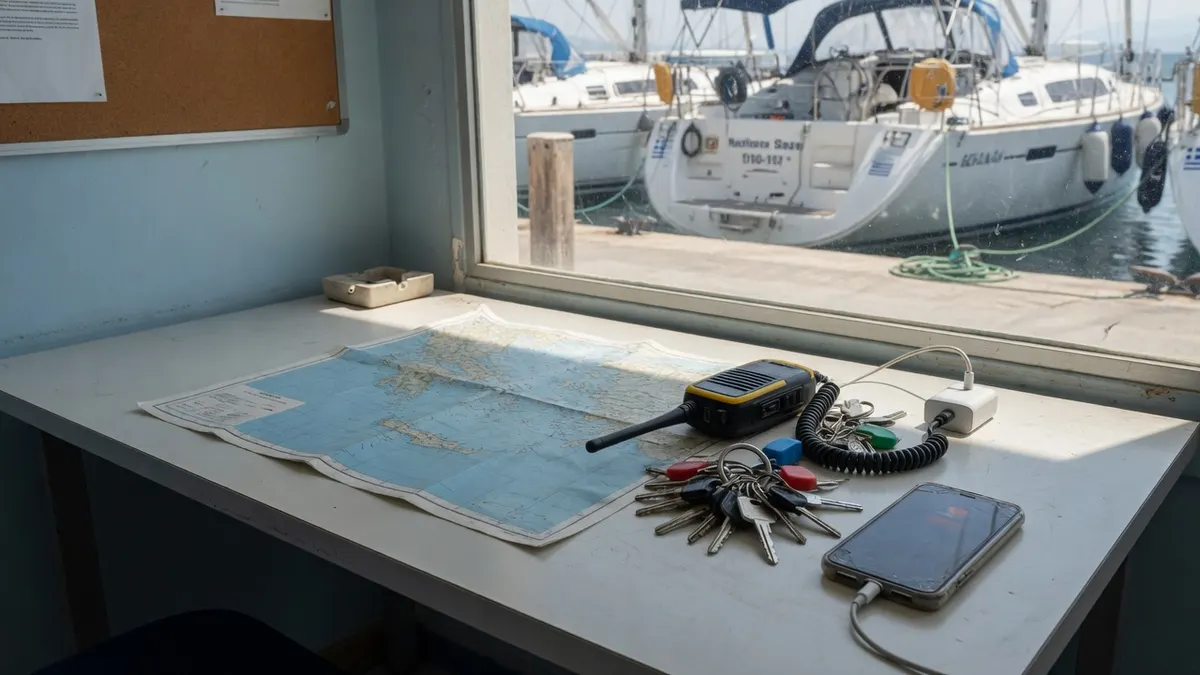
Multilingual phone reception for yacht charter
Quick summary
- A published Greek number already takes English, German, French and Italian in the same changeover Saturday.
- The assistant hears the language on the first sentence and continues in it. It covers 70+ languages, and it can switch if they mix.
- Week or briefing is still the first question. A name in German does not tell you which job it is.
- A cover question in English is still a cover question. Fluency does not let it say they are covered.
- The spoken rule does not change: the base will look at the week. A licence is not decided in German either.
- The confirmation SMS goes out in the language of the call, with the papers to bring, not a decision.
TL;DR
You are in a cockpit when a family rings in German about August, or in English about a licence. They want a week, or they want to know if they can go bareboat. They will not wait for the colleague who is comfortable in German to climb back from the fuel dock. An assistant answers in the language it hears — 70+ languages, and it can switch if they mix Greek and English on the same call. It asks week or briefing first, takes dates, skipper or bareboat, writes the note or books a viewing that is free, and refuses anything that sounds like cover, a licence yes, or a week's price invented from a description. It will not translate a German ICC into a decision.
Key takeaways
- Leave language detection on. Pinning the line to Greek is how the 09:40 German week never reaches you.
- Put the week-or-briefing question in every language you actually hear, not only the two you staff.
- Write the cover sentence once and never vary it: the base will look at the week. Never 'you are covered'.
- Do not let it decide a licence, invent a week's price, or say a destination is allowed because they asked in English.
- Send the SMS in the language of the conversation, with papers to bring, not a yes on those papers.
- Read the first multilingual transcripts with a base manager. That is where a soft cover sentence creeps in.
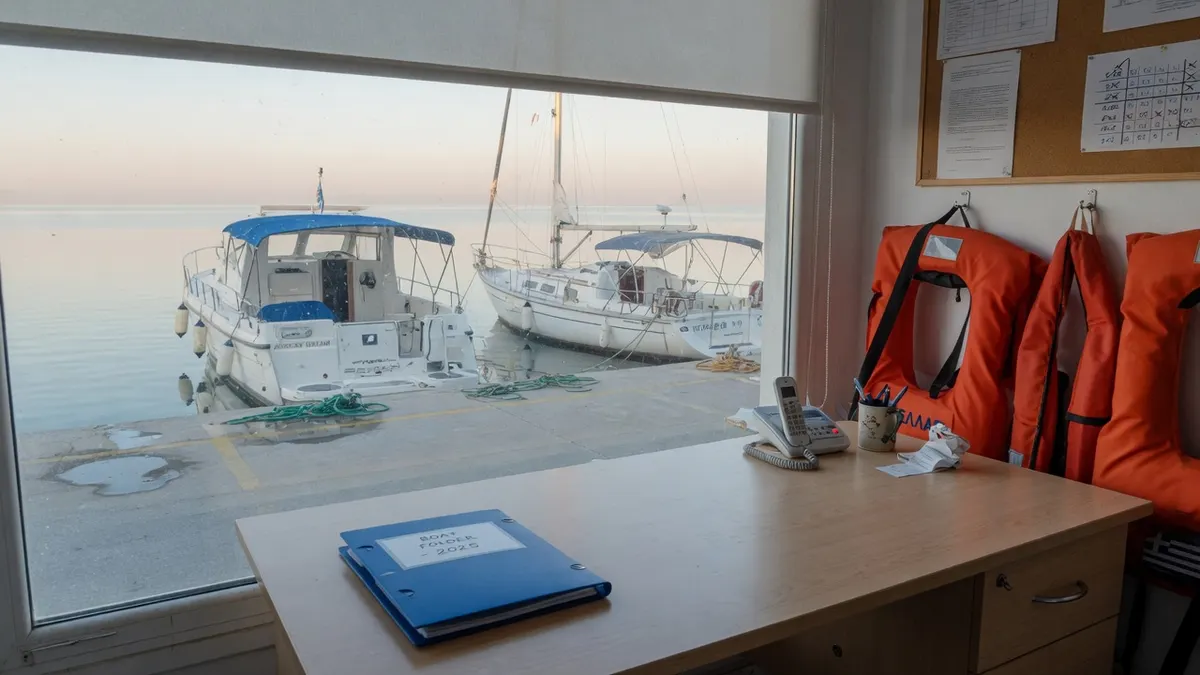
They start in German while you are in a cockpit in Greek
Changeover Saturday at a Greek base is not a Greek morning. It is English from a listing, German from a family on the quay, French from a flotilla, Italian from a one-way they read about. The person who would answer is in a cockpit, in Greek, counting fenders.
The family will not hold for the colleague who wintered in Hamburg. They will not record a message after a Greek beep. They have two other bases in the same search, in their language. They hang up.
So language here is not a nice extra on a charter script. It is how the first sentence either becomes dates on a week note, or becomes a short ring in the provider’s log.
The assistant hears the first sentence and continues in it. 70+ languages. It can switch if they mix. You do not set a language per marina, and you do not pin the published number to Greek because the office is in Greek.
Week or briefing is still the first question
A fluent greeting that jumps to “which week?” in German is still the wrong first question. A crew on the pontoon is not a new August week. A day boat is not a catamaran for eight.
Put the split in every language you actually hear. Not only the two you staff. The Saturday you skip French is the Saturday a flotilla rings from a different island.
After the split, the same three facts: dates, skipper or bareboat, berths. Fluency does not replace them. A long German sentence about a holiday still has to land on a week.
If they name a boat in German and you only know the English listing, take what they said. Ask once for a second form if they have one. Do not invent the hull. A viewing at the wrong finger is a review in their language, which is the language other families read.
Cover in English is still cover
The temptation on a foreign-language call is to be extra helpful. Helpful is how “you are covered” gets said in German because the colleague who speaks German is not there to stop it.
The rule does not change with the language. The assistant never says they are covered. Not for the deposit, not for the dinghy, not for a week towards Turkey. A published starting figure you marked as speakable may be repeated in the language of the call. A description of eight people and a catamaran may not. A comfort sentence said in French is still your sentence on the recorded line.
“Is my licence enough?”, “can we go without a skipper?”, “is the deposit refundable?” are the same questions they are in Greek. Note them. Do not confirm a licence you cannot see. Do not decide bareboat because you understood the ICC perfectly.
Write the refusal once. Use it in every language. If the transcripts show a softer sentence in English than in Greek, the English one is the one that will be quoted back when the dinghy is missing.
Papers, SMS, and what a licence is called
Licences arrive with names that do not match your folder: ICC, Sportboot, a national ticket, a VHF card. The assistant is a taker of names, not a translator of law.
Take what they said. Do not map it onto a yes. Do not tell them which Greek paper it “equals”.
The SMS follows the call. A Greek text after a German booking is how they arrive without the photocopy, or how they stand at the gate with a message they only half read. Put the papers you actually want in that same language. Do not let the assistant add “these papers are enough”.
Deposit amounts do not go onto a recording unless you marked a published figure as speakable. “Refundable” does not go on in any language.
Already on the water, in a language you do not staff
This is the call that cannot wait for a bilingual colleague. They name a warning light. They are speaking French.
The assistant still flags a phone. It still does not tell them to keep going, to stop, or that they are covered. It collects a boat name and a number while it connects. It can keep speaking French on the way to you. Fluency is not permission to give seamanship.
If you have no one who can take that live transfer, the note still has to be right: boat, where they say they are, what they named. Wrong advice in fluent English is worse than a slow callback.
What you do not explain, even fluently
It does not explain whether they may sail to Turkey. It does not say who is at fault on a quay. It does not say a child may helm. It does not say the weather is a go. Those sentences sound like help and become advice, and some of them become legal advice.
It does not invent a skipper in German to make a bareboat request fit. It does not tell them their ferry to the island is still valid. It takes the week they asked for.
If they mix a hotel stay into the same call — “can you also book the room ashore?” — that is not your diary. Take the charter facts. Do not open a stay. The neighbour trade is a hotel. This base is hulls.
What you configure first
Leave detection on. Write the split and the cover refusal in the languages you actually hear on a Saturday, not only in Greek and English. Mark licence behaviour: take as said, never yes.
Set SMS to follow the call, with papers to bring, without a decision on those papers. Route on-the-water to a phone regardless of language.
Then read the first multilingual transcripts with the person who stands on the pontoon. You are listening for a cover sentence that appeared because the German was good, a licence that was “helpfully” approved, and a destination that was allowed in English.
A base that answers in seventy languages and still says they are covered has only made the wrong sentence travel further.
Rates live on the pricing section of the home page. They are not repeated here.
AI receptionist, in-house staff, or a call centre
| CITT | In-house | Call centre | |
|---|---|---|---|
| Answers in the caller's language | 70+ languages, including a switch mid-call | Greek, and English if they have it | Whoever is on that shift |
| Week or briefing first, in that language | Yes — before the diary | Yes, if they understood the start | Often jumps to weeks in English |
| Says they are covered because they asked in German | Never | Not on the first call either | Sometimes says it to be helpful |
| Licence named in French | Notes it as a question, not a yes | Yes, if they caught it | Sometimes confirms to keep the week |
| SMS language | Same as the call | If they remember to switch | Often Greek regardless |
| On-the-water in a language you do not staff | Flags a phone, still no advice | If someone who speaks it is free | Holds them in English |
| Invents a week's price in Italian | Never | After the boat and the week | Often reads a range |
What one unanswered German Saturday call costs a charter base
Worked from these assumptions — change any of them and the answer changes:
- A changeover Saturday. About 8 of the inbound calls that morning start in German or English.
- The person who would take those is in a cockpit. Two of those 8 ring out.
- A week that stays is worth about €2,400 — put your own figure in, this is the number to change first.
- This example treats both unanswered foreign-language calls as week requests that then went to the next base.
- 2 German or English week calls reach nobody on one Saturday.
- Both families dial the next quay rather than leave a Greek voicemail.
- 2 × €2,400 = €4,800 that Saturday.
- Changeover Saturdays, over a 20-week season — 20 × €4,800. Put your own weeks in.
About €96,000 a season from language alone on that window — and only if you accept the conversion. Change it.
What it costs
CITT is pay as you go: no packages, no minimum, no contract. The current rates — the monthly fee per number and the per-minute rate — are on the pricing section of the home page, which is the only place they are published.
Frequently asked questions
Do I have to set a language per marina?
No. The assistant hears the first sentence and continues in that language. It can switch if they mix. You do not pin Lefkas to German and Alimos to English. A Saturday is several languages on the same number. Pinning the line to Greek is how the August week never becomes a note.
They named a German licence. Can it say that is enough?
No, in any language. It notes what they said they hold. It books a time to show papers, or flags you. Fluency does not turn an ICC into a bareboat yes. A wrong yes in German is a sentence the base owns when they leave without a skipper.
Can it say they are covered in their language to keep them?
Fluency does not create cover. The assistant never says they are covered, in English, German, or Greek. It takes the week and the question. A human looks at the file. A number or a comfort sentence said in French is still your sentence.
What if they mix Greek and English on the same call?
It can switch. Dates, skipper or bareboat, and berths still have to be on the note. Mixing languages is not a reason to skip the split, and not a reason to guess the week.
Will the SMS be in German if they rang in German?
Yes. The confirmation follows the language of the call, with the papers you actually want them to bring. A Greek SMS after a German conversation is how they ring again from the gate, or how they arrive without the photocopy.
Can it explain whether they may sail to Turkey, in English?
No. That is not a language problem. It is legal advice this line does not give. It takes the destination as a request. It does not say yes, no, or that they are allowed. A fluent answer that is wrong is worse than a callback.