Lesson reminders and waitlist calls for tutoring centres
Quick summary
- The last group is still at the board. Tomorrow's first lessons and a waitlist sit on the desk. Nobody will work them tonight.
- Remind tomorrow first — first lessons and regular days, from the live roster. Those are not one list.
- A waitlist call goes out only when a matching group actually has a place. Do not ring to fill a room.
- A makeup offer is a matching group with a seat, in the window you already use — often the same week.
- The assistant will not invent a place, and it will not choose a university direction, on a call you started.
- Take any number off the list that asks not to be called, the same evening, before the next pass.
TL;DR
The last group is still in the room. Tomorrow three children start. One parent never got a reminder. A place opened in Γ Λυκείου chemistry and the waitlist is still on paper. Nobody rings them, because the hour those calls belong to is the hour every teacher is still at the board. The assistant works the lists you already keep: it reminds tomorrow's first lessons, offers a waitlist place only when the roster shows a seat, and offers a makeup only into a matching group that has one. It will not invent a place. It will not choose a direction.
Key takeaways
- Turn on tomorrow's reminders first, from the live roster — first lessons and regular days separately.
- Build the waitlist call from a place that actually opened, not from a wish to fill the room. Offer that group only.
- Add the makeup pass next: same subject, same year, a group that has a seat, in the window you already use.
- Write the outbound script so it cannot add a name to a full group, or speak a direction, on a call you started.
- Take any number off the list that asks not to be called, the same evening, before the next pass.
- Listen to the first fifty outbound recordings for a seventh chair, a fee that was not on the sheet, or a direction.

The last group is still in the room
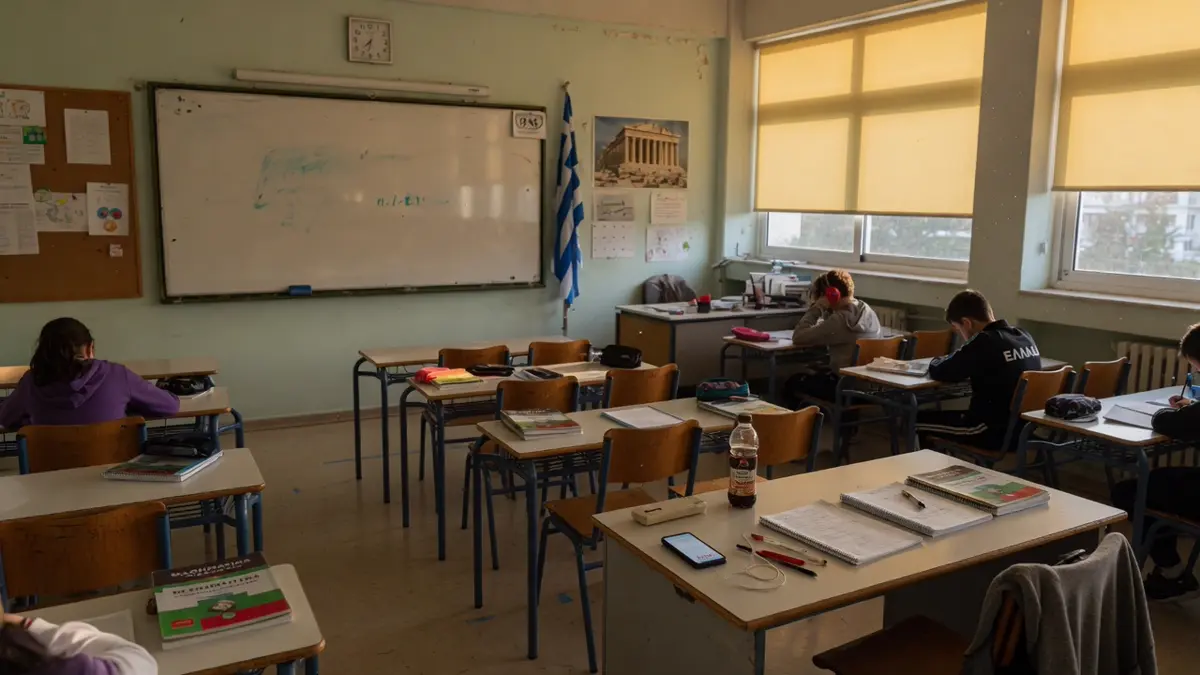
20:10 on a Tuesday. Behind the glass the last Γ Λυκείου group is still at the board. The owner is covering because the usual teacher is off. On the desk sit two sheets nobody will touch tonight.
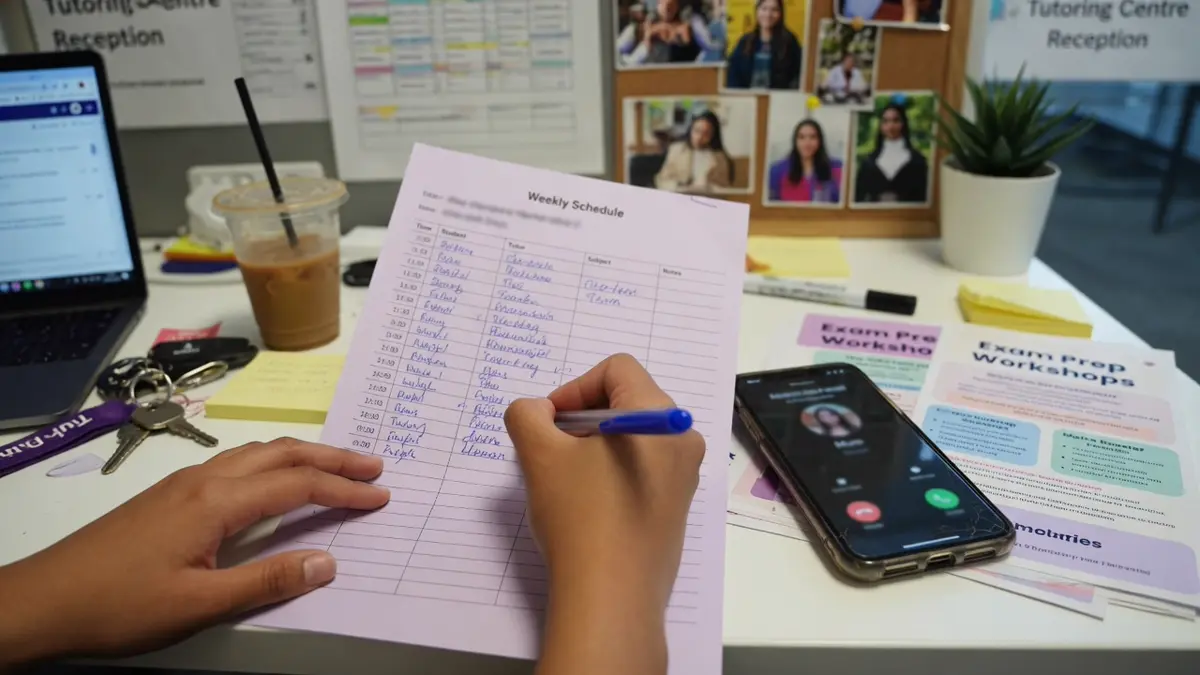
One is tomorrow. Three children start. B Lykeiou maths, exam programme, Tuesday and Thursday at 17:00. The names went on the roster this week. None of the parents have been reminded. One of them has the flyer from the next street still in the bag.
The other is a waitlist. A child left Γ Λυκείου chemistry this afternoon. A seat opened. Four names have been waiting since September. Nobody has rung them.
You will not make those calls. The hour they belong to is the hour a teacher is still explaining a problem, or watching six children write, and they cannot leave the room.
That is outbound on this number. Not a campaign. Not “we have a group you might like”. The parents who already have a first lesson tomorrow. The names the waitlist already holds, against a place that actually opened. The child who missed Thursday and is still owed a makeup in the window you already use.
Tomorrow, the waitlist, the makeup
Four piles. Turn them on in this order. Do not mash them into one pass.
Tomorrow’s first lessons. This evening, or tomorrow morning if the first group is after school. The list is short because it comes from the roster you already use, not from a sheet someone exported on Wednesday. First lessons separately from children who have been coming since September. Time still good? They enrolled at the next frontistirio on Friday night? The group they wanted is no longer taking names? If they need to move a first lesson, release the seat, take the new day only if that matching group has a place, then send the SMS. Do not park a first lesson on a makeup hour. Do not put a makeup into a new-enrolment seat.
A reminder can confirm that the lesson is on the roster. It cannot confirm a new place. If the child had been taken off the list, a person would have called. This call is the reminder. The SMS follows the language of the enrolment — 70+ languages — and names the subject, the year, the days, not a sales pitch.
Waitlist. From a place that actually opened. Same subject, same year, same programme. Offer that group. Take the child’s name if you need it said back. Do not offer physics because chemistry is still full. Do not offer B Lykeiou because Γ is the one that opened and you want to sound helpful. If they mention a second child, or a second subject, that becomes a separate request, not a second seat invented on this call.
Makeups. The children who missed this week, against a matching group that still has a place, in the window you already use — often the same week. If Friday’s matching group is full, it is not a makeup. The assistant takes a note. It does not invent a Friday hour.
Names that went quiet. Last month’s almost-enrolments. The parent who came to the desk in September, did not finish the paperwork, and stopped answering. These are not tomorrow’s call. Shorter. Faster opt-out. Ask whether they still want that subject, that year, that programme. Do not describe a group that would only be honest if a seat were free.
After a place actually opened
This is the call desks mean to make and do not.
A child left. The maximum was six. There are five names on Γ Λυκείου chemistry, exam programme, Tuesday and Thursday. The waitlist has been sitting since the first week of September. Tonight those parents are still deciding whether to keep waiting or to take the flyer from the next street.
If nobody from your desk rings, the decision happens without you. Thursday you send a polite text. They have already enrolled somewhere else, or they have gone quiet, which on a waitlist usually means the same thing.
The assistant can make that evening call because it is not at the board. The script is small on purpose.
A place opened in this group, this subject, this year, this programme, these days. Do you still want it for the child we already have on the waitlist?
That is the whole useful conversation. Anything longer starts to fill the room, and filling the room on this call is how a seventh name, a different year, or “we also have physics” gets into their evening from a voice that cannot see the other lists.
Do not run this call against a group that is still at the maximum. The roster already shows the count. Offering a place that does not exist is how you spend Thursday apologising.
Do not run it against a name that asked to be taken off. A parent who said stop in October is not a waitlist name in January.
Two parents waiting for the same seat must not hear about each other. “Another family is deciding tonight” is pressure. So is “you should take it before someone else does”. The assistant does not say either. You can, with the list open.
A waitlist for exam-programme chemistry is not a waitlist for regular chemistry. Do not let the assistant flatten those two into “chemistry”.
A place you put on the line
On an inbound call they chose you. On an outbound call you chose the moment. You put a group or a figure into their evening. If that group is still full, or that figure was last year’s fee, you wrote the card.
The usual version is “we have something you might like” and then a description. Subject, year, days — that is a specific group, whether you named the teacher or not. If the live roster is not attached to that row, that paragraph cannot be spoken. Confirming a place that does not exist is worse than a missed call. The parent turns up, a teacher is pulled out of the room, and you own the crowded Tuesday.
The other version is the fee. “We can do something on the price if you start this week.” “Two subjects are cheaper.” Those sentences belong on a call where a person can see the sheet. The assistant can say that you need them, and it can book that call. It cannot be the messenger of a deal.
A third version is the waitlist call that turns into advice. “Yes, θετική is the right direction.” “Four extra hours will be enough.” The assistant does not choose a direction. It does not say how many hours will be enough. It offers the place that opened, or it puts the words in front of you.
A fourth is the mix. A makeup name gets offered a new enrolment in a different subject. A first-lesson reminder gets asked whether they want to add physics. The person at the desk already keeps those piles separate. The assistant has to be told, or Tuesday evening will have a makeup parent holding a new-enrolment conversation and a waitlist parent being offered a year that is not theirs.
A fifth is the named teacher, offered on a waitlist call because it sounds helpful. The assistant names Kostas only when that teacher’s matching group is the one that opened. If it names Kostas on a group he does not take, you own the promise.
First-lesson reminders are a roster call
The cleanest outbound job in the frontistirio, if you let it stay a roster job.
The name is already yours. The group is on the list. The day is tomorrow. The offer is a reminder, not a new place. The assistant confirms the subject, the year, the programme, the days, the time. It says how the place is held if they have not finished enrolment at the desk. It does not sell a second subject. It does not diagnose whether the child is “ready”.
It is not a sales call. If they ask whether you have physics as well, that becomes a request, not a confirmation that a physics group has a seat.
A first lesson and a regular Tuesday are not the same reminder. The parent who has been coming since September needs the day and the time. The parent whose child starts tomorrow also needs the floor, where to park, and that a place is held once they finish the paperwork. Mark them the way you mark a teacher’s afternoon.
August and July: if you are closed and September has not started, first-lesson reminders wait. Do not remind a Tuesday in a week you marked shut.
A parent who wants to move a first lesson follows the matching roster, not a free hour on the clock. A cancel should free the seat the way you already free it, so the next waitlist name can take that chair. Set the notice you actually enforce. The assistant should say it at the end of a reminder only if you want it said then.
“Can they catch up if they start in January?” is not a reception answer on an outbound call either. Stop offering the place as if the year were already repaired. Take the words. Offer a talk with you. A human looks at the marks.
Fees follow the same sheet rule as inbound. If the published monthly fee is on the sheet, the assistant can repeat that figure. A sibling discount cannot. Do not store a “from” figure for the whole frontistirio and let it read that out on a waitlist call.
Exam-programme reminders and regular-lesson reminders can sit on the same evening and still must not be mashed together. A child on the homework group is not reminded about a mock exam they are not sitting.
Mock exams and extra hours
In the weeks before Πανελλήνιες the outbound list changes. It is not first enrolments. It is mock exams, extra hours, Saturday sessions you actually run.
Give it only the sessions you have already put on the roster: which subject, which year, which programme, the day, the time, how many extra chairs you actually allow. The assistant reminds the parents whose children are already in that exam group. It does not ring the regular homework group and invite them to a mock they have not been prepared for.
An extra hour is a counted seat like any other. If Saturday’s mock is at the maximum, the assistant does not add a name to be helpful. It takes a note, or it waitlists against that session only.
It does not tell a parent the extra hours will be enough. It does not tell them the child should drop θεωρητική. Those calls wait for you.
If you do not run mocks at all, say so in the notes. The assistant should not invent a Saturday session because the exams are close.
What the assistant may not say
Outbound keeps the inbound bans, and adds one.
No confirming a place unless the roster shows a free seat in that matching group at that moment. No fee that is not on the sheet in front of it. And no invented group — not “we also have physics in that year”, not a description that would only be honest if a specific seat were free.
A reminder after a first enrolment is a question about tomorrow. The assistant does not re-sell the group. They already put the name down. A waitlist call offers the place that opened. It does not sell a direction, a sibling discount, or a second child into the same room. It does not say the child can catch up from January.
Subject, year, and exam-or-regular still matter on the way out. A name from last month’s makeup list is not offered a new exam group they have never discussed. Get the first field wrong and every field after it is filed against the wrong list.
The flyer is not a roster. Last week’s printout is not a roster. The assistant confirms a place only when your own list says so at that moment. If the list is silent, stale, or unreachable, it takes the child they already named and leaves the confirmation to you. It does not say yes because the flyer still lists that group.
A second child asked on the evening call is the same trap as on the way in. Two children are two enrolments. The assistant takes the year and the subject for the younger one. It does not add them to Γ Λυκείου chemistry because that is the group that opened.
The sibling who was not on the waitlist
A lot of waitlist follow-ups become this, and only this: another child in the same family. The younger one in B Lykeiou. A cousin. Someone who “might as well start too”.
Book that the way you book any new place. The seat that opened in Γ Λυκείου chemistry does not entitle them to a second seat in B. If B chemistry is full, the honest call is a waitlist for B, not a machine adding a name to Γ.
If you have not configured a family hold — two children, two groups, a desk conversation about the fee — take the request. Do not promise a sibling discount. Do not promise the same teacher unless that teacher’s matching group has a place.
If two waitlist parents want the same opened seat, that is your call. The assistant offers the place to the name you told it to ring, or takes a request. It does not put two children in one chair and hope.
Write how a waitlist works the way you already run it: who comes first, how long a name stays, that a place is held once they finish enrolment at the desk. The assistant can repeat that. It cannot invent a seventh chair for the sibling.
What you set up first
- Tomorrow’s lists, from the live roster. First lessons and regular days separately. Not a spreadsheet from Wednesday.
- Waitlist from a place that actually opened, not a marketing dump of everyone who ever asked about a group. Subject, year, programme, the group that now has a seat.
- This week’s makeup list, from children who actually missed. Subject, year, the matching groups that still have a place. Not the no-shows from last month.
- A hard stop on seats and fees unless the live roster is attached to that row. One line that forbids adding a name to a full group. One line that forbids a figure that is not on the sheet.
- Quiet hours, retries, and an opt-out that writes the same evening, before the next pass of the list. After school and early evening, not 10:00 when the parent is at work and the child is in class.
- Exam weeks marked separately from September. Mock exams and extra hours only if they are on the roster. July and August, if you close.
Then listen to the first fifty outbound recordings, including the short ones. You are listening for a “yes there’s a place” that the list does not support, a fee, a second subject that was not on the card, a direction, a sibling dropped into Γ. If any of those appear, stop the list until the script is tighter.
Give it the published monthly fees it may repeat, if you have them, and do not give it a discount figure it would read out. One line that forbids advice about university direction. One line that forbids mixing a makeup name onto a new group.
September is not this evening
A number that starts tomorrow is a continuation. A number you have not spoken to since the first week of September is a cold call, even if they once stood at the desk and left a name on paper. Shorter script. Faster opt-out. If they still want a place, they will give you the subject and the year again. Mixing those two groups in one pass is how you ring people about a group they already joined two streets along.
A number that asked not to be called comes off before the next pass, not after a complaint.
Telling last month’s almost-enrolments that something new matches should wait. If you do it, do it as a permission question: we have a place in the subject and year you already gave us; someone at the desk can call you about it; do you still want that. No description of a full group. No “it’s Kostas, Tuesday, still a seat”. Do not attach a live roster row to every quiet name so the assistant has something to say.
The language of the last conversation stays the language of this one, if you have it on the record. A parent who enrolled in English should not get a Greek reminder about tomorrow. A parent who booked a makeup in Greek should not get an English call about Thursday. If you do not know, start in Greek and switch. Seventy-plus languages. The SMS follows the language of the call, and it goes to the parent.
They do not pick up, and the first lesson is still tomorrow. Do not leave a message that restates the group and whether there is a place. A short “please call us back about tomorrow’s first lesson” is enough, plus the SMS from the roster. Three failed reminders on the same number is not a reason to try a fourth with a livelier script. Take them off tomorrow’s list and let a person decide whether the seat can be released. On a waitlist: one more try the next evening, then a note for the desk. On makeups: the retries you set, then a note for the teacher.
Tuesday evening is a good hour for the parents who just put a name down. It is a bad hour to start a “still interested” pass at names from September, unless you choose that on purpose.
Before you give it a number
The facts you already use when you ring from the corridor. Which lists, in which order. The sentence for “I cannot confirm a place from this call”. The sentence for a fee that is not on the sheet. After-school hours. Which floor. How a place is held. The opt-out that actually writes.
Then the two forbidden sentences, written so nobody improves them later: we do not add a name to a group that is at the maximum; we do not give a figure that is not on the sheet. And the third, for outbound only: we do not invent another group that would fit.
If those are in place, the first week of recordings will be usable. Listen to the first fifty yourself.
Rates live on the pricing section of the home page. They are not repeated here.
AI receptionist, in-house staff, or a call centre
| CITT | In-house | Call centre | |
|---|---|---|---|
| Evening-before reminder | Yes, from the live roster | If they remember after the last group | If you sent them the list |
| Waitlist when a place actually opened | Offers that matching group only | When someone has an evening | A generic “we have space” |
| Makeup into a matching group | Same subject and year, if a seat exists | When they finish the room | If you wrote a script |
| Adds a seventh name to fill the room | Never | Tempting, on a short group | Risk, if the sheet is stale |
| Speaks a direction or a sibling price | No — flags a person | Yes, if they sit down with the parent | Should not |
| Mixes a makeup name onto a new group | No — two lists, two checks | Keeps the piles apart | One script, both jobs |
| Stops when the parent says stop | If you configure the list | If they note it | If the list is clean |
What an uncalled waitlist leaves empty in a four-room frontistirio
Worked from these assumptions — change any of them and the answer changes:
- A frontistirio with four rooms. About 15 names sit on waitlists this month, across exam groups.
- The desk reaches about 6 of them by hand. 9 names are still on paper.
- Of those 9, this example assumes 3 would have taken a place if someone had offered one that actually opened. Put your own take-up in here.
- A filled place is worth about €160 a month in this example — put your own monthly fee in before you trust the answer.
- A child who starts typically stays through June. This example uses six months left from the month the place opened. Put your own remaining months in.
- 3 unoffered places × €160 × 6 months = €2,880 of group fees in the months that were left.
- That figure ignores the first-lesson reminders nobody made. Those sit on a different list.
- Over a school year, the same waitlist opens more than once. Use the months you actually have left, not a full year, if the place opened in January.
About €2,880 from three waitlist names nobody rang when a seat actually opened. Change the take-up, the fee, and the months left.
What it costs
CITT is pay as you go: no packages, no minimum, no contract. The current rates — the monthly fee per number and the per-minute rate — are on the pricing section of the home page, which is the only place they are published.
Frequently asked questions
What should it call about first?
Tomorrow's first lessons. The list is short, it is already on the roster, and silence has a concrete cost: an empty chair and a teacher who prepared. After that, waitlist names against a place that actually opened. Makeups come third. Leave “we have another group you might like” until you have watched those three run without inventing a seat.
Can it tell them there is now a place in Kostas's group?
Only if the roster shows a free seat in that matching group at that moment. A reminder can confirm that tomorrow's lesson is on the list. That is a fact about the roster, not a new place. If you cannot live with a waitlist sentence, send the SMS from the calendar and keep a person on anything that might become a seat question.
What does the waitlist call actually ask?
Whether they still want that subject, that year, that programme, in the group that now has a place. It does not offer a different year to fill a short room. It does not offer physics because maths is still full. Those are pressure, and they belong to a person who can see the lists.
Can it tell them how many extra hours will be enough?
No. That is not a reception answer. The assistant can remind a mock exam or an extra hour you already put on the roster. It does not say how many hours will be enough for Γ Λυκείου in four months, and it does not choose a direction. A human talks to the parent.
What if a parent says they do not want these calls?
They come off the list the same evening, and they stay off. Outbound only works if the desk is careful with the names it already has. A complaint about a call they did not ask for will cost more goodwill than the place you might have filled.
Will it quote a sibling discount on the follow-up?
It repeats a figure only when that figure is on the sheet you connected. It will not estimate, round, or invent a two-subject price. A discount asked on a waitlist call is the same trap as on the way in. The assistant takes the request and flags you.