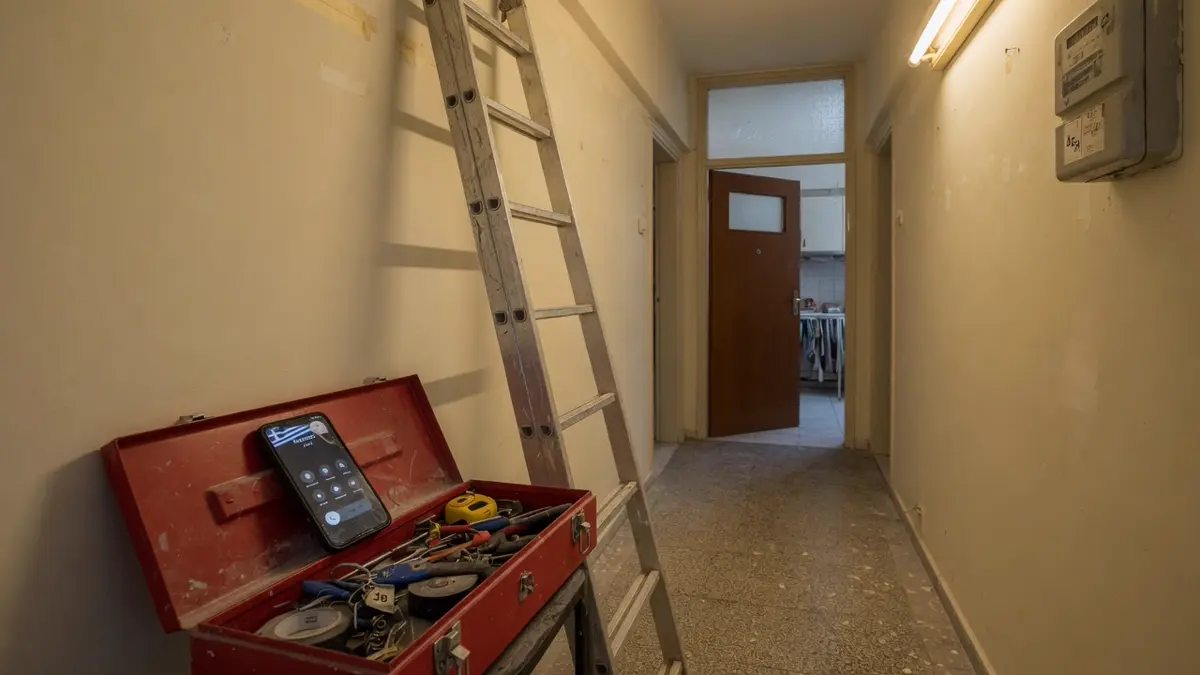
Confirm booked trade visits before the van leaves

Quick summary
- Tomorrow's list is on the dash. Two names have no door code. One wrote tiles not in. Nobody rings them.
- This is not a new booking. They already have a morning. The call confirms they will be in, and that the job can start.
- A bathroom needs the tiles. A communal look needs the manager and the shaft key. A flat needs someone behind the door.
- It does not invent 9:20, release the hour if they do not answer, or quote the job from the reminder.
- It calls in the language of the booking. The SMS with the window and the door code follows that language.
- Set the hours it may ring before the first name goes out. Do not leave a quote or an arrival on a voicemail.
TL;DR
Tomorrow you have a bathroom look, two sockets, and a roof tank with the building manager. Two names have no door code. One wrote that the tiles might be late. You are under a sink, or you have already packed the van. Nobody rings those names. An assistant calls the people who already have a morning in the book. It confirms they still want the visit, that someone will be in, and that the tiles or the key are actually there. It will not invent when you will arrive. It will not invent a price. It speaks the language on the booking — 70+ languages — and texts the window in that language.
Key takeaways
- Start with tomorrow's visits that have no door code, and with any job that depends on tiles, a key, or a manager.
- Confirm the visit that is already in the book. Do not open a new booking on this call.
- Write the questions once: will someone be in, are the tiles in, does the manager have the shaft key, is there a door code.
- Do not let it name 9:20, release the hour if they miss the call, or quote the job from the reminder.
- Call in the language on the booking. The SMS follows that language — 70+ languages.
- Set quiet hours and retries before the first name. Never leave a price or an arrival on a recording.
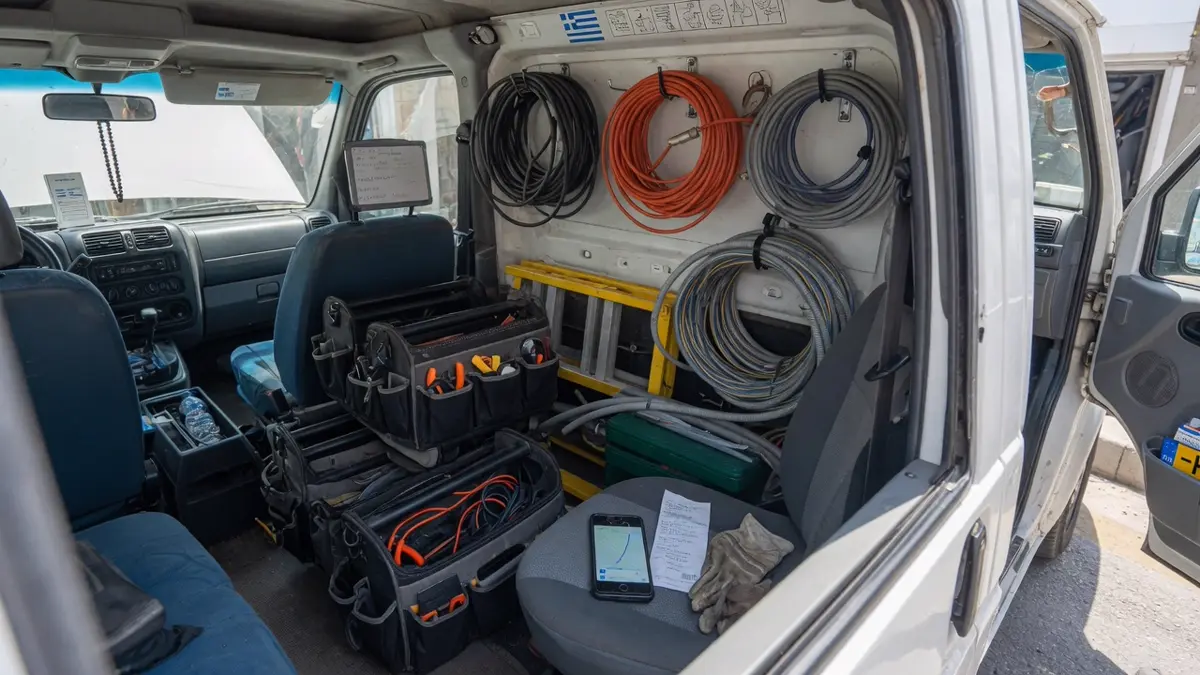
Tomorrow’s list, still uncalled
Tomorrow’s visits are on a list on the dash. Two have no door code. One wrote that the tiles might be late. The building manager has the only key to the shaft, and nobody has asked if they will be there on Tuesday.
You will not ring them. You are under a sink, or on a ladder, or you have already packed the van for the job you are in. Tomorrow you will stand on a landing with nobody home, or in front of a wall that is still closed, or at a shaft that will not open.
These people already have a morning. They do not need a new booking. They need a call that confirms they still want the visit, that someone will be in, and that the job can actually start. Answering the inbound line does not do that work.
This is a normal evening on a one-van trade. You already measure the jobs you finished. The empty mornings sit in the book as if they happened.
This is not a new booking
The inbound assistant asks emergency or booked, then looks for a free hour. This call is the other direction. The hour is already there.
Confirm they still want it. Confirm someone will be in. Confirm the thing the job depends on — tiles, a shaft key, a water heater that has arrived, a kitchen that is actually open. Take a door code if they have one. Stop.
Do not open a second visit for a name that is already on tomorrow. Do not offer a different day unless they say they cannot do this one, and then treat that as a move on the book you already use, not as a fresh quote.
Do not use the reminder to sell two extra sockets they did not ask for. Do not use it to quote the bathroom. A number spoken on a confirm call is a number they will hold you to on the landing, before you have opened the wall.
If they ask “how much?”, the answer is the same as inbound: a published call-out you actually print, or no figure. You price what you have seen.
Will someone be in — then the thing the job needs
Write the questions the way you would tell a new hire before they ring the list.
Someone in. A tenant who is at work. A landlord who thought the tenant would wait. A building manager who is only there on Tuesday mornings. If nobody is behind the door, the morning is empty. Ask.
The thing the job needs. Tiles for a bathroom. The new water heater on the balcony. The kitchen opened so you can get to the board. The shaft key for the tank. If that thing is not there, you are not starting. Ask.
The door. Street-door code. Floor. Who opens the landing. A pedestrian street does not need to be solved on this call. It does need to stay off any sentence that sounds like 9:20.
If they say the tiles are not in, that is a move or a cancel, not a reason to invent Friday at nine. The assistant takes the new day they want and leaves the change to the book. It does not offer their own Thursday to the next person until the change is in.
If they say they forgot, and can you come now instead — look at whether anything is running or dead. If not, this is still tomorrow’s visit, or a request to move it. It is not a now.
A leak that appears on a confirm call
They pick up and say the pipe has gone, or the board is dead, or they smell burning. That is not a confirm any more.
The assistant asks whether the water is still running, whether the power is still out, whether they smell burning. If yes, it takes the address — you already have it — and puts that on the phone you named. It does not turn tomorrow’s bathroom into an arrival in twenty minutes. It does not cancel Thursday from the same call. You decide whether to leave the job you are in, or to leave tomorrow’s book.
If the answers are no, they wanted a tighter time because they will be home this afternoon. That is a request. The assistant does not invent 14:00 over a kitchen that is already open.
Write this split into the outbound script. A confirm call that cannot hear a leak will book a now you cannot keep, in the language they are already speaking.
Do not invent 9:20
The book says Thursday morning. That is the sentence.
Tightening it to 9:20 on a reminder feels helpful. It is how a caller waits on the landing while you are still looking for a place to leave the van, or still in the previous building, or still waiting for the manager with the key.
The assistant repeats the window already in the book. It does not make it smaller. If you actually write hours — Thursday at 10:00, not Thursday morning — it may repeat that hour. If you do not write hours, it must not invent one.
The same ban covers a price. A reminder is not a quote. A voicemail is not a quote. A recording that says “about two hundred for a bathroom” is a number that lives on a phone you do not control.
If you run after-hours confirms, write the hours it may ring. A call at nine in the evening about tomorrow’s sockets is useful. A call at nine about a job that is already done is not. Sunday night is only a time you chose.
Nobody answers — the morning stays theirs
A missed outbound call is not a cancellation. The hour stays in the book until a person who can see the book decides otherwise.
You set the retries. Two or three honest attempts, then a short recording that names the trade and asks them to ring back. No door code on that recording. No price. No “we will be there at 9:20”.
After the tries, the name stays on a list you can see, still holding the morning. You decide whether to leave the yard. An assistant that offers that hour to the next quote, because the confirm did not pick up, is how two kitchens wait.
If they answer and say they are not coming, the assistant writes that down and leaves the release to you. Then the hour can go back on the book, the same hour, so a quote that rings inbound can be offered it. A cancel that sits on the dash until the evening is a morning you already lost.
The manager, the shaft, and Tuesday
Communal work has a second person. The tenant can confirm they will be in and still not have the key to the tank. The manager can confirm Tuesday and still not have told the people on the landing that the water will be off.
The outbound list for a communal look should name who has to be there. If that name is missing, the call is to get it, not to repeat “Tuesday morning” at a tenant who cannot open the shaft.
Do not let the assistant promise that you can get into the shaft, or that the water will only be off for an hour. Those are sentences you give when you have seen the tank. The confirm call takes who will be there and whether the key exists.
A pedestrian street, a van that needs ten minutes to stop, a board on a landing that needs the lights off: write those as notes for you, not as promises for them.
The language on the booking
A tenant who booked in English gets the confirm in English. A manager who booked in Greek gets it in Greek. The assistant works in 70+ languages and follows the language already on that visit.
If the cousin booked in Greek and the person at the door speaks English, ask who the text should go to. The person who needs the window and the door-code reminder is the person who will be on the landing.
The SMS goes out after they have said they are still coming. Window, address, door code if they gave one. Not a minute. Not a price. Not a Greek text after an English confirm.
If they do not answer, the recording follows the same language. It still must not carry a code, a figure, or an arrival.
What the transcript is for
It is how you, packing the van at seven, already know Thursday morning, Kypseli, bathroom, tiles in, someone in, code 14, and that they asked for 9:20 and were told no. That is the difference between ringing the bell and hoping, and walking in with the facts you confirmed the night before.
If the transcript does not contain whether they will be in, whether the job can start, and whether a leak appeared on the call, the setup is wrong, even if every name was dialled. A confirm that produces “reminded about visit” is a voicemail with a longer recording.
A communal transcript that does not name who has the key is the same failure. You cannot open a shaft on “someone will be there”.
The rule it must obey
A confirm is a confirm. It is not a new booking, not a quote, not an arrival.
It may repeat the window already in the book. It may take a door code. It may ask about tiles, a key, and who will be in. It may put a leak that appears on this call onto the phone you named. It may do those things in the language on the booking.
It may not invent 9:20. It may not invent a price. It may not release the hour because they did not pick up. It may not offer that hour to the next quote from the same call. It may not cancel Thursday’s bathroom because they sounded urgent. It flags you.
It may not leave a code, a figure, or an arrival on a recording. It may not diagnose. It may not decide that you will leave the job you are in.
Tell them it is an assistant. The greeting can still use the name on the van.
What you configure first
- Tomorrow’s short list. No door code. Tiles, key, or manager still unknown. Do not start with the whole year.
- The questions, written as you would say them: someone in, tiles in, key with the manager, door code.
- The window already in the book. No tightening. No 9:20.
- The leak split. If water is running or the board is dead on this call, ring a human. Do not book a now.
- Quiet hours and retries. No price and no arrival on the recording. No code on the recording.
- Language of the booking. SMS in that language. Who the text goes to when a manager booked for a tenant.
- What happens when they cancel. Write it back on the book the same hour. The assistant does not give the morning away. You do.
Then listen to the first twenty confirms. You are checking that the hour was not tightened, that no price appeared, that a leak went to you, that a missed call did not release the morning, and that the text went out in the language of the booking. If a call fails those, it failed, however polite it sounded.
Make one test call to a number you hold before the first real name goes out.
How CITT handles it
- It calls from the list you give it — tomorrow’s visits, not a cold list.
- It confirms the visit that already exists. No second booking for the same name.
- It asks the questions you wrote — someone in, tiles, key, door code — and stops.
- A leak on this call rings a human. No invented arrival.
- A missed call does not release the hour. A spoken cancel is written back for you to free.
- Several outbound calls can run while you stay under the sink. You still take the ones you can.
- It texts after they confirm, in the language of the booking — 70+ languages — window and door code only.
- You get the transcript, the summary, and whether the job can start, as fields you can read in the van.
What it will not do
It will not invent when you will arrive. The window in the book is the sentence.
It will not invent a quote. A reminder is not a price list.
It will not give the morning to someone else because they did not pick up. It will not cancel a booked kitchen because a caller sounded urgent.
It will not leave a door code, a figure, or an arrival on a voicemail. It will not diagnose. It will not promise that you can open a shaft, or that you will be there at midnight if you do not run nights.
It will not treat a confirm as an inbound quote for extra sockets. The job in the book is the job. Anything else is a request.
What these calls sound like
The name of the visit first. Then whether they still want it. Then whether someone will be in, and whether the job can start. Then the door code. Then the window already in the book, said once, not made smaller.
There is no “we can be there at 9:20”. There is no “a bathroom is usually this”. There is no “I’ll put you down for this afternoon” over a kitchen that is already open. There is no Greek text after an English booking.
If the assistant is friendly and still tightens the window, you meet a person on the landing at a minute you never wrote. Put Thursday morning on the dash the way the book already has it, take the code, and keep a leak on your phone.
Before the first live list
Write down which mobile gets a leak that appears on a confirm. Write down the sentence for a window you will not tighten, and the sentence for a price you will not give. Mark whether you confirm the night before, whether you ring Sundays, and whether communal jobs need a second name.
Take the structure of the calculation above and put your own figure in. Four empty mornings are enough to know whether this is you.
Rates live on the pricing section of the home page. They are not repeated here.
AI receptionist, in-house staff, or a call centre
| CITT | In-house | Call centre | |
|---|---|---|---|
| Rings tomorrow's booked visits | Yes, from the list you give it | If they finish the job they are in | If you export the names |
| Asks if someone will be in | Yes — that is the call | Yes, when they have a free minute | Often just reads the day |
| Asks about tiles, key, door code | The questions you wrote, nothing else | If they remember to ask | A generic “still coming?” |
| Releases the hour if they do not answer | Never | Sometimes from a guess | Risk, if the sheet says no-show |
| Invents 9:20 or a price on the reminder | No — only the window already in the book | Can see where the van will actually be | Tempted to sound helpful |
| Language of the booking | 70+ languages | Greek, and English if they have it | Whoever is on that shift |
| A leak that appears on this call | Rings a human — not a new hour | Yes, if they hear it | May book the first gap |
What unconfirmed mornings cost a one-van trade
Worked from these assumptions — change any of them and the answer changes:
- One van. About 8 booked visits a week. Put your own weekly count in.
- Over a normal month this example counts 6 mornings where nobody confirmed they would be in, or the tiles were still not there, or the manager did not have the key. Put your own count in.
- Of those 6, this example assumes 3 become empty visits: you arrive, nobody is in, or the wall is still closed. Change the 3 if yours is lower.
- A wasted morning, before parts, is worth about €180 here in labour and the next job you could not take — YOUR figure will differ, and this is the number to change first.
- The remaining visits on those days may still stand. This example counts only the empty morning.
- 3 empty mornings in one month.
- 3 × €180 = €540 that month, from visits that were already in the book and nobody confirmed.
- Separate from that, some names would have cancelled if asked. If two half-days would have come off the book the day before, and a quote caller could have taken one of them, put your own figure on that row. The assistant does not give the hour away. You do, after they say they are not ready.
About €540 a month from the empty landing alone — and only if you accept the three mornings above. Change them.
What it costs
CITT is pay as you go: no packages, no minimum, no contract. The current rates — the monthly fee per number and the per-minute rate — are on the pricing section of the home page, which is the only place they are published.
Frequently asked questions
Who should it call first?
Tomorrow's visits that have no door code, and any job that depends on tiles, a shaft key, or a building manager being there. Those lists are short and the facts are already in the book. Do not start with last year's customers, or with people you already saw this week, or with a visit you have already cancelled. Add a day-before confirm for every visit only after you have watched the short list behave for a week.
Can it give the hour to someone else if they do not pick up?
No. A missed outbound call is not a cancellation. The morning stays theirs until a person who can see the book decides otherwise. If they answer and say the tiles are not in, the assistant writes that down and leaves the release to you. Offering the hour to the next quote from the same call is how two kitchens expect you at the same time.
Will people mind a software call the day before a visit?
They mind a sales call. They do not mind “you have a visit tomorrow morning, will someone be in, are the tiles there, is there a door code,” if they asked you to come. The assistant says it is an assistant, names the trade, and stops if they ask not to be called again. You set the hours. Sunday night is not one of them unless the visit is Monday and you chose that.
What if they want to come earlier, or they now have a leak?
A tighter time is a request, not a confirm. The assistant does not invent 9:20. A leak that appears on this call is not a new booking. It takes whether the water is still running and puts that on the phone you named. You decide whether to leave tomorrow's bathroom. A yes on the phone for an arrival you cannot keep is worse than not having called.
Can it take the door code on this call?
Yes, and it should, if they have one. It texts the window and the code after they have said they are still coming. It must not read a code into a voicemail. A recording stays on a phone you do not control. If they have no code, it must not invent one. The sentence is the window already in the book, plus who will be in.
What happens when they do not answer?
You set the retries and the message. A short recording that names the trade and asks them to ring back is enough. A price and an arrival do not go on that recording. After the tries you chose, the name stays on a list you can see, still holding the morning. Three honest attempts with no answer is a fact for you, not a reason to keep ringing the same number after dinner.