Missed calls at a driving school — who hangs up
Quick summary
- Kostas has a foot over the second brake. Maria is in the other car. The office is empty.
- A new student who hears voicemail hangs up and dials the next school on the same search.
- Ask driving lesson, theory class or test date first — those three misses are not one pile.
- The people who leave a message already know you. The people who wanted to start leave nothing.
- The assistant answers, tags which of the three they mean, and does not invent a free hour.
- Pull unanswered calls by hour from the provider. Isolate late afternoon on its own.
TL;DR
Kostas has a foot over the second brake. Maria is in the other car. The office is empty. Someone rings for a driving lesson, a theory class, or a test date. A new student who hears voicemail hangs up and dials the next school. An existing student who wanted to cancel at twenty to five tries once. The assistant answers every line at once, asks which of the three they mean, and only offers a time that is actually free. It will not invent a lesson hour. It will not invent a test date the transport office has not given you.
Key takeaways
- Ask the provider for unanswered calls by hour, four weeks back. Look at 16:00 to 19:00 on its own.
- Do not judge the week by the tape. New students who wanted to start leave nothing.
- Forward after a short delay so whoever is back at the desk still takes the call.
- Tag driving lesson, theory class and test date separately. They are not one unanswered pile.
- Never invent a free lesson hour, and never confirm a test date the transport office has not given you.
- Pull the same after-work window after four weeks. If it has not dropped, the forwarding rule is wrong.
The phone is face-down in the cup holder
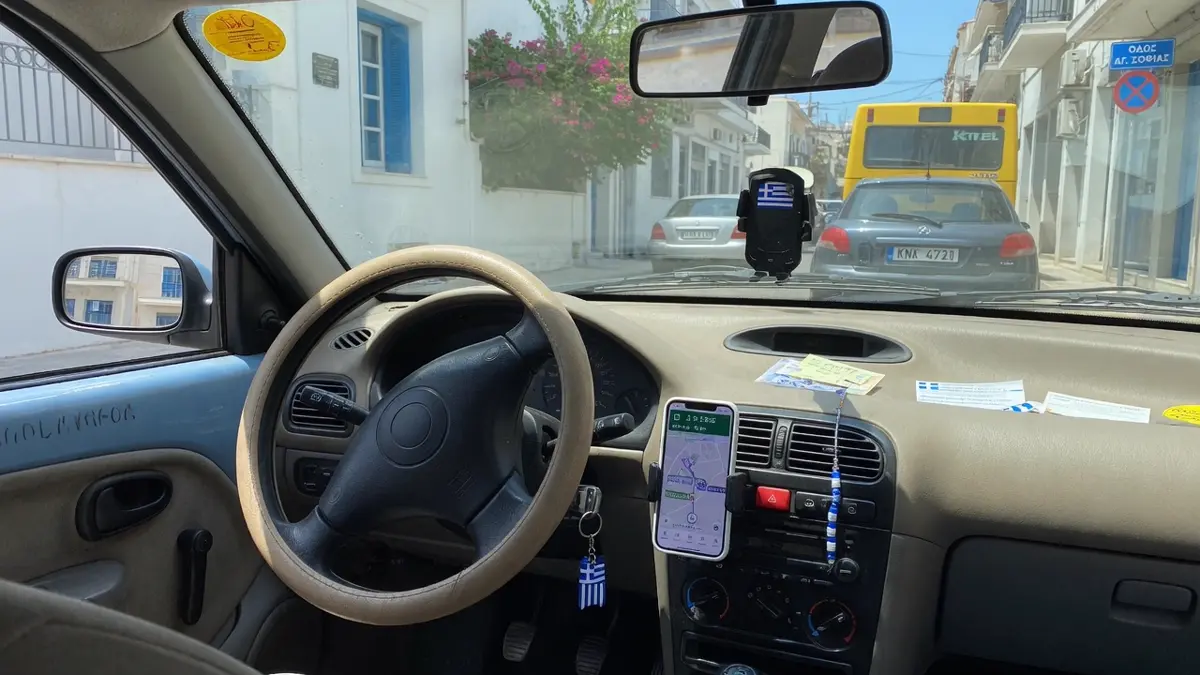
Thursday, 17:10. Kostas is in the passenger seat of the dual-control car. The student is approaching a junction you have used a hundred times. His right foot is over the second brake. The phone in the cup holder lights up.
He cannot pick it up. The student cannot be left. Maria is in the other car, on the ring road, with the same problem. The shopfront, if you still have one, is empty until someone comes back to swap a student.
The caller opened two school numbers from the same search. They want to start this week. They asked for tomorrow at five because that is when they leave work. They will not wait through the beep. They hang up and dial the next number.
That is a normal Thursday at a two-instructor school. You already count lessons given and packages sold. The thing you usually cannot see is the person who tapped the telephone icon at 17:12, listened to four rings, and went back to the search. That caller is in the telephony log, which nobody at the school has ever asked to see.
Who hangs up, and who you hear later
Not every unanswered call costs the same.
The person who leaves a message already knows you. They have been in the car. They want to cancel today’s lesson. They want to know how many hours they have left. They will wait until you play the tape. These are the voices that shape the story of “we don’t miss much”.
The person who wanted to start does not leave a message. They wanted a yes and a time this week. A beep is a no. They are still on the search page. The next school with a dual-control car is one tap away.
A parent calling for an eighteen-year-old who turns in March does not leave a message either. They have two flyers on the table. They will ring the school that picks up.
Then the caller who already tried twice. They are not in this week’s unanswered log as a new miss. They have decided you are the school that does not pick up. Inbound volume can drift down for a season and you will look for the cause on the lesson list, where it will not be.
If you judge the week by the tape, you staff for cancels and remaining-hour questions. You miss the people who wanted to start. Those are the ones with a package attached.
After work, both cars out
Look at the log by hour before you look at it by day. The unanswered calls sit in a clump: late afternoon into the early evening, when people leave work and want tomorrow at five, and when both of you are already on the road.
Tuesday morning often looks fine. Someone is back at the desk between students. The people who can actually start a package are not free at 10:30 on a Tuesday. They are free after work. Those hours are also when both dual-control cars are out.
Hiring someone for the quiet mornings does not put a pair of hands on the Thursday phone. A second instructor still has one pair of hands. When three people ring in twelve minutes, callers two and three hear ringing that nobody will take.
The same hour is when theory students ring to ask if Thursday’s class is still on, and when someone asks when their test is. If the assistant is not on that number, those two either wait on a tape or hang up. A theory question nobody answers is a student who does not come that evening. A test question nobody answers is a student who still does not know where to meet.
Pull 16:00 to 19:00 on its own before you look at the rest of the week. If that window is quiet in the log, you are not looking at a typical school, or the log is the wrong line. If it is loud, start here.
Three kinds of miss
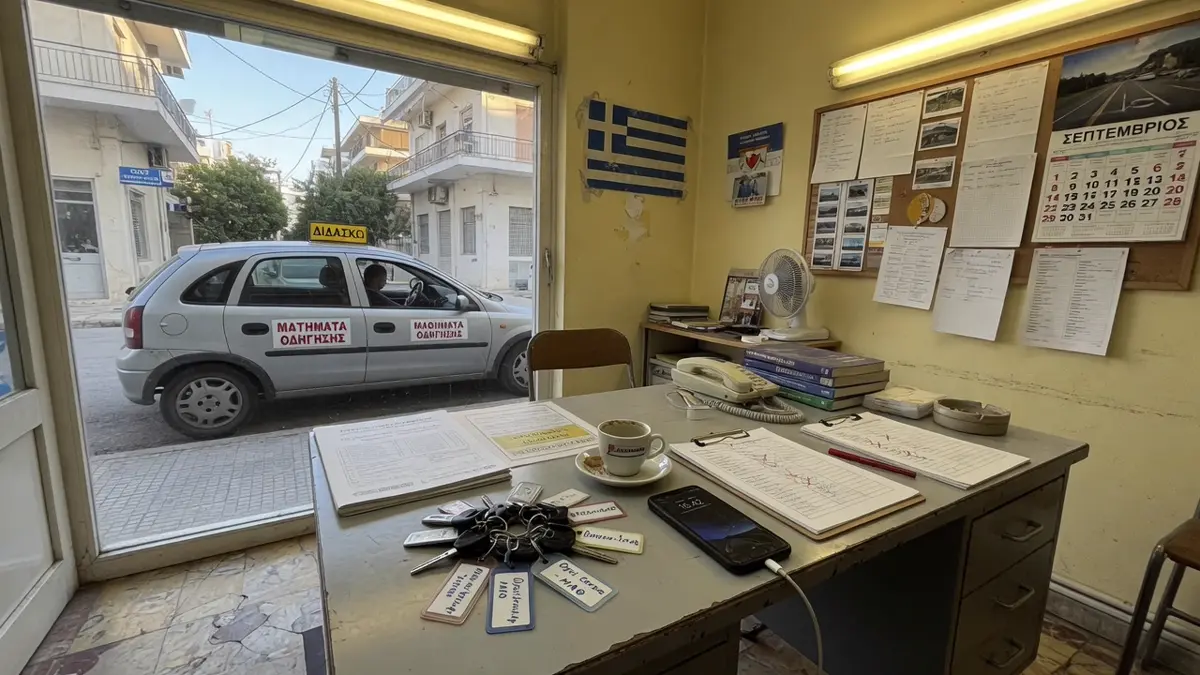
The number on the shopfront, the Google listing and the cards in the windscreen is one number. A caller who wants a driving lesson, a caller who wants Thursday’s theory, and a caller who wants a test date all dial it. If nobody picks up, those three misses go into one pile.
If you treat every unanswered call as a lesson, you will staff the evening for cars and leave the theory room empty. If you treat every unanswered call as a theory question, you will still lose the person who wanted to start in a car this week.
Tag them. Driving lesson. Theory class. Test date. The weekly total is useless if those are one number.
A caller who is already a student — they said “Kostas”, they named today’s hour, they asked how many hours they have left — belongs on the lesson list. A caller who asked if Thursday’s theory is still on belongs on the room list. A caller who asked when the test is belongs on the transport-office list you already keep, or on a note if you have no date yet.
The person at the desk already hears that split without thinking. The log will not, unless you make the assistant ask lesson, theory or test first.
A motorcycle caller is not a category B miss either. If Maria is the only motorcycle instructor and she is already out, that unanswered call is a bike hour you did not take. Do not mash it into the category B pile.
They already have the next school on the same screen
You talk about missed calls as if they were spread through the day. They are not.
A parent searches “driving school” and two numbers come back. They tap yours. Kostas is in a car. Maria is in a car. Callers two and three, if they arrive in the same burst, hear engaged, or they hear ringing.
The assistant takes every call: lesson, theory or test, who they usually go with if they have already started, and a time that is actually free. It does not invent tomorrow at five because that is what they asked for. That is how you book two students against a car that is already on the ring road.
Then 18:40 on a weekday. One caller, still on the search, asking if you pick up from the metro. Both of you are still out. If that call goes to the beep, they ring the next school that listed a pickup.
If you only staff for the Thursday burst, the evening new-student tap still goes. If you only think about the evening, the three who ring at once still hear engaged. Pull the log as two pictures, not one weekly total.
Fifteen seconds in a moving car
A delay of fifteen seconds assumes someone can hear the ring and choose. In the passenger seat the work phone is in the cup holder, face-down, or on silent because the student is talking. Fifteen seconds pass. Thirty. The caller is already on the next school.
If the published number is a mobile that travels in the car, a long delay just sends them to the beep. A short delay — or an immediate forward when that instructor is marked out on a lesson — is how the assistant actually sees the call. Whoever is genuinely free at the desk still picks up if you keep the desk in the chain.
Someone standing at the shopfront rings the number on the door. They can see the lights. They still want to know if there is a lesson this week. That call is the same call as the search tap. Do not send them to the beep because both cars are out.
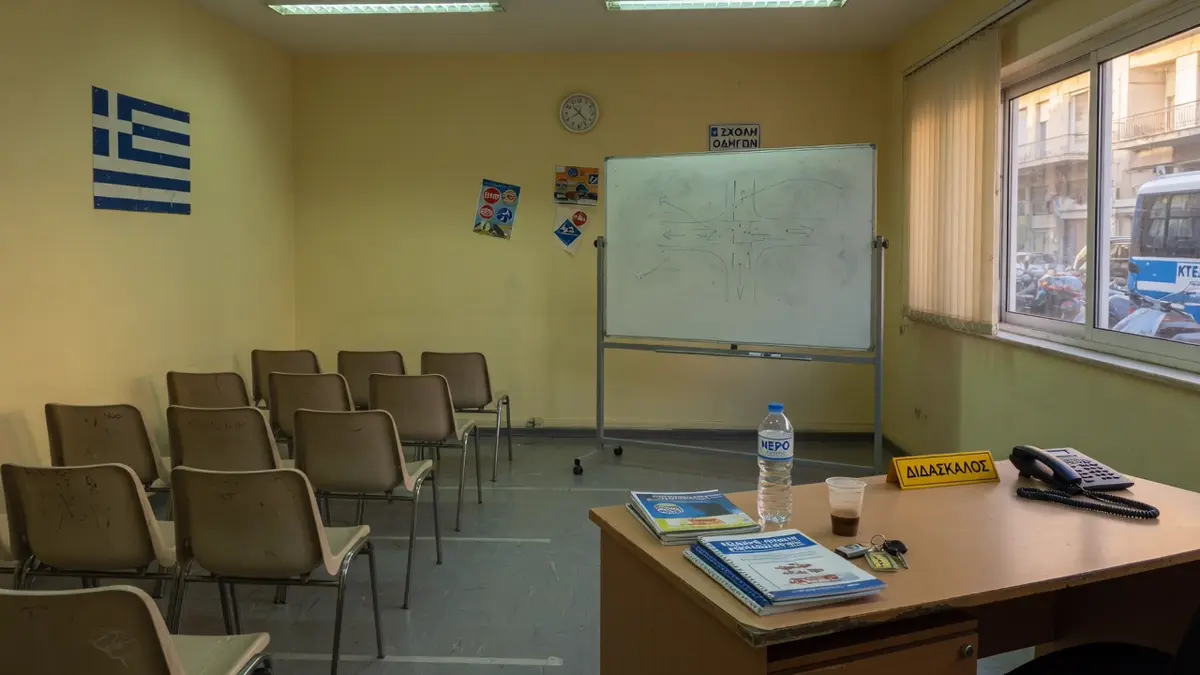
In the theory room the same fifteen seconds fail for a different reason. The person who would pick up is at the whiteboard. They can hear the phone in the corridor. They cannot leave six people in front of a junction diagram.
A cancel you never heard
“I need to cancel today’s lesson, I’m still at work” is a student you already have. They will often try once. They will not always leave a message. Missing that call is rude. It is also an empty hour at 17:00 that you could have offered to the next person who asked.
The assistant should take the cancel, free the hour if anything is left of it, and offer it to the next caller if you want that. It should not offer a free replacement hour. Say the cancel rule you actually use.
Do not let cancels be the measure. The measure is unanswered new students between 16:00 and 19:00, and unanswered first lessons from people who are not yet on a package. Those two hang up.
“How many hours do I have left?” is the same kind of existing-student call. Only answer if you have given the assistant that list. If you have not, it takes the name and says you will confirm. If that call rings out, they will ask again at the car door, with the next student already waiting. That is a mess. It is still not the same loss as the person who wanted to start.
A test-date question that rings out is a third kind. The student already has a date from the transport office, or they do not. If they have one and nobody picks up, they still do not know where to meet. If they have none, they wanted a note. The assistant may repeat a date you have already written down. It must not invent a Tuesday because the call was about to die.
Do not invent an hour to keep them
The missed-call problem tempts people to put something — anything — on the line so the caller stays. That is how a school ends up offering 17:00 when Kostas is already out, or confirming a test morning the transport office has not given you, at five on a Thursday, with both cars on the road.
Answer so they do not dial the next school. Ask lesson, theory or test on the first exchange. Write down who they usually go with, or that they have not started. Do not tell them tomorrow at five is free. Do not give a test date that is not in the file. Offer a lesson only if that instructor and that car are actually free.
A caller who heard “tomorrow at five is not free; I have Thursday at 17:30 with Kostas, pickup at the metro” is still on your books. A caller who heard “yes, five o’clock, we’ll squeeze you in” and then stood on a pavement in Agia Paraskevi while the car was still in Piraeus is a Thursday you spend apologising.
Someone rings and asks if they are ready for the test, or how you reverse into a bay. If that goes to the beep, they try another school, or they wait. The assistant writes the words down. It does not say they are ready. It does not give driving advice. You have been in the car. It has not.
A published package you gave it can be repeated — the starter set on the card in the window. Unseen remaining hours cannot. Do not store a “from” figure for the whole school and then wonder why the assistant reads it out on an unanswered Thursday.
What the transcript is for
It is how Kostas, who was in a car at 17:00, walks into the evening list already knowing driving lesson, new student, Thursday at 17:30, pickup at Agia Paraskevi metro. That is the difference between “sorry I missed you, what did you want” — which is a second cold call — and “you asked for a driving lesson this week, Thursday at 17:30 with me”. The second sentence is why they do not dial the next school while you are asking them to start again.
If the transcript does not contain lesson, theory or test, who they go with, the pickup if there is one, and what was booked or left, the setup is wrong, even if every call was answered. An answered call that produces “enquired about a lesson” is a message with a longer recording.
A theory transcript that does not have the evening they asked about is the same failure. You cannot act on “someone rang about class”.
A caller who rang in English gets the note and the SMS in English. A caller who rang in Greek gets them in Greek. The assistant works in 70+ languages. The confirmation follows the language of the call.
The rule it must obey
A driving lesson is a booking only when that instructor and that car are free. A theory place is a booking only against the evenings you already run. A test date is a sentence only from the date the transport office has already given you.
It will not invent a free lesson hour. If Kostas is out from 16:00 to 19:00, 17:00 is not free. It will not invent a private theory hour on Saturday morning because the car calendar has a gap. The car calendar is the wrong list. It will not confirm a test date you do not have. It will not put a theory student into a car hour, or a motorcycle student onto a category B gap.
It will not give driving advice. It will not say a student is ready. It will not guess remaining hours. It will not offer a free replacement hour because someone cancelled yesterday.
Tell callers it is an assistant. The greeting can still use the school’s name.
The calls arrive together, in the hour nobody can leave a moving car. A second person at the desk still has two ears. Callers two and three still hear engaged. An assistant that can take several at once matches that. Keep the people you have. Let Kostas keep his foot over the second brake. Let Maria stay on the ring road.
What you configure first
- The unanswered-by-hour log. Four weeks, late afternoon included. Without it you are guessing.
- Forward on no-answer, not always. Fifteen to twenty seconds if someone can hear the desk phone. Shorter if the published number travels in the car.
- Lesson, theory or test, written as a required first question.
- Tags. Driving lesson, theory class, test date, cancel, remaining hours.
- The two forbidden sentences, in the same words the desk already uses when they are being careful: we do not invent a free hour; we do not confirm a test date the transport office has not given us.
- Pull the same log after four Thursdays. If 16:00 to 19:00 has not dropped, the forwarding rule is wrong, or the assistant is not on the number on the shopfront.
Then who teaches B and who teaches A, which car they have, whether you pick up, the evenings theory actually runs, the cancel rule you already say out loud. Give it the published packages it may repeat, and do not give it a remaining-hours figure it would read out.
The number on the shopfront stays yours. One forwarding rule at the provider. Calls the desk takes never leave the school. Every line is answered at once. The assistant checks the list that matches the request before it offers a time, and confirms by SMS only when the booking is real.
In a Greek school, English is how a share of new students start — people who work in English, a parent who rang that way, someone who already drives in another country. They ring after work, often looking at two other cards. If nobody picks up, they do not leave a message in a language they are not sure you speak. They dial the next school. The assistant stays in the language of the first sentence. Seventy-plus languages. Ask which of the three they mean. Do not invent an hour.
Before the first live Thursday
Write down which mobile gets a test-date request and a “ready or not” question after both cars are out. Write down the sentence for an hour you cannot offer, and the sentence for a test date you do not have. Mark who is in on Thursday evening, whether you pick up from the metro, and whether Saturday motorcycle hours come off in the rain.
Take the structure of the calculation above and put your own figure in. Four Thursdays are enough to know whether this is you.
Rates live on the pricing section of the home page. They are not repeated here.
AI receptionist, in-house staff, or a call centre
| CITT | In-house | Call centre | |
|---|---|---|---|
| Both instructors already in a car | Every line answered at once | After they get back, if at all | Depends who was rostered |
| New student, two school numbers open | Answers before they dial the next one | One call, if someone is at the desk | A message, if they wait |
| Asks lesson, theory or test first | Yes — before it looks at any list | Yes | Often jumps to what time |
| Offers only a free hour that exists | Checks instructor and car first | Yes — they can see who is out | Reads a gap on a sheet |
| Test date vs lesson | Repeats only a date you already have | Yes | Treats it as another booking |
| Thursday 16:00 to 19:00, office empty | Same as a Tuesday morning | Nobody — both cars are out | A message for later |
| Invents a spare hour to keep them | Never — callback | Tempted, on a tight day | Risk, if the sheet is thin |
What the Thursday tape does not show at a two-instructor school
Worked from these assumptions — change any of them and the answer changes:
- Two instructors, a normal Thursday, roughly 18 inbound calls.
- About 8 of those arrive between 16:00 and 19:00, when both instructors are already in a car.
- Of the calls nobody reaches, 2 leave a message and 6 leave nothing.
- 3 of those 6 silent calls were new students asking to start.
- A new student who buys a lesson package is worth about €350 to the school — YOUR figure will differ, and this is the number to change first.
- This example assumes 2 of those 3 never leave a message and ring another school. Change that if yours is lower.
- The tape on Thursday evening shows 2 people. That is the number the school believes.
- The provider's log shows 8 unanswered. The other 6 are the ones nobody counted.
- 3 of the 6 were new students. If 2 of those 3 start somewhere else, that window is €700 gone before 19:00.
- Thursdays alone, over a 46-week teaching year — 46 × €700. Put your own weeks in if you close in August.
About €32,200 a year, from one recurring three-hour after-work window that the tape will never report. Change the €350 and the two lost starts before you trust it.
What it costs
CITT is pay as you go: no packages, no minimum, no contract. The current rates — the monthly fee per number and the per-minute rate — are on the pricing section of the home page, which is the only place they are published.
Frequently asked questions
How do we find out how many calls we actually miss?
Ask the telephony provider for unanswered calls by hour, including late afternoon, for the last four weeks. Most small schools have never requested it. The figure is usually much larger than the pile of messages, because a caller who wanted to start hangs up at the beep and dials the next school on the same search.
Would a better mobile for every instructor not fix this?
It fixes the call that arrives while they are walking back to the office. It does not fix the call that arrives with a student approaching a junction and a foot over the second brake. One person still has one pair of hands. Maria in the other car cannot pick up either.
Does the contact form on the site not catch them?
Some of them. The people willing to type a name into a form are not the same people who tap the number because they want a lesson this week. Those two groups overlap less than desks hope. The form also does not ask lesson, theory or test.
What happens to the calls we do pick up?
Nothing, and nothing is charged. The forwarding rule only sends a call on when it has rung unanswered for the seconds you set. An instructor who answers at the desk, or who steps out of a car and picks up, keeps that conversation.
Will a student know they are not speaking to Kostas?
They will know they got an answer. The assistant introduces itself the way you configure — most schools put the school name in the greeting and do not pretend the voice is a named instructor. If asked directly, it says it is an assistant. What new students punish is the ring-out, not the honesty.
How soon can we tell whether anything changed?
Four weeks, against the same unanswered-by-hour log you pulled at the start. Measure unanswered calls, not calls the assistant handled. A dashboard full of handled calls can hide a forwarding rule that is still dropping Thursday between 16:00 and 19:00.