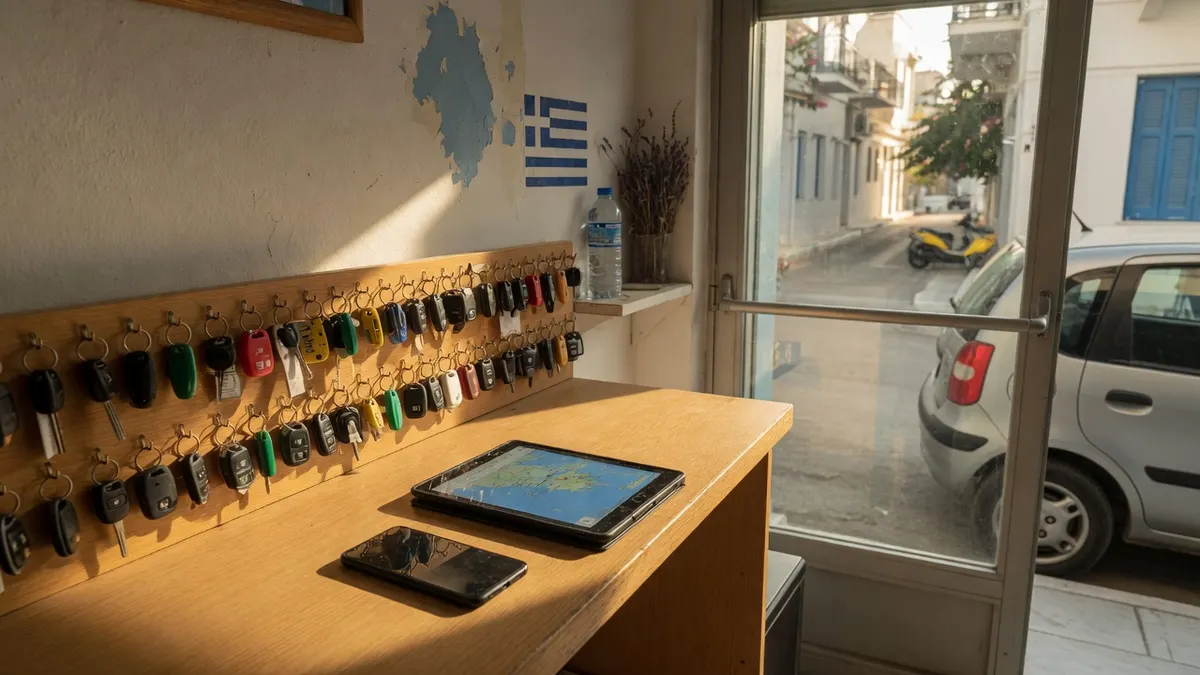
Pickup chase and delayed-flight calls for car rental desks
Quick summary
- You are handing keys. The no-show list and the delayed Athens flight still have to be chased.
- The list is a named booking, a pickup reminder, or a missing licence chase. Not a second opinion on cover.
- Every call starts with the name on the booking. If they do not recognise it, the call stops.
- It does not say the deposit is waived. Missing papers are a yes or no. What those papers mean is the desk.
- If they ask whether anything is covered, the assistant writes the question down and says the desk will look at the booking.
- SMS does the first reminder. The voice call is for the car that is still on the board two hours after the ferry.
TL;DR
You are handing keys. Eight pickups are still unanswered and the 21:10 Athens flight never landed. Nobody is going to spend the afternoon ringing. An assistant works the list you give it: name on the booking, one purpose. It asks whether they are still coming. It does not say what the deposit will be, whether anything is covered, or that a second driver is allowed. If they ask, it writes the question down and says the desk will look at the booking. It can move a slot if that time is free. It will not ring a hotel reception about someone else's hire.
Key takeaways
- Build each list from your own files: booking name, the number on the file, and one purpose.
- Do not put a hotel reception number on a pickup chase unless that number is the number on the file.
- Write the purpose as a reminder or a chase, not as a question about cover.
- If the client asks whether anything is covered, the assistant ends the call and flags the desk to call back.
- Check the board before you speak a time. Do not read 17:00 off this morning's pad.
- Keep deposits, excess and last year's CDW off the script. The desk will look at the booking.
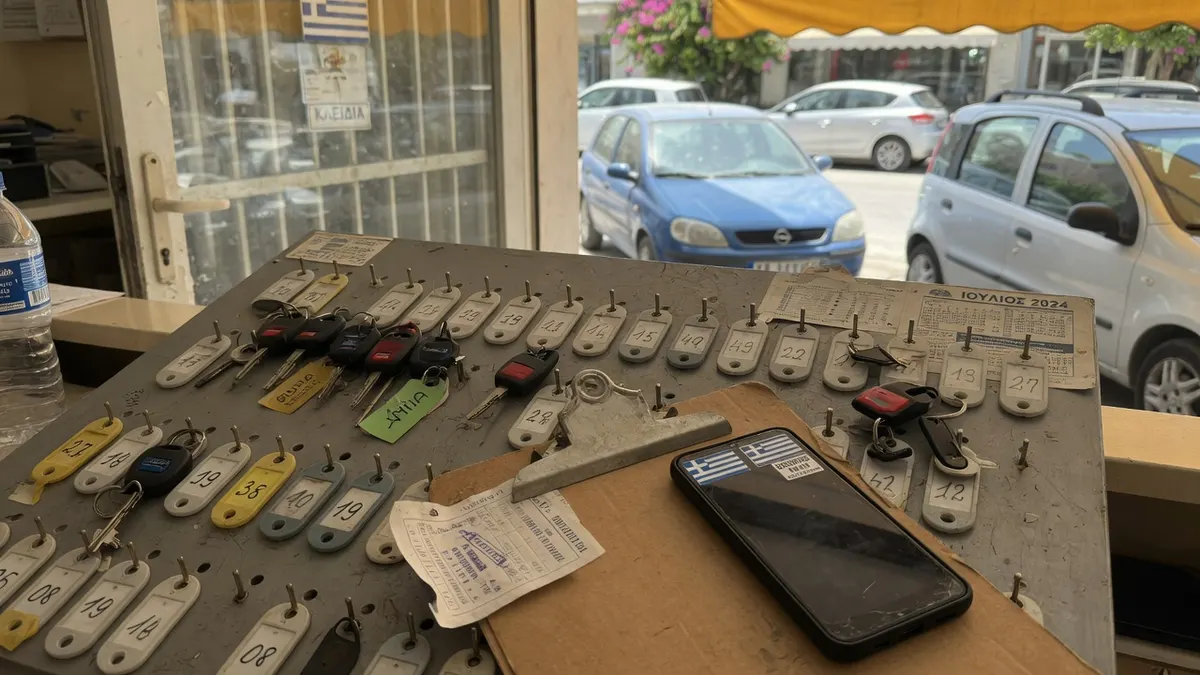
The lists on the pad while you hand keys
The family is still at the counter. Eight pickups are still unanswered. The 21:10 Athens flight never landed. You are not going to spend the afternoon ringing.
That is the outbound problem at this desk. Not a campaign. Not a hunt for new hires. A list of people you already have on the board, a name you have already written down, and nobody free to ring because both of you are at a car.
SMS does the first reminder. The voice call is for the car that is still on the lot two hours after the ferry, or the night slot that will die if nobody asks whether the plane is coming.
One purpose, the name on the file, then stop
Every outbound call starts with the desk name and the name on the booking. If the person on the line does not recognise it, the call stops. That is how you avoid briefing a hotel reception about a deposit, or a spouse about a second driver.
The purpose is one line. Are you still coming. Can you make 17:00. We do not have the licence copy you said you would send. Not “while I have you, do you want extra days”. Not “the excess is usually small if you want to sort it now”.
If they ask whether anything is covered, or whether the deposit is waived, the assistant writes the question in their words, says the desk will look at the booking, and ends the chase. A chase that becomes a contract has no person at the keys and no file note of a decision.
What belongs on the list
No-show after the ferry. The port slot was 16:30. It is 18:10. The car is still on the board. Ask if they are coming. If not, release the slot. Offer a later time only after the board is checked.
Delayed flight. The 21:10 is now 23:40, or it is cancelled. Ask if they still want the night collection. If you do not run nights, say so from the hours you typed in. Do not invent a driver in the hall.
Missing papers. Licence, voucher, a card they said they would bring. Name the list. Do not say those papers mean the deposit is waived.
Return reminder. Airport booth at 17:00 tomorrow. The desk, the time. Not a waived late fee. Not “keep it until Monday”.
Do not mix “are you still coming” with “see if they want extra days”. That is two jobs. Only the first one belongs on this call.
Numbers that must not be on the list
A hotel reception, unless that number is the number on the file. A spouse’s mobile, unless they are the named driver. A colleague at the next desk. A number copied from a WhatsApp group the intern made in June.
The assistant rings the number on the file. If that number is wrong, the chase fails honestly. A wrong number that reaches a hotel is a briefing about someone else’s hire.
The board, not this morning’s pad
A new slot spoken on an outbound call is a booking. It has to come from the board you actually use. 17:00 off this morning’s pad is how two families arrive for the same compact.
If the board cannot be reached, the assistant takes a request and says it has not confirmed a time. It does not guess that the night person is still there.
October hours belong on the same board. Do not chase a 23:40 collection into a week when the airport booth is dark.
After the call
You get the transcript, whether they are coming, whether a slot moved, and any cover or deposit question they asked — tagged as a question, not as a yes. The SMS confirms the reminder or the new time, in the language of the call. It does not confirm a waived deposit.
Read the first week of outbound transcripts. That is where “we can probably skip the hold” creeps in, because the car needed to move. Take that sentence out. The car moves when the slot is released, not when cover is invented.
What you set first
- The list from your files. Name, number on the file, one purpose.
- No hotel numbers unless they are on the file.
- The board, checked before any new time is spoken.
- The stop. Cover, deposit, excess, second driver — write the question, end the chase, flag the desk.
- SMS first, voice for the car that is still sitting.
- Release a no-show the same hour, so the hall can take the car.
This is not a dealership chase. You are not asking if they still want the Peugeot. You are asking if they are coming for the keys. Keep it that small.
Rates live on the pricing section of the home page. They are not repeated here.
AI receptionist, in-house staff, or a call centre
| CITT | In-house | Call centre | |
|---|---|---|---|
| Chase after a no-show at the port | Yes, from your list | When someone has time | If you write a script |
| Delayed-flight and pickup reminders | Yes | Yes | Sometimes |
| Starts with the name on the booking | Yes | Yes | If you insist |
| Names cover to hurry the pickup | Never — the desk will look at the booking | The desk does, after the contract | A risk if the script drifts |
| Answers whether the deposit is waived | No — flags the desk | The desk does | Must not; sometimes does |
| Offers a slot the board does not have | No — checks the board, or takes a callback | If they check | Often from this morning's pad |
| Rings a hotel about someone else's hire | No — only the number on the file | Only if you said so | A risk if the list was not read |
What unchased no-shows cost one July week
Worked from these assumptions — change any of them and the answer changes:
- Two people, 16 open pickups on a July day, each waiting on a ferry or a flight.
- This example treats 6 of those 16 as still missing two hours after the slot.
- A car that sits unused, or is released when they arrive at four, wastes about €55 of a reserved slot — put your own figure in, not ours.
- A two-hour outbound chase recovers half of those missing cars. Challenge this first; desks vary.
- 6 cars still on the board, two hours out.
- Half recovered — 3 slots that move, or 3 cars that go to someone still in the hall.
- 3 × €55 = €165 of reserved time protected, in one week.
- Several such weeks a season — this example counts eight.
About €1,320 a season of board time, from calls that only ask whether they are still coming.
What it costs
CITT is pay as you go: no packages, no minimum, no contract. The current rates — the monthly fee per number and the per-minute rate — are on the pricing section of the home page, which is the only place they are published.
Frequently asked questions
Can it tell them which papers are missing?
It can name the list you put on the file — licence, voucher, the card for the deposit. It should not rebuild the contract on the call, and it should not decide that a particular paper proves anything. If they ask whether the deposit is waived, that is a callback. The desk will look at the booking.
What if they ask whether they are covered, on the chase call?
The assistant does not answer. It says the desk will look at the booking, takes the question in the client's words, and ends the chase. A chase that becomes a cover conversation has no reviewer, no file note of a decision, and no person at the keys. The transcript still helps — you return a real question rather than “they rang”.
Can it offer a new pickup time?
Yes, if you allow that purpose and if it checks the board before it offers a slot. It still does not tell them what the deposit will be beyond the list you entered. A reminder that starts waiving a hold has stopped being a reminder.
Does it still ask for the name when we ring?
Yes. The call opens with the desk name, the name on the booking, and it stops if the person on the line does not recognise it. That is how you avoid briefing a hotel reception about a hire, or a spouse about a deposit.
Can it chase a return from an existing hire?
As a time reminder, yes: we have a slot this afternoon at the airport booth, can you make it, here is the desk. Not as a sentence that a late fee is waived, and not as cover. “We still have 17:00 at the airport” is reception. “You can keep it until tomorrow without charge” is a contract.
Who decides who is on the list?
The desk. The assistant does not invent people to ring. You export or tick the files that need a reminder or a chase, with one purpose each. A list that mixes “are you still coming” with “see if they want extra days” is two jobs, and only the first one belongs here.