Service-due and test-drive follow-up for car dealerships
Quick summary
- The last test drive is back and a technician is still under a diesel. Two lists sit on the desk. Nobody will work them tonight.
- Remind tomorrow first — test drives from the sales diary, drop-offs from the workshop book. Those are not one list.
- Service-due comes off the job card. Offer a bay the workshop actually has. Do not sell a car on that call.
- The people who sat in the Peugeot this morning get three honest endings: come back, a call from sales, or leave it.
- The assistant will not say a car is still on the lot, and it will not speak a price, unless that fact is in the file you connected.
- Last April's almost-buyers are a different call from this morning. Mix them and you ring people about a car they already bought elsewhere.
TL;DR
The last test drive is back. A technician is still under a car. Tomorrow's test drives and drop-offs have not been reminded. The job cards show who is due a service. The people who sat in a car this morning said they would think about it. Nobody rings them, because the hour those calls belong to is the hour both pairs of hands are still on the lot. The assistant works the lists you already keep: it reminds tomorrow's times, offers a bay the workshop book actually has, and asks the people who sat in a car whether they want to come back or talk to sales. It will not invent that a car is still on the lot. It will not invent a price.
Key takeaways
- Turn on tomorrow's reminders first, from the live diaries — sales for a test drive, the workshop book for a drop-off.
- Build the service-due list from the job cards, not from everyone who ever bought a car. Offer a bay. Do not pitch stock.
- Add the same-evening follow-up next: come back if that car is still with you, a salesperson callback, or leave it.
- Write the outbound script so it cannot confirm stock or speak a price unless the live file is on that row.
- Take any number off the list that asks not to be called, the same day, before the next pass.
- Listen to the first fifty outbound recordings for a second car, a figure, or a diagnosis that was not on the card.
The last drive is back. Nobody has rung them.
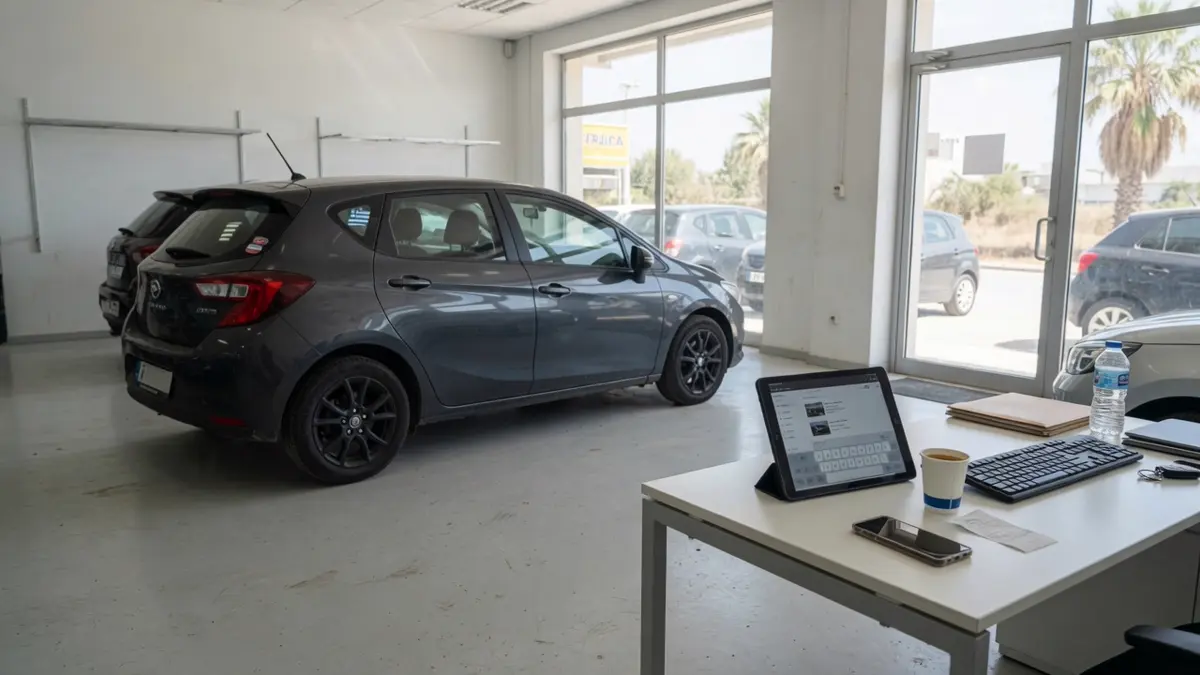
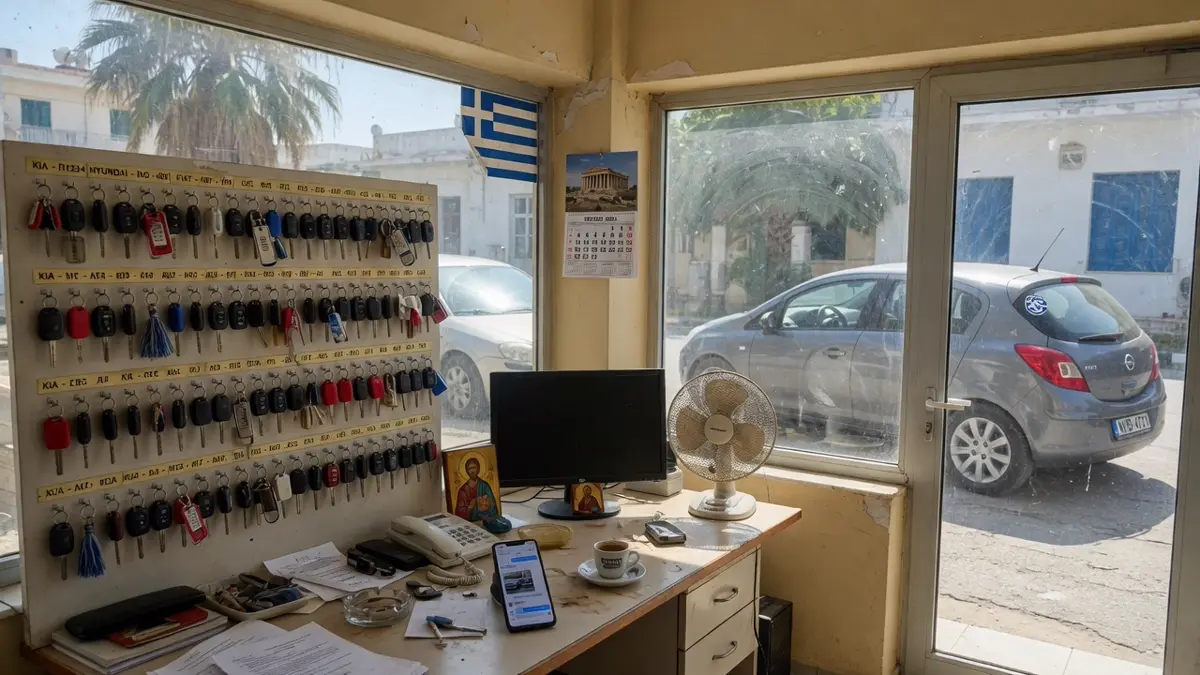
Saturday, 18:30. The last test drive is on the gravel. Keys on the hook. In the workshop a technician is still under a diesel that came in late, oil on both hands. Someone at the desk is tagging a set of keys for Monday. On the same desk sit two sheets nobody will touch tonight.
One is service-due. Last oil and filter was six months ago. A KTEO sticker runs out before the end of the month. The names are already yours. They came from the job cards, not from a bought list.
The other is this morning. Three people sat in cars. One of them was the grey Peugeot from the listing. They said they would talk to a partner. They went home. They are on the sofa with the photos they took of the dash. Another dealer has a similar car on Car.gr. They will answer the first number that rings.
Tomorrow four people are booked to sit in a car. Three more are booked to leave one in a bay. None of them have been reminded.
You will not make those calls. The hour they belong to is the hour a salesperson is still in a passenger seat, or a technician still cannot wipe their hands.
That is outbound on this number. Not a campaign. Not “we have something you might like”. The names the job card already marked due. The people who already have a time tomorrow. The people who already sat in a car.
Tomorrow, the job card, this morning
Four piles. Turn them on in this order. Do not mash them into one pass.
Tomorrow’s times. Friday evening, or Saturday morning if Sunday is the day on the lot. The list is short because it comes from the diaries you already use, not from a sheet someone exported on Wednesday. Sales diary for a test drive. Workshop book for a drop-off. Those are not one list. Time still good? They found another dealer on Friday night? If they need to move a test drive, release the salesperson and the car, take the new time only if both are free, then send the SMS. If they need to move a drop-off, that is the workshop book. Do not park a service customer on a test-drive hour.
A reminder can confirm that the time is in the book. It cannot confirm that the Peugeot is still on the lot. If the car had gone, a salesperson would have called. This call is the reminder. The SMS follows the language of the booking — 70+ languages — and names the hour, not a stock status.
Service-due. From the job card you already keep. Last oil and filter. Last interval. A KTEO window. Offer a bay the workshop book actually has, for work you already do. Take the registration if you need it said back. Do not sell a car. Do not diagnose the light. Do not say they can keep driving until Thursday. If they mention a noise they are frightened of, or a light they think is serious, stop offering the routine hour and put the words in front of a technician.
This morning’s test drives. The same evening, once they could reasonably be home. Not a pitch. Three honest endings: they want to come back if that car is still with you, they want someone on sales to call them, or they want you to leave it. Write down which. If they want to come back, the same rules as any test drive — a salesperson free, the car still in the file, they should bring a licence, SMS only then. If they ask what you will take, or whether you will put their trade-in against it from a description, the assistant writes the words and flags you. It does not speak a figure.
Names that went quiet. Last month’s test drives. Last spring’s almost-buyers. Shorter. Faster opt-out. Ask whether they are still looking. Do not describe a grey Peugeot. Description is how you claim a car is on the lot.
After they sat in the car
This is the call desks mean to make and do not.
They remember the seat, the noise from the road, the kilometres on the clock. They also remember the next dealer they opened on Car.gr in your car park. Tonight they will pick which number to answer.
If nobody from your lot rings, the decision happens without you. Monday you send a polite text. They have already been back to someone else, or they have gone quiet, which on a used lot usually means the same thing.
You sat in this car, this morning, this hour. Do you want to come back if that car is still with us? Do you want someone on sales to call you? Or shall we leave it?
That is the whole useful conversation. Anything longer starts to sell, and selling on this call is how a price, a “yes it’s still there”, or “we have another diesel automatic” gets into their evening from a voice that cannot see the stock file.
Do not run this call against a name that never showed, or against a car that left this afternoon. The sales diary already shows who sat in the car. If the stock file no longer shows that car as yours, the honest call is a salesperson, not a machine asking whether they want to sit in a car you cannot put the keys in.
Two people who sat in the same car this morning must not hear about each other. “The other couple loved it” is pressure. So is “someone else is coming tomorrow, so you should decide”. The assistant does not say either.
Because you rang them
On an inbound call they chose you. On an outbound call you chose the moment. You put a car or a figure into their evening. If that car is gone, or that figure was last week’s listing, you wrote the card.
The usual version is “we have something you might like” and then a description. Make, year, colour, fuel — that is a specific car, whether you named the registration or not. If the live stock file is not attached to that row, that paragraph cannot be spoken. Confirming a car that left yesterday is worse than a missed call. The buyer turns up, a salesperson is pulled off the lot, and you own the wasted Saturday.
The other version is the price. “The listing is old, we can do better.” “We’ll take that for it.” Those sentences belong on a call where a person can walk to the car. The assistant can say that sales needs them, and it can book that call. It cannot be the messenger of a deal.
A third version is the service-due call that turns into a diagnosis. “Yes, you can keep driving.” “That’s just the service light.” The assistant does not say what a light means. It offers a bay, or it puts the words in front of a technician.
A fourth is the mix. A service-due name gets offered a used Polo. A Saturday test drive gets asked for a registration and a fault. The person at the desk already keeps those piles separate. The assistant has to be told, or Saturday evening will have a service customer holding a sales conversation and a buyer being offered a lift that is already booked.
Service-due is a workshop call
The cleanest outbound job on the lot, if you let it stay a workshop job. The name is already yours. The last visit is on the card. The interval is one you already use — six months, a set of kilometres, a KTEO window. The offer is a bay the workshop book actually has, for work you already do. The assistant checks that book before it offers a time. If the book cannot confirm the time, it takes a callback rather than giving a driver a lift that is already booked.
It is not a sales call. If they ask whether you have a used car they could look at when they drop off, that becomes a request for sales, not a confirmation that something is on the gravel.
KTEO is not an oil change. If you do the official test, say so. If you only do the prep, say so. If you do neither, the assistant must not offer a KTEO time. Saturday workshop hours are not Saturday sales hours. Mark them the way you mark a technician’s lunch. August: if the workshop is closed and sales is not, service-due waits.
A cancel should free the bay the way you already free it. Set the notice you actually enforce. The assistant should say it at the end of a service booking it makes on the way out.
“The car is making a noise, can I wait until the service?” is not a reception answer. Stop offering the routine hour. Take the words. Offer a sooner bay if one exists, or put it in front of a technician. A human looks at the car.
If the published menu has an oil and filter, the assistant can repeat that figure. Unseen work cannot have a price from the phone. A courtesy car is offered only when you have marked one as free. Two customers for one Polo is a worse morning than an uncalled list.
The rule the assistant must obey
Outbound keeps the inbound bans, and adds one.
No confirming a car is still on the lot unless the stock file says so at that moment. No price that is not in the record in front of it. And no invented car — not “we have another diesel automatic in that size”, not a description that would only be honest if a specific car were still there.
A follow-up after a test drive is a question about the next step. The assistant does not re-describe the car. They sat in it. A service-due call offers a bay. It does not sell a car, a finance plan, or a trade-in from a description. Year and kilometres on the evening call are not a valuation. The assistant takes the request. You look at the car.
Sales or service still matters on the way out. A name from last month’s service list is not offered a Saturday test drive in a car they have never seen. Get the first field wrong and every field after it is filed against the wrong book.
The partner who could not come
A lot of Saturday follow-ups are this, and only this: another person has to sit in the same car. The partner who was at work. A parent driving down from Thessaloniki on Tuesday. Someone who has to bring a licence the first driver did not have on them.
Book that the way you book any test drive. The first hour in the diary does not entitle them to a second one if the car has gone, or if the only free hour belongs to a salesperson already in another passenger seat. If that Peugeot is already out, the next drive is not at 11:10 just because the sales diary has a gap. The assistant has to know which car is free, not only which salesperson.
If two people want the same 18:30 in the same car, that is your call. The assistant offers the next real hour with a free salesperson and that car, or takes a request. It does not put two strangers in the same passenger seat and hope.
What you set up first
- Tomorrow’s lists, from the live diaries. Sales and workshop separately. Not a spreadsheet from Wednesday.
- Service-due from the job cards, not a marketing dump of everyone who ever bought a car off you. Interval, KTEO window, work you actually do.
- Today’s follow-up list, from test drives that actually happened. Name, car, hour, salesperson. Not the no-shows.
- A hard stop on stock and prices unless the live file is attached to that row. One line that forbids confirming a car off a listing. One line that forbids a figure from a description. One line that forbids inventing a second car that would fit.
- Quiet hours, retries, and an opt-out that writes the same day, before the next pass of the list. Saturday evening is a good hour for the people who just sat in a car. It is a bad hour for a service-due pass.
- Saturday workshop hours marked separately from Saturday sales. August, if you close the bays. How a test drive works, and that they should bring a licence.
The language of the last conversation stays the language of this one, if you have it on the record. A buyer who sat in the car in English should not get a Greek reminder about Saturday. If you do not know, start in Greek and switch. Seventy-plus languages. The SMS follows the language of the call.
They do not pick up, and the test drive is still tomorrow. Do not leave a message that restates the car and whether it is still there. A short “please call us back about tomorrow’s appointment” is enough, plus the SMS from the calendar. Three failed reminders on the same number is a note for the desk, not a fourth try with a livelier script.
A number that sat in a car this morning is a continuation. A number you have not spoken to since April is a cold call. Mix those two groups and you ring people about a car they already bought two doors along.
Then listen to the first fifty outbound recordings. You are listening for a “yes it’s still there”, a figure, a second car that was not on the card, a diagnosis, a courtesy car that was not marked free. If any of those appear, stop the list until the script is tighter.
Rates live on the pricing section of the home page. They are not repeated here.
AI receptionist, in-house staff, or a call centre
| CITT | In-house | Call centre | |
|---|---|---|---|
| Evening-before reminder | Yes, from the matching diary | If they remember in the car | If you sent them the list |
| Service-due from the job card | Offers a bay the workshop has | When someone has an afternoon | A generic “your car is due” |
| Same-evening call after a test drive | Come back, sales callback, or leave it | When they get off the lot | If you wrote a script |
| Confirms the Peugeot is still there | Only if the stock file says so | From memory, sometimes wrong | Risk, if the sheet is stale |
| Speaks a price or a trade-in | No — flags a person | Yes, if they walk to the car | Should not |
| Mixes a service name onto a used Polo | No — two lists, two books | Keeps the piles apart | One script, both jobs |
| Stops when the person says stop | If you configure the list | If they note it | If the list is clean |
What an uncalled service-due list leaves empty in a workshop with a sales desk
Worked from these assumptions — change any of them and the answer changes:
- A dealership with two bays and a used lot. About 80 customers are due a service this month, from the job cards.
- The desk reaches about 30 of them by hand. 50 names are still on the list.
- Of those 50, this example assumes 20 would have taken a bay if someone had offered one. Put your own take-up in here.
- A booked oil and filter is about €90 of workshop time in this example — put your own menu figure in before you trust the answer.
- An empty bay on a Tuesday morning is not usually filled by a walk-in clutch.
- 20 unoffered services × €90 = €1,800 of workshop time in one month.
- Over eleven working months — 11 × €1,800. Put your own months in if you close the bays in August.
- That figure ignores the people who sat in a car on Saturday and nobody rang that evening. Those sit on a different list.
About €19,800 a year of workshop time that was already on a job card, waiting for a phone call. Change the take-up and the menu figure.
What it costs
CITT is pay as you go: no packages, no minimum, no contract. The current rates — the monthly fee per number and the per-minute rate — are on the pricing section of the home page, which is the only place they are published.
Frequently asked questions
What should it call about first?
Tomorrow's times. The list is short, it is already in the two diaries, and silence has a concrete cost: a salesperson and a set of keys, or a bay and a technician. After that, service-due from the job cards — a bay the workshop actually has. The people who sat in a car this morning come third. Leave “we have another diesel you might like” until you have watched those three run without inventing a car.
Can it tell them the Peugeot is still on the lot?
Only if your own stock file says so at that moment. A reminder can confirm that a test drive is in the sales diary. That is a fact about the book, not about the gravel. If the car had left, a salesperson would have called; this call is the reminder. If you cannot live with that sentence, send the SMS from the calendar and keep a person on anything that might become a stock question.
What does the call after a test drive actually ask?
Whether they want to come back if that car is still with you, whether they want someone on sales to call them, or whether you should leave it. It does not re-describe the car. They sat in it. It does not say the other couple loved it, and it does not invent a second diesel in that size. Those are pressure, and they belong to a person who can see the file.
Can it tell them they can keep driving until the service?
No. That is not a reception answer. The assistant offers a bay if the workshop book has one, or it puts their words in front of a technician. It does not say what a light means, and it does not say a noise is safe as far as Thessaloniki. A human looks at the car.
What if someone says they do not want these calls?
They come off the list the same day, and they stay off. Outbound only works if the desk is careful with the names it already has. A complaint about a call they did not ask for will cost more goodwill than the oil change you might have booked.
Will it quote a price or a trade-in on the follow-up?
It repeats a figure only when that figure is in the record you connected. It will not estimate, round, or give a sense of the market. A trade-in asked from a description is the same trap. Year and kilometres are not a valuation. The assistant takes the request and flags sales. You look at the car.