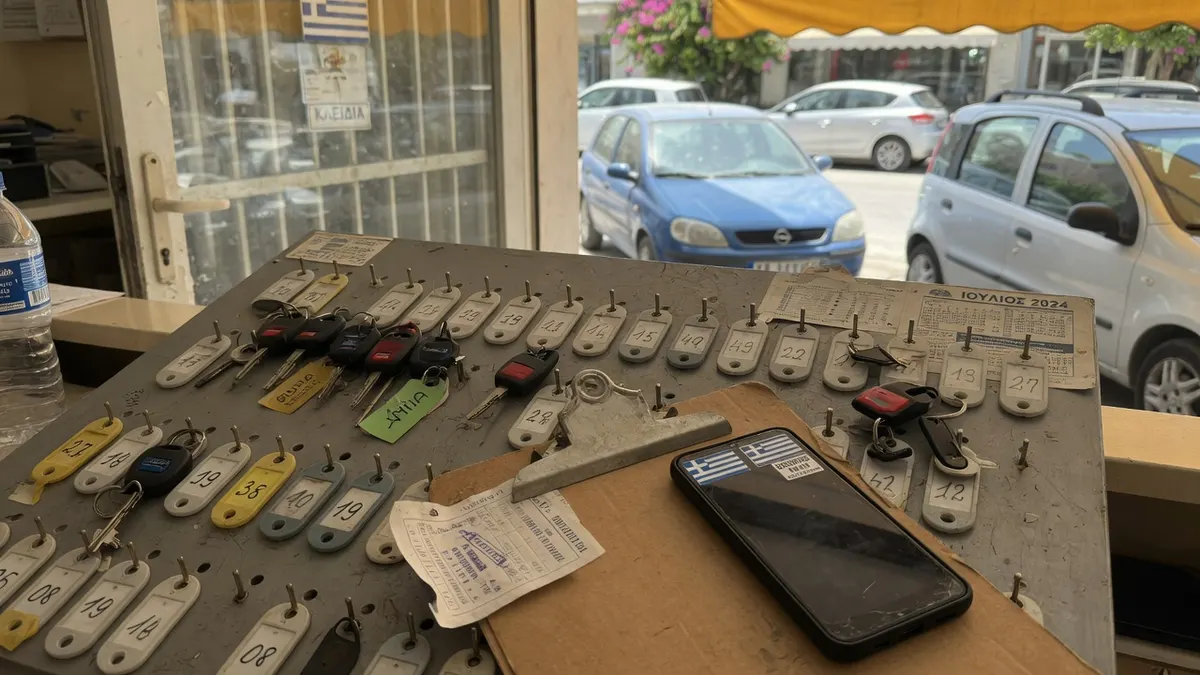
Book car rental pickups without mixing night and town
Quick summary
- The assistant reads the board before it offers a time, so a night collection is never offered as a town slot at ten.
- A pickup at the airport and a change at the town desk are different bookings. Get that wrong and a family stands in the wrong car park.
- Pickup or change first. Then the booking name or the plate. Then the board.
- Anything that sounds like cover, a waived deposit, or a second driver stays a callback. The desk will look at the booking.
- If the assistant cannot read the board, it takes a callback. It does not guess a class of car.
- The assistant texts the time, the desk, and what to bring, so the papers that arrive are papers you can use.
TL;DR
You are handing keys. A caller who wants a time will not wait for a callback just to learn whether 17:00 at the airport is free. An assistant can book those slots if it reads the board first, treats a 23:40 collection as different from a town pickup, and asks pickup or change before it places anything. A pickup is a slot. A change is a change. A waived deposit is not a new visit type — the desk will look at the booking. If the board cannot be reached, the assistant does not guess. It takes the request and says so. The assistant texts the time, the desk, and what to bring.
Key takeaways
- Give the assistant the types and their real durations before you let it book — airport pickup, port pickup, town, night, a short change.
- Mark night hours and sold-out classes in the same board it reads, including October.
- Test a move on an existing pickup and on a change, separately, before you test a walk-in.
- Turn on the SMS at the moment of booking, with the list of what to bring for that desk.
- If the board cannot be reached, the only answer is a callback.
- Check the first fifty bookings by hand. That is when you find the hour that was a night collection put into a town slot.
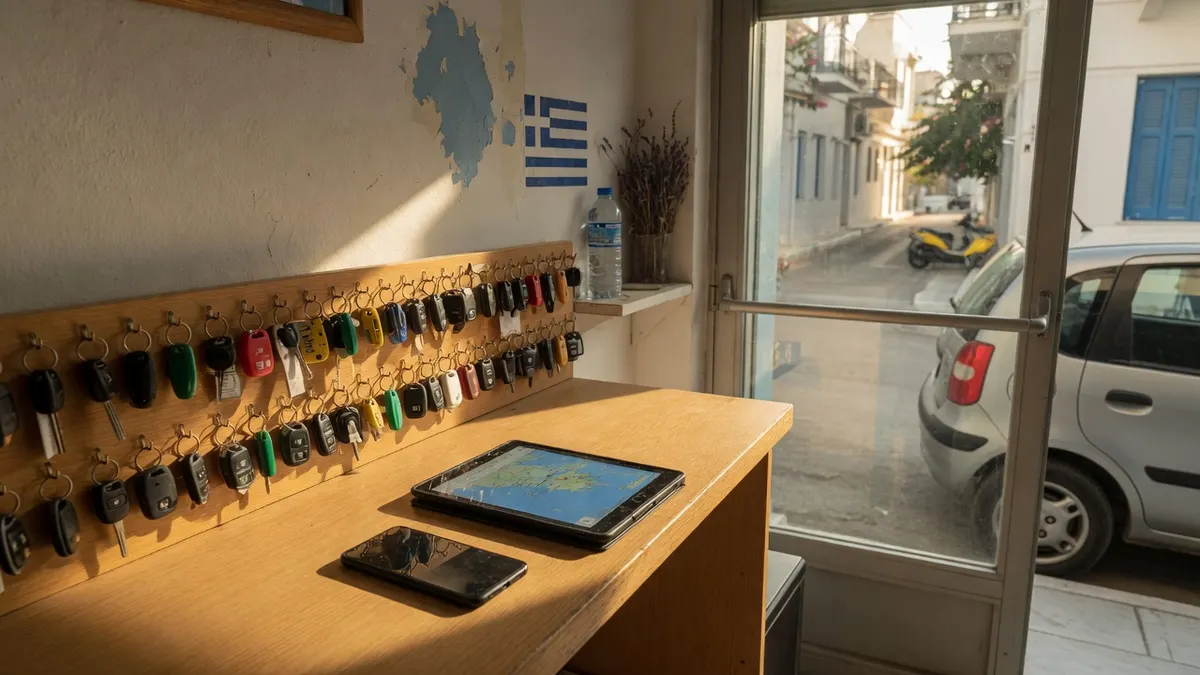
When someone wants a time and you are at the keys
One of you is walking a family to a compact. The other is taking a card at the booth. The phone rings.
A driver wants 17:00 at the airport booth. A couple off the ferry want the port in twenty minutes. A client wants ten minutes at the town desk to add a second driver. You cannot pick up. The card machine has not come back.
Those three callers are asking for a time. They are not asking for the same slot. Mix them and a family is standing in the airport car park while you are still at the port, and the night person is waiting for a flight that has already been moved.
A caller who wants a time will not wait for a callback just to learn whether Thursday is free. They will ring the next desk. The assistant can book those times if it reads the board first, treats a 23:40 collection as different from a town pickup, and asks pickup or change before it places anything.
Two desks, two clocks
The airport booth and the town desk do not share a queue. They barely share a road. A slot that is free in town is not a person standing in arrivals. A night collection is not a morning at the port.
Write the types the way you would tell a new hire on their first Saturday.
Airport pickup. Flight number if they have it. How late you run. Whether someone stays for a delay. How long a collection actually takes when three families land together.
Port pickup. Ferry time, not flight time. The booth is a folding table and a key board. A twenty-minute window after the boat is not an hour.
Town. Licence, contract, a quieter counter. A change lives here more often than a first pickup in July.
Night. Only if you run it. A dated hour, a named person, a lot that is still locked. If you do not run it, the honest answer is the next hour you do, not a promise that someone will wait in the hall.
Mark sold-out classes on the same board. An automatic that left at noon is not free at 17:00 because the assistant wants to be kind.
Pickup or change — then the name — then the board
Nothing useful goes into the diary before the split.
If it is a pickup, take the name on the booking, the flight or the ferry, and which desk. Then look. Offer only a slot that board shows as free. Write it. Text the desk, the time, and what to bring: licence, voucher, the card for the deposit.
If it is a change, take what they want changed. Extra days, a second driver, a baby seat, a switch of desk, a later return. Then look. A ten-minute add at town is not a night hour. Do not put a child seat into a 23:40 slot.
A caller who is both — keys tonight and a partner to add — still gets two notes. Book the pickup. Flag the second driver. Do not let the assistant finish the second one as a yes.
If the board cannot be reached, the only honest sentence is a callback. A family at the airport with a confirmation for a car the desk has never heard of is worse than no booking.
Moves, cancels, and the slot that never went back
“Move Thursday” is not a request until they say which Thursday thing. The night keys and the baby seat can share one phone.
The assistant finds the existing slot, releases it, writes the new one, then texts. It does not offer the old hour to the next caller until the change is in. Handled as two messages — cancel, then a new book that fails because Thursday is still theirs — they are told the desk is full and their own car is sitting on the lot.
A cancel has to go back on the board the same hour. A delayed flight that will not come tonight is a car someone in the hall can take. A cancel you hear about at breakfast is a night person who waited for nothing.
October hours belong on the same board. Do not let it book a 23:40 collection into a week when the airport booth is dark.
What must not be booked
A waived deposit is not a visit type. Cover is not a visit type. “Can a twenty-four-year-old drive?” is not a visit type. Those are notes on a pickup, or a flag to the desk.
The assistant may book a short counter time to go through a second driver or extra days, if you allow that type. It may not book a session in which it itself decides the deposit. It may not put a CDW chat in the diary.
A one-way you do not run is not a slot. Pickup in Heraklion, return in Chania — only if you marked that you allow it. If you only take the car back where it started, say so on the first call, not at the keys.
A class of car the board does not show is not a booking. “A small automatic for five” is a request. It becomes a slot when the board has the car.
What to bring, in the language of the call
The SMS is the booking. Time, desk, name, what to bring. Licence, voucher, the card they will use for the deposit. If they rang in German, the text is in German. If they rang in English, English. 70+ languages. A confirmation in the wrong language is how a first pickup misses the booth and decides the desk cannot handle them.
Remind them which car park. Airport booth is not town. Port is not the hotel. A pin for a night lot only if you actually use one, and only the pin you typed in.
Do not put the excess, a CDW price, or a waived-deposit sentence in the text. The assistant will send whatever you leave in the template.
What you set first
- Types and durations. Airport, port, town, night, short change. Real minutes, not hopeful ones.
- The board you already use. If it cannot be read, the assistant takes a callback. It does not guess.
- Hours, including the hours you do not run. Night, Sunday, October.
- Sold-out classes for the day. A line the assistant may speak.
- The two refusals. No waived deposit. No invented cover. No invented class of car.
- SMS at the moment of booking, with the desk and the paper list, in the language of the call.
- Moves as one change. Find, release, write, then text.
- Read the first fifty bookings. That is when a night collection has been dropped into a town slot at ten.
A quiet morning in March will tell you the greeting is right. It will not tell you whether Thursday’s 23:40 is still landing on the town diary. Check the burst, not the calm.
Rates live on the pricing section of the home page. They are not repeated here.
AI receptionist, in-house staff, or a call centre
| CITT | In-house | Call centre | |
|---|---|---|---|
| Reads the board before offering a time | Yes, the board the desk works from | Yes | Usually not — takes a message |
| Books nights and Sunday airport hours | Yes, if you marked them | No, if they have gone home | Sometimes |
| Treats a night collection as different from a town slot | If you marked the two types | Yes | Rarely sees the week |
| Starts with pickup or change | Yes — before it looks at the board | Yes | Often jumps to what time |
| Books a waived deposit | Never — the desk will look at the booking | The desk does, after the contract | Sometimes books "a deposit chat" |
| Sends the confirmation and what to bring | Automatically, by SMS | If they remember | Sometimes |
What a month of empty night collections costs
Worked from these assumptions — change any of them and the answer changes:
- Two people. About 40 booked pickups a month at the airport, the port, or the town desk.
- An empty night slot is not given to someone else the same evening.
- About 12% of booked times arrive at the wrong desk, or nobody comes. Check your own figure. Desks vary.
- Recoverable value of a used night slot, €55. Put your own figure in. A 23:40 collection and a ten-minute change are not the same.
- A reminder that names the desk and what to bring cuts empty times by a third. Challenge this first.
- 40 times × 12% = about 5 empty slots a month.
- 5 × €55 = €275 of reserved time sitting empty.
- A third avoided returns about €90 a month.
- Over a 16-week island season — 4 × €90.
Roughly €360 a season, from a text that names the desk, not only the time.
What it costs
CITT is pay as you go: no packages, no minimum, no contract. The current rates — the monthly fee per number and the per-minute rate — are on the pricing section of the home page, which is the only place they are published.
Frequently asked questions
Can it book a pickup while I am handing keys?
It reads the same board the desk works from and checks the slot before offering it. An hour you have closed because you are at the port, or because the night person has gone home, is never offered as a collection, if you marked it. Short changes at the town desk can still be offered that day if someone will be at the counter. If the assistant cannot reach the board at that moment, it does not guess. It takes the request as a callback and says so. A pickup the desk has no record of is worse than no pickup. The family turns up with a voucher and nobody is free.
What about someone moving an existing pickup?
The assistant asks pickup or change first, then the name on the booking, and treats the move as one change. Handled as cancel, then book, Thursday is still taken by their own car, and they are told that slot is not free. A client who has a night collection and a town change on the same phone must say which visit is moving.
Will it book a time to waive the deposit?
It will book a pickup, or a short time at the counter to go through a second driver or extra days, if you allow those types. It will not book a session in which the assistant itself waives a deposit or invents cover. Deposit and cover are decided at the keys after the contract is open. The desk looks at the booking — a person, not the voice on the phone.
Should it book a 23:40 collection against any free hour?
A night collection is a different slot if you run one, and a note if you do not. Mark the hours. If you close at 22:00, do not promise 23:40. The assistant takes the flight number and the name, and offers only the kind of slot you marked. It does not invent a driver in the hall.
Who sends the confirmation?
The assistant, by SMS, in the language of the conversation, at the moment of booking, including which desk and what to bring. The reminder goes out ahead of the time on the schedule you set. Neither requires anyone at the counter to type a number.
Can clients cancel through it too?
Yes, and you should let them, especially on night collections after a delayed flight. A cancellation the desk hears about two hours before is a car that can go to someone still in the hall. The same cancellation arriving as a no-show is a slot gone. Cancellations are written back to the board the same way bookings are.