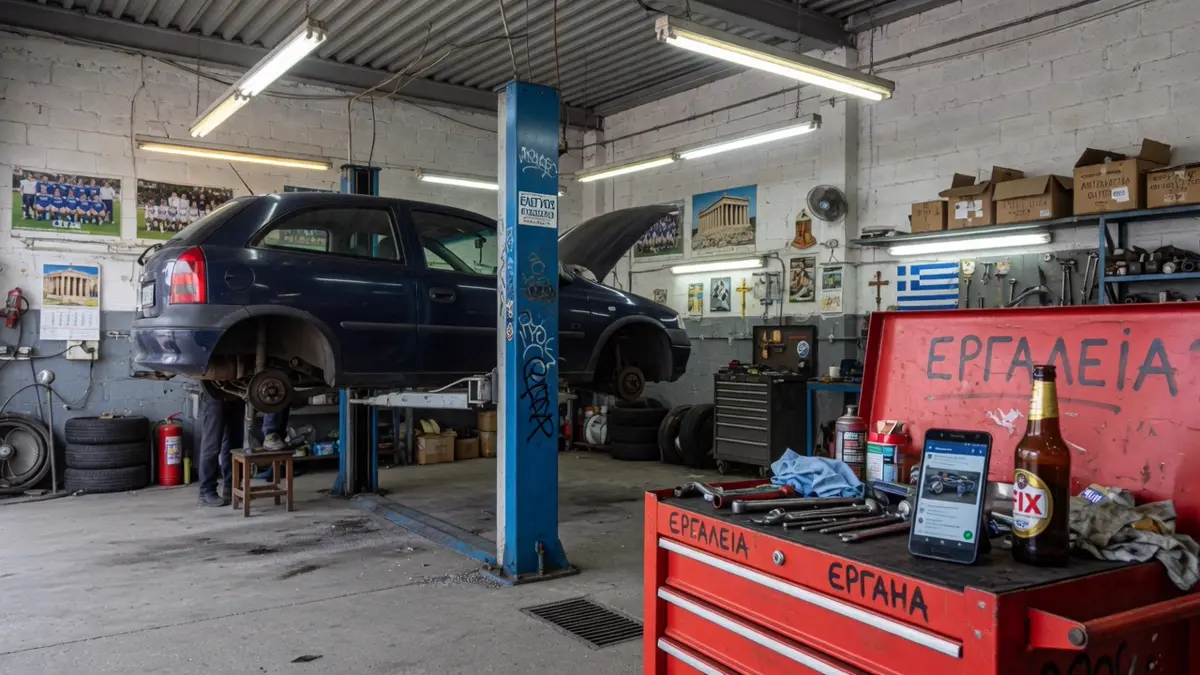
Service-due and KTEO reminders for auto repair shops
Quick summary
- The last car is still on the lift. Tomorrow's drop-offs have not been reminded. The job cards show who is due. Nobody will work those lists tonight.
- Remind tomorrow first — from the live book, not from a sheet someone wrote on Wednesday.
- Service-due comes off the job card. Offer a bay the book actually has. Do not sell a car on that call.
- A KTEO sticker that runs out this month is a deadline. Offer the prep or the test you actually do, not a sticker you cannot issue.
- The assistant will not invent a ready time, and it will not speak a parts price, unless that figure is a published menu item you gave it.
- Last April's quiet names are a different call from this month's sticker. Mix them and you ring people about a car they already took elsewhere.
TL;DR
The last car is still on the lift. Tomorrow's drop-offs have not been reminded. The job cards show who is due a service, and whose KTEO sticker runs out this month. Nobody rings them, because the hour those calls belong to is the hour both pairs of hands are still greasy. The assistant works the lists you already keep: it reminds tomorrow's times, offers a bay the book actually has, and asks only about the job on the card. It will not invent a ready time. It will not invent a parts price. It will not sell a car. You do not sell cars.
Key takeaways
- Turn on tomorrow's reminders first, from the live book. Time still good, shutter still the same.
- Build the service-due list from the job cards, not from everyone who ever left a plate. Offer a bay. Do not pitch a used Golf.
- Add the KTEO window next: official test, prep, or neither — the same line you use inbound.
- Write the outbound script so it cannot invent a ready time or a parts price from a plate.
- Take any number off the list that asks not to be called, the same day, before the next pass.
- Listen to the first fifty outbound recordings for a finish time, a figure, a diagnosis, or a used-car offer that was not on the card.
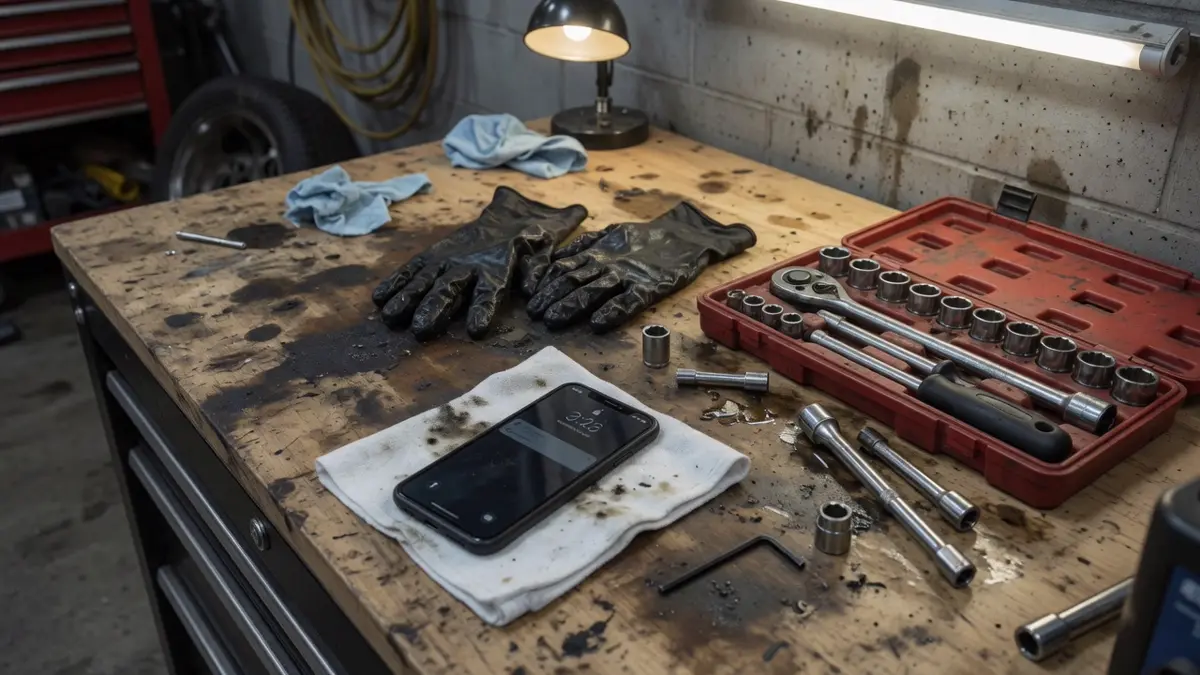
The last car is still up. The lists are not.
Tuesday, 18:30. The last hatchback is still on the lift, or just coming down. Oil on both hands. Someone in the small office is tagging a set of keys for the morning. On the same desk sit two sheets nobody will touch tonight.
One is service-due. Last oil and filter was six months ago. A KTEO sticker runs out before the end of the month. The names are already yours. They came from the job cards, not from a bought list.
The other is tomorrow. Four people are booked to leave a car. None of them have been reminded. One of them will look at the sticker again tonight and ring another garage. One of them will forget and leave you an empty hole at 08:30.
You will not make those calls. The hour they belong to is the hour you still cannot wipe your hands.
That is outbound on this number. Not a campaign. Not “we have something you might like”. You do not sell cars. The names the job card already marked due. The people who already have a time tomorrow.
Tomorrow, the job card, the sticker
Three piles. Turn them on in this order. Do not mash them into one pass.
Tomorrow’s times. This evening, or early tomorrow if you open the shutter at half past seven. The list is short because it comes from the book you already use, not from a sheet someone exported on Wednesday. Time still good? They found another garage this afternoon? The car will no longer move? If they need to move a drop-off, release the bay, take the new time only if a hole of the right length is free, then send the SMS. If they now say the car will not start, stop treating this as a reminder. Take the location. The old Thursday hole is free. The new problem is not a diary problem.
A reminder can confirm that the time is in the book. It cannot confirm that the car will be ready at five. If they ask when they can collect, the assistant takes the question. The SMS follows the language of the booking — 70+ languages — and names the hour and the job, not a finish time.
Service-due. From the job card you already keep. Last oil and filter. Last interval. Offer a bay the book actually has, for work you already do. Take the plate if you need it said back. Do not sell a car. Do not diagnose the light. Do not say they can keep driving until Thursday. If they mention a noise they are frightened of, or a light they think is serious, stop offering the routine hour and put the words in front of you.
The KTEO window. Same pass, not a second campaign. A sticker that runs out at the end of the month is a deadline the driver already knows. The call offers a prep or a test you actually perform, against a day you are open. If you only do the prep, say so. If you do neither, the assistant must not offer a KTEO time. A caller who says MOT means the same sticker. Saturday hours are not weekday hours. Mark them the way you mark a lunch shutter.
August: if the bays are closed, service-due waits. Do not offer a hole in a week you marked shut.
After you said you would call about the extra
This is the call desks mean to make and do not, and it is not a job for the assistant if a figure is involved.
The car is already with you. You opened it. The service is not the whole job. Pads, a leak, a belt. You said you would ring before you fitted anything that was not in the service. At 18:40 you are still under the next car. The owner is on the sofa waiting for a number.
That call belongs to a person who has seen the car. The assistant can say that you need them, and it can ask for a time they can take the call. It cannot be the messenger of a pads figure. A number spoken on your number is your number. If that number was a guess from the plate, you will take it back at the shutter.
Do not let outbound “service-due” swallow these. They are not due a service. They are waiting on a decision about a car that is already on a card. Mix the two and you ring someone about next month’s oil change while their Golf is on your lift.
Write a separate flag for “we said we would call about extra work”. The assistant may place that flag in front of you. It may not speak the figure.
A finish time you put on the line
On an inbound call they chose you. On an outbound call you chose the moment. You put a time or a figure into their evening. If that time was a guess, or that figure was last year’s pads, you wrote the card.
The usual version is “it’ll be ready tomorrow at five” said to get the reminder over with. The part is still at the factor. They arrive at five. You own the conversation at the shutter.
The other version is the price. “The service is about this, pads maybe that.” Those sentences belong on a call where a person can see the car. The assistant can repeat a published menu item you gave it. Unseen work cannot have a price from the phone. Do not store a “from” figure for the whole workshop and let it read that out on a noise they have not described.
A third version is the service-due call that turns into a diagnosis. “Yes, you can keep driving.” “That’s just the service light.” “You’ll be fine as far as the ferry.” The assistant does not say what a light means. It offers a bay, or it puts the words in front of you.
A fourth is the mix. A service-due name gets offered a used Golf. A reminder about tomorrow gets asked for a sales name. You do not sell cars. There is no stock. There is no salesman. The person at the wing already keeps that door shut. The assistant has to be told, or Tuesday evening will have a service customer holding a conversation about keys you do not have.
A fifth is offering to collect, or offering a truck, because it sounds helpful on a service-due call. The assistant offers only what you wrote: a tow number you keep, collect if you actually collect, or bring it if it rolls. If it offers a truck you do not run, someone waits in a car park for a vehicle that is not coming.
Service-due is a bay, not a chat
The cleanest outbound job in an independent garage, if you let it stay a bay offer.
The name is already yours. The last visit is on the card. The interval is one you already use — six months, a set of kilometres, a KTEO window. The offer is a hole the book actually has, for work you already do. The assistant checks that book before it offers a time. If the book cannot confirm the time, it takes a callback rather than giving a driver a morning that is already a clutch.
It is not a sales call. If they ask whether you have a used something while they are in, the assistant says this is a garage, and that you repair. It does not take a name for a salesman.
KTEO is not an oil change. If you do the official test, say so. If you only do the prep, say so. If you do neither, the assistant must not offer a KTEO time. A service and a pre-KTEO on the same visit is one bay, the longer of the two, in the order you already use. You wrote that order for inbound. Outbound follows the same line.
A caller who wants to move a booking that is already in follows the book. A cancel should free the bay the way you already free it, so the next oil change can take that lift. Set the notice you actually enforce. The assistant should say it at the end of a booking it makes on the way out.
“The car is making a noise, can I wait until the service?” is not a reception answer. Stop offering the routine hour. Take the words. Offer a sooner diagnostic if one exists, or put it in front of you. A human looks at the car.
New work and a car you already have can sit on the same evening and still must not be mashed together. A car on the lift waiting for a yes on pads is not a service-due name.
What the assistant may not say
Outbound keeps the inbound bans, and adds one.
No ready time unless the job card is marked ready. No parts price that is not a published menu item. And no invented car — not “we have a used Golf if you are looking”, not a viewing, not a name for a salesman. You do not sell cars.
A reminder is a question about tomorrow’s time. The assistant does not re-describe last year’s job. A service-due call offers a bay. It does not sell a car, a finance plan, or a clutch from a description. It does not say they can keep driving. It does not invent a monthly figure for work you have not seen.
Service, KTEO or breakdown still matters on the way out. A name from last month’s service list is not offered a Thursday bay if they now say the car will not start. Get the first field wrong and every field after it is filed against the wrong hole.
The listing on Google is not a job card. Last year’s printout is not a job card. The assistant offers work that is on the card you connected. If the card is silent, stale, or unreachable, it takes a callback. It does not invent a service interval because six months “sounds right”.
A complaint about last week’s invoice, raised on a service-due call, is a note. Take the name and what they said. Do not offer a free redo from the phone. Do not discount the next service to make the list go smoothly.
The partner who has to drop the car
A lot of evening reminders are this, and only this: another person has to leave the car. The partner who has the keys in the morning. A parent driving in from the next town. A colleague who will leave it on the way to work.
Book that the way you book any drop-off. The first hour in the diary does not entitle them to a second one if that morning is now a clutch, or if the only free hole is after you close the shutter for lunch. The assistant has to know which bay is free, and whether anyone will be there to take the keys.
If you have not configured an evening drop-off — keys through the letterbox, under the shutter, left in the car — take the request. Do not promise someone will be on the forecourt at seven unless that is a window you marked.
If two people want the same 08:30 in the same bay, that is your call. The assistant offers the next real hole of the right length, or takes a request. It does not stack two Golfs on one lift and hope.
Write how a drop-off works the way you already run one: where to park, where the keys go, the lunch shutter, Saturday until noon if that is you. The assistant can repeat that. It cannot invent a collection at five.
What you set up first
- Tomorrow’s list, from the live book. Not a spreadsheet from Wednesday.
- Service-due from the job cards, not a dump of everyone who ever left a plate. Interval, KTEO window, work you actually do.
- What you actually do for KTEO, written the same way as inbound: official test, prep, or neither.
- A hard stop on ready times and parts prices unless the card is marked ready, or the figure is a published menu item. One line that forbids five o’clock. One line that forbids a pads figure from a plate.
- Quiet hours, retries, and an opt-out that writes the same day, before the next pass of the list.
- The lunch shutter, Saturday noon, August if you close. Who is on the tools. Which lift is down. Every car that is waiting on a part.
- One line that says you do not sell cars, so a service-due name is never offered a Golf.
Then listen to the first fifty outbound recordings, including the short ones. You are listening for a “it’ll be ready at five”, a figure that is not on the menu, a diagnosis, a truck you do not run, a used-car offer. If any of those appear, stop the list until the script is tighter.
Give it the published prices it may repeat — a listed oil service, a listed diagnostic — and do not give it a pads figure it would read out. One line that forbids advice about a noise or a warning light. One line that forbids mixing a service-due name onto a car for sale.
A separate flag for extra work on a car that is already with you. The assistant may put that flag in front of you. It may not speak the number.
April is not this month’s sticker
A number whose sticker runs out this month is a continuation. A number you have not spoken to since April is a cold call, even if they once left a Golf and a plate on a card. Shorter script. Faster opt-out. If they still want a bay, they will give you the job they can still name. Mixing those two groups in one pass is how you ring people about a service they already booked two streets along.
A number that asked not to be called comes off before the next pass, not after a complaint.
Telling last year’s customers that something is due should wait until the card actually says so. Do not attach a guessed interval to every quiet name so the assistant has something to say. If the card does not show a due date, it is not a service-due call.
The language of the last conversation stays the language of this one, if you have it on the record. A driver who booked in English should not get a Greek reminder about Wednesday. A customer who booked in Greek should not get an English call about their oil change. If you do not know, start in Greek and switch. Seventy-plus languages. The SMS follows the language of the call.
They do not pick up, and the drop-off is still tomorrow. Do not leave a message that invents a ready time or a parts figure. A short “please call us back about tomorrow’s appointment” is enough, plus the SMS from the calendar. Three failed reminders on the same number is not a reason to try a fourth with a livelier script. Take them off tomorrow’s list and let a person decide whether the hole can be released. On service-due: the retries you set, then a note for the office.
Tuesday evening is a good hour for tomorrow’s reminders. It is a worse hour to start a “still looking after April” pass at names from last spring, unless you choose that on purpose. It is a bad hour to start extra-work prices. Those belong to a person who has seen the car.
Before you give it a number
The facts you already use when you ring from the office. Which lists, in which order. The sentence for “I cannot give you a ready time from this call”. The sentence for a price that is not on the menu. The lunch shutter. Where to park when they come. How a drop-off works. The opt-out that actually writes.
Then the two forbidden sentences, written so nobody improves them later: we do not give a ready time until we have seen the car; we do not give a parts figure that is not on the menu. And the third, for outbound only: we do not offer a car for sale.
If those are in place, the first week of recordings will be usable. Listen to the first fifty yourself.
Rates live on the pricing section of the home page. They are not repeated here.
AI receptionist, in-house staff, or a call centre
| CITT | In-house | Call centre | |
|---|---|---|---|
| Evening-before reminder | Yes, from the live book | If they remember after the last car | If you sent them the list |
| Service-due from the job card | Offers a bay the book actually has | When someone has an afternoon | A generic “your car is due” |
| KTEO sticker runs out this month | Offers the prep or test you actually do | If they remember the deadline | May offer a test you cannot issue |
| Invents a ready time on the way out | Never — card or callback | Tempting, to get a yes | Often says this afternoon |
| Speaks a parts price from a plate | No — published menu or a person | Yes, if they can see the car | Should not |
| Mixes a service name onto a used Golf | No — this is a garage | Says the same | One script, both jobs |
| Stops when the person says stop | If you configure the list | If they note it | If the list is clean |
What an uncalled service-due list leaves empty in a two-bay garage
Worked from these assumptions — change any of them and the answer changes:
- A two-bay independent garage. About 50 customers are due a service or a pre-KTEO check this month, from the job cards.
- The office reaches about 20 of them by hand. 30 names are still on the list.
- Of those 30, this example assumes 10 would have taken a bay if someone had offered one. Put your own take-up in here.
- A booked service visit is worth about €150 to the garage — put your own figure in before you trust the answer.
- An empty Tuesday morning is not usually filled by a walk-in clutch.
- 10 unoffered services × €150 = €1,500 of workshop time in one month.
- Over eleven working months — 11 × €1,500. Put your own months in if you close the bays in August.
- That figure ignores tomorrow's drop-offs nobody reminded. Those sit on a different list.
About €16,500 a year of work that was already on a job card, waiting for a phone call. Change the take-up and the service figure.
What it costs
CITT is pay as you go: no packages, no minimum, no contract. The current rates — the monthly fee per number and the per-minute rate — are on the pricing section of the home page, which is the only place they are published.
Frequently asked questions
What should it call about first?
Tomorrow's times. The list is short, it is already in the book, and silence has a concrete cost: a bay and a morning. After that, service-due from the job cards — a bay the book actually has. The KTEO window comes with that pass, not as a separate campaign. Leave “we also had a look at a Golf you might like” off entirely. You do not sell cars.
Can it tell them the car will be ready at five?
No. A reminder can confirm that a drop-off is in the book. That is a fact about the diary, not about a finish time. If they ask when they can collect, the assistant takes the question. It does not invent five o'clock to get a yes. Once you have marked the card ready, it can repeat the collection window you already use.
What does the service-due call actually ask?
Whether they want a bay for the job that is already on the card — a service, a pre-KTEO check, or both as one visit. It does not re-describe last year's invoice. It does not say they can keep driving until Thursday. It does not offer a used car. If they mention a noise they are frightened of, stop offering the routine hour and put the words in front of you.
Can it tell them they can keep driving until the service?
No. That is not a reception answer. The assistant offers a bay if the book has one, or it puts their words in front of you. It does not say what a light means, and it does not say a noise is safe as far as the ferry. A human looks at the car.
What if someone says they do not want these calls?
They come off the list the same day, and they stay off. Outbound only works if the office is careful with the names it already has. A complaint about a call they did not ask for will cost more goodwill than the oil change you might have booked.
Will it quote pads or a clutch on the follow-up?
It repeats a figure only when that figure is a published menu item you gave it — a listed oil service, a listed diagnostic. It will not estimate, round, or give a sense of the market from a plate. Extra work found on a car that is already with you is a call a person makes. The assistant flags you. You look at the car.