Chase unsigned quotes and confirm measure-ups
Quick summary
- Tomorrow's list is on the bench. Two names have no door code. One quote from last week is still unsigned. Nobody rings them.
- This is not a new booking. They already have a morning, or they already have a quote. The call confirms they will be in, or asks whether the quote arrived.
- A measure-up needs the opening clear. A screen look needs someone at home. An unsigned quote needs a yes, a no, or a callback — not a new figure.
- It does not invent 09:20, release the morning if they miss the call, or re-price the door from the reminder.
- It calls in the language of the booking. The SMS with the window and the door code follows that language.
- Set the hours it may ring before the first name goes out. Do not leave a price or Thursday's install on a voicemail.
TL;DR
Tomorrow you have a balcony tape, a screen look, and a street-door visit. Two names have no door code. Last week's slider quote never came back. You are on a reveal, or you have already packed the van. Nobody rings those names. An assistant works the list you give it: name, opening, one purpose. It asks whether they will be in, whether the opening is clear, whether the quote arrived. It does not name a new price. It does not invent Thursday. If they ask what the quote means, it writes the question down and says the shop will call back. It will not ring a neighbour about someone else's balcony.
Key takeaways
- Start with tomorrow's visits that have no door code, and with quotes that have sat unsigned past the day you marked.
- Confirm the visit that is already in the book. Do not open a new booking on this call.
- Write the questions once: will someone be in, is the opening clear of curtains, is there a door code, did the quote arrive.
- Do not let it name 09:20, release the morning if they miss the call, or re-price the door from the reminder.
- Call in the language on the booking. The SMS follows that language — 70+ languages.
- Set quiet hours and retries before the first name. Never leave a price or an install day on a recording.
Tomorrow’s list, still uncalled
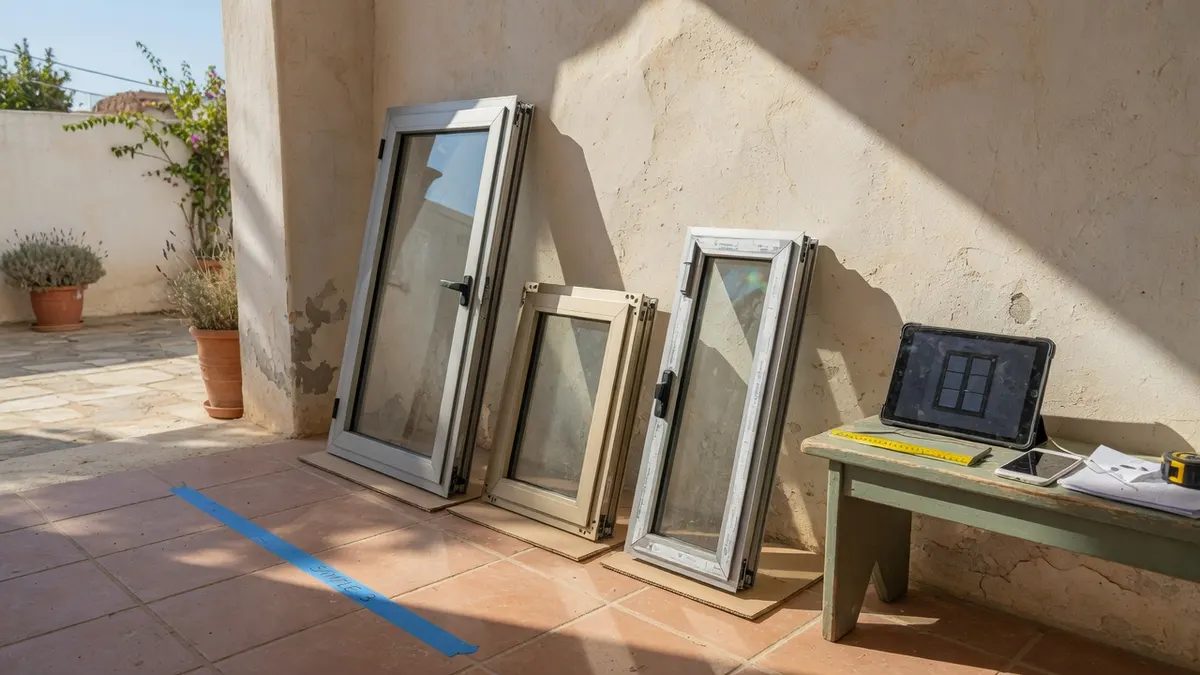
The frames on the cardboard are for a different job. Tomorrow’s pad has a balcony tape in Nea Smyrni, a screen look, and a street door. Two names have no door code. Last week’s quote is still a printed sheet on the desk. You have a reveal in your hands, or you have already loaded the van. Those names will not ring themselves.
This is not the inbound problem. These people already spoke to you, or to the assistant. They already have a morning, or they already have a number on a page. What they do not have is a confirm, and what you do not have is a yes on the quote.
If nobody calls, two things happen. You climb to a third floor and nobody is home. Or a slider you already measured goes to the shop that chased.
This is not a new booking
The list is names you put on it. Each row has one purpose.
Confirm. Tomorrow’s visit is still on. Will someone be in. Is the opening clear of curtains and furniture. Is there a door code. Are the old frames still in the way.
Quote chase. Last week’s paper. Did they receive it. Are they coming in, or should the shop call. Not: what does line three mean. Not: can you do it cheaper.
A neighbour’s balcony that appears on this call is a new job. Take a number. Do not add a second tape onto tomorrow. Do not quote the neighbour from the reminder.
A street door that will not close, if it appears here, is a flag to a phone, not a new hour squeezed over tomorrow’s tape.
Will someone be in — then the thing the job needs
A measure-up needs an adult at home and an opening you can stand in. A screen look needs the same. A communal stairwell needs the manager and the key. A street door needs the entrance free of parked bikes if that is how you wrote it.
Ask the questions you typed, in that order, and stop. Extra helpfulness is how 09:20 gets invented, and how a price creeps onto a confirm.
If they say the old kitchen is still in, that is a move, not a confirm. Find the visit. Release the morning. Offer a free one. Text. Do not leave tomorrow on the van’s list.
If they say they never got the quote, note it. Do not read the quote aloud. The shop sends it again, or calls.
Do not invent 09:20, and do not re-price the door
They will ask what time exactly. The answer is the window already in the book. A morning. An afternoon. Not 09:20 to sound precise. The van is still on another balcony.
They will ask the price again, because they did not open the SMS, or because another shop named a figure yesterday. The assistant does not name one. Not the old one, unless you marked that exact sentence as speakable, which you should not need on a chase. Not a new one. The shop calls back.
They will ask for Thursday if they say yes. A yes on the phone is not a signed paper. If your rule is that the shop books the fit, the assistant flags you. It does not put Thursday in the book to close the call.
Nobody answers — the morning stays theirs
A no-answer is not a no-show. The assistant retries in the window you set. It does not release the hour. It does not offer Nea Smyrni to the next name. It does not leave “the door is €1,800” on a voicemail — and it does not leave any figure.
A note on the list: not reached, retry at, still on for tomorrow. You decide, in the evening, whether to keep the morning. The assistant does not decide from silence.
Quiet hours belong in the setup. Do not ring a holiday-flat owner at 22:00 because the list was long.
The language on the booking
Call in the language stored on the visit. 70+ languages. The SMS with the window and the door code follows that language. A Greek confirm after an English booking is a code they cannot use at the street door.
If no language was stored, you pick a default and you will guess wrong some weeks. Store it on the inbound.
The manager may still be Greek on a building whose owner is German. The confirm goes to the number on the visit, not to a neighbour, not to a spouse unless that number is the number on the file.
The rule it must obey
One purpose per row. Questions you wrote. No new booking. No new price. No Thursday from a yes. No release from silence. No neighbour from this call. Door-off goes to a human.
The transcript is for what was not said as much as what was. If a price appears, that line is a failure, even if they sounded pleased.
What you configure first
- Build the lists from your own files. Name, number on the file, opening, purpose, language, door code if you have it.
- Two lists, not one heap. Tomorrow’s confirms. Unsigned quotes past the day you marked.
- Write the questions. In, clear, code, quote arrived.
- Forbid 09:20, re-pricing, install days, release on no-answer, voicemail prices.
- Quiet hours and retries before the first name goes out.
- The phone that should ring if a street door will not close appears on a confirm.
- Read the first week’s transcripts. That is where a helpful figure creeps in.
How CITT handles it
It works the list you gave it. It speaks the language on the row. It asks the questions you wrote. It texts the window and the code. It flags a yes, a move, a missing quote, a door that will not close. It does not invent the rest.
What it will not do
It will not open a new balcony from a reminder. It will not read a quote aloud. It will not match another shop’s figure. It will not put Thursday in the book because they said yes in the kitchen. It will not cancel tomorrow because they missed one call. It will not ring a number that is not on the file.
What these calls sound like
Name, opening, purpose, the questions, a refusal if they ask for a figure, an SMS. There is no sales pitch. There is no “while I have you, the neighbour’s door”. There is no 09:20.
If the assistant is friendly and still names a price, last week’s quote is now two numbers and you own both. Put the confirm on the window that is already in the book, and put the quote back on your phone.
Rates live on the pricing section of the home page. They are not repeated here.
AI receptionist, in-house staff, or a call centre
| CITT | In-house | Call centre | |
|---|---|---|---|
| Rings tomorrow's measure-ups | Yes, from the list you give it | If they finish the balcony they are on | If you export the names |
| Asks if someone will be in | Yes — that is the call | Yes, when they have a free minute | Often just reads the day |
| Asks about curtains, door code, unsigned quote | The questions you wrote, nothing else | If they remember to ask | A generic “still coming?” |
| Releases the morning if they do not answer | Never | Sometimes from a guess | Risk, if the sheet says no-show |
| Re-prices the door on the reminder | No — only the window already in the book | Can see the quote they already wrote | Tempted to close it with a number |
| Language of the booking | 70+ languages | Greek, and English if they have it | Whoever is on that shift |
| A street door that will not close, on this call | Rings a human — not a new hour | Yes, if they hear it | May book the first gap |
What unconfirmed mornings and unsigned quotes cost a two-person shop
Worked from these assumptions — change any of them and the answer changes:
- Two people. About 9 measure-ups a week and 4 quotes sitting unsigned. Put your own weekly counts in.
- This example assumes 2 measure-ups a month find nobody home, so the morning is lost, and 1 unsigned slider a month never comes back.
- A lost tape morning is not recovered the same day. A slider that would have been signed is about €1,800 here — replace that.
- A wasted morning of two people is labour you already paid. Put your own day-rate in if you want that column; this example uses only the lost slider.
- One unsigned slider a month does not come back.
- 1 × €1,800 = €1,800 of work that month.
- Eleven months — 11 × €1,800. Put your own months in if you close in August.
About €19,800 a year from unsigned sliders that nobody chased, on those assumptions. Add wasted mornings if you want that column.
What it costs
CITT is pay as you go: no packages, no minimum, no contract. The current rates — the monthly fee per number and the per-minute rate — are on the pricing section of the home page, which is the only place they are published.
Frequently asked questions
Can it chase a quote that has been sitting for a week?
Yes, if that name is on a list you built from your own files: name, number on the file, opening, one purpose. The purpose is “did the quote arrive”, not “shall I tell you a better figure”. If they ask what a line means, the assistant ends the pricing part and flags you to call back.
What if nobody answers the confirm call?
The morning stays theirs. The assistant does not release the hour, does not offer it to the next person, and does not leave a price on a voicemail. It can retry in the window you set. A no-answer is a note on the list, not a cancellation.
Can it offer Thursday's install if they say yes to the quote?
Only if you marked install booking as something it may do after a signed yes, and only if the book shows a free install window. A yes on the phone is not a signed paper. If your rule is that the shop books the fit, the assistant takes the yes and flags you. It does not invent Thursday to close the call.
They ask for a neighbour's balcony on the same call. What then?
That is a new job. This list is not a new-business hour. The assistant takes a number and says someone will call back, or it points them at the published number. It does not add a second tape onto tomorrow from a reminder call, and it does not quote the neighbour from memory.
Can it ring a spouse's mobile about the quote?
Not unless that number is the number on the file. A quote chase to the wrong person is a privacy problem and a confused balcony. Build the list from your own cards.
What language does it use on the chase?
The language of the original booking, if you stored it. 70+ languages. The SMS follows that language. See [pricing](/en/#pricing).