Book measure-ups without mixing screens and installs
Quick summary
- The assistant reads the book before it offers a morning, so a screen look is never offered as a measure-up hour.
- A mosquito-screen visit and a full-opening tape are different bookings. Get that wrong and a client sits in twenty minutes reserved for a reveal.
- Measure-up or screen first. Then the opening and the address. Then the book.
- Anything that sounds like a price, a glass spec, or Thursday's install stays a callback. The quote comes after the tape.
- If the assistant cannot read the book, it takes a callback. It does not guess that a balcony is free.
- The assistant texts the window, the type, and what to leave clear, so the opening you arrive at is an opening you can measure.
TL;DR
You have the tape on a reveal. A caller who wants a morning will not wait for a callback just to learn whether Wednesday is free. An assistant can book those mornings if it reads the book first, treats a screen look as different from a measure-up, and asks which opening before it places anything. A photo is not a quote. An install is not a first visit. A price question is not a new visit type. If the book cannot be reached, the assistant does not guess. It takes the request and says so. It texts the window, the type, and what to leave clear of curtains.
Key takeaways
- Give the assistant the types and their real durations before you let it book — measure-up, screen-only, roller look, street-door look.
- Mark fabrication days, install days and August in the same book it reads.
- Test a move on an existing measure-up and on a screen visit, separately, before you test a new slider.
- Turn on the SMS at the moment of booking, with the list of what to leave clear for that type.
- If the book cannot be reached, the only answer is a callback.
- Check the first fifty bookings by hand. That is when you find the hour that was a screen put into a measure-up morning.
The caller wants a morning. You have a tape in your hands.
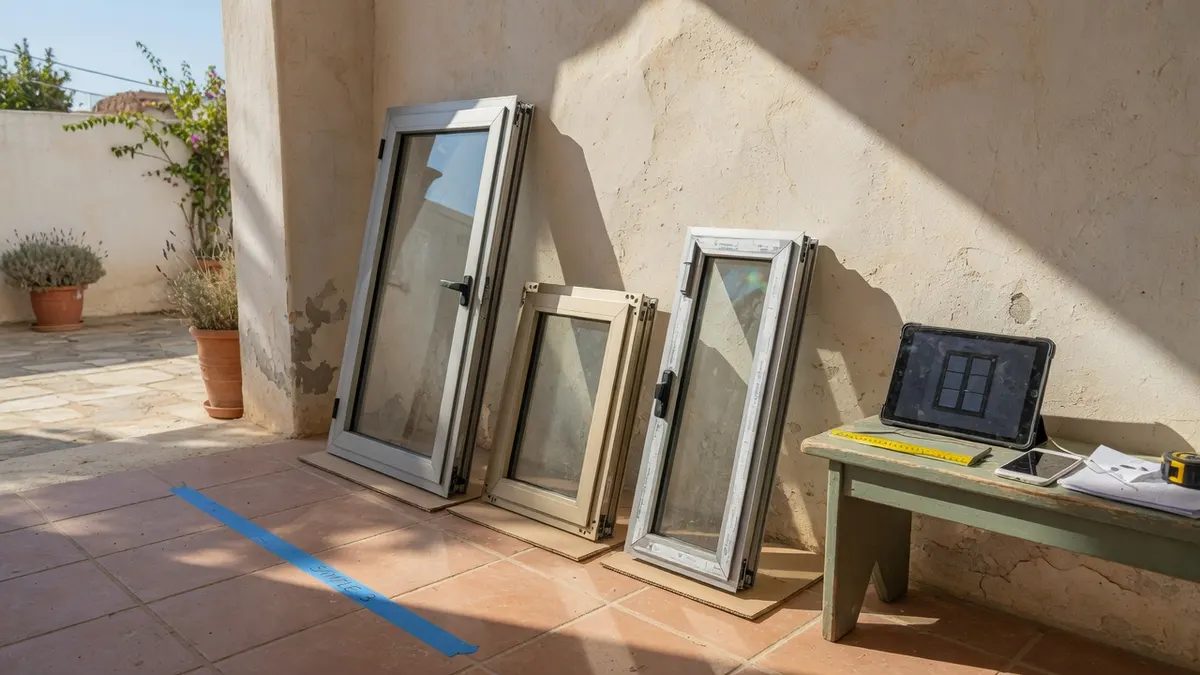
They want a sliding door measured. Or screens on three openings. Or a roller looked at after the wind. You are on a balcony. The book is in the shop, or on the tablet on the bench next to the frames. They will not wait for you to come down the stairs just to learn whether Wednesday is free.
A morning in this trade is not one kind of morning. A tape on a reveal is an hour. A screen-only look is shorter. A roller can be a look or a replacement you have not priced. An install is a crew and frames that already exist. Mix them and Wednesday looks full of mesh while a slider never gets a tape.
The assistant’s job on this call is not to be helpful with a day. It is to name the type, read the book, and write a visit the shop can keep.
Measure-up or screen — then the facts
Nothing useful goes into the book before the type.
Measure-up. You have not seen the opening. Slider, casement, street door, a set of windows. The assistant takes which opening, which floor, the address, and whether anyone will be home. It offers a morning only if the book shows that morning free. It does not tighten “morning” to 09:20 to sound ready. It does not add Thursday’s install on the same call.
Screen. Torn mesh, a slider that sticks, they want screens on openings that may already have frames. Duration is shorter. If you marked screen-only as its own type, that is the slot it offers. If you did not, it will drop a twenty-minute mesh into a tape hour, and the next slider will be told you are full.
Roller. Jammed, noisy, slats bent. A look is not a replacement. The assistant takes the opening. It does not book a motor you have not seen.
Street door. If it still closes, it can wait for a look. If it does not close, this is not a booking — it is a flag to a phone.
Ask the opening before the day. A caller who says “the balcony” may mean the slider, the casement next to it, and the roller above. Three openings are three lines on the note, even if they want one morning.
A visit is a window, not a minute
You do not run 09:20. You run a morning, or an afternoon. The van goes to Nea Smyrni, then to a third floor, then the tape goes on. Traffic, a lift that is out, a door code that does not work — those eat minutes you cannot promise.
The assistant offers the window you already use. It repeats that window on the SMS. It does not invent 09:20 because the caller asked for “first thing”. First thing is the start of the window. If they need a tighter time, that is a callback, not a tighter lie.
A measure-up that needs two people — a wide slider, a street door, a stairwell — is not the same window as a one-person tape. Mark it, or Wednesday will show one name and need two bodies.
Rain can cancel an install. Rain does not always cancel a tape on an inside opening. Do not let the assistant cancel Wednesday’s measure-up because the sky looks wrong on a recording. Weather on an install day is yours.
A communal look is not a kitchen window
The building manager rings. Stairwell windows. A block entrance. Three flats on the same landing. They want one morning and one number.
That is not a kitchen window. The assistant takes the building, who will be there with the key, and which openings. It books a communal type if you created one. It does not stack three tapes into a screen slot because they are in the same postcode.
A shaft the manager opens on Tuesdays is a Tuesday, or it is not booked. A code on the street door belongs on the note. A promise that the van can wait on a pedestrian street does not.
Same-building work is still one opening per line. Flat 3’s slider and flat 5’s screens are two visits even if the van does not move.
Do not put Thursday’s install on a first call
They are in a hurry. The wood is rotten. Guests arrive on Saturday. They sent a photo. They want the door fitted on Thursday.
The assistant does not put that Thursday in the book. Frames do not exist yet. The opening has not been taped. A Thursday promised now is a Thursday you spend taking back when the reveal is deep or the glass is a week out.
After a signed quote, the install is a different type, from a list you control. The assistant may book it then, if you said so. On this call it books the tape.
Do not let it “squeeze” an install over an open measure-up. Then the tape runs long, and the install waits in the van.
Moving Wednesday is one change
The old kitchen is still in. The tiles are late. They will not be home. The opening is blocked by a wardrobe they forgot.
A move is find the visit, release the morning, offer a morning that is actually free, write the new time, text. One change. The old hour is not offered to the next caller until it is back on the book.
If the assistant leaves both hours in, Wednesday is empty and Friday is double. If it offers the old hour before the change is in, two tapes arrive at the same balcony.
A cancel has to go back on the book the same hour. Otherwise the next caller is told you are full and the morning sits empty. A cancel is not a chance to invent a price for a different opening on the same call.
What the confirmation has to name
The SMS is part of the booking. If it does not go out, the opening will still have curtains on it.
It names the window, the type, the address as they said it, the floor, which opening, and what to leave clear. Curtains off. Furniture pulled back. Someone at home. Door code if they gave one.
It goes out in the language of the call — 70+ languages. A Greek text after an English booking is a third-floor they cannot find.
It does not contain a price. It does not contain Thursday’s install. It does not contain “we will be there at 09:20”.
If they need to bring a colour chip, or a photo of the neighbour’s door they liked, that line is yours to type in. The assistant repeats it. It does not add a catalogue.
When the book cannot be reached
Then it does not guess. Last week’s Wednesday is not this week’s Wednesday. A gap you remember from the van is not a gap.
The assistant takes the request, the address, the opening, and a number, and says someone from the shop will call back. That is the whole call. A guessed morning that collides with a tape already on a balcony is worse than a callback.
Decide this before the first live week. If the answer is not a callback, you will find out when two vans are promised to the same reveal.
How CITT handles it
- Type first. Measure-up, screen, roller, street door. Nothing goes in the book before that split.
- The book you already use. A visit is written only when that book shows a free window.
- The window you actually run. A morning, an afternoon — not 09:20.
- No install on a first call. No price from a photo. No communal figure from a landing.
- A move is one change. Release, write, text. The old hour is not offered until it is back.
- The SMS follows the call. Window, type, opening, what to leave clear. 70+ languages.
- Door-off and flat-open are not bookings. They ring a phone you named.
What it will not do
It will not invent a figure from a photo to close the slot. It will not book Thursday’s fit because they have guests on Saturday. It will not drop a screen into a tape hour unless you marked them the same, which you should not. It will not stack three flats into twenty minutes. It will not cancel a tape because a recording mentioned rain. It will not offer the old Wednesday until the move is in the book.
What these calls sound like
The order is the type, the opening, the address, a window the book can honour, the SMS. There is no “we can do Thursday”. There is no round figure to hold them. There is no 09:20.
If the assistant is friendly and still puts a screen in a tape hour, Wednesday is mesh and the slider is at the next shop. Check the first fifty bookings by hand. That is when you find the duration you never typed in.
What you set up first
Write the types and their real durations. Connect the book you already use. Mark fabrication days, install days, and August. Turn on the SMS with the clear-opening line. Decide the callback for when the book cannot be reached. Give it the same-day list: door off, flat open. Test a move on an existing measure-up before you test a new slider.
Rates live on the pricing section of the home page. They are not repeated here.
AI receptionist, in-house staff, or a call centre
| CITT | In-house | Call centre | |
|---|---|---|---|
| Reads the book before offering a morning | Yes, the book the shop works from | Yes, if they can see it | Usually not — takes a message |
| Treats a screen as shorter than a tape | If you marked the durations | Yes | Rarely sees the difference |
| Books an install before the tape | Never | Only after a signed quote | Tempted, if they ask for Thursday |
| Invents a price on the booking call | Never — the quote is after the reveal | Can refuse | May read a range to close the slot |
| Move when the old kitchen is still in | One change, then a new SMS | Yes | Two messages, often |
| Speaks the caller's language | 70+ languages | One or two | Whoever is on that shift |
| SMS names the opening | Window, type, what to leave clear | If they remember to text | A generic “see you Wednesday” |
What a mixed morning costs when a screen sits in a tape hour
Worked from these assumptions — change any of them and the answer changes:
- Two people. A normal week with about 9 measure-up mornings and 6 screen looks in the book. Put your own weekly count in.
- A measure-up morning that becomes an order is worth about €1,800 here. A screen-only job is about €280. Replace both.
- This example assumes 2 screen callers were given a measure-up hour, so 2 real tapes were pushed or lost.
- Of those 2 lost tapes, 1 does not rebook — put your own conversion in.
- Two screen looks occupy two measure-up hours.
- One of the displaced tapes does not come back.
- 1 × €1,800 = €1,800 of work that week that the book looked full for.
- A week like that once a month, 11 months — 11 × €1,800.
About €19,800 a year on those assumptions. Change the tickets and how often a screen is put in a tape hour.
What it costs
CITT is pay as you go: no packages, no minimum, no contract. The current rates — the monthly fee per number and the per-minute rate — are on the pricing section of the home page, which is the only place they are published.
Frequently asked questions
Can it book Thursday's install if they are in a hurry?
Not from a first call, and not from a photo. An install is a crew and frames that have already been made. The assistant books a measure-up, or a screen look, or a roller look. After a quote is signed, you — or the assistant, from a list you control — book the fit. A Thursday promised before the tape is a Thursday you then have to take back.
What if the old kitchen is still in on the morning of the tape?
That is a move, not a new job. The assistant finds the visit, releases the morning, offers a morning that is actually free, writes the change as one change, and texts. It does not leave the old hour on offer until the change is in. It does not invent a second visit on top of the first.
Can it put three flats from the same block on one morning?
Only if you marked communal or same-building work as a type, and only if the book shows that morning free. It still takes which openings and who has the key. It does not invent a block price from a landing photo, and it does not stack three tapes into a screen slot.
What does the confirmation text actually say?
The window you use — a morning, an afternoon — the type (measure-up, screen, roller), the address as they said it, and what to leave clear: curtains off the opening, furniture pulled back, someone at home. It goes out in the language of the call. It does not contain a price.
What if the book cannot be reached?
Then the only honest answer is a callback. The assistant takes the address, the opening, and a number, and says someone from the shop will call back. It does not guess that Wednesday is free because last week it was.
Do we have to give up the number on the van?
No. You keep the number. You set one forwarding rule. A call you pick up never leaves the shop. See [pricing](/en/#pricing).