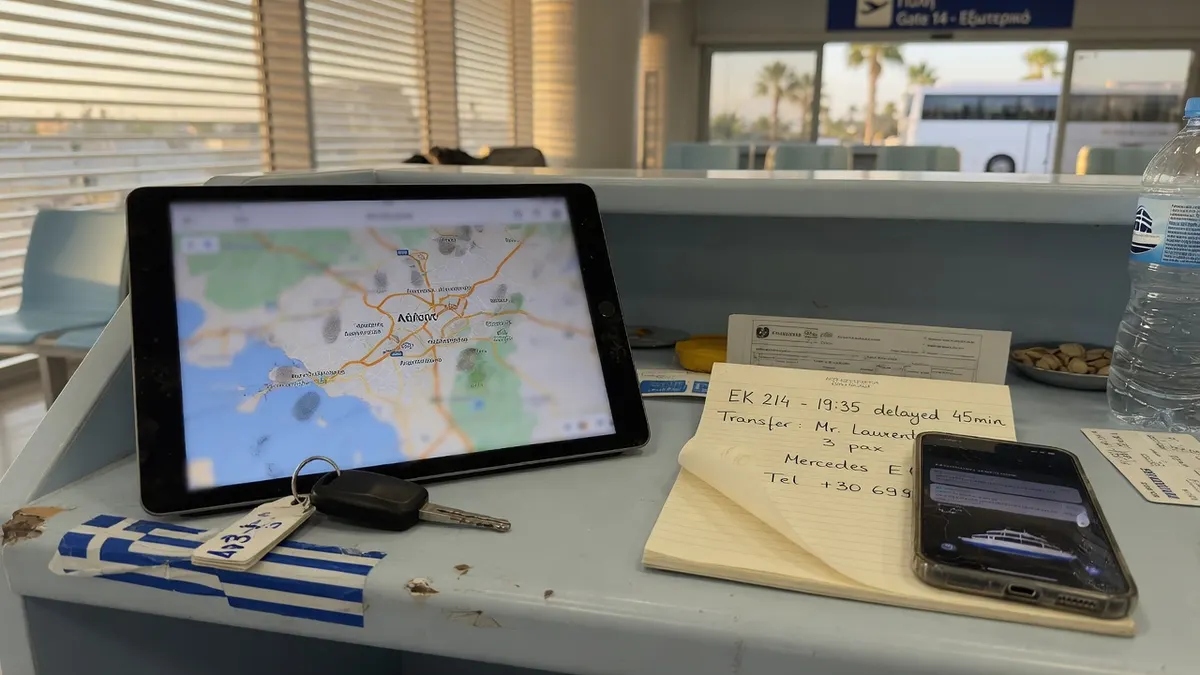
Confirm tomorrow's airport pickup by phone
Quick summary
- Tomorrow's list is on the desk. Two flights have no new time. One villa has no bag count. Nobody rings them.
- This is not a new booking. They already have a run. The call confirms they still land, and on which flight.
- A delayed landing needs the rule you already use: wait, last run, whether the van is still assigned.
- It does not invent a fare, release the van, or promise a name board the hall will not staff.
- It calls in the language on the booking. The SMS with the meeting point follows that language.
- Set the hours it may ring before the first name goes out. Do not leave a villa gate code on a voicemail.
TL;DR
Tomorrow eight pickups are on the sheet. Two flights have moved. One villa never gave a bag count. You are on the radio, or the last van is still out. Nobody rings those names. An assistant works the list you give it: name on the run, flight number, one purpose. It asks whether the flight is still the one on the sheet. It does not say what a delay will cost, whether a seat is in the van, or that the driver is already waiting. If they ask for a fare, it writes the question down. It can book a change if that slot is free. It will not ring a hotel reception about someone else's pickup unless that number is the number on the file.
Key takeaways
- Build each list from your own runs: name, the number on the file, the flight, and one purpose.
- Do not put a hotel reception on a pickup chase unless that number is the number on the file.
- Write the purpose as a confirmation or a flight-change chase, not as a new quote.
- If the guest asks how much the ride is, the assistant ends the price part and flags the desk.
- Check the run sheet before you speak a new time. Do not read 01:10 off last night's pad.
- Keep fares, last-run guesses and gate codes off the script. The office will look at the sheet.
The list is tomorrow’s sheet, not a second sales hour
Outbound on this desk is not a hunt for new villas. The names are already on the run sheet. The work is to find out whether the flight is still the flight, whether the hotel is still the hotel, and whether anyone added a child who needs a seat.
You are on the radio. Eight names wait. Two of those flights have already moved on the boards. If nobody rings, a van goes to one ten and the family came in at two. The hall is empty. The review is not.
So you hand the assistant a list you built: name as on the run, number as on the file, flight as on the sheet, one purpose. The purpose is confirmation, or a flight-change chase, or a missing bag count. It is not “see if they also want a return”, unless that return is already a second line you wrote.
Start with the name and the flight, or stop
Every outbound call opens on the identity you already have. If they do not recognise the name or the flight, the call stops. It does not read the next row. It does not guess that the person who answered is the husband on the same villa.
A hotel reception is not the guest. Do not put the hotel’s number on a pickup chase unless the guest put that number on the file. The receptionist will confirm a van for the wrong family, or will refuse to discuss it, and you have spent the only quiet minute you had.
If a child answers, or a driver at a different company, stop. Leave a request for the name on the file to call you. Do not describe the run to whoever picked up.
Confirm. Do not requote.
The tempting extra on a confirmation call is a price, because they ask. They ask because they are packing. They ask because a friend at the same hotel paid something else last year.
The assistant does not invent a fare on this call. A published figure already attached to that run may be repeated if you marked it speakable. A new description — more bags, a supermarket, a second drop — is a request on the note. The desk prices it, or does not.
“Is the driver already assigned?” is a sheet question. If the sheet still shows the van, the assistant may say the pickup is still on the sheet. It may not say the driver is downstairs. It may not say how long they will wait if the new landing is later.
Flight moved, bags missing, extra stop
Flight moved. Take the new number and the new time they were told. Check the sheet before speaking a new slot. If the slot is there, write it and text. If it is not, flag. Do not keep the old van on the old hall as a courtesy. That courtesy is how you miss the family and miss the next job.
Bags missing. Take the count. Do not downsize or upsize the vehicle on this call. A 7-seater is not a spoken promise from a new bag number. The desk looks at the van.
Extra stop. Note it. Do not add a fare. Do not say the driver will wait in a supermarket car park unless that is a rule you wrote for this list.
Child seat that was not on the original run. Request, not yes. Stock is in a boot, not in a script.
Return tomorrow morning. Different purpose, same identity rules. Confirm hotel and the flight they must make. Do not turn the call into a new pickup for someone else at breakfast.
What must never go on the recording
A villa gate code. A lockbox. A hotel room number used as access. If they offer it, refuse it on this channel. The assistant asks for a number the desk can use, not for the door.
A fare invented to close the extra stop. A wait invented because they sound tired. A name board promised for an hour you do not staff.
Quiet hours are yours. Do not ring a family at 02:00 because the sheet was printed late, unless that family is already in the air and you marked the list as same-hour. Retries belong in the setup, not in the assistant’s improvisation.
The SMS after the chase
If the sheet accepted a new time, text it, in the language on the booking — 70+ languages — with the meeting point you actually use. If the sheet refused, do not text a hopeful time. Flag a phone.
A confirmation SMS that still has the old flight number is how they wait at the wrong hour. The outbound call and the text have to match the sheet, not the pad from this afternoon.
What you set first
- Build lists from the sheet, not from a hotel’s arrivals printout you do not own.
- One purpose per list. Confirmation. Flight-change. Missing bags. Return reminder. Do not mix a sales hour into a confirmation hour.
- Identity first. Name, flight, number on the file. Stop if they do not match.
- No hotel-reception chase unless that number is on the file.
- No gate codes, no invented fares, no invented waits.
- Sheet check before a new time is spoken.
- Quiet hours and retries before the first name.
- Read the first week’s outbound transcripts for a fare that appeared, a code that was taken, and a van that was promised through a hotel desk.
The point of the call is that tomorrow’s hall matches tomorrow’s sheet. A fluent extra sentence about price puts you back in the same trouble as an unanswered inbound: a number you now own, and a family who believed it.
Rates live on the pricing section of the home page. They are not repeated here.
AI receptionist, in-house staff, or a call centre
| CITT | In-house | Call centre | |
|---|---|---|---|
| Day-before confirmation of a pickup | Yes, from your list | When someone has time | If the list was sent |
| Flight-change chase | Takes the new number, does not guess a wait | Yes, if they have the radio | Often says the driver will wait |
| Starts with the name and flight on the file | Yes — stops if they do not recognise them | Yes | Sometimes reads the next row |
| Invents a fare on the chase | Never | Not on a confirmation call either | Sometimes requotes to keep them |
| Rings a hotel about someone else's van | Only if that number is on the file | Sometimes asks the desk | Often tries the hotel first |
| Language of the booking | 70+ languages | One or two | Whoever is on that shift |
| Gate code on a voicemail | Never | Should not | Risk, if the script has it |
What an unconfirmed night pickup costs when the flight has moved
Worked from these assumptions — change any of them and the answer changes:
- Eight pickups on tomorrow's sheet. Two flights have already moved on the public boards.
- Nobody rings those two. Both vans still go to the old time.
- A wasted night run, plus a family that then books another van, is worth about €70 of work you cannot sell twice — put your own figure in.
- This example assumes that happens once a week in summer. Change the count.
- Two unconfirmed pickups go to the old landing time.
- One family has already landed on the new time and left with another van. One van waits on an empty hall.
- Count that as one lost pickup and one wasted run. 1 × €70 of work you cannot put elsewhere that hour.
- Summer weeks — 16 × €70. Put your own weeks in.
About €1,120 a season from unconfirmed moved flights — and only if you accept the conversion. Change it.
What it costs
CITT is pay as you go: no packages, no minimum, no contract. The current rates — the monthly fee per number and the per-minute rate — are on the pricing section of the home page, which is the only place they are published.
Frequently asked questions
Who is allowed on the outbound list?
People who already have a run on your sheet, with a number that is on that file. A hotel reception is not a guest. Do not chase a pickup through the hotel unless the guest put that number on the booking. A spouse's mobile about someone else's villa is the same rule.
Can it tell them the driver is already assigned?
Only if the sheet you connected still shows that van on that flight. If the sheet has moved, or cannot be read, the assistant confirms they still want the pickup and takes a new flight number. It does not say a driver is waiting.
What if they ask the price on the confirmation call?
That is still a fare question. A published figure you marked as speakable may be repeated. A new description — extra bags, an extra stop, a second address — is a note and a callback, not a new number invented to finish the call.
Can it change the pickup to a new flight on this call?
If the run sheet shows a slot for the new time, yes, and then it texts the meeting point. If the sheet is full, or the last run has passed, it takes the request and flags you. It does not keep the old van on the old hall as a kindness.
What about returns the next morning?
Same list, different purpose. Confirm the hotel they are leaving from and the flight they must make. Do not turn a return confirmation into a new night pickup for a friend at the same hotel unless that is a separate run you have written.
Can it leave a villa gate code on voicemail if nobody picks up?
No. A code on a recording is a code you cannot pull back. The assistant leaves a callback request, not the access. Quiet hours and retries are yours to set before the first name goes out.