AI call agent that follows a job on a list

Quick summary
- The job is a list with a stop rule: ring these people, say this, stop if they want you.
- Twelve no-shows from Thursday sit on a clipboard. Nobody rings them because the inbound line is already eating nine o'clock.
- Outbound does not switch the door number off. A person who rings in still gets an answer.
- It does not freelance. If the job is a reminder, it does not start selling. If they say stop, it stops.
- You write who may be rung. A number that only ever inbound is not a number you put on the list.
- It is not the person at the glass and not the clerk at 18:30. It is the colleague who actually works the list.
TL;DR
You have a list. Twelve people who missed Thursday. Four quotes you said you would ring back. A row of “we'll call you” from last week. The inbound line eats the morning and the list stays on the clipboard. An AI call agent is the colleague who works that list: it rings the names you allowed, says the job you wrote, books a time only if the diary is free, and stops the moment they ask for you or ask not to be called. It still answers the number on the door. It does not invent a second job in the same conversation. It follows the work you gave it.
Key takeaways
- Write the job as a script with a stop: what to say, what to book, when to hand over, when to never ring again.
- Put only numbers you are allowed to ring on the list. An inbound-only customer is not a row.
- Keep the door number live while the list is running. Outbound is not a reason to miss the next stranger.
- Let it book a replacement time only after it checks the diary. A reminder that invents Friday is a new mess.
- Read the first week's attempts. Any sentence that was not in the job is a leak.
- Give it the stop words verbatim: stop, a person, do not call this number — those end the attempt.

What an AI call agent actually is
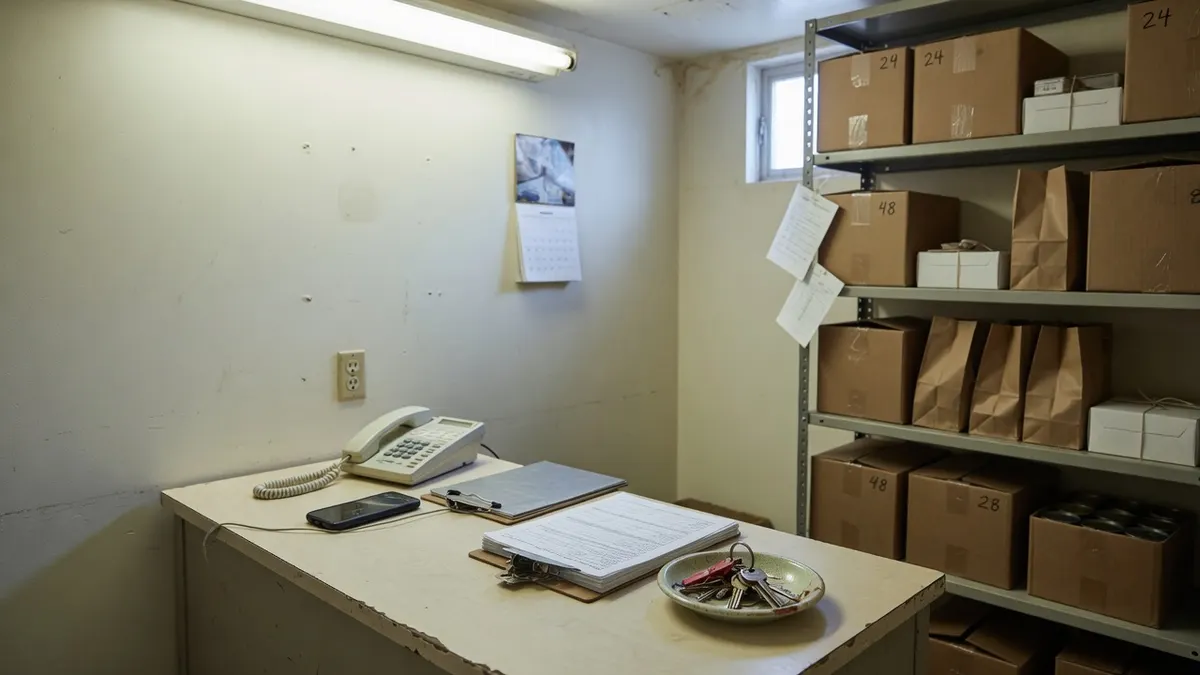
There is a clipboard next to the till. Twelve names. Five ticks missing from Thursday. Four quotes you said you would return. A row that only says “we’ll call you” and a date from last week.
You meant to start at four. At four the inbound line is still going. At six you lock the shutter and the clipboard goes in the drawer with the same five gaps.
An AI call agent is the colleague who works that list. It has a job, not a chair. It rings the names you allowed, says the thing you wrote, books a replacement only if the diary is free, and stops when they ask for you or ask not to be called.
It still answers the number on the door. The list does not switch the shop off. That is the reason the clipboard never moved: one pair of hands cannot ring out and pick up at the same time.
It is not the receptionist who greets the stranger at the glass. It is not the assistant who writes your day up at 18:30. Those are other jobs. This one begins with a row and ends when the row is done, handed over, or forbidden.
The list that never gets rung
In a Greek shop the list is polite and late. You do not like ringing people. They do not like being rung. So you wait until the afternoon, and the afternoon is inbound, and the no-show from Thursday becomes a hole on Friday, and then a hole you stop looking at.
The people on that list already know you. They booked. They asked for a quote. They said call me. They are not strangers. They are unfinished work. Leaving them on paper is how the next similar shop becomes the one that “actually called”.
A reminder is one job. A no-show recovery is one job. A “your quote is ready” is one job. Do not stack them. An agent that starts with Thursday and then mentions a second product is not following a job. It is freelancing on your number.
Write the list as rows you can defend. Name, number, why they are on it, which script, how many attempts, when to stop forever. A row without a why is how you ring someone who only ever inbound and who will tell the street you pester.
Inbound still happening while the list is open
The door number does not care that you have a clipboard. A stranger rings because the shutter is up. A regular rings because the part came. If the agent is mid-attempt, another line still has to answer. Otherwise you have only moved the empty chair from the desk to the campaign.
That is the whole point of giving the list to something that is not you. You keep serving. You keep picking up when your hands are free. The attempts happen in parallel, not instead.
If you only have one published number and you send every outbound attempt from it, people who miss a reminder will ring back on the same line. That callback is inbound. It must not land on voicemail because the next row already started. Configure the door number so a returning missed reminder is a conversation, not a second failure.
Do not run the list through a private mobile that also receives family calls. The job needs a line you are willing to see on a stranger’s screen.
A job with a stop rule
The script is short. Who you are. Why you are ringing. One question. One offer if the diary allows it. Then stop.
Stop if they want a person. Stop if they say this number is wrong. Stop if they say do not call. Stop if they are angry about Thursday and need you, not a replacement slot. Stop if they start giving a card number — that field does not exist.
You write those stops as words, not as a feeling. The agent cannot hear that the joke was not a joke. “Fine, whatever” is not a yes. If the yes is unclear, it takes a name and you ring. A booked Friday pulled from a shrug is a no-show you invented.
Attempts have a count. Two, maybe three, not seven. The third attempt on a Saturday morning is how a reminder becomes a complaint. Write the hours a job may run. Do not ring a house number at 21:00 because the list was long.
If they say they already booked, the agent looks at the diary and does not argue. If the time is there, it confirms and ends. If the time is not there, it is your file, not their mistake, until you have looked.
Reminders, no-shows, and “we’ll call you”
Reminder. Tomorrow at ten, still coming. If yes, the row closes. If no, a new time only from the diary. If no answer, one more attempt in the hours you named, then a note for you, not a fourth try at dusk.
No-show. They did not arrive. The bench was held. The job is a same-day replacement, not a lecture. The agent does not tell them they wasted your morning. You can say that, if you want it said. The script does not.
Quote is ready. You said you would call. The agent says the quote is ready and offers a time to go through it, or offers to have you ring. It does not read a figure you have not marked as speakable. A number said to “get them in” is a number you then spend the visit taking back.
We’ll call you. That sentence is a debt. If you wrote it, it is a row. If you cannot remember who you said it to, you do not have a list, you have a feeling. Start from the book, not from guilt.
August needs its own stop. Do not let a reminder book a visit into a week the shutter is down. The 15th is not a normal Thursday in this country.
How CITT handles the job
- You hand it a list, not a mood. Each row has a why, a script, and a stop.
- The door number stays live. Attempts do not mute inbound. A stranger still gets an answer.
- One job per conversation. A reminder does not become a sale. A no-show does not become a lecture.
- A new time is offered only after the diary is checked, and is written in, with an SMS in the language of the call.
- Stop words end the attempt. Person, stop, do not call. Transfer if you named one, otherwise a note.
- Attempts are counted. You set how many and in which hours. The agent does not decide to “just try once more”.
- You get the sheet. Reached, rebooked, stopped, asked for you, not reached. Plus the transcript of each try.
What an agent will not do
It will not ring a number that is not on the list. It will not take a card. It will not invent a Friday. It will not finish the script over the top of “I want Kostas”. It will not scold a no-show. It will not add a second product to be efficient. It will not sit the empty chair. It will not write your 18:30 list from inbound scraps — that is another job.
It will not keep calling a row you marked do-not-ring. If week one shows an attempt after a stop, the file is wrong. Fix the row before you add more names.
It will not pretend to be you. The opening line says where the call is from and that this is the agent on that job. A voice that claims to be Kostas on an outbound recording is a voice you then have to unpick.
What these jobs sound like
The exchange above is the shape. Thursday was missed. The agent offers a day it can see, refuses to pile a second request on, and stops the reminder the moment they ask for Kostas. Thursday is closed. Friday is the only open item. The do-not-ring about Thursday is written, not smiled at.
A good attempt is shorter than you think. Who, why, one question, a time or a stop. If the transcript is a tour of the shop, the job has drifted. If the transcript ends without a yes, a no, or a stop, the script is missing its last line.
“We’ll call you” should not still be true a week later. Either the row was worked or you should not have said it.
What you set up first
The list with a why on every row. The script. The stop words. The attempt count and the hours. The diary, or a ban on offering times. The rule that inbound on the door number is never switched off for the campaign.
Write who must never be rung. Write August dates. Write the sentence that this is the agent, not Kostas. Do not put a price in the quote job unless that price is one you are willing to hear on a recording.
Then read the first twenty attempts with the clipboard in your other hand. Any sentence that was not in the job comes out. Any row without a why comes off. Any stop that was ignored is a file error, not a personality.
Rates live on the pricing section of the home page. They are not repeated here.
AI receptionist, in-house staff, or a call centre
| CITT | In-house | Call centre | |
|---|---|---|---|
| Works a list you actually wrote | The job, in the order you set | After inbound, if ever | Their campaign, their hours |
| Stops when they ask for you | Yes — that is in the job | They already are you | After the script, sometimes |
| Keeps answering inbound on the door number | The list does not mute the shop | One pair of hands, one task | Separate teams, extra cost |
| Invents a second pitch in the same call | Never — one job | Sometimes, to “make it worth it” | Often, if the brief is a quota |
| Rings a number you did not allow | No — only the list | If they “just try” | If the file was mixed |
| Speaks the caller's language | 70+ languages | One or two | The campaign language |
| What it will not do | Sit the desk or write your day from scraps | Finish the clipboard after closing | Know who asked never to be rung |
What an untouched clipboard of Thursday no-shows costs
Worked from these assumptions — change any of them and the answer changes:
- One shop, a Thursday of 12 booked visits, 5 of them do not arrive.
- You mean to ring those 5 the same afternoon. The inbound line takes the afternoon. Nobody is rung.
- 3 of the 5 would have taken a Friday or Saturday replacement if someone had asked that day.
- A recovered visit is worth about €90 of work in this example — put your own ticket in, this is the number to change first.
- This example assumes you do not recover them the following week.
- 5 no-shows sit on the clipboard at 16:00.
- 3 of them would have rebooked on the same day if asked.
- 3 × €90 = €270 of work, that Thursday.
- A Thursday like that three times a month, 11 months — 33 × €270.
About €8,910 a year on those assumptions — or less if you already ring the list, more if your ticket is higher. Change both figures.
What it costs
CITT is pay as you go: no packages, no minimum, no contract. The current rates — the monthly fee per number and the per-minute rate — are on the pricing section of the home page, which is the only place they are published.
Frequently asked questions
Can it ring people who have not asked to be rung?
Only if you put them on the list, and you should not put them on the list. The agent rings the rows you give it. A stranger who once asked a price is not, by itself, a row. Write who may be called and why. A number that only ever inbound is left off.
What if they say they already booked?
Then the job stops being a reminder and becomes a check. The agent looks at the diary. If the time is there, it confirms. If the time is not there, it does not argue. It takes a name and you look. Winning a disagreement on a recorded line is how you lose the person.
Does outbound stop the inbound number?
It must not. The list is extra work, not a reason to let the door number ring out. A stranger who rings while the agent is on an attempt still gets an answer on another line. One pair of human hands cannot do that. That is why the list never moved.
How does it stop if they want me?
You write the stop words. “A person”, “Kostas”, “stop”, “do not call”. The attempt ends. They get a transfer if you named one, or a time you will return. The agent does not finish the reminder over the top of that request.
Can it take a card number on the call?
No. A job can take a yes, a no, a new time, a name. A card number is not a field you give this agent. If money has to move, that is a visit or a link you send yourself. Do not put payment into the script.
What is on the list afterwards?
Who was reached, who was not, who rebooked, who asked to stop, who asked for you, and the transcript of each attempt. You see the clipboard as a finished sheet, not as five names you still feel guilty about at closing.