AI call assistant for notes, diary and SMS
Quick summary
- The job starts while you are still talking and finishes after you hang up: note, diary, SMS.
- At 18:30 the pad has three names and one time with a question mark. That is the work this assistant is for.
- It looks at the real diary before a Thursday is said out loud. Then it writes the Thursday in.
- The confirmation leaves as an SMS in the language of the call. You do not type it later from memory.
- A transcript is not a souvenir. It is how you see the sentence you never wrote down.
- It does not sit the empty chair as its main job. It is the person who writes the day so the day stays true.
TL;DR
The conversation already happened, or it is happening now, and the mess is the paper. A name on a pad. A Thursday with a question mark. An SMS you meant to send after the next customer. An AI call assistant is the person who used to do that write-up: it checks the diary before a time is offered, writes the time into the calendar you already use, sends the confirmation in the language of the call, and leaves you a summary you can read at 18:30 instead of a pile of scraps. It does not replace the greeting at the glass. It does not work an outbound list. It keeps the day from lying.
Key takeaways
- Connect the diary first. An assistant that cannot see Thursday will still say Thursday if you let it.
- Write the after-call shape: name, what they wanted, what was booked, what is still yours to return.
- Let the SMS go out in the language they rang in. Do not type a Greek confirmation from an English call at closing.
- A collision on the same slot is a flag the same hour, not a surprise at four when both people arrive.
- Listen to week one for times that were said and never written. Those are the leaks.
- Give it the sentence for a price or a promise that is not in the file: take the request, do not finish the sentence.

What an AI call assistant actually is
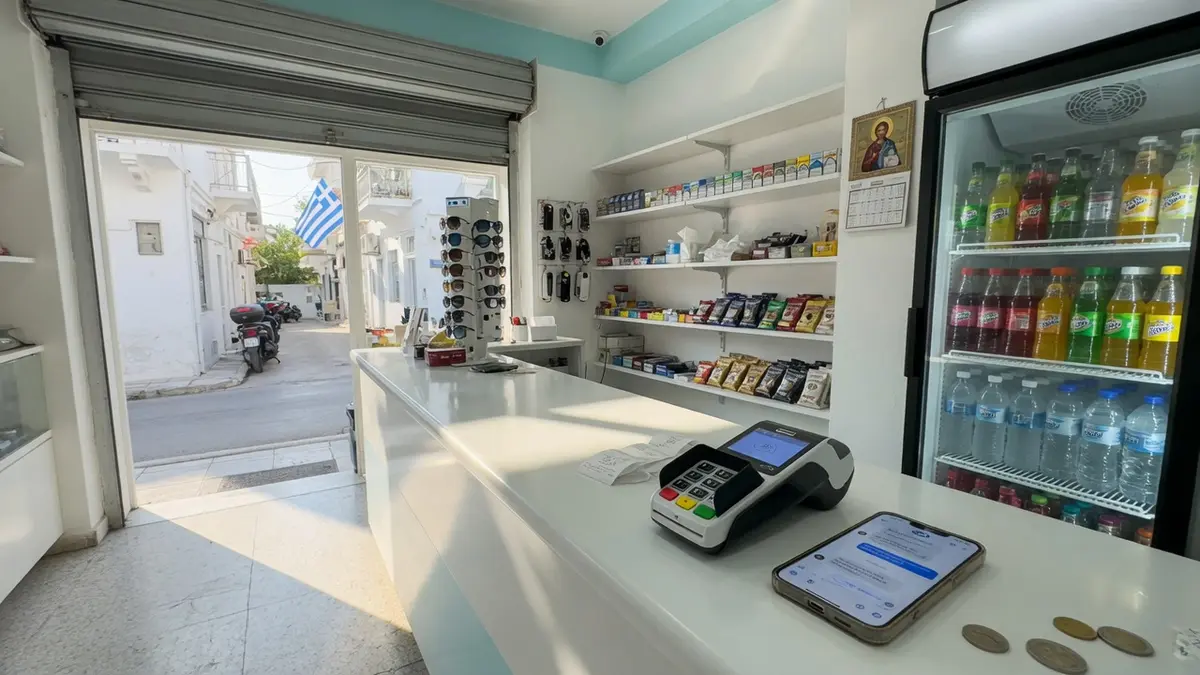
The call already happened. Or it is happening now, and you are holding the handset with a customer in front of the card machine. Someone says Friday. You nod. You put a dot on the pad. The next person is already talking.
At half past six the pad has three names, one arrow, and a time with a question mark. The SMS you meant to send is still in your head. Thursday might be taken. You are no longer sure who said they would bring the part and who said they would ring back.
An AI call assistant is the person who used to do that write-up. During the conversation it looks at the diary before a day is offered. After the conversation it writes the day into the same calendar, sends the confirmation, and leaves a summary you can read without decoding your own handwriting.
It is not the face at the glass. Greeting is a different chair. It is not the agent with a clipboard of twelve people you promised to ring. It is the second brain of the call — the one that used to sit down with the book after you locked the shutter, and often did not.
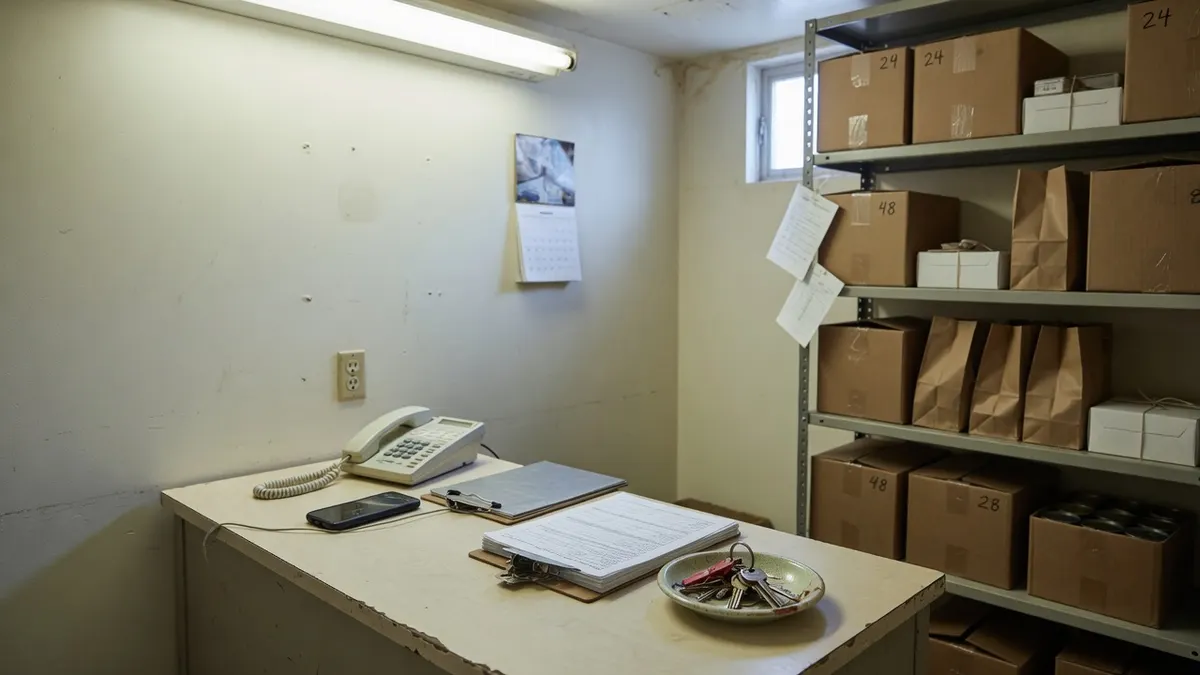
The pad at half past six
Every small shop in this country has the same pad. A spiral notebook by the handset. A name. A number with one digit unsure. “Thurs?” underlined twice. A plate. A tick that might mean booked or might mean they will confirm.
That pad is not a system. It is a delay. The delay is where the day starts to lie. Two of you take calls. Both write. Neither opens the shared diary until later, or at all. Friday at ten is said twice. Friday at ten is written once. The SMS goes to the person you still had in your head, in the language you speak, not the language they rang in.
The assistant exists so the pad can stay in the drawer. The record is made while the facts are still in the air, not at closing when you are reconstructing a morning from scraps.
If you already pick up most calls yourself, you still have this problem. Answering is not writing. A careful conversation that leaves no diary entry is a conversation you will have again, angry, on Friday at the glass.
During the call: the diary before a time
The only time that may be said out loud is a time the diary shows as free. That is the whole rule.
“Thursday morning” said because last Thursday morning was quiet is not a time. “We can usually do Friday” is not a time. “Come after lunch” is not a time unless after lunch is a slot you keep.
The assistant checks first, then speaks. If the calendar is not connected, it must not invent a window. It takes a name and you offer the time when you can see the book. A helpful voice that guesses a gap is how you get two people at four and a bench that was already promised.
When two conversations agree on the same slot, the second one must not be written on top of the first. The assistant flags the collision the same hour. You decide who moves. A surprise at four is not a diary. It is a fight in the doorway.
Mark two kinds of time if you have them. A visit that needs you is not a five-minute drop. A drop written as a visit blocks an hour. A visit written as a drop puts someone in a gap that cannot take them. The assistant can only keep the kinds you named.
After the call: the note, the SMS, the list for you
The write-up has a shape. You decide the fields. A useful first version is the one you already wish the pad held.
Name. Number. What they wanted, in their words. Whether a time was written in. Whether anything is still yours to return — a price, a status, a yes from Kostas. The plate, the order date, the receipt number, if they gave one.
Then the SMS. It leaves in the language of the call. It repeats the time that is in the diary, not a time from memory. If you change Saturday hours that morning, the next confirmation has to be the new Saturday, not last week’s. A stale file is a confident lie.
Then the list for you. Not a digest you open on Sunday. The open items from today, on a phone, while you can still ring them. A callback promised for “this afternoon” that sits in a weekly pile is a callback you did not make.
A transcript sits under all three. You do not read every one. You read the ones where the summary looks thin, or where a price appears, or where a Thursday was said. That is how the file grows. A sentence that was never written down and still got said is a leak. You either add the line or you forbid it.
When two conversations agree on the same Thursday
This is the failure the pad cannot see. You said Thursday to the person at 11:10. A colleague said Thursday to the person at 11:40. Nobody opened the book. At four both are at the glass.
The assistant’s job in that hour is not charm. It is to refuse the second Thursday and offer what is actually free, or to take a name and let you move someone. If you have a rule — first booking keeps the slot, or the longer job keeps the slot — write it. If you do not, the assistant must not pick a winner.
No-shows start in the same place. A time that was said and never confirmed is a time people half-remember. The SMS is not a courtesy. It is the difference between a bench that is ready and a bench you held for someone who thought it was only a maybe.
If they reply that they cannot come, that reply has to land in the same diary. A confirmation that cannot be changed is how you keep an empty Friday and turn away the person who would have taken it.
How CITT handles the write-up
- The diary you already use is the diary it checks. No second book. No slot that exists only in the assistant.
- A time is said only after that check. If nothing is connected, it takes a name and you call back with a real window.
- The same time is written in, not remembered for later, not left on a pad.
- The SMS leaves in the language of the call — 70+ languages — with the time that is in the book.
- The summary names the open item. A price still yours. A status still yours. A transfer still yours. Not a vague “they called”.
- A collision is flagged the same hour, while you can still move someone, not at four at the glass.
- You get the transcript. That is how you find the sentence that should never have been said, or the sentence you should have written down in week one.
What an assistant will not do
It will not invent a time it cannot see. It will not send an SMS for a booking it did not write. It will not finish a price you have not listed. It will not sit the empty chair as if greeting were the same job as writing. It will not work the outbound list. It will not decide a complaint. It will not pretend the pad is empty when an item is still open.
It will not summarise a complaint into something smaller. Their words stay their words. You decide the sentence that goes back.
It will not email a file it does not have. An invoice copy is a request and a number. You send the paper.
If they want to change a time, it checks again. It does not shuffle the day from memory to be helpful.
What the paper trail sounds like
The exchange above is the shape. They think Thursday was already agreed. The assistant refuses to say Thursday from memory. It offers a time it can see. It writes that time. It sends the text in the language of the call. The last visit, when nobody wrote it down, is named so the caller knows this one is different.
A good 18:30 list is boring. Name, time, open item. If the list is a paragraph of impressions, the write-up has failed. If the list is empty and the pad is full, the assistant was never given the diary.
“Did we book Thursday” should never be a mystery at closing. Either it is in the book, with a text that left, or it is an open callback with a name. A third state — we talked about it — is how Friday breaks.
What you set up first
Connect the diary. Until that is done, forbid offered times. Then the after-call shape: name, want, booked or not, open item. Then the SMS in the language of the call.
Write the two kinds of slot if you have them. Write the collision rule if you have one. Write the sentence for a price or a promise that is not in the file.
Give it Saturday hours, lunch, 15 August, and the next day you already know you will close, because a confirmation sent into a dark shop is a visitor at a locked shutter.
Then sit with week one and a pen. Every time that was said and not written is a line you fix. Every SMS in the wrong language is a rule you fix. Every summary that hides an open price is a field you add. The pad goes in the drawer when the list at 18:30 is truer than the paper.
Rates live on the pricing section of the home page. They are not repeated here.
AI receptionist, in-house staff, or a call centre
| CITT | In-house | Call centre | |
|---|---|---|---|
| Checks the diary before a time is said | Always, on the calendar you connected | If they can reach the book | A slot on their sheet, later |
| Writes the time into your calendar | In the same diary the shop already uses | If they remember after the next customer | An email you copy by hand |
| Sends the confirmation SMS | In the language of the call | If they still have a free hand | A template, often the wrong language |
| Leaves a summary you can read at 18:30 | Every call, with the open item named | A pad, if the pen was there | A ticket you open tomorrow |
| Invents the thing you agreed | Never — only what it wrote down | From memory, late, tired | From a short note |
| Speaks the caller's language | 70+ languages | One or two | The shift's language |
| What it will not do | Be the face at the glass or work the outbound list | Write the day up after they lock the shutter | Know which Thursday is already taken in your book |
What four unwritten Thursdays cost a one-diary shop
Worked from these assumptions — change any of them and the answer changes:
- One shared diary, two people who both take calls, a normal month.
- About 4 times a month a Thursday is said out loud and never written, or written on a pad and not in the book.
- 2 of those 4 become a collision or a no-show because the SMS never left.
- A lost visit in this example is worth about €120 of work — put your own ticket in, this is the number to change first.
- This example assumes you do not recover those 2 visits later in the same week.
- 4 times in a month the diary and the conversation disagree.
- 2 of those 4 become an empty slot or a double-booked slot.
- 2 × €120 = €240 of work, that month.
- Twelve months — 12 × €240.
About €2,880 a year on those assumptions — small until you add the Friday you spend apologising. Put your own ticket in.
What it costs
CITT is pay as you go: no packages, no minimum, no contract. The current rates — the monthly fee per number and the per-minute rate — are on the pricing section of the home page, which is the only place they are published.
Frequently asked questions
Does it pick up if I am already on the line?
It can. The overflow still needs a note, a time, an SMS. If you pick up yourself, you can still want the write-up: the transcript, the diary entry, the text. That is a different job from the empty chair. Configure both. Do not assume the greeting is the paperwork.
Can it write into the calendar we already use?
That is the point. It checks the diary you already keep before it offers a time, and it writes the time into that same diary. A second calendar that only the assistant can see is how you get two Thursdays. If you have not connected a diary, it must not invent a window.
What if the SMS goes out in the wrong language?
It should not. The confirmation follows the language of the call. A caller who rang in Greek gets the text in Greek. A caller who rang in English gets it in English. If week one shows a mismatch, the file is wrong, not the person. Fix the language rule before you add more sentences.
Does the transcript replace listening?
No. The transcript is how you find the sentence that was never in the file — a price, a Thursday, a “yes we have it”. You still decide what to add and what to leave as a callback. A shop that never opens the transcript is a shop whose file does not get better.
What if we agreed a price I have not listed?
Then the assistant must not finish that sentence. A figure spoken on your number is your figure. If the price is not in the file, it takes the request as a list and you call back. Do not let a helpful write-up invent the number you were about to check in the book.
What do I see at half past six?
A list of calls, each with a short summary, whether a time was written in, whether the SMS left, and what is still yours to return. The pad can stay in the drawer. The day is on the screen in the order it happened.