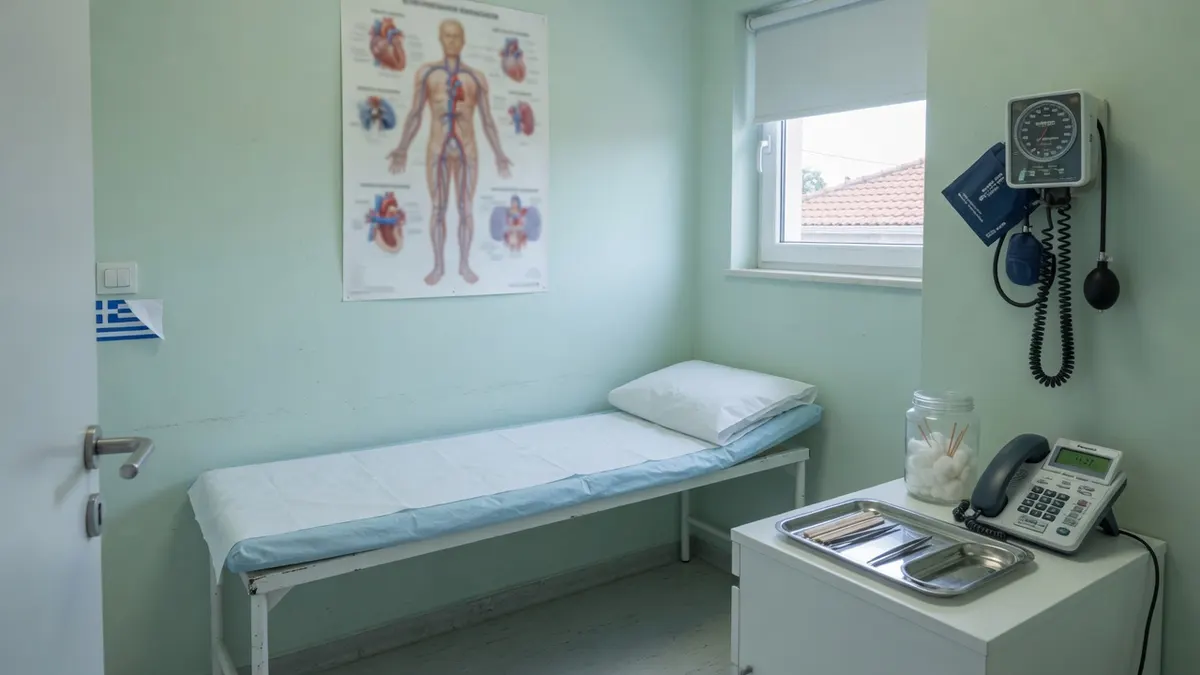
Missed calls at a medical practice at opening
Quick summary
- The phone is busiest when you unlock the door, and the receptionist already has a line at the glass.
- The calls nobody answers are repeat prescriptions, appointment requests and results — not a clinical decision on the line.
- Some hang up and walk in. Some hang up and go without the tablets. A few mention chest pain to a machine.
- The voicemail box keeps the calm messages. The people who needed a person rarely leave one.
- An assistant answers every line at once, takes the request, and puts chest pain onto a named phone.
- Count unanswered calls by hour from the provider first. Do not judge the morning by the voicemail box.
TL;DR
When you unlock the door, the receptionist is taking names at the desk and you are with the first patient. The phone rings with bookings, repeat prescriptions, and people asking whether their blood tests are back. The receptionist can speak to one caller. The others hang up, walk in, or reach a machine. An assistant answers every line at once, takes those requests, and never reads a result. It writes down what the caller said. Chest pain, trouble breathing, or a baby who is not right ring a named phone, not an inbox.
Key takeaways
- Ask the telephony provider for unanswered and abandoned calls by hour, for four weeks, before you change a forward.
- Treat the first ninety minutes after you open as its own window. That is when this practice cannot pick up.
- Do not count the problem from the voicemail box. People asking for results, and people with chest pain, rarely leave a message.
- Forward after fifteen to twenty seconds while someone is at the desk, so walk-ins still get a person at the glass.
- Point chest pain, trouble breathing, and a baby who is not right at a phone a person holds, never at an evening email.
- Pull the same provider file after a month. The number that must move is unanswered calls in that opening window.
When you unlock the door
You turn the lock. At the glass the receptionist is already writing a name, an AMKA, which doctor, whether last Thursday’s papers came with them. You are in the consulting room. Your hands are on the first examination. The phone starts.
The people on the line want ordinary things. A time this week. The blood-pressure tablets, three left in the box. Bloods taken on Thursday, it is Monday, are they back. A certificate for work. How a referral for the scan works here. A parent, and the name that belongs on the record is the child’s.
The receptionist can speak to one of them. Everyone else hears the ring, or hold music, or a machine. Two people already have their hands full. Callers do not wait.
What the people who are not answered do
Some hang up and come to the glass. They bring the empty box. The receptionist then types the same request standing up, and the next four calls ring behind them. The people who needed a visit you already booked now wait behind someone who only came because nobody picked up.
Some hang up and do not come. The parent on a shift, the older patient without a lift, the person who already used their one phone break — they wait. A repeat that would have taken two minutes at 08:12 becomes a Thursday problem. They go without the tablets, or they borrow, or they send a relative later in the week. None of that shows in a voicemail count.
Some ring again about the bloods, angrier. People who cannot learn whether their tests are back do not become calmer overnight. They try at lunch. They ask a relative to try. They arrive unannounced and stand in the queue for the doctor who has not started. The request is still the same request. They asked it at the desk instead.
A few stay on long enough to say they have pain in the chest. They say it to a person who is already mid-sentence with a walk-in, or they say it to a machine that will be heard after the morning list has started. The assistant is not an emergency service and must not sound like one. It still has to answer that line, write down what they said, and ring a phone a person actually holds.
The walk-in that started on the telephone
Count, for one week, the people at the glass who open with “I couldn’t get through.” Those people are the missed calls, standing in the building.
The person with the empty tablet box at the hatch is here for a repeat that should have been taken at 08:12. The person asking whether the bloods are back, standing in the queue for a doctor who has not started, is here for a results request that should have been a note on that doctor’s list. The parent with a hot child who could not get through and came anyway has not been seen yet. They have been added to a waiting room you did not plan.
A new patient who could not get through may not come to the glass at all. They try the next internist or paediatrician in the area. You never see them. Existing patients come back as walk-ins. A new patient often does not come back at all.
The empty box and the Thursday gap
A repeat request is most of the volume on a settled list. At the moment of the call it is clerical. The patient already has the item. You already decided it could be repeated.
When nobody takes that call, two things happen. The person who can walk in brings the box to the glass, and the receptionist types the same request between two other conversations. The person who cannot walk in waits. In Greece the next step is usually an e-prescription that the patient collects at a pharmacy. If nobody took the request until 11:00, the box is still empty at lunch.
The assistant takes the name as they say it, the item as they named it, and the pharmacy, and it reads them back. It does not issue the e-prescription. It does not say they are due or they are early. A new item — “can I also have something for the cough?” — is a request for you, not a line on the same form.
The pharmacy that sent them back is the same job. They ring, nobody answers, they come to the glass with the bag. Take the name, the item, and the reason they were sent back, in their words.
Results that wait
The bloods were taken on Thursday. It is Monday. They want to know. If nobody picks up, they ring again, or they walk in, or a relative tries at lunch.
Do not let the assistant read a result, including one marked normal, including whether the result is back. Take the name, the date of birth or the AMKA, which tests they mean, and a number to call back on. A person from the practice rings them.
If they ask “is it anything to worry about?” the assistant says it cannot tell. “Probably fine” is advice. Take the request now, while they are on the line, rather than after they have come to the building to ask the same question at the glass.
The voicemail box is the wrong count
The person who will leave a message is often the person whose certificate can wait until 11:00. The person who will not is the person whose child is hot, whose box is empty, or whose chest is tight.
Partners who count only the messages under-count the morning and mis-read the mix. They look at seven messages and conclude the telephone is a bit busy. The provider’s log shows twenty-five abandoned calls in the same window, including the one that lasted eight seconds and said nothing. An eight-second call is not nothing. It is someone who needed a person and did not get one.
Stop using the box as a dashboard. Use the log. Split the first ninety minutes after you open from the rest of the day. Other hours matter — lunch, the gap after the last patient — but the opening window is when two people already have their hands full and callers do not wait.
If you closed for August, or the receptionist left at two and you are still with a patient, the phone still rings. People who can wait will speak after the beep. The rest hang up.
Phrases that must not wait for a machine
You keep a short list of phrases that stop the conversation and reach a human immediately. Chest pain. Trouble breathing. A baby who is not right. Whatever else you decide for this practice.
The list has to be short, or it fires on everything and people start ignoring it. And it has to go to a phone, not to an email someone opens after the last patient.
The assistant does not tell the caller what the symptom means, or to wait, or to go anywhere. It captures what they said and it rings the number you named.
Do not point those phrases at a flag on a screen. Flags are for results requests and certificates. Those words ring a person.
If the same phrase is spoken after you have locked the door, the assistant says the practice is closed and reads the emergency wording you wrote. It still rings the on-call phone you named, so you know the call happened. Write that wording yourself. It can name the emergency number you want named.
Two forwards, one list of phrases
If the assistant is only on the line after twenty seconds, a chest-pain caller still has to wait those twenty seconds of ring. That is acceptable during desk hours, when a human might pick up and when you want the glass to keep the easy calls. It is not acceptable as the only path at 07:50, or at 19:40, or on a Saturday when the door is locked.
Configure two forwards. Desk hours: a short delay, then the assistant, with the phrases ringing the duty mobile the moment they are heard. Closed hours: immediate forward, same phrases, same phone, plus a spoken line that uses the emergency wording you wrote. Do not build a third path that asks them to leave a message so someone can flag it later. Flags are for cholesterol enquiries.
The assistant is not an emergency service. It must not give first-aid instructions, must not say whether this is “probably indigestion”, and must not book a routine time over the phrase. It captures, it rings the human, it stays on the line if you have configured it to until that human answers.
A home-visit request after hours is the same split. The assistant can take the name, the address, the reason in the caller’s words, and the callback number. It cannot decide that you will come after lunch.
After the last patient
Many Greek practices run a second burst in the afternoon or evening, when people leave work. The receptionist may already have gone. You may still be with the last patient. Results that were filed at 17:10. Repeats people remembered on the way home. A relative ringing about an older patient who has become breathless since tea.
If they reach a machine after 19:00, you hear the breathless caller at 08:05. Immediate forward after the door is locked, with the same short phrase list on a phone, is the minimum. The assistant can still take a repeat request at 19:20 and park it for authorisation in the morning. It can still record a results enquiry. Do not leave that breathless caller until tomorrow with nobody alerted.
If you are closed, the spoken line about the emergency number has to be early in the call, not after a minute of capture. Capture still happens. The emergency instruction happens first when the phrase is heard.
Another person at the desk
Hire if the paperwork is drowning you. Hire if the glass is unsafe. Do not hire thinking a second salary will take five rings at once. Two people take two conversations. Callers three, four and five still hear the tone that makes them walk in or go without.
When the words change — chest pain, a baby, trouble breathing — the assistant rings the person you named. It is not a second nurse.
Keep the person you have at the glass. Give them fewer ringing lights and fewer empty boxes waved through the window.
Certificates and the other morning overflow
A large part of the opening hour is practice policy. How do I get a certificate for last week. Do you write the referral here or do I need a paper. What do I bring the first time. Are you taking people from this area.
When nobody picks up, those callers also come to the glass, often with the form in their hand. The receptionist then answers the policy question standing up, and the next repeat rings behind them.
Give the assistant your own sentences for those questions, so the call finishes on the line. “We write certificates only for patients we have seen” is a practice rule. “You probably do not need a note for three days” is advice. It does not belong in the assistant’s mouth.
A parent calling about a child must leave the child’s name, not only the parent’s. If that call is missed and they walk in, the desk has to start again, and the record is easy to attach to the wrong person.
How you count it honestly
- Four weeks of unanswered and abandoned calls, by hour, from the provider. Save the file.
- Forward on no-answer during desk hours; immediate when the door is locked.
- Repeat capture and results-request capture on from the first morning. Booking only for the types you already trust the desk to place.
- Escalation phrases, short, on a phone that is held by a named role, not by an inbox.
- Tags: repeat, results, appointment, escalation. Without tags the weekly review is a pile of names.
- The same provider file, four weeks later. The number that must move is unanswered calls in the first ninety minutes after you open.
If that number has not moved, you are looking at a forward that is too long, a desk that is still telling people to “just ring back”, or a results rule that is sending callers to a human who then puts them on hold. Fix the path. Do not add a greeting.
What you configure first
The opening-hour forward. Repeat capture with read-back. The results refusal, including “normal” and “are they back”. The three phrases that ring a phone. A note the partners can see: overnight, a breathless caller must not wait on a machine until morning.
A forward after fifteen to twenty seconds while the desk is staffed, and an immediate forward when the door is locked.
Tell the doctors what the assistant will not do, in writing, before the first live morning. Agree the chest-pain and results rules before a patient hears a clinical word from a voice that cannot explain it.
Rates are published once, on the pricing section of the home page.
AI receptionist, in-house staff, or a call centre
| CITT | In-house | Call centre | |
|---|---|---|---|
| The opening queue | Everyone answered at once | One call at a time | Depends on who is logged in |
| Repeat request that would have hung up | Taken and read back | Only if they stayed on hold | Taken if a seat is free |
| Results enquiry | Request recorded, never read out | Per practice policy | Not permitted |
| Chest pain on a ringing line | Rings a named phone | If someone picked up | Script, then transfer |
| Walk-ins who could not get through | Fewer — the request was already taken | The morning crowd at the glass | Still happen if hold time is long |
| After the last patient | Same capture, same phrases on a phone | A machine, if you left one on | At a surcharge |
What the opening window costs when people hang up
Worked from these assumptions — change any of them and the answer changes:
- 60 inbound calls in the first ninety minutes after you open, one person on the desk. Put your own window and your own count in.
- About 25 of those 60 wait long enough to hang up or to reach a machine. Use your own number.
- Of those 25, most are repeats, appointment requests, or results. Use your own split.
- This example assumes 6 of the people who wanted a repeat or a time do not ring back the same day and later come to the glass. Replace that 6 with your own figure.
- Each of those desk visits takes about 6 minutes of reception time. Replace with your own figure.
- The person on the desk is paid roughly €11 an hour including employer costs. Use your own figure.
- 6 walk-ins × 6 minutes = 36 minutes of extra desk work the same morning.
- The people who asked about results and did not get through will ring again or arrive. Neither shows in the voicemail box.
- Over 5 mornings, 5 × 36 minutes = 3 hours a week of avoidable pile-up at the glass.
- Over 46 weeks — 46 × 3 hours = 138 hours.
- 138 × €11 = about €1,520 a year in desk time.
About 138 hours a year of reception time created by calls that already happened, roughly €1,520 at €11/hour — before counting anyone who simply went without the tablets.
What it costs
CITT is pay as you go: no packages, no minimum, no contract. The current rates — the monthly fee per number and the per-minute rate — are on the pricing section of the home page, which is the only place they are published.
Frequently asked questions
How do we measure the real miss rate?
Ask the telephony provider for unanswered and abandoned calls by hour, for the last four weeks, before you change anything. Compare that file to the voicemail box. The gap is the actual loss: people who wanted a repeat, a time, or a result and did not stay for the beep.
Is this not just a staffing problem at opening?
Extra hands help the glass. They do not change the fact that five calls can ring while two people are already speaking. The opening problem is several clerical requests at the same minute — take a repeat, take a booking, take a results request — and one more salary adds one more conversation.
What if someone rings about chest pain and the desk is empty?
That call must not wait on a machine. The assistant answers, hears the phrase, and rings the number you named. It does not file a note for later. If you are closed, it still says the wording you wrote about the emergency number, and it still alerts the phone you chose so the practice knows the call happened.
Will repeats get authorised without a doctor?
No. Capture is not authorisation. The assistant takes the name, the item as the patient said it, and the pharmacy, reads them back, and puts the request on the same path a receptionist would have used. Early, late, or “can I also have something for the cough” still belongs to a person who can see the record.
Do we lose the people who prefer a person at the desk?
Not if you forward on no-answer rather than immediately. Fifteen to twenty seconds keeps the calls the desk can take. Walk-ins still speak to whoever is at the glass. The assistant takes the overflow that used to become a second visit or a silent gap in the tablets.
How soon will we know it worked?
Four weeks, on the same unanswered-by-hour report you pulled at the start. If the first ninety minutes after opening have not come down, the forward is too long, or the desk is still sending people back to the phone for tasks the assistant already finished.