Book moving surveys without pricing a photo
Quick summary
- The assistant reads the book before it holds a date, so a Saturday truck is never offered from a living-room photo.
- A survey and a job already priced are different bookings. Get that wrong and a van sits on a flat nobody has walked.
- Date, lift or stairs, packing first. Then the book. A picture is not volume.
- Anything that sounds like a figure, a piano in the lift, or “two men can do it” stays a callback after the survey.
- If the assistant cannot read the book, it takes a callback. It does not guess a free truck.
- The assistant texts the survey time, the type, and who must be there with the key.
TL;DR
The sofa is on the stairs. A caller who wants a date will not wait for a callback just to learn whether the first of the month is free. An assistant can hold those dates if it reads the book first, treats a survey as different from a Saturday truck, and asks lift and packing before it places anything. A photo is not a job type. If the book cannot be reached, the assistant does not guess. It takes the request and says so. The assistant texts the time, the type, and who must open.
Key takeaways
- Give the assistant the types and their real durations before you let it book — survey, packing-plus-move, Saturday truck, island hold.
- Mark month-end weeks and island ferries in the same book it reads, including August.
- Test a move on an existing survey and on a priced job, separately, before you test a new date.
- Turn on the SMS at the moment of booking, with who must be there for that type.
- If the book cannot be reached, the only answer is a callback.
- Check the first fifty bookings by hand. That is when you find the Saturday that was a photo put into a truck.

When someone wants a date and you are on the stairs
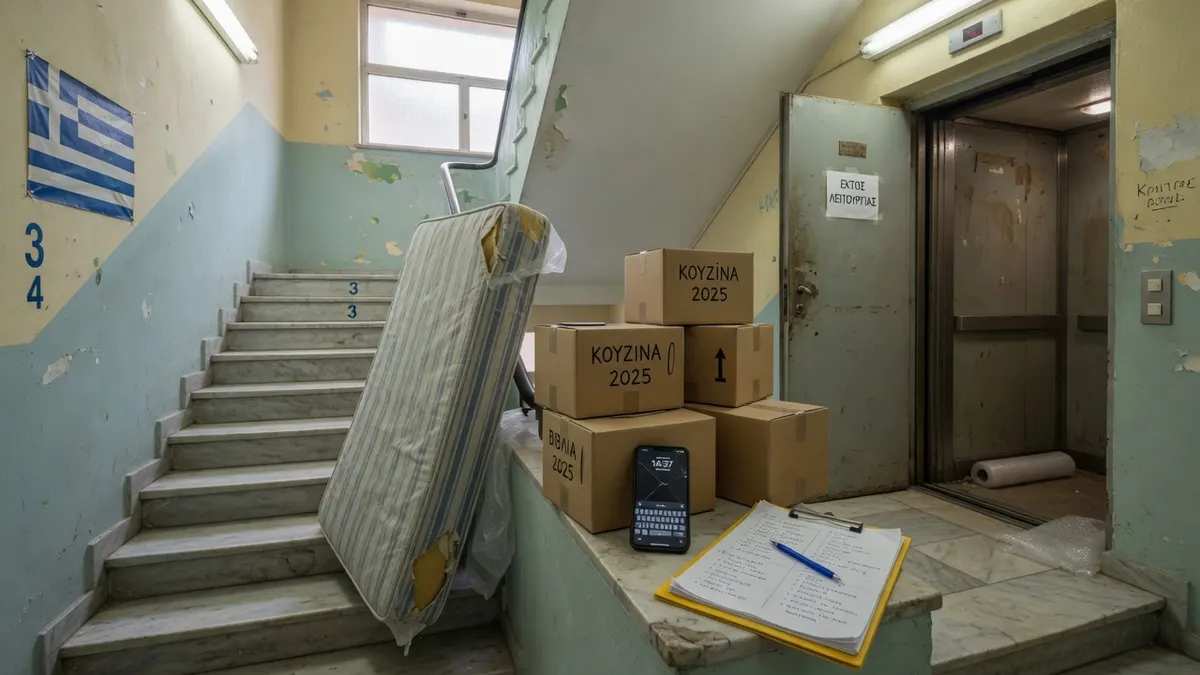
One of you has a sofa on the third landing. The other is waiting on a lift. The phone rings.
Someone wants the first of the month held. Someone wants Thursday evening for a survey. Someone wants Saturday for a van, packing still in the wardrobes. You cannot pick up. The sofa is still on its side.
Those three callers are asking for a time. They are not asking for a cubic metre. If the assistant treats them as one free Saturday, the unpriced flat lands on a truck, and the packing is still in drawers when you arrive.
You put the assistant on the van number with a forward-on-no-answer rule. It reads the book you already use. It offers only dates that are actually free for that type.
Types that cannot share a Saturday
Survey. You in the rooms. Evening often, because people work. Duration you actually use — write it in. The assistant does not shorten it to fit a gap between two jobs.
Priced job. Truck, crew, a date already walked. Holding the first of the month is this type only after volume. Not before.
Packing-plus-move. Still in the wardrobes. Extra hours, extra hands. Not a van for boxes in the hall. If you do not mark it, Saturday fills with jobs that are still in drawers.
Walk-up. Fourth floor, no lift. Different duration from a ground-floor shop. The assistant asks the floor. It does not say how many extra men.
Island hold. Ferry, a week you are already on a coast. Mark those weeks. A hold that exists only in the caller’s head is a truck on the wrong island.
If you do not mark the types, the assistant will fill the last week of the month with whatever sounded like “a van”. You will arrive at a fourth floor with a two-person crew, or at a packed shop with a packing team.
Lift and packing before the diary
The diary is not the first question. Date, from and to, lift or stairs, packing done or not — then the book.
No lift, fourth floor: write it. Lift reserved for another tenant that morning: write it. The assistant does not say “then we use the stairs” as if that were free. Stairs instead of a lift is a different job. The survey prices it. The booking records it.
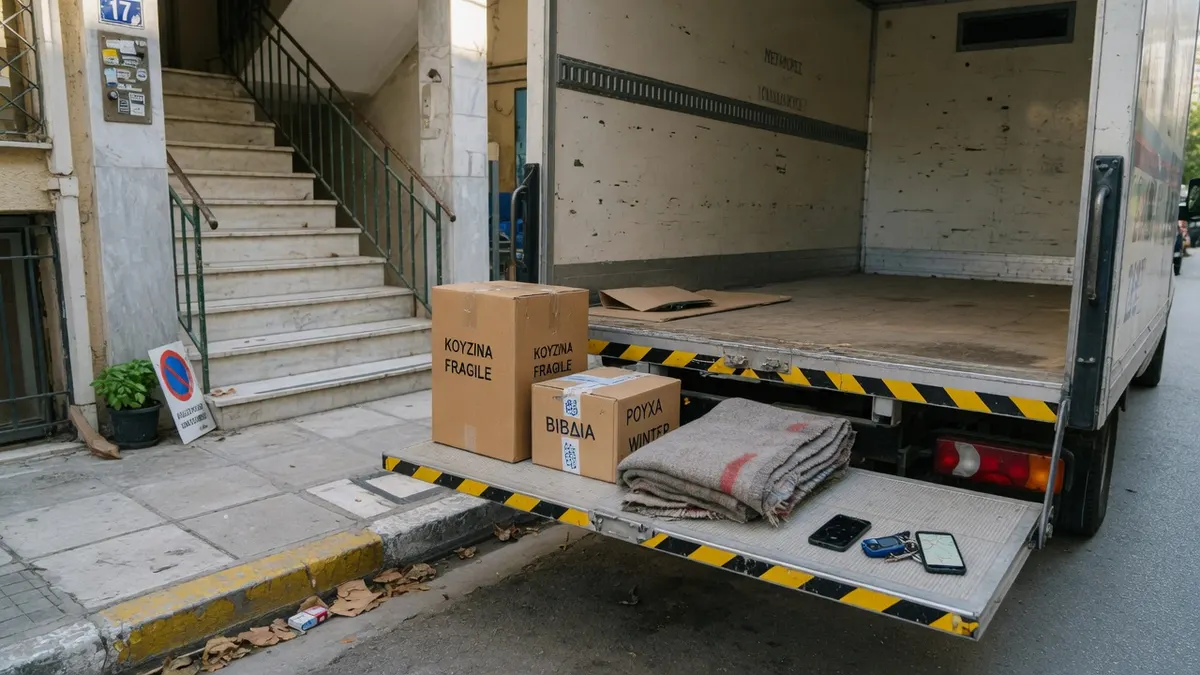
Packing still in wardrobes is not a detail for the morning of the job. It is the type. The SMS should say packing, so they do not expect a two-hour van.
If they ask “how much from the photo?”, that is not a new visit type. It is a refusal. The assistant books the survey they actually need, and flags the figure. It does not invent a cubic metre to make the hold feel complete.
What it must not place in the book
A price from a picture. A range. “Flats like that are usually…” Those are not types. The visit is a survey. The figure stays off the line.
A piano that fits in the lift. A “two men can do a fourth floor”. The assistant takes that there is a piano, which floor, lift or not. The survey decides access.
A street permit as a promised fact. The assistant flags access. It does not tell them which form to file, and it does not say the truck can sit on a pedestrian street for two hours.
A same-day truck into an island week you closed. August dates belong in the book before you let it offer anything in that month.
If the book cannot be reached, the only honest sentence is a callback. A Saturday that exists only in the caller’s head is how you get keys at the door and both trucks still on a landing.
Moving a time without doubling it
“Move Thursday” is not enough. Thursday may hold a survey and a priced job for the same name.
The assistant asks which visit, then cancels, then books. If it books first, Thursday stays taken by their own survey and they are told the time is not free. That is how you lose an hour and keep the complaint.
Test this on a survey and on a priced job, separately, before you let it touch a new date. The first fifty bookings are where you find the photo that landed on a truck.
Cancellations go back into the book the same way. A survey freed on Wednesday afternoon can take a first-of-the-month that rang at nine. A cancellation you only hear when nobody opens is an hour gone.
Who must be there
The SMS is not a courtesy. It is how the key holder knows the hour.
For a survey: someone in the flat who can open every room, including the basement they forgot. For a job: keys at the time you wrote, and a number that works that morning. For packing: that the wardrobes are the job, not a surprise.
The assistant sends this in the language of the call — 70+ languages. A Greek confirmation to someone who booked in English is how a survey misses the time and decides the firm cannot handle them.
Remind them again on the schedule you set. Neither text needs anyone in the cab to type.
Month-end, Saturday, and the book you actually work from
Connect the book you already use. Do not keep a paper pad for trucks and a phone calendar for surveys. The assistant reads one week. If a month-end Saturday is only in your head, it will offer the first while both trucks are already out.
Mark island weeks. Mark packing crews. Mark the week you refuse new jobs. An assistant that can book is only useful if the closed days are in the same place as the open ones.
A quiet November Tuesday is useful for testing the greeting. It is not the test of whether a photo can still land on a Saturday truck. Check month-end. Check Saturdays.
How CITT handles the booking
- Your number stays on the van. Forward on no-answer. A call you pick up never leaves the firm. See pricing.
- It asks date, lift and packing, then looks at the book. Not the other way around.
- It offers only types you marked, with the duration you wrote.
- It refuses a photo-price and still books the survey they need.
- It writes the time into the same calendar the office already uses, and texts who must open.
- If the book is unreachable, it takes a callback. It does not guess.
Rates live on the pricing section of the home page. They are not repeated here.
What you set first
Enter the types: survey, priced job, packing-plus-move, walk-up, island hold. Real durations. Who must be there for each.
Write the sentence that forbids a figure from a picture. Write the same-day flags: keys tomorrow, piano, Saturday already full, island with no ferry.
Mark month-end weeks and Saturday load. Test a move on a survey and on a priced job. Turn the SMS on at the moment of booking. Then check the first fifty by hand.
A truck the office cannot send is worse than a callback. Put that in the notes, in those words, if you have to.
AI receptionist, in-house staff, or a call centre
| CITT | In-house | Call centre | |
|---|---|---|---|
| Reads the book before holding a date | Yes, the book the office works from | Yes | Usually not — takes a message |
| Books evenings and Saturday surveys | Yes, if you marked them | No — already on a walk-up | Sometimes |
| Treats a survey as different from a truck day | If you marked the two types | Yes | Rarely sees the week |
| Starts with date, lift and packing | Yes — before it looks at a figure | Yes | Often jumps to a range |
| Books a photo-price | Never — volume after the survey | The crew does, after the rooms | Sometimes books “a quote from pictures” |
| Sends the confirmation and who must open | Automatically, by SMS | If they remember | Sometimes |
What a month of empty surveys costs
Worked from these assumptions — change any of them and the answer changes:
- Two trucks. About 28 booked surveys a month, plus jobs already priced.
- An empty survey hour is not given to someone else the same day.
- About 12% of booked surveys arrive with nobody home, or the packing story has changed. Check your own figure. Firms vary.
- Recoverable value of a used survey hour, €70. Put your own figure in. A walk-up survey and a ground-floor shop are not the same.
- A reminder that names who must be there cuts empty surveys by a third. Challenge this first.
- 28 surveys × 12% = about 3 empty surveys a month.
- 3 × €70 = €210 of reserved time sitting empty.
- A third avoided returns about €70 a month.
- Over 11 working months — 11 × €70.
Roughly €770 a year, from a text that names who opens, not only the time.
What it costs
CITT is pay as you go: no packages, no minimum, no contract. The current rates — the monthly fee per number and the per-minute rate — are on the pricing section of the home page, which is the only place they are published.
Frequently asked questions
Can it hold the first of the month while we are on the stairs?
It reads the same book the office works from and checks the date before holding it. A Saturday you have closed because both trucks are out, or because the other crew is already on a walk-up, is never offered as a job, if you marked it. Surveys can still be offered that week in evenings you marked. If the assistant cannot reach the book at that moment, it does not guess. It takes the request as a callback and says so. A truck the office has no record of is worse than no truck. The client waits with keys and nobody is free.
What about someone moving an existing survey?
The assistant asks date, from and to first, then the name on the file, and treats the move as one change. Handled as cancel, then book, Thursday is still taken by their own survey, and they are told that time is not free. A client who has a survey and a priced job on the same phone must say which visit is moving.
Will it book a time to price the living-room photo?
It will book a survey, if you allow that type. It will not book a session in which the assistant itself names a figure from a picture. Volume is after someone has walked the rooms. The price comes from the survey — a person, not the voice on the phone.
Should it hold a Saturday van against any free hour?
A Saturday truck is a job day, not a survey hour. Mark those days. Packing still in the wardrobes is packing plus a move, not a van for boxes in the hall. The assistant takes lift or stairs, packing done or not, and offers only the kind of visit you marked. It does not promise the first of the month from a list of rooms.
Who sends the confirmation?
The assistant, by SMS, in the language of the conversation, at the moment of booking, including who must be there with the key. The reminder goes out ahead of the time on the schedule you set. Neither requires anyone in the cab to type a number.
Can clients cancel through it too?
Yes, and you should let them, especially on surveys in the last week of the month. A cancellation the office hears about the day before is a slot that can go to a date that still needs a walk. The same cancellation arriving as a no-show is an hour gone. Cancellations are written back to the book the same way bookings are.