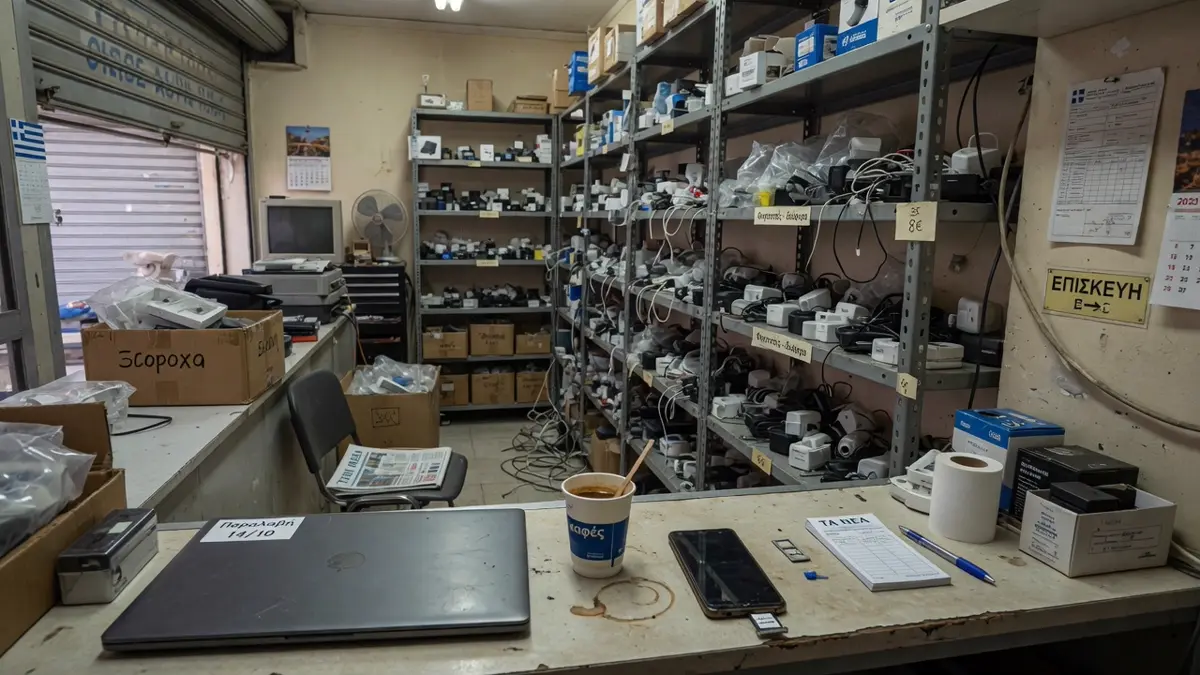
Book drop-offs and on-site visits at an IT shop
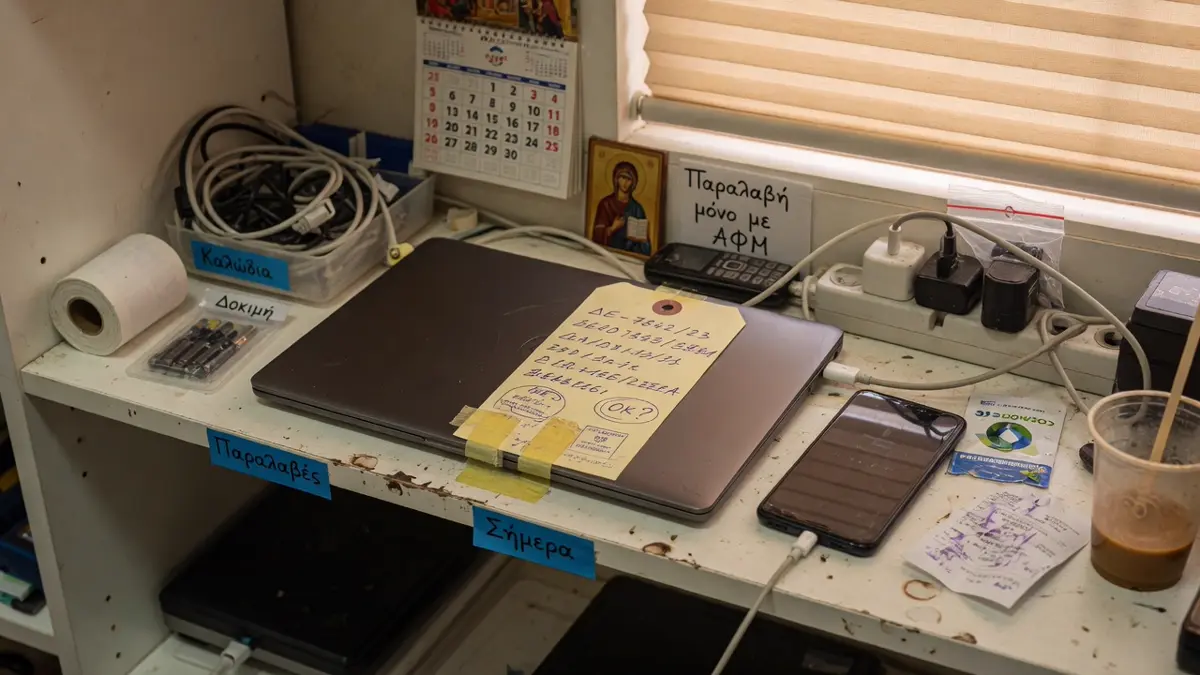
Quick summary
- Drop-off, on-site, or already with us first. Those are three jobs, not three times on one book.
- A drop-off needs someone at the counter. A free bench hour is not a window if you are already in the van.
- An on-site holds the van. It does not belong on the bench book.
- A move is one change: release Thursday’s drop-off, then place the new window, or they are told their own hour is taken.
- Mark Saturday as pickup only if that is how you run it. A new drop-off is not a collect.
- The SMS goes out after the booking is in the book, in the language of the call.
TL;DR
Someone at the bench has both hands in a chassis. A caller wants to drop a laptop, wants you at their office, or is asking about a machine already on the shelf. Those are three jobs. The assistant asks which of the three it is, then books only against the book that matches — a counter window for a drop-off, van hours for an on-site. It will not name a fault. It will not quote a repair. On a status call it reads only what you marked. A move is one change. The confirmation goes out by SMS after the booking exists.
Key takeaways
- Make drop-off, on-site or already with us the first question, and give it two books. Do not offer a van hour from the bench diary.
- A drop-off needs someone at the counter. Do not offer a window if you have already left in the van.
- Tell it never to name a fault, or to speak a repair price, from a phone description.
- Test a move on a name who already has Thursday at 11:00. Watch whether their own window blocks the new one.
- Mark Saturday pickup separately from a new drop-off. Offer remote only when you actually run it, and never on a machine that will not power.
- Turn SMS confirmation on the same morning you turn booking on. Read the first thirty tickets by hand.
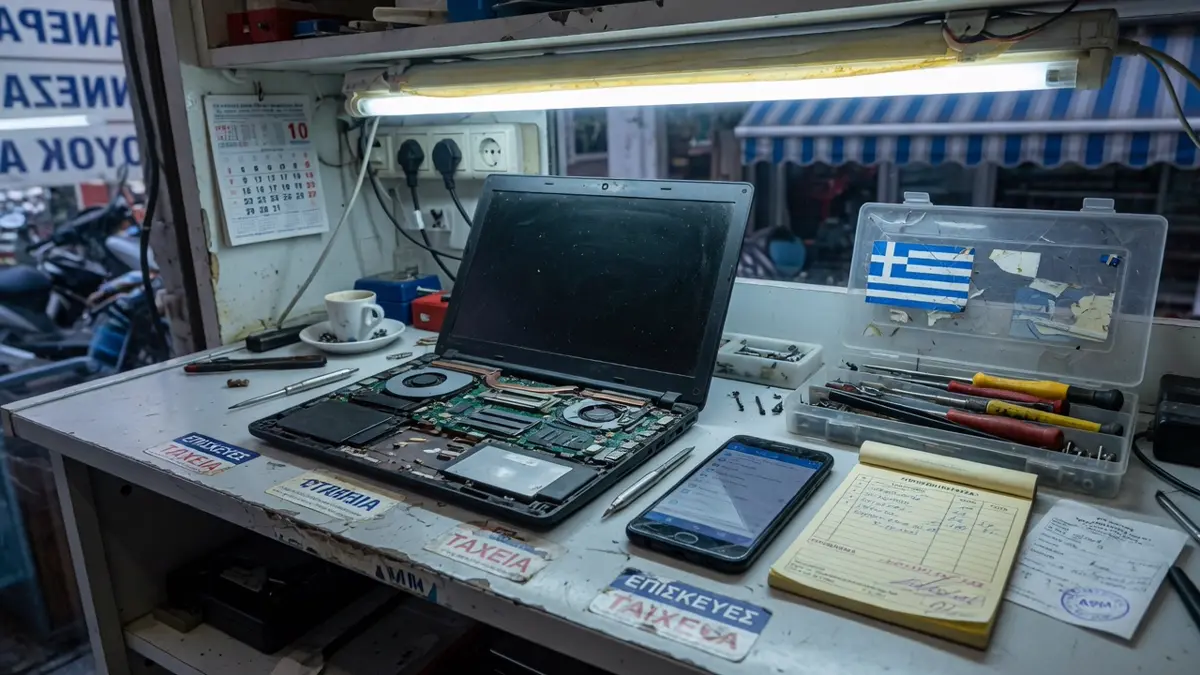
Three jobs, one number
The number on the glass, the Google listing and the last invoice is one number. A caller who wants to drop a Dell this afternoon and a caller who wants you at the office both dial it. Before anyone says yes to a time, the assistant has to know which job this is.
A drop-off holds a pair of hands at the counter. The machine is not here yet. What you need on the ticket is a name, a phone number, what the device is, and what they see — will not power, screen, slow, will not print — in their words. Then a window when someone is actually in to take it. The work starts after you have looked.
An on-site holds the van, or the bag, and a window at their door. A cupboard server, a room that will not print, a shop till, a machine they will not carry down the stairs. It does not belong on the bench book.
A status call holds a ticket. Name on the ticket, day they left it, what the device looks like if two jobs share a surname. Then only what you marked. It is not a new window.
Those are three conversations. They do not use the same person, the same hours, or the same stretch of the morning. If the assistant treats every caller as a drop-off, an office spends three minutes being offered a counter window. If it treats every caller as a visit, the person with a laptop under their arm is asked for a street door code.
Late morning makes the split sharper. Your hands are inside a case. The screw must not fall into the board. Someone at the counter — if there is someone — has a customer in front of them. The phone on the wood rings.
Nobody at the bench can finish the booking by hand. Both hands are in the chassis. Taking a message and promising that someone will look at the book later is the job a tape already does. Finishing the call means the time it offers is free when they put the laptop on the counter, or when you stand at their door.
Read the matching book before you offer. Write the booking before you confirm. If that book cannot be reached, say so and take a callback. A time the caller was promised and the bench has never seen is worse than no booking.
What goes wrong when the book is one book
The failure is not “the phone rang”. The failure is a time that sounded finished and was not.
A caller is given today until 14:30 from the bench book. That hour is a van visit. They arrive with a Dell. The door is locked. You are in Kypseli with the bag open.
An office is given Thursday at 10:00 from the bench book. They wait at the street door. You are still inside a tower. The visit never leaves.
A second drop-off is booked for Papadopoulos on Tuesday. That machine has been on the shelf since Tuesday. They stand at the counter with a laptop you already have.
A remote hour is offered because the caller asked. The laptop will not power on. A remote session cannot start. You own the wasted window.
A caller wants to move Thursday at 11:00 to the afternoon. Handled as cancel-then-book, 11:00 is still in the book while the assistant looks for 15:00. They are told the afternoon is tight. Sometimes they are told their own morning is the reason. Then, if the new time fails, Thursday is gone as well, and they have dropped out of the book.
None of that is a missed call. It is a booking that should not have been spoken.
Drop-off, on-site, or already with us
The first question is the split the person at the counter already asks without thinking. Are you bringing it in, should we come to you, or is it already here? Then the facts for that job. Then the book that matches.
Drop-off. The machine is not here yet. Laptop, small desktop, charger, sometimes a printer they can lift. Name, number, device, what they see in their words. Then a window when someone is actually at the counter. Do not add a fault you have not seen. “It will not turn on” is what they see. It is not a board. It is not a charger.
On-site. Address, floor, who will be in, what they see. None of the PCs will print is still not a diagnosis. It is a reason to come. Check the van hours. Write it in. If only one of you does on-site, an afternoon visit can only go on that person’s hours.
Already with us. Name on the ticket, day they left it, what the device looks like if two jobs share a surname. Then only what you marked: still on the bench, waiting for a part, ready for pickup. If nothing is marked, the honest sentence is short: I do not have a status I can give you; I will leave a note so you can ring them. “Almost done” is a guess. Do not let the assistant say it.
A caller who wants remote help is another kind of job only if you actually offer it. Write it down. A machine that will not power on cannot take a remote session. The assistant must not offer one to be helpful.
The assistant may offer a time only when the type, the person and the length all match, and only after it has read the book you actually work from. A free bench hour is not a van window. A free van hour is not a pair of hands at the counter.
The bench and the van are two resources
In a one- or two-person shop the counter is empty most of the morning. You are inside a case, or you have the bag open at someone’s office. The person who would have taken the laptop is the person whose hands are busy.
Mark bench hours and van hours as two resources. If you are a one-person shop and you leave in the van, nobody is at the bench. Write it that way. An assistant that sees one open book will send you out while a chassis is still open, and the person who was told “today until 14:30” will stand at a locked door with a laptop.
If only one of you does on-site, do not treat the van as a pool. A free hour on the person who stays at the bench is not a visit.
Two drop-offs in the same window need the length you already use between them — the ticket, the look, the next machine on the counter. Stack them and the second person waits with a laptop while you are still writing the first name.
When the book cannot be reached, the answer is a callback, said plainly. The assistant does not hold a window it cannot see.
A cupboard server and a room that will not print are not the same length. Give it the types you already run, and last month’s real lengths, not a catalogue. Each type has a length and a book it may use. The assistant looks at the van book only after it knows which type this is.
If you do not do that work — a brand you never touch, a server you will not climb for, a recovery you do not take — say so, so it stops taking those bookings.
Saturday is pickup, or it is not
Saturday morning is its own mark. Plenty of you take a drop-off or a pickup then and do not take on-site. If Saturday is pickup only, say so. A caller who asks “are you open Saturday if I only want to collect?” wants to know whether it is worth crossing town. Yes until a time you set; no, Monday from 09:00; or yes for pickup, no for a new drop-off.
If they asked about Saturday pickup and the answer is Thursday at 16:00, the assistant answered a question they did not ask.
If Saturday takes a new drop-off, that window still needs someone at the counter. It is not an on-site just because it is Saturday. A visit belongs on the next van hour you actually run, which may be Tuesday.
August: if one of you is off, the list has to show it. The assistant will honour a list it can see. If the list is empty, it will offer the van on a day nobody can leave the bench.
Moving a window is not a new ticket
The caller already has a time. They are not making a new booking. They are changing one.
Handled as “cancel, then book”, Thursday at 11:00 is still in the book while the assistant looks for 15:00. The caller is told their preferred hour is taken — by a system looking at their own drop-off. Then, if the new time fails, Thursday is gone as well.
The order is: find the existing ticket, release it, offer two times that are actually free, place one, send the new confirmation. In that order.
A moved drop-off still needs someone at the counter. The afternoon is not the morning moved. You may already be in the van at 15:00. Confirm the bench hours still show a pair of hands.
A moved on-site still needs the van. Thursday’s office visit does not become Friday’s bench gap. If they want to move a visit and the office is only open in the morning, that is a fact for the note, not a reason to invent a door time.
A moved status question is not a move at all. Ready is a mark. If they want to collect on a different day, that is a pickup window, not a new look.
Test this before anything else. Pick a name who already has Thursday at 11:00 on a Dell. Ask the assistant to move it to the afternoon. Watch whether their own hour blocks them, and whether someone is actually at the counter at the new time.
After a move, the reminder goes to the new number and the new date, not the old ones. The old SMS must not still say 11:00.
Remote is its own job
If you offer remote help, mark it as its own type. It has a length. It needs a machine that still starts. It does not sit on the bench book and it does not sit on the van book.
A caller who says the laptop will not turn on is not asking for remote. The assistant must not offer a session to sound helpful. A session spoken on your number is a session they will sit down for.
If you do not offer remote, say so. Do not let fluency invent a login hour you do not run.
A password does not belong on the recording. Even when the booking is remote, the assistant should ask them to wait until they are on the session, or to bring it written down if they are coming in. It should not take the password as a string on the call.
What it must not place
It will not name a fault. A screen you have not seen is not a screen job. A board you have not opened is not a board job. “Probably the charger” said out loud is a promise the next person at the counter has to undo.
It will not invent a repair price. It can repeat the sentence you already say before you take a machine — the line on the wall, if you have one. A repair you have not opened does not have a price yet. Do not type a screen price or a board price into the notes. The assistant will say the number.
It will not put a drop-off on a van hour if you gave it two books. It will not say a laptop is ready, or that a charger is in the drawer, unless the ticket says so.
It will not promise the files. It will not walk anyone through a format, a BIOS reset, or a reinstall. It will not offer remote help on a machine that will not power on. It will not decide a warranty. It takes the make, the age if they know it, and books the look. You decide.
If they are unhappy about last week’s job, take the name and what they said. Do not offer to do it again from the phone. You look at the machine.
The text after the call
The assistant sends the SMS itself, in the language of the conversation — 70+ languages — after the diary entry exists in the matching book. For a drop-off it names the window and the device. For an on-site it names the window and the address. It does not name a ready time, a fault, or a repair price.
No entry, no message. A text for a counter window while you are already in Kypseli is worse than no text. They stand at the door. You own the locked shop.
A same-morning reminder helps a Saturday pickup more than a Tuesday on-site, because Saturday is when people decide whether it is worth crossing town. Where to park and that they should bring the charger can go in the same message. A diagnosis cannot. A price cannot.
Let callers cancel through the assistant. Write the cancel back to the matching book immediately. Freeing the counter does not free the van. Treat “I need to move it” as a change, not as a cancel plus a hope.
Look at the first thirty tickets by hand: type, person, length, and whether someone was actually at the counter. An on-site in the bench book, a drop-off against a van stretch, a second ticket for a laptop already on the shelf, a named board — any one of those will repeat until you correct the type.
What you turn on first
Start with the split, not with a menu.
- Drop-off, on-site or already with us as the first question, and two books — bench hours and van hours. Do not let it offer a visit from the bench diary.
- Four types only. A laptop drop-off. An office on-site, if you run the van. Saturday pickup, if you take it. One other published job you actually do — a printer they can lift, or a remote session on a machine that still starts, if that is you. Lengths from last month’s real book.
- The two bans. No named fault from a description. No repair price before someone has opened the machine. The sentence on the wall is the most it may repeat.
- How a drop-off works — window, who is at the counter, that they should bring the charger — and Saturday marked separately from a weekday visit.
- The change path, tested with a real name already in Thursday, on a named device.
- The SMS rule: after the booking exists in the matching book, never before, never with a ready time you have not marked.
- A failure sentence the assistant is not allowed to improve: if the diary cannot be reached, it says someone will call back. It does not hold a window it cannot see.
Leave diagnosis, repair figures, format advice, passwords, and “is it ready” as callbacks or ticket reads. Turn the SMS confirmation on the same morning you turn booking on. Turn the reminder on before the week is out.
When those four types have produced a week of bookings you would have been happy to have made yourself, add the next type. Do not add them all on day one.
Add opening hours, who is in, whether you close in August, where to park, how you mark a ticket ready.
Rates live on the pricing section of the home page. They are not repeated here.
AI receptionist, in-house staff, or a call centre
| CITT | In-house | Call centre | |
|---|---|---|---|
| First question on the shop number | Drop-off, on-site, or already here | Yes, if they heard the start | Often jumps to what time |
| Drop-off vs on-site | Two books, two kinds of time | Yes, if they are at the counter | Treats them as one booking |
| Status from the ticket | Reads only what you marked | Yes — they can see the bench | Guesses or takes a message |
| Van hour while a case is open | Next free stretch on the van book | Yes, they know they cannot leave | Books the bench gap anyway |
| Moves Thursday’s drop-off | One change, then a new SMS | Yes | Two messages, often |
| Saturday pickup only | Off-limits for a new drop-off | If they remember the split | Treats Saturday as one book |
| Sends the confirmation | SMS, after the booking exists | If they remember at the counter | Sometimes |
What empty drop-off windows cost when a cancel never reaches the book
Worked from these assumptions — change any of them and the answer changes:
- One person on the bench, about 12 drop-off windows a week. Put your own weekly count in.
- About 3 of those 12 are empty: a no-show, or a cancel that never reached the book. Check your own week.
- An empty Thursday window is not filled the same morning.
- Time for one of those windows — the counter, the look — is about €70 in this example. Use your own figure. This is the number to change first.
- A Wednesday-night cancel written back into the book lets you offer Thursday to the next person who asked to drop a laptop. This example assumes you would fill 1 of those 3. Change that if yours is lower.
- 3 empty drop-off windows × €70 = €210 of Thursday that bought nothing.
- Writing the cancel back on Wednesday night is what frees that window for the next caller with a laptop under their arm.
- Over 46 weeks, if nothing changes — 46 × €210. Put your own weeks in if you close in August.
- That is only the window. It does not count the van you sent out while a case was still open, or the person who stood at a locked door.
About €9,660 a year in windows nobody used — before the laptop that never found a free hour. Change the €70 and the three empties before you trust it.
What it costs
CITT is pay as you go: no packages, no minimum, no contract. The current rates — the monthly fee per number and the per-minute rate — are on the pricing section of the home page, which is the only place they are published.
Frequently asked questions
Will it put an on-site on a bench hour?
Not if you gave it two books. A drop-off needs someone at the counter. An on-site needs the van. The assistant asks drop-off, on-site or already with us first and only offers a stretch of time that matches that book. If the right diary cannot confirm the time, it takes a callback rather than sending you out while a chassis is still open.
Can it book a drop-off if nobody will be at the counter?
Only when the bench hours you marked say someone is in. If you are a one-person shop and you leave in the van, the counter is empty. Booking “today until 14:30” against that stretch is how someone stands at a locked door with a laptop. If the book cannot confirm a pair of hands at the counter, the assistant takes a later window or a callback.
How should it move Thursday’s drop-off?
As one change. Find the ticket, release the window, then place a new time that is actually free for that job. If it cancels first and searches second, Thursday at 11:00 is still in the book and the caller is told their own hour is taken. Then, if the new time fails, Thursday is gone as well. Test this with a real name in the book before you let it book for real.
Should it book an on-site if they have not said what they see?
No. A room that will not print is not a cupboard server. A shop till is not “the internet is slow”. The assistant takes what they see, in their words, and only then looks at the van book. What they see is a reason to come, not a diagnosis. If you do not do that kind of visit, it should say so and stop.
Who sends the confirmation?
The assistant, by SMS, in the language of the call, and only after the booking exists in the matching book. A text that goes out before the van hours are checked is how you leave the bench with a case open. No booking in the diary, no text.
Can a caller cancel through it as well?
Yes, and you want them to. A Thursday drop-off you hear about on Wednesday evening is a window you can offer to the next person with a laptop. A Friday on-site released on Thursday is a van hour the next office can take. Write the cancel back to the same book the booking went into. A cancel that lives only in a transcript is a cancel the next caller cannot be offered.