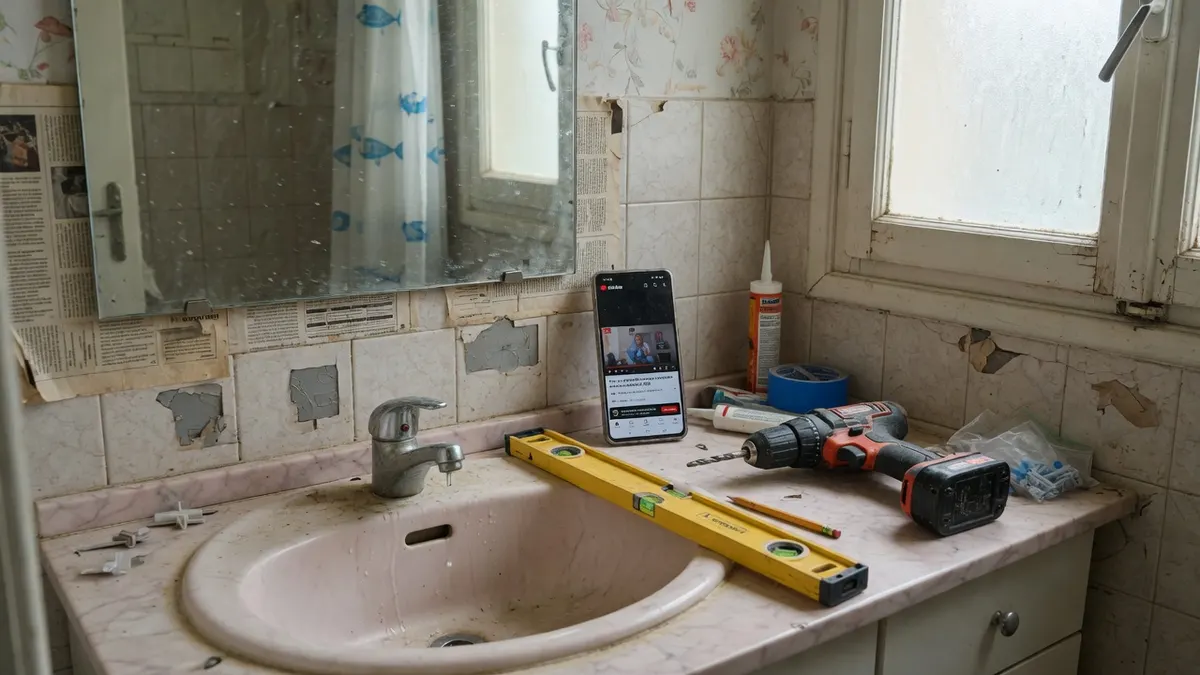
Bundle reminders and access chase for handymen
Quick summary
- You are on a step. Saturday's door and the fourth-floor tap still have to be chased.
- The list is a named address, a visit reminder, or a missing wall. Not a second opinion on a board.
- Every call starts with the address or the name on the job. If they do not recognise them, the call stops.
- It does not say how long you will be. Missing access is a yes or no. A consumer unit is still a refusal.
- If they ask you to reset the board, the assistant writes the question down and gives the electrician line.
- SMS does the first reminder. The voice call is for the door that has still not confirmed two days out.
TL;DR
You are on a step. Six small-job files still need someone at home and Saturday's bundle never confirmed the fourth-floor tap. Nobody is going to spend the afternoon ringing. An assistant works the list you give it: address or name on the job, one purpose. It asks whether someone will be in. It does not say what the hinge needs, whether they should reset the board, or when you will arrive. If they ask, it writes the question down and says the van will look at the door, not at the mains. It will not ring a neighbour about someone else's tap.
Key takeaways
- Build each list from your own jobs: address or name, the number on the file, and one purpose.
- Do not put a personal mobile on a door chase unless that number is the number on the file.
- Write the purpose as a reminder or a chase, not as a question about the board.
- If the client asks you to reset the mains, the assistant ends the chase purpose and gives the electrician line.
- Check the book before you speak a time. Do not read Saturday off last week's pad.
- Keep hinge prices and any board sequence off the script. You will look at the door, not at the consumer unit.
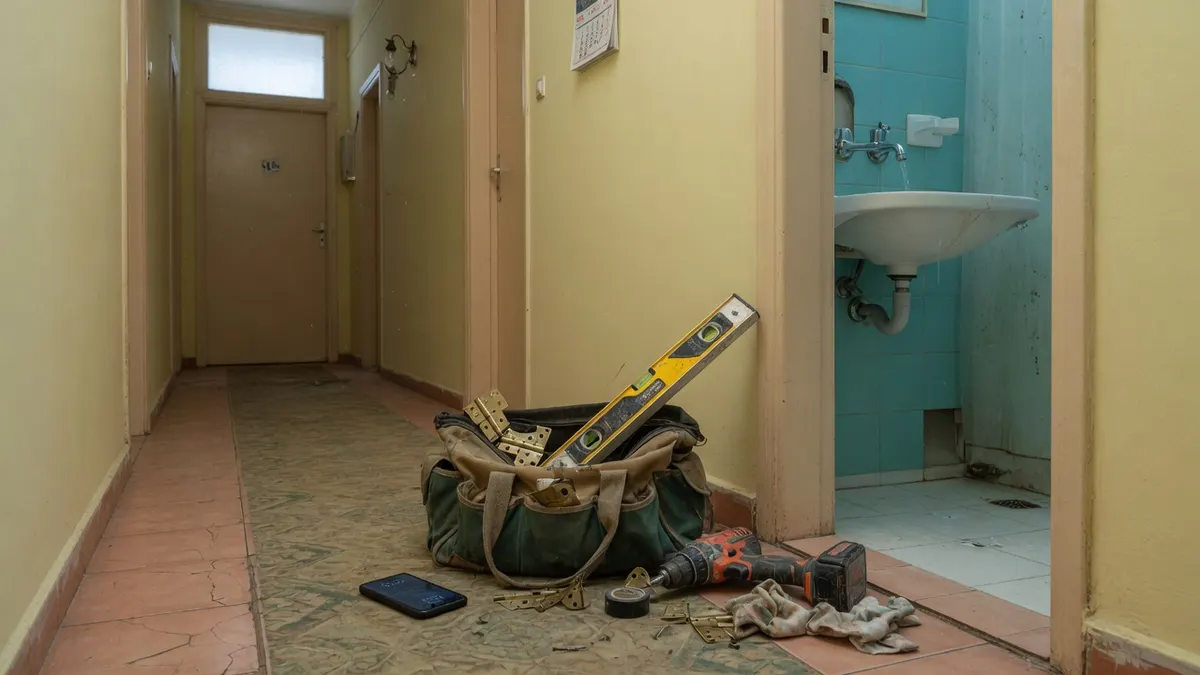
The lists on the dash while the shelf is still in your hands
The last screw is not in. Six small-job files still need someone at home. Saturday’s bundle never confirmed the fourth-floor tap. You are not going to spend the afternoon ringing.
That is the outbound problem on this van. Not a campaign. Not a hunt for new work. A list of people you already know, an address you have already written down, and nobody free to ring because both hands are on a step.
The person who would chase, if you have one, is under a tap. The phone still has to do the second chase: will someone be in, will the wall be clear, we still have Saturday for the door. Those calls do not happen. When someone does make them in a hurry, they reach a neighbour, or they start answering whether to reset the board so the file can move.
One purpose per number
Each row on the list is one job and one reason.
Access. Someone in the flat, wall clear, hall free for the door. Yes or no. A new time only if the book has one.
Bundle. Door on the third, tap on the fourth, still both on Saturday. Confirm both floors.
Reminder. We still have Saturday at 10:30 for the shelf. Will the wall be clear.
Not on this list: a cold call to see whether they want silicone too. Not a “how is the door today”. Not a neighbour’s mobile you copied off the intercom. Not a board you decided to add.
If the person who answers does not recognise the address or the name, the call stops. You do not brief a neighbour about a tap.
What the chase is not allowed to become
They will ask you to reset the board while you are there. They will ask how long you will be on Saturday. They will mention that the hinge still sticks and ask for a price from last week’s photo.
The assistant writes those questions down and ends the chase purpose. It does not answer them to be helpful. A recorded “we’ll look at the main” on an outbound call is still yours. A recorded “the door looks like a washer job from the photo” is a sentence you then spend the visit taking back.
Missing access is a yes or no. What the hinge needs is a callback. How long is a question you answer when you know the street that morning. A board is still a refusal.
Do not put a reset sequence on the outbound script “in case they ask”. It will be said.
Landlords and the wrong mobile
A bundle in a rental often has the tenant’s number and the landlord’s. Only the number on the file gets the chase.
A shelf in a lived-in flat has the person who will be home. Do not ring a neighbour to ask whether the wall is clear.
A wardrobe the landlord ordered has the landlord. Do not ring a guest who is not on the job.
The assistant opens with the van name and the address. If they do not recognise it, goodbye. That is how a neighbour does not hear that the third-floor door is in the book.
SMS first, voice when Saturday is still silent
Most reminders should be a text. Saturday 10:30, door third floor, tap fourth floor, reply if that has changed. The voice call is for the file that has not answered two days out, or for the bundle that never confirmed the second job.
The SMS goes in the language of the original booking. A German visit with a Greek reminder is a missed fourth-floor tap.
Do not put a price in the reminder. Do not put “we can reset the board if it trips” in the reminder. The text is the time, the jobs, and the floors.
If they reply with a board question, that reply is the electrician line, not a new outbound script.
After Saturday the list is not the inbound overflow
Monday morning, the inbound phone is leftover small jobs. The outbound list is still next Saturday’s door and last week’s missing access. Do not let the assistant mix them.
A chase that starts “we saw you rang about a tap, is it still dripping?” is a new inbound job wearing an outbound hat. If they then describe a flooding mixer, you now have a same-day call you started. If they then describe a board, you now have a licence problem you started.
Keep the outbound purpose narrow. If they volunteer a flooding tap, the assistant stops the chase and puts that on your phone. If they volunteer a board, it gives the electrician line and does not add it to Saturday.
What you put on the list tonight
Address or name. The number on the file. One purpose: access, bundle, or reminder. The visit type already in the book. The language of the original call. Both floors if it is a bundle.
Not a photo caption. Not a hinge figure. Not a board. Not a neighbour.
Then let the assistant work that list while you put the last screw in. You get the transcript, whether they confirmed, and the questions it refused.
Rates live on the pricing section of the home page. They are not repeated here.
When Saturday is still in the book and nobody is in
Two days out, the door is still sitting on Saturday at ten. Nobody has said they will be home. If you do nothing, you climb to the third floor in Chalandri, you wait in the hall, and you lose the hour you could have given to a shelf in the same block.
That is the chase that earns its place. Not a marketing call. A yes or no on a named address. If they say they will be in from ten, the assistant writes that into the note. If they say they cannot make Saturday, the assistant checks the book and offers a free door hour, or takes a callback if the book is unreachable.
If they say they will “leave the door on the latch”, the assistant does not turn that into security advice. It notes what they said. You decide whether that is access you will accept.
Photos that are documents, not a price
You asked for a photo of the wall because you want it on the file before you travel, not because the assistant will read a hinge price off the picture.
The chase names the item. “We still need confirmation someone will be in at Andrea Papandreou 18 on Saturday.” That is access. “Does the photo show a cheap hinge job?” is a price. The second sentence does not belong on this call.
If they send the photo during the chase, the assistant thanks them and says the van will look at it on the visit. It does not name a figure on the line.
A file that moves because someone will be in is a file that keeps Saturday. A file that moves because someone guessed the door from a picture is a file you will undo on the visit.
What a good outbound week looks like
The inbound phone still takes small jobs. The book still holds doors. The dash list is shorter on Thursday than it was on Tuesday, because six people were asked a yes-or-no and four answered.
You did not spend the afternoon ringing. You did not brief a neighbour. You did not record a board. You did not quote a hinge from a photo.
The four who answered either confirmed they will be in or moved the hour while there was still time to give it to someone else. The two who did not answer are still on the list for one more pass, then they come off, because a chase that never reaches anyone is not a reason to keep Saturday blocked.
That is the work. Address, one purpose, stop when they ask about the mains.
AI receptionist, in-house staff, or a call centre
| CITT | In-house | Call centre | |
|---|---|---|---|
| Access chase before a door visit | Yes, from your list | When someone has time | If you write a script |
| Bundle and shelf reminders | Yes | Yes | Sometimes |
| Starts with the address or the name | Yes | Yes | If you insist |
| Takes a board to hurry access | Never — refuses and refers | You refuse after you hear board | A risk if the script drifts |
| Answers how long you will be | No — flags you | You do, when you know the street | Must not; sometimes does |
| Offers a visit the book does not have | No — checks the book, or takes a callback | If they check | Often from last week's pad |
| Rings a neighbour about someone else's tap | No — only the number on the file | Only if you said so | A risk if the list was not read |
What unchased Saturday access costs one week
Worked from these assumptions — change any of them and the answer changes:
- One van, 13 open door, shelf or bundle files, each waiting on someone at home, a clear wall, or the fourth-floor key.
- This example treats 6 of those 13 as still missing two days later.
- A file that sits incomplete, or is pulled when nobody is home at ten, wastes about €80 of reserved time — put your own figure in, not ours.
- A two-day outbound chase recovers half of those missing files. Challenge this first; vans vary.
- 6 files still open on paper, two days out.
- Half recovered — 3 files that move on the access they needed.
- 3 × €80 = €240 of reserved time protected, in one week.
- Several such weeks a year — this example counts eight.
About €1,920 a year of van time, from calls that only ask whether someone will be in.
What it costs
CITT is pay as you go: no packages, no minimum, no contract. The current rates — the monthly fee per number and the per-minute rate — are on the pricing section of the home page, which is the only place they are published.
Frequently asked questions
Can it tell them which small jobs are still on Saturday?
It can name the jobs you put on the list — door on the second, tap on the fourth, shelf on the third. It should not rebuild the visit on the call, and it should not add a board because they mentioned one. If they ask you to reset the mains, that is the electrician line, not a new line on Saturday.
What if they ask you to look at the board, on the chase call?
The assistant does not take it. It gives the electrician line you wrote, takes the question in their words, and ends the chase purpose. A chase that becomes board work has no licence attached. The transcript still helps — you return a real small-job confirmation rather than “they rang”.
Can it offer a new time for the visit?
Yes, if you allow that purpose and if it checks the book before it offers a time. It still does not quote the hinge from a photo. A reminder that starts pricing the door has stopped being a reminder.
Does it still ask for the address when we ring?
Yes. The call opens with the van name, the address or the name on the job, and it stops if the person on the line does not recognise them. That is how you avoid briefing a neighbour about a tap, or a tenant about a landlord's wardrobe.
Can it chase a shelf from an existing client?
As a reminder, yes: we have a time this week, will the wall be clear, here is the floor. Not as a sentence that they should try the board first. “We still have Saturday at 10:30 for the shelf” is reception. “Reset the main before we come” is board work.
Who decides who is on the list?
The van. The assistant does not invent people to ring. You export or tick the jobs that need a reminder or a chase, with one purpose each. A list that mixes “will someone be in” with “see if they want the board too” is two jobs, and only the first one belongs here.