Class reminders and trial follow-up for gyms
Quick summary
- Tomorrow's names are on the desk. Two trials have no time. One class has a space on the waitlist. Nobody rings them.
- This is not a new booking. They already have a class, a trainer hour, or a trial lead. The call confirms they still come.
- A trial is still a lead on the way out. It does not become a seat in tonight's class because you rang them.
- It does not release a class space, invent a membership price, or drop a waitlist name into a room the list does not show.
- It calls in the language of the booking. The SMS with the hour or the trial window follows that language.
- Set the hours it may ring before the first name goes out. Do not leave a membership figure on a voicemail.
TL;DR
Tomorrow six people are due. Two trials have no confirmed window. One waitlist name is still sitting on Thursday pilates. You are spotting a lift, or the last class has started. Nobody rings those names. An assistant calls the people who already have a class, a trainer hour, or a trial lead. It confirms they still come, takes a time, and says the rule you actually use. It will not release a space, invent a price, or put a trial into a members' class. It speaks the language on the booking — 70+ languages — and texts the hour in that language.
Key takeaways
- Start with tomorrow's classes and trainer hours that have no reminder, and with trial leads that have no confirmed window.
- Confirm the booking that is already in the book. Do not open a new class on this call.
- Write the trial-as-lead rule once: name, window, you confirm. Outbound does not turn a lead into a class.
- Do not let it release a space, grant a freeze, or offer a waitlist name a room the list does not show.
- Call in the language on the booking. The SMS follows that language — 70+ languages.
- Set quiet hours and retries before the first name. Never leave a membership figure on a recording.
Tomorrow’s list, still uncalled
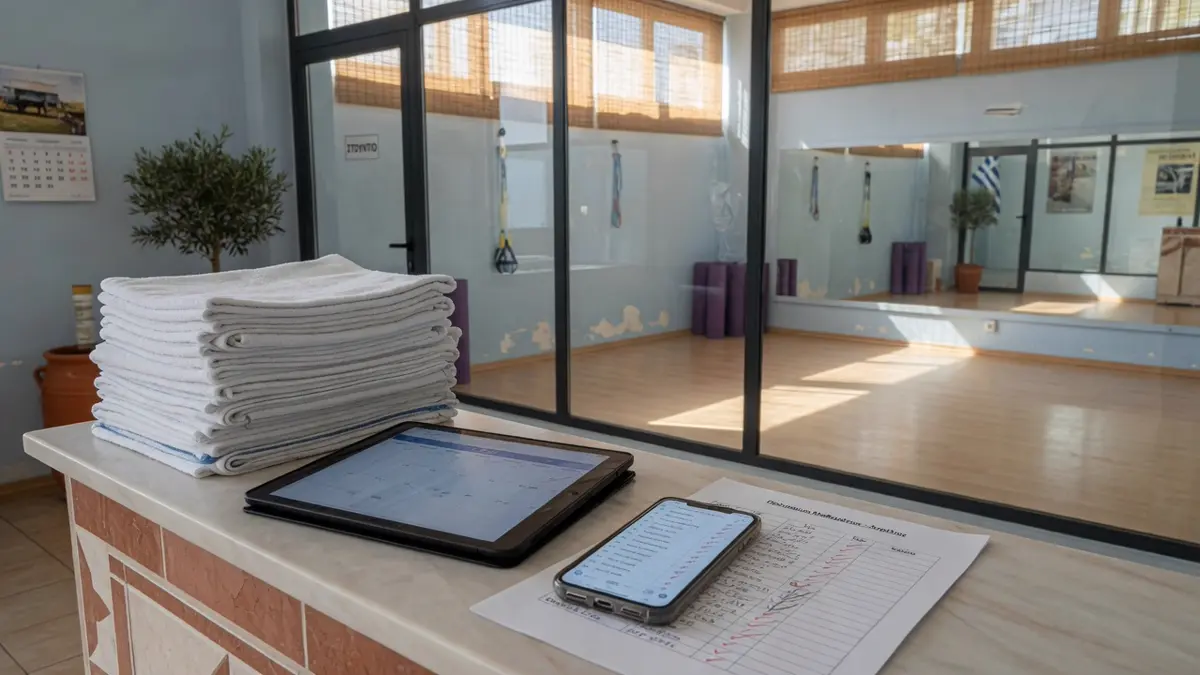
Tomorrow’s classes are on a list on the desk. Two trials have no window. One name is still sitting on the Thursday pilates waitlist. You will not ring them. Someone is under a bar. You are watching elbows. Or the last class has started. Or you have already locked the desk and gone home.
Tonight a first visit will not walk in if nobody confirmed the hour. Someone else will not come at all. You keep their mat empty. A stranger who rang at six joins the next gym on the map.
These people already have a class, a trainer hour, or a lead. They booked yesterday, or they left a name after work. They do not need a new class opened. They need a call that asks whether they still come, takes a time, and says the rule you actually use.
Answering the inbound line does not do that work. The person ringing in wants space in tonight’s pilates. This list is the people who already have one, or who already asked for a trial.
Why those calls never get made
Nobody rings them because the person who would has both hands on a lift. The phone that would make the outbound call is the same phone already ringing with a new trial.
After this set you are not free. You are teaching. You are wiping a bench. You are walking a member through a machine. In the evening the last class has started. The trial names are still on the paper.
A second pair of hands does not appear in a gym this size. A call-centre shift does not know that a trial is a lead, whether Thursday pilates is at the cap, or whether Kostas still takes new people. A sheet they were sent in May will say come at seven. The room is full.
In the morning you find out who came. The ones who joined somewhere else do not leave a note. The ones who never meant to come still have a line in the book.
A class reminder is not a new booking
The first fact on this call is the class or the trainer hour that already exists. Which class. Which day. Which hour. Which name. The assistant names those facts and asks whether they still hold.
It does not open a fresh availability search. It does not ask “what time would you like?” as if this were a stranger. That question turns a member who is already on tomorrow’s pilates into a second class, or it talks past the reminder and into a trial they did not ask for.
It takes a yes or a no. If they do not know yet, it writes that down. It does not invent a time that makes the evening look tidy.
If they say the hour has to move, the call is no longer a confirm. It is a request. The assistant takes the new class and a number. It does not say another hour is free unless the list you connected shows a space. You finish the change.
If they ask what membership costs, it may repeat a published figure you gave it. It must not invent a monthly, round a quarterly down to sound ready, or guess what August costs this year. If you did not type a figure, the desk gives the price when they can see the person.
A member who already has a pack and a person who only left a trial name are not treated as people who still need a class. The first needs the hour that is already there. The second needs the lead. Ask which they are only if the list you gave the assistant is unclear. Do not let it sell them a second mat.
A trial lead is still a lead
A name on the trial list is not a person you put into tomorrow’s class because you finally rang them.
The outbound call confirms a window that works. It tells them someone from the gym will meet them. It does not drop them into a members’ hour so the list can be ticked. The members notice. The instructor did not plan a first-timer. You never get the conversation that turns a visit into a member.
If they ask to “just join the seven o’clock”, the assistant says no, not from this call. It takes the window. You decide whether that visit is a floor walk, an induction, or a first hour with a trainer.
If they no longer want to come, the assistant writes the words they used and stops. It does not argue them into a class. It does not quote a price to keep them on the line.
If they want to bring a friend, that is a guest question, not a second trial the phone can invent. Follow the guest rule you wrote. If you have none, it takes the request.
A trial the desk has not confirmed still does not get a text that sounds like a seat. “We have noted tomorrow around 19:00. The desk will confirm.” is honest. “See you in pilates” is not.
A waitlist space it must not invent
A name on the waitlist is waiting for a space the list actually shows. They are not waiting for a hopeful call.
When a member cancels Thursday pilates, the space has to go back on the list before anyone is offered it. Then the assistant may ring the first name you told it to ring. If the list does not show a space, it does not call. Fluency is not a second list.
It offers only the class that opened, at the hour that opened. It does not swap them into Friday spinning because Thursday sounded full in its head. It does not add a second name to a ten-mat room because two people said yes.
If they cannot take the hour, it writes that down and goes to the next name you allowed. It does not hold the space open with a “we’ll see”. The next person on the list needs the truth.
A waitlist call is not a trial. A trial is not a waitlist. Mix them and you put a stranger on a members’ mat and leave a paying member uncalled.
A space it must not release
The mat stays theirs until a person who can see the list says otherwise. A missed call is not a cancellation. A voicemail with no reply is not a cancellation. “We might be late” is not a cancellation.
If they answer and say they are not coming, the assistant writes the words they used and stops. It does not offer the space to the next person who asked. It does not tell a waitlist name the pilates is free from the same call. Two parties in a ten-mat room is worse than an empty mat.
A no-show in the morning is a different job. The assistant does not release the hour, refund a pack, or put the space back on the list unless you wrote that down and a person has marked the booking as gone. Do not give it a sentence that sounds like permission. “We usually let it go after six” will be read out.
A freeze, a pause, or a membership they want to stop is a request. The assistant takes the name and what they asked. It does not grant the freeze on this call. You decide.
If a walk-in is standing at the desk while the list is still uncalled, that is your decision, with the list open. It is not a decision for an outbound script.
The language on the booking
The booking already has a language. English on a trial from someone who just moved here. German on a class a couple booked from a map. Greek when a cousin reserved for someone else.
You are not free to ring them in that language at half past six, with both hands on a bar, and you are not free at nine. The assistant starts in the language on the booking. If they switch mid-call, it follows. The SMS goes out in the language of the conversation. You do not set a language per class.
A trial window in Greek, sent to a person who booked in English, will not get them through the door. They will stand outside and ring the next gym that answers in their language.
If a partner takes the phone and continues in English, it follows. The text still goes to the number on the booking, in the language that just finished.
On a small Greek gym in a neighbourhood with new residents, part of the outbound list is not in Greek. The call fails if the hour arrives in the wrong one.
Injuries, prices, and the questions that arrive on a confirm
A confirm call collects extra questions. How much is the monthly. Which class is safe for a knee. Can a friend come. Is there parking. What time do you close.
Those answers live in the facts you entered. The assistant may repeat published hours, parking, how to find the door, and a listed drop-in or pack you typed in. It may not invent a membership figure, a class you do not run, or a guest pass you do not offer.
A sore knee on a reminder call is still a sore knee. The assistant does not name an exercise, say whether they should still come, or tell them they need a clinician. It can confirm the hour they already have. It cannot write a programme. That is a note.
If they ask for a first programme, or for a trainer they have never met, the assistant takes the request. It does not say Kostas can take them at seven unless that calendar shows the hour.
Do not let it give training advice, a diet sentence, or a promise that Thursday will be quieter because it usually is.
How CITT handles it
- You give it the lists you already have. Tomorrow’s classes and trainer hours. Trial leads with no window. Waitlist names only when the list shows a space. Not last year’s members, and not people who already trained today.
- It calls in the language on the booking — 70+ languages — and introduces itself as an assistant for the gym.
- It names the class, the trainer hour, or the trial that already exists, then asks whether they still come and when.
- A trial stays a lead. It confirms a window. It does not drop them into a class.
- It checks the list you already use before it agrees a move or offers a waitlist space. If the list does not show a space, it takes a request.
- It confirms by SMS, in the language of the call, including the hour or the trial window, and only after they have said they are coming.
- It escalates what cannot be finished on the call — a freeze, an unpublished membership price, an injury question, a “we are not coming,” a waitlist name the list will not support — as a tagged note.
- You get the transcript, the summary, the time they gave, and whether the reminder or the trial note was sent.
What it will not do
It will not release a class space because nobody answered. It will not refund a pack. It will not offer the mat to a waitlist name from this call until a person has marked the hour as free.
It will not drop a trial into a members’ class. It will not invent a membership price, a trainer who is off, or a class that has no instructor in the building.
It will not grant a freeze. It will not write a programme. It will not read a membership figure into a voicemail. It takes the request. A human decides.
What these calls sound like
The order is the booking that already exists, then whether they still come, then a time, then the trial rule said out loud if this is a lead. There is no new class. There is no invented space. There is no “just come at seven” when the list does not show a mat.
A late cancel goes on a note you can act on with the list open. A trial stays a visit you confirm. If they ask not to be called again, that sentence is honoured.
What you set up first
Give it tomorrow’s classes and trainer hours, and the trial leads with no window. Connect the class list and the trainer calendars you already use. Write the trial-as-lead rule in the words you already say: name, window, you confirm. It does not drop them into a class.
Give it only the published prices and house facts it may repeat — hours, parking, how to find the door. Write one line that forbids a released space, a freeze from the phone, a membership figure on a voicemail, and injury advice.
Set the hours it may ring, and how many times it tries. Then listen to three trial follow-ups before you add a waitlist pass or a day-before reminder for every name on the class list.
Rates for the service live on the pricing section of the home page. They are not repeated here.
AI receptionist, in-house staff, or a call centre
| CITT | In-house | Call centre | |
|---|---|---|---|
| Rings tomorrow's classes | Yes, from the list you give it | If they finish the set | If you export the names |
| Asks whether they still come, and when | Yes — that is the call | Yes, when they have a free minute | Often just reads the hour |
| Trial lead on the way out | Still a lead — window, then you confirm | If they remember to close it | Books a class to finish the list |
| Releases the space if they do not answer | Never | Sometimes from a guess | Risk, if the sheet says no-show |
| Invents a class space or a membership price | No — only what the list and your published figure show | Can see the room and the person | Tempted to sound helpful |
| Language of the booking | 70+ languages | Greek, and English if they have it | Whoever is on that shift |
| Waitlist when a space opens | Offers only a space the list shows | If they remember the names | Reads last week's timetable |
What unconfirmed trial leads cost a small gym
Worked from these assumptions — change any of them and the answer changes:
- One desk, one or two people on the floor, a normal week.
- About 6 trial leads sit on paper each week with no confirmed window. Put your own count in.
- Of those 6, this example assumes 2 would have walked in if someone had rung them back the same day. Change the 2 if yours is lower.
- A new member who stays after a trial is worth about €220 on your books in those first months — YOUR figure will differ, and this is the number to change first.
- The remaining four may still come later, or they may already have joined somewhere else. This example counts only the two who would have come if someone had called.
- 2 unconfirmed trials in one week that would have walked in.
- 2 × €220 = €440 that went to the next gym on the map, from people who already left a name with you.
- Forty-two working weeks at that rate — 42 × €440. Put your own weeks in.
About €18,480 a year from the uncalled trial list alone — and only if you accept the two visits above. Change them.
What it costs
CITT is pay as you go: no packages, no minimum, no contract. The current rates — the monthly fee per number and the per-minute rate — are on the pricing section of the home page, which is the only place they are published.
Frequently asked questions
Who should it call first?
Tomorrow's classes and trainer hours that have no reminder, and trial leads that still have no confirmed window. Those two lists are short and the facts are already in the book. Do not start with last year's members, or with people who already trained today, or with a membership you have already frozen. Add a waitlist pass only after you have watched the trial list behave for a week.
Can it give the class space to someone else if they do not pick up?
No. A missed outbound call is not a cancellation. The space stays theirs until a person who can see the list decides otherwise. If they answer and say they are not coming, the assistant writes that down and leaves the release to you. Offering the mat to a waitlist name from the same call is how fourteen people meet in a ten-mat room.
Will members mind a software call the day before a class?
They mind a sales call. They do not mind “you have pilates tomorrow at seven, are you still coming,” if they booked the class. The assistant says it is an assistant, names the gym, and stops if they ask not to be called again. You set the hours. Saturday night is not one of them unless the class is that evening and you chose that.
What if they want to move the class, or add a trainer hour?
That is a request, not a confirm. The assistant takes the new hour and a number. It does not say a different class is free unless the list you connected shows a space. You finish the change. A yes on the phone for a class already at the cap is worse than not having called.
Can it close the trial on this call?
No. A trial is still a lead. The assistant confirms a window that works and tells them someone from the gym will meet them. It must not drop them into a class from the outbound call, and it must not quote a membership price unless you wrote one published figure it may repeat. You meet them on the floor.
What happens when they do not answer?
You set the retries and the message. A short recording that names the gym and asks them to ring back is enough. A membership figure does not go on that recording. After the tries you chose, the name stays on a list the desk can see, still holding the class or still sitting as a lead. Three honest attempts with no answer is a fact for you, not a reason to keep ringing the same number after the last class.