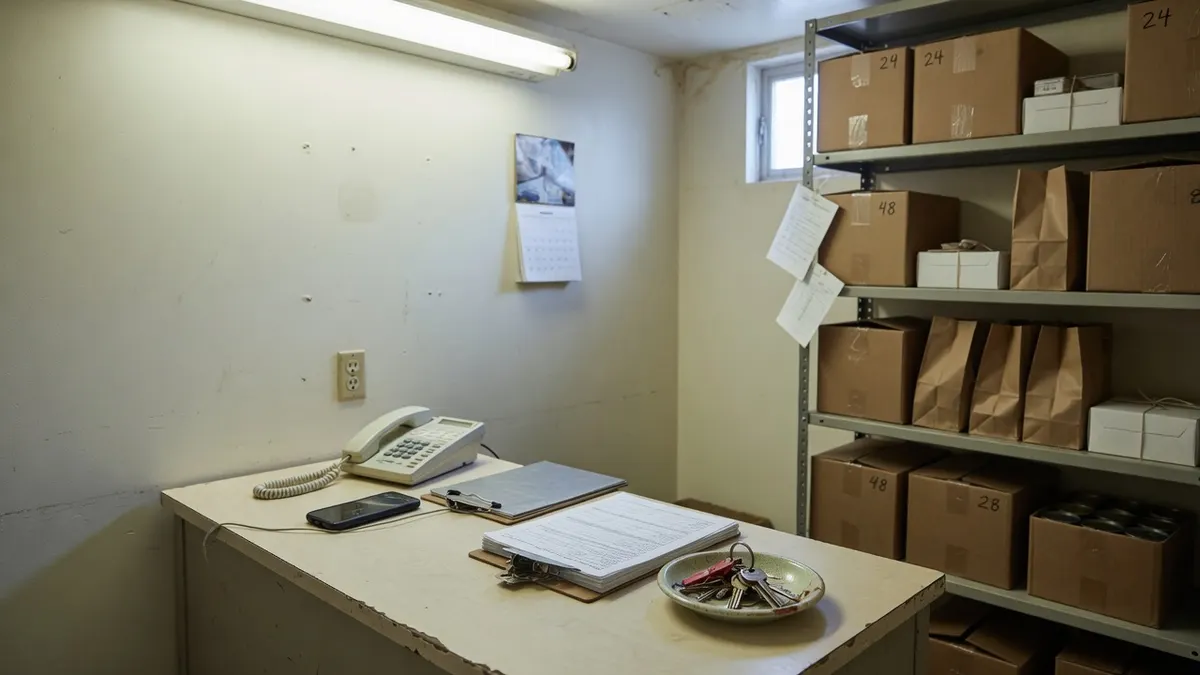
Missed calls in a one-person shop

Quick summary
- You cannot pick up when a customer is at the till and the courier is holding out a device.
- Are you open Saturday does not leave a message. They hang up and treat the shutter as down.
- A quote and where is Tuesday's order hang up the same way. One is new work. The other is work you already took.
- A second person is not the usual answer here: the quiet hour does not pay a wage, and two calls can still arrive at once.
- An assistant that answers writes down the hours, quote and order calls so you can return them before you lock up.
- Ask the phone company for unanswered calls by hour before you change anything. The till book will not show them.
TL;DR
You run a shop or a small workshop in Greece. One person takes the till, signs for the courier, and sometimes leaves in the van. The phone rings in all three moments. The caller wants Saturday hours, a price, or news of an order they already placed. They almost never leave a message. An assistant answers from the hours and rules you wrote down. It does not invent a price, a stock answer, or a Thursday. If the answer is not in the file, it takes a name and a number and you call back.
Key takeaways
- Ask the phone company for unanswered calls by hour, including lunch and the hour after you close.
- Do not judge the week by the voicemail box. "Are you open" leaves nothing.
- Forward after a short delay so a quiet moment at the counter still belongs to you.
- Tag hours, quotes, order status and complaints separately. They are not one pile.
- Have complaints and "the delivery has not come" sent to your mobile the same morning.
- Count unanswered calls again after four weeks. If the number has not dropped, the delay is wrong.
The phone rings and you cannot pick up
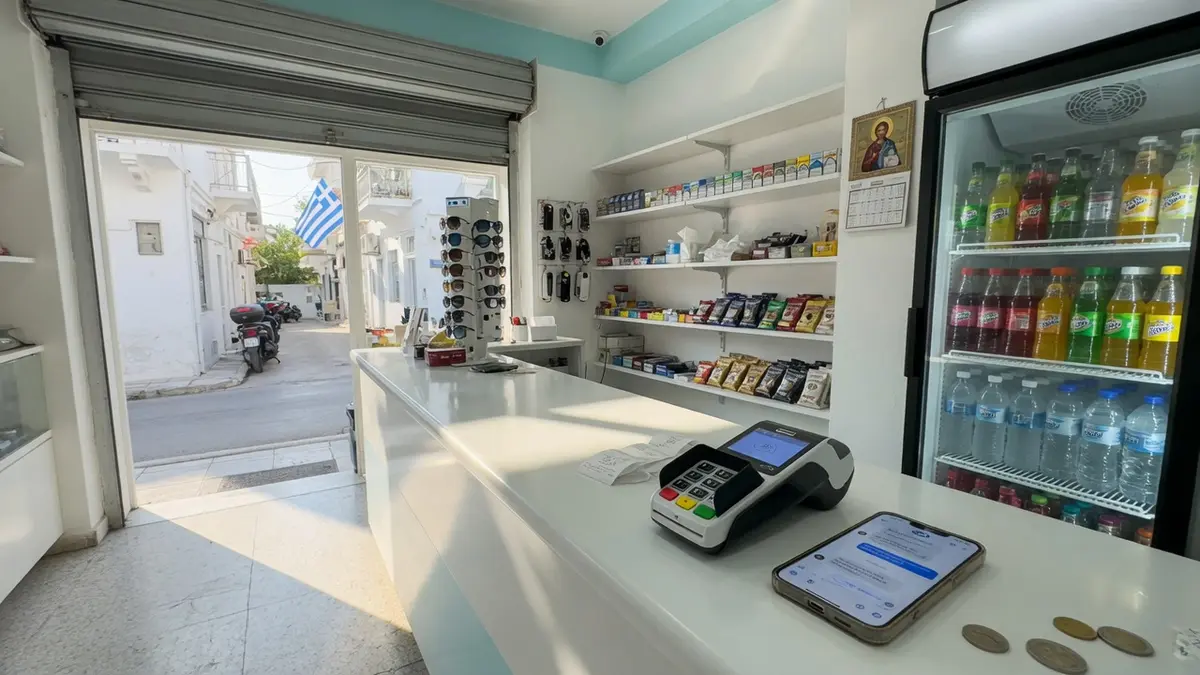
A customer is at the till. Their card is in the machine. The courier is at the door with a device for you to sign. The phone starts ringing on the counter.
You stay with the two people in front of you. That is the right choice. The person on the phone hears the ring, then nothing, and hangs up.
They were not ringing to chat. They wanted Saturday hours, or a price, or news of an order they already placed. For a question that small they will not wait for a beep and they will not leave a message. If nobody answers they treat you as shut, or they take the quote to the next place that picked up, or they arrive on Thursday already angry because the status call they tried on Tuesday never reached you.
You will not see any of that in the till book. The till book only shows the people who walked in. The phone company’s log shows the rings. Most one-person shops have never asked for that log.
What they were asking
Saturday, lunch, the week of 15 August. “Are you open.” “Until when.” “Do you close at two.” The caller is often on the pavement or in a car, deciding whether to turn towards you. If nobody answers, they drive to the next open shutter. They do not leave a message for three words.
A price. A repeat of last month’s order. A part they want to describe. A photo they want to send on Viber. If you do not pick up, some of them will ring whoever else does that work on the same street or the same search page. The message they might have left is the one you hear at twenty to six, when you cannot price it properly either.
Tuesday’s order. They already gave you money, or a deposit, or at least a yes. They want to know if it is ready, or why the supplier’s van has not been. If nobody picks up, they stop asking about the order. They come to the counter on Thursday already complaining.
A complaint. They collected yesterday. They will tell the whole story. They will sometimes wait. They will not become less angry. A complaint you only hear after you lock the shutter is a worse conversation than the one you could have had at ten past two.
There are others. The thing they saw in the window last week. An invoice copy for their accountant. Whether you still take collections after you have nominally closed. Where to park, which bell to ring, whether the shutter is up at eight for the first delivery. They all meet the same rule: if you wrote the answer down, the assistant may say it. If you did not, it takes a name.
Why hiring someone usually does not fix the phone
The person at the counter is the person who knows whether Saturday is open, whether the order is ready, whether the quote is one figure or another. Every time you stay with the customer in front of you — which you should — the person on the phone hears nothing.
People will tell you to hire someone to stand next to you. For most shops of this size the wage is not there. The quiet hour does not pay for them. Two calls can still arrive at once while they are wrapping a bag.
The other local mistake is treating the voicemail box as proof. “We do not get that many missed calls — look, three messages this week.” Those three are the people who already know you and are willing to wait. The hours calls and the quotes are not in the pile.
What the assistant may say, and what it must not
If the assistant invents a Saturday, someone drives over and finds the shutter down. If it invents a Thursday, someone arrives for an order that is still on a supplier’s floor. A callback the same afternoon costs you less than either of those.
So the rule is the one you already keep for yourself when you are tired and the queue is long: if it is not written down, do not say it. Hours should be in the file. A price is in the file only if you are willing to hear that figure played back as yours. An order status is in the file only if you connected the book. Everything else is a name, a number, and a note to you.
A caller who hears “Saturday nine until two, and I have asked them to call you about the order rather than guess” is still yours. A caller who hears “yes, come in, it should be there” and then stands in front of a closed shutter is why the rule exists.
The lunch-hour temptation is to put a helpful yes on every question so the caller stays. That is how the wrong Saturday gets said in a week you had decided to close. Write the callback sentence yourself, in your words, so the assistant does not turn it into a yes you did not mean.
What you set up first
- The unanswered-by-hour log. Lunch, late afternoon, the hour after you close. Four weeks. Write the number down.
- Forward on no-answer. Ten to twenty seconds. You keep the calls you can take.
- Hours, written as you actually keep them, including the messy ones — Thursday early close, Saturday until two, lunch, the week of 15 August.
- Tags. Hours, quote, order status, complaint, delivery. Otherwise the week is a blur of “messages”.
- Complaints and failed deliveries to your mobile, not to the evening email.
- The callback sentence, in your words, so the assistant does not improve it into a yes.
Then pull the same log a month later. The figure that matters is still unanswered calls in the lunch window and after closing. If that figure has not moved, you are looking at a delay that is too long, or at a second number on an old card that you forgot you still print.
Lunch, the shutter, and the people who ring from their break
Many shops in Greece still pull the shutter at two and open again at half past five. Someone rings at twenty past two, hears nothing, and writes you off for the day. They needed Saturday hours, or they needed to know if they could collect at six. They do not think “they are at lunch”. They think you are shut. They go to the next similar place on the street.
If you close for lunch, that hour is the same three questions from people who are themselves on a break. You are eating, or you are receiving stock, or you are not there. The hours are already written down. The assistant can read them out.
If you take collections at six after you have nominally closed, write that too, or the assistant will send someone to a locked shutter. If you change Saturday, change the file the same morning. If the file is three weeks stale, the assistant will still say the old hours with confidence. A short file you actually keep true is safer than a long one you last touched in June.
You are in the van and the shop is empty
A delivery that was promised for this morning is on the seat beside you. Behind you the shop is empty and the phone on the counter is ringing. Your mobile is in the cup holder. You cannot reverse into a loading bay and answer Saturday hours at the same time.
A card on the door that says you will be back in twenty minutes does not tell anyone whether Tuesday’s order is ready. Put the assistant on the number that is already on the door and on the search result. A second number nobody looks up does not help the person who just rang the first one.
If you also give out a mobile — to suppliers, or as “the quick number” — decide which one people actually use and forward that one. Forward only the shop line and the mobile still rings in the bag while you sign. Forward both with no delay and you never take a call yourself, even when you are standing still. The unanswered log on each number will tell you which one is real. Start there.
You are in the back and the machine is running
A print run is going. A screen is open and the adhesive is still wet. A key is in the cutter. The shop floor is empty and the phone is on the counter you cannot reach without putting the work down. You hear the ring over the machine and you stay where you are, because stopping now makes the job longer, not shorter.
You will stay with the work. You should. The person who rang still needs Saturday hours or a price, and they will not wait for the adhesive to set.
A long ring delay assumes you might walk to the counter. With wet adhesive or a key in the cutter, you will not. Ten seconds is plenty. If you are free, you will have picked up by then. If you are not, a longer delay only leaves them ringing.
After you lock the shutter
You are pulling the padlock and the phone is in a pocket. “Are you open tomorrow” rings while you are finding the key. That caller is deciding whether to come on Saturday. Forward it. Do not wait until you have sat down.
The evening caller is not asking something complicated. They are asking the lunch questions from a sofa: Saturday, a price, an order they are anxious about. A recording that says “leave a message after the tone” asks them to do work they will not do for a question that small. The assistant saying Saturday nine until two, or taking the facts of the quote, is what those calls need after 17:00.
The same is true of the hour after you close on a weekday. People ring then because they work during your opening time. A voicemail from 17:10 that you return at 21:00 is not the same as an answer at 17:10. The hours were already in the file. The quote facts can wait for you. The “is it ready” call should be flagged to your mobile before you eat, not buried in a digest you read after midnight.
Last year’s card and the listing you forgot
Small shops reprint cards slowly. The number on last year’s card, or on a marketplace listing you forgot, or on a supplier’s phone, may not be the number you forwarded. The unanswered log on the line you care about will look healthy. The customers will still say they could not get through.
Once, at the start, ring yourself from a private phone using every number you can still find in public. The ones that do not reach the assistant are the miss you are not measuring. Fix those before you blame the voice.
What you do with the list before you lock up
Once the calls are answered, you have a list instead of a quiet phone. That list is how you return the quote before you lock up, starting with the ones most likely to become work, instead of in the sequence the voicemails happened to be left. It is how you ring the Dimitriou order before they drive over. It is how you notice that four people asked about Saturday and you still have not put Saturday on the door.
If the transcripts do not contain the question in usable form — hours, or what they wanted priced, or the name on the order — the assistant is answering and you are still reconstructing the call at 21:00. Fix the questions it asks before you spend time on the voice.
When they want a price, the assistant should come back with what they need, how many, by when, and a number you can return. “The usual order” and “same as last time” are not enough to price from. If they want to send a photo on Viber, it takes the request and, if you have written the number, tells them where to send it. It does not speak a figure for a photo it has not seen.
“Do you still have the thing I saw in the window last week” is a callback unless you have written a short list the assistant may confirm. “We do not confirm stock on the phone” is a complete sentence to put in the file.
A quiet Tuesday is not proof the phone was fine
A slow week gets explained as weather, season, the street being dug up. Sometimes that is true. Sometimes four quote calls went unanswered at lunch and two people who asked about Saturday hours decided you were closed. You cannot see the difference in the till. You can see it in unanswered calls tagged as quote or hours. If you do not tag, you will keep telling yourself the season story. The log is how a one-person shop stops guessing why Tuesday was empty.
AI receptionist, in-house staff, or a call centre
| CITT | In-house | Call centre | |
|---|---|---|---|
| Answers while you sign for a delivery | Yes | No | Yes |
| Three calls during one customer at the till | All of them | One, if that | Depends on staffing |
| "Are you open Saturday" at 19:10 | From the hours you wrote | Voicemail, or nothing | If they are still on shift |
| Writes down the quote they wanted | Facts, then a callback | If they had a pad free | A short message |
| Invents "it should be ready Thursday" | Never | When they are rushed | If the brief is vague |
| What the voicemail box shows | They were answered | A fraction of who actually rang | Their log, not yours |
Four unanswered calls at lunch, one message left
Worked from these assumptions — change any of them and the answer changes:
- One person, a normal weekday, counter and phone.
- 6 calls between 13:00 and 14:30. You reach 2. 4 ring out.
- Of the 4, 1 leaves a voicemail and 3 leave nothing.
- The 3 silent ones were: Saturday hours, a quote, an order-status check.
- A quote that becomes work is worth about €180 of margin here. Put your own ticket in.
- This example assumes 1 of those 3 would have become that work. Drop it to zero if you do not believe it; the hours call still matters.
- The voicemail box after lunch shows 1 person. That is the number you believe.
- The provider's log shows 4 unanswered. The other 3 are the ones nobody counted.
- If 1 of the 3 was the quote and would have become an order, you did not see €180.
- Two such lunches a week, 46 weeks — 92 × €180.
About €16,500 a year that never appears in the till book — on the ticket and conversion you just chose. Change both.
What it costs
CITT is pay as you go: no packages, no minimum, no contract. The current rates — the monthly fee per number and the per-minute rate — are on the pricing section of the home page, which is the only place they are published.
Frequently asked questions
How do I find out how many calls I am actually missing?
Ask the phone company for unanswered calls by hour, including lunch and the hour after you close. Most small shops have never asked. The number is usually larger than the voicemail pile, because "are you open" and "can I have a price" hang up at the beep.
Would a second person at the counter not solve this?
Sometimes, if you already needed a second person for the walk-in trade. As a phone solution it is usually the wrong shape: you would be paying someone to wait through the quiet hour so they can catch twelve minutes of ringing, and two calls can still arrive at once. The cheaper first step is to stop those calls going unanswered.
Is voicemail not enough for a shop this size?
It catches the people who already know you and are willing to wait. It does not catch the person deciding whether to drive over on Saturday, and it does not catch the person who will take their quote to whoever answered. Those two do most of the damage, and they leave nothing.
What happens to the calls I do take?
Nothing, and nothing is charged. The forwarding rule only sends a call on when it has rung for the seconds you set. If you pick up between customers, that conversation stays with you.
Will people mind that it is not me?
They will mind if nobody answers. The assistant uses the greeting you write and, if asked, says it is an assistant. What callers punish on a high street is the unanswered ring, especially on a question as small as Saturday hours.
How soon will I know if it worked?
Four weeks, against the same unanswered-by-hour log. Measure unanswered calls, not "calls the assistant handled". A full dashboard can hide a delay that is still too long for the lunch rush.