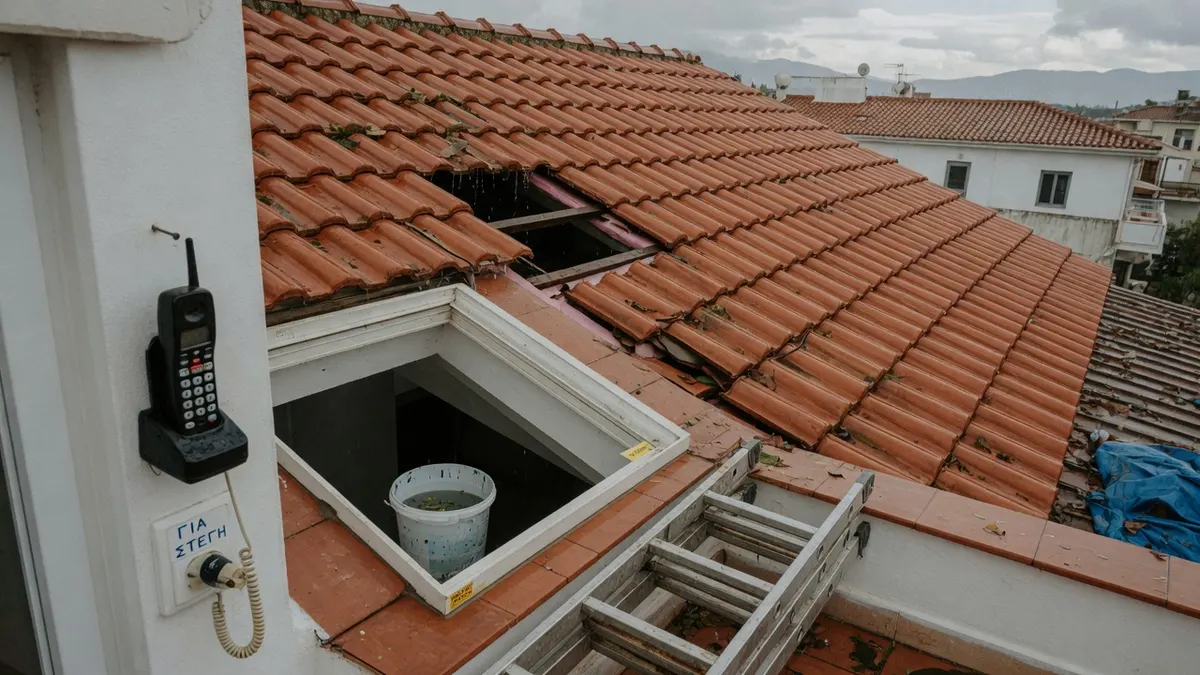
Access and storm chase for roofing crews
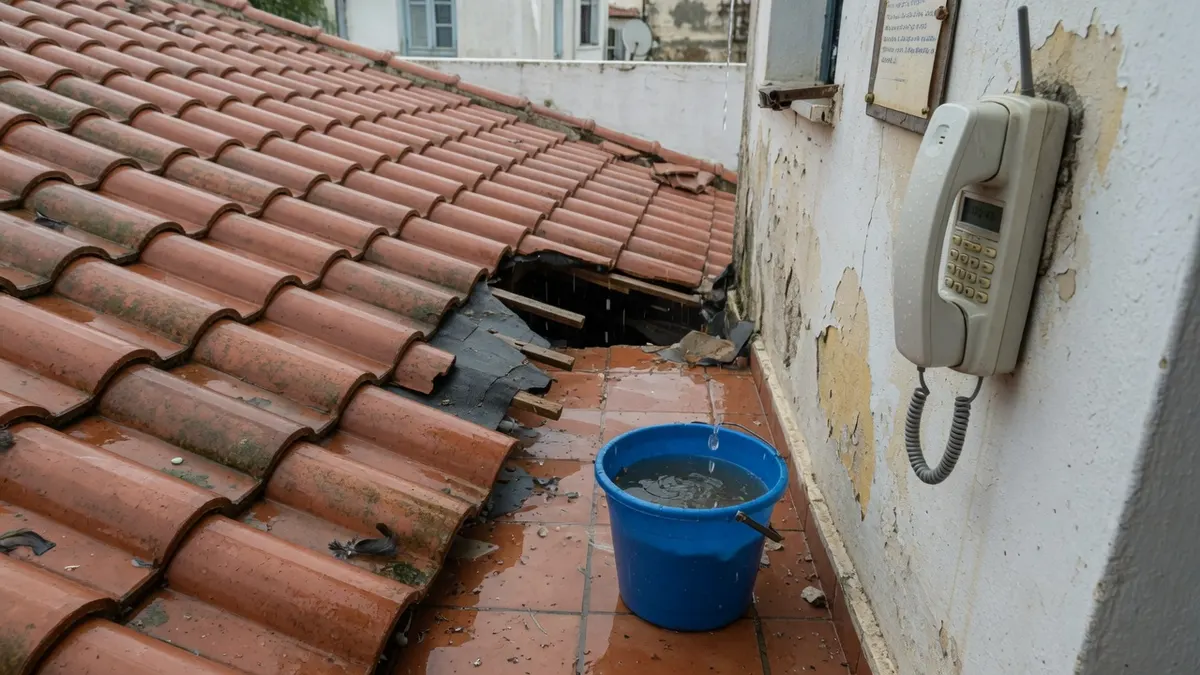
Quick summary
- You are already on another roof. The look they were going to confirm and the drip they were going to report still have to be chased.
- The list is a named address, a look reminder, or a drip check. Not a second climb, and not a tile from a photo.
- Every call starts with the address or the name on the job. If they do not recognise them, the call stops.
- It does not tell them to go up. Missing access is a yes or no. What that drip means is a callback.
- If they ask which tile it is, the assistant writes the question down and says someone will look from the crew.
- SMS does the first reminder. The voice call is for the door that is still locked two days before the look.
TL;DR
You are already on another roof. Eight looks are still unconfirmed and Thursday's drip still has no access. Nobody is going to spend the afternoon ringing. An assistant works the list you give it: address or name on the job, one purpose. It asks whether someone will be at the door. It does not say which tile it is, whether they should go up, or what the re-roof will cost. If they ask, it writes the question down and says someone from the crew will look. Please stay off the roof. It can book a move if that morning is free. It will not ring a neighbour's mobile about someone else's drip.
Key takeaways
- Build each list from your own jobs: address or name, the number on the job, and one purpose.
- Do not put a neighbour's mobile on a drip chase unless that number is the number on the job.
- Write the purpose as a reminder or a chase, not as a question about a tile or a climb.
- If the client asks whether they should go up, the assistant ends the call and flags the crew to call back.
- Check the book before you speak a morning. Do not read Thursday off last week's pad, and do not offer a roof day on a wind forecast.
- Keep last year's neighbour and 'cover it yourself' off the script. Stay off the roof.
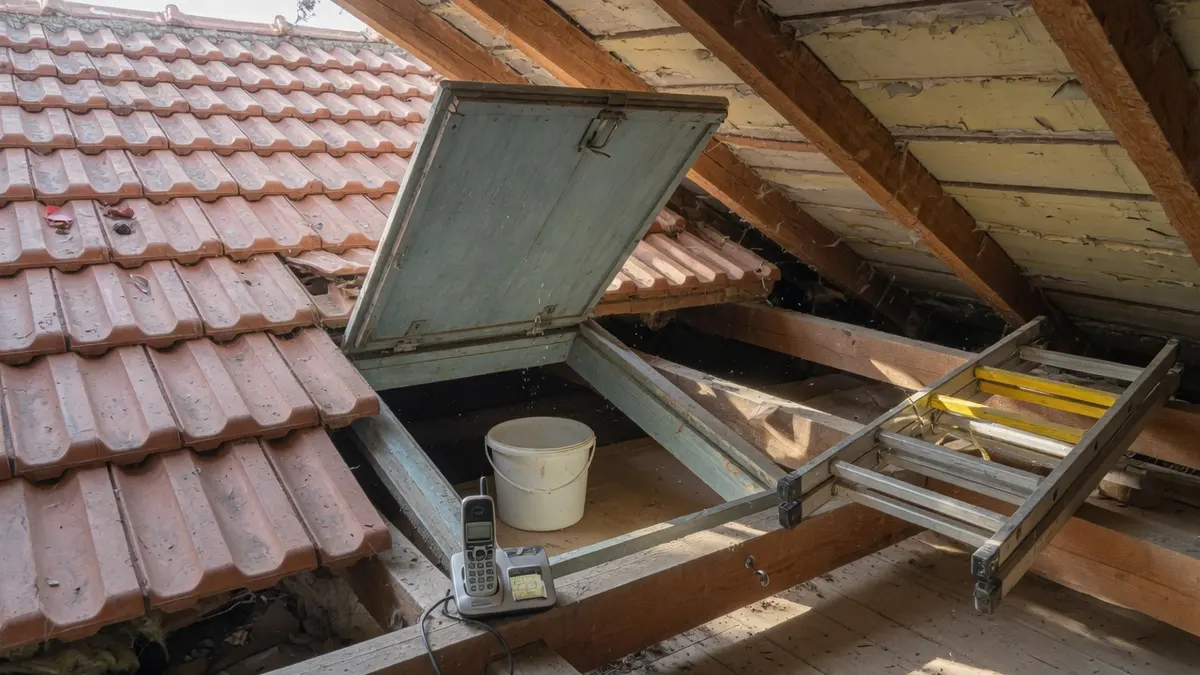
The lists on the van while you are on another roof
The tile is still in your hands. Eight looks are still unconfirmed. Thursday’s drip still has no access. You are not going to spend the afternoon ringing.
That is the outbound problem on this crew. Not a campaign. Not a hunt for new work. A list of people you already know, an address you have already written down, and nobody free to ring because the roof you are on will not wait.
The helper, if you have one, has sent the messages. The voice call is the second attempt. It does not happen. The look morning sits with nobody at the door, or someone pulls you off the tiles at nine because a manager never brought the key — or because someone went up and you now own that.
Nobody has worked two other lists either. A look on Thursday that nobody confirmed, so the morning is empty and the ladder never leaves the van. A drip that needed a yes on access before the next rain, left a number, and never confirmed — they have two other roofers in the same search, and they will use one of them, or the hatch.
You put the assistant on a list you made. It rings. It talks like a receptionist: the crew name, the address or the name on the job, then the one thing you asked it to do. Then it stops. Stay off the roof stays in the first purpose if they raise a climb.
Three purposes, and nothing else
Three jobs belong on a list.
A named look, before the morning. Someone at the door. A key with the manager. Which room is wet, as you wrote it. The assistant names the drip you wrote down, asks whether they will be there, and offers to note a problem. It does not discuss which tile it is. It does not rebuild the cause on the call. It does not tell them to go up.
A drip or access reminder. Time, place, who should be there, stay off the roof, how to say if they cannot. No sentence that a sheet is a good idea. No “just look from the hatch”. No estimate of the re-roof.
A new-look follow-up. They asked about a drip, a gutter, a re-roof, and never booked. The assistant offers a morning only if the book has one. If you have closed re-roofs for the month, it says so on the first line. It does not invent a figure. It does not name a tile. It does not promise you can take them on. Stay off the roof if they ask.
Everything else is your call. Which tile it is. Whether they should go up. What the re-roof will cost. Whether it is the roof or the terrace. Those sentences need you, the tiles, and a decision. They do not belong on a list.
A storm look is you on the tiles. A re-roof week is a crew and a dry window. If the assistant cannot tell them apart, you spend Thursday on people who only needed a door opened.
The wrong job, the wrong person
The first failure is not a missed reminder. It is the wrong drip spoken to the wrong person.
A bedroom briefed to a neighbour. A re-roof briefed to a tenant who picked up the owner’s mobile. Last year’s gutter figures read to a caller who rang about this year’s drip. Opening with the address or the name on the job, and stopping when those are not recognised, is how you keep the jobs apart.
The number on the list is the number on the job. A neighbour’s mobile does not go on a drip chase unless that mobile is the number you were told to use. A tenant does not go on a roof unless you have an instruction from the owner. A former occupant, a number copied off a forwarded message, a mobile that now belongs to someone who sold the flat — not on the list.
If the person who answers does not recognise the address, the assistant stops. It does not explain the drip so they can “pass it on”. It does not ask them to find the owner. It does not ask them to go up and look. It ends the call and flags you.
If the caller is a client who is both — a look still open and a re-roof in the same breath — the assistant records both and does not merge them into one morning. Those are two conversations for you, even if they answered one ring.
The question that is not a chase
Clients ask. They ask on the outbound because that is when they finally have the crew on the phone.
“Should I go up?” “Which tile is it?” “Can I put a sheet on?” “What will the whole roof be, roughly?” Those are climb questions, or a cause, or a figure. An assistant that answers has given a decision with no roofer and no look. An assistant that writes the question down, in the client’s words, and says someone from the crew will look — please stay off the roof — has ended the chase.
The call ends there. The assistant does not go through the photo. It does not give a range. It does not say last year’s neighbour. It does not describe a hatch.
If they will not leave the door without a yes on the tile, flag a person. Do not invent a climb to close the reminder.
The same stop applies to a new-look follow-up. “Just tell me if I should go up, I still have a sheet” is not a reason to stay on the line. Intake is finished on the phone. The tiles are yours after you have been on them.
The rule the assistant must obey
One purpose per call. Address or name first. Stop if those do not match. Check the book before speaking a morning. Take questions, do not answer them. Never use a number that is not the number on the job. Never tell them to go up.
Drip, gutter and re-roof may appear as labels on the list, so the right person owns the callback. They are not themes for the assistant to finish. An access chase does not discuss a tile. A drip reminder does not confirm that a sheet will hold. A new-look follow-up does not invent a diagnosis or a climb.
Water still coming in, they asked to go up, a neighbour who is not on the job — flag those, do not walk anyone through them. If they offer that the bucket is still out, take it as a note. If they do not, do not interrogate them on a reminder call.
A morning from last week’s pad
Closed wind days move. Look mornings move. An outbound that confirms Thursday at 09:00 from last Friday’s pad, after the book has closed the morning because of wind, is worse than no call. The client arrives with a bucket on a morning you have given to another roof — or to weather. They may go up while they wait.
The assistant has to check the book before it speaks a morning. It never offers a roof day you have closed because of wind. Looks can still be offered if someone will be on the ground and the tiles are safe enough for you. If the book cannot be reached, it does not guess. It takes a callback.
On a closed wind day you still take the phone. You do not take a re-roof. Enter the look mornings. The assistant cannot invent them.
Calls that cannot stay on this list
Three things, said on an outbound, end the purpose and go to a phone.
Water is still coming in, onto a bed. Take the address, who is speaking, and put it on a number you hold. Do not finish the door chase first. Do not tell them to go up.
They ask if they should go up. End the purpose. Stay off the roof. Flag you.
A neighbour picked up. Do not brief the drip. End the call. Flag you.
Everything else can wait for the transcript.
What you configure first
- The list shape. Address or name on the job, the number on the job, purpose, person who owns the callback. No second number “just in case” unless that second number is also on the job and you have said so.
- Who stays off the list. Neighbour mobiles on someone else’s drip, tenants on a job they are not named on, former occupants, and any number that came off a forwarded message rather than off your own job.
- The three purposes, written so they cannot drift into a climb or a tile. Named room. Yes or no. Note a problem. Stay off the roof. Stop.
- The book check on any call that will speak a morning. Wind days marked, so a roof day cannot land on a wet Thursday.
- The stop-and-flag when the client asks to go up, which tile it is, or what the re-roof will cost.
- The callback sentence, verbatim, even on a new-look follow-up: please stay off the roof. Someone from the crew will look.
Turn on SMS before the voice list. The first reminder is a text. The voice call is the second attempt: the door that is still locked two days before the look, or the drip that a text did not turn into a morning. Do not send both at the same minute with different times. The book is the source.
See pricing for how calls are charged.
What these calls sound like
The exchange in the panel above is the shape to expect. The assistant names the crew, the address, and the fact that this is a reminder only. It refuses the climb question and the tile question. It records both for the crew. It does not go through the roof.
A look reminder is shorter. Identity, address, time, place, who should be there, stay off the roof, a path if they cannot. If they cannot, that is a book problem for a person, not a talk about whether a sheet will hold.
A drip chase names the room you wrote down. It does not decide that a stain is a tile. If they raise Thursday and you have already closed it for wind, the crew will call back.
A new-look follow-up offers only mornings the book currently has. It does not invent a figure. If you are not taking re-roofs this month, that sentence comes first. Stay off the roof if they ask.
If nobody answers, the assistant leaves the message you entered — crew, address, purpose, a number back, stay off the roof — or it sends the SMS and stops. It does not leave a second message that starts to describe the tiles.
The assistant answers in the caller’s language, from what you entered. In a Greek crew that is often Greek, English, German and Albanian in the same week. An access chase to a foreign owner is still a chase, not a climb walkthrough in a second language.
Lists that stay on your phone
A client who has gone quiet on a disputed leak. A job where a relative might pick up. A number that may now belong to someone who sold the flat. If a job is too sensitive to ring, it does not belong on the list. You decide that before the assistant dials.
Estimates, “just look from the hatch”, dates spoken as if a re-roof had been decided, walkthroughs of a sheet — those sentences belong to a roofer, in a call you meant to make.
After a storm, look week, August
A storm week, a look week and an August Friday are not the same list.
After a storm is drips and access. The chase is a named address and someone at the door. If water is still coming in, or they ask to go up, that goes to a phone.
Look week is existing jobs, often after hours, often in more than one language. The chase is a door and a morning, not a sentence that the tile is named. The failure is a yes on a climb to hurry the key.
An August Friday is one person on the ground and a published number that still rings. Set the closure dates and the sentence for new work. Do not confirm a look in a week when the crew is dark.
Teach the assistant the three shapes. If you give it one generic “follow-up” label, it will treat a climb like a door reminder.
After the first list
Run a short list first. Ten access chases two days before looks. Ten look reminders. Five new-look follow-ups. Read every transcript before you add volume.
You are not listening for warmth. You are listening for the extra sentence — the one that was not on the purpose line. The moment it almost described a climb, almost named a tile, almost treated a drip and a re-roof as the same booking, almost rang a neighbour, almost confirmed Thursday off last week’s pad. Those are visible in the first week if you read the record.
After a storm is when you will want to loosen the list. That is when you must not. Send on the access you have, or flag a person. Do not let the assistant finish the climb question out loud so the morning can move.
AI receptionist, in-house staff, or a call centre
| CITT | In-house | Call centre | |
|---|---|---|---|
| Access chase before a storm look | Yes, from your list | When someone has time | If you write a script |
| Look and drip reminders | Yes | Yes | Sometimes |
| Starts with the address or the name | Yes | Yes | If you insist |
| Tells them to go up to hurry the look | Never — stay off the roof | Never, if they know the job | A risk if the script wants a photo |
| Names a tile on the chase call | No — flags the crew | The crew does, on the roof | Must not; sometimes does |
| Offers a roof day the book has closed for wind | No — checks the book, or takes a callback | If they check | Often from last week's pad |
| Rings a neighbour about someone else's drip | No — only the number on the job | Only if you said so | A risk if the list was not read |
What unchased access costs one week of storm looks
Worked from these assumptions — change any of them and the answer changes:
- Two people, 12 storm looks on the book this week, each waiting on a door or a manager with keys.
- This example treats 4 of those 12 as still missing two days later.
- A morning that sits empty, or is pulled when nobody is at the door at nine, wastes about €140 of reserved time — put your own figure in, not ours.
- A two-day outbound chase recovers half of those missing mornings. Challenge this first; crews vary.
- 4 mornings still open on paper, two days out.
- Half recovered — 2 mornings that move on the access they needed.
- 2 × €140 = €280 of reserved time protected, in one week.
- Several such weeks a year — this example counts four storm weeks.
About €1,120 a year of crew time, from calls that only ask whether someone will be at the door.
What it costs
CITT is pay as you go: no packages, no minimum, no contract. The current rates — the monthly fee per number and the per-minute rate — are on the pricing section of the home page, which is the only place they are published.
Frequently asked questions
Can it tell them which access is still missing?
It can name the item you put on the list — street door, manager on the landing, which room is wet. It should not rebuild the drip on the call, and it should not decide that a particular stain is a tile. If they ask whether they should go up, that is a callback. Stay off the roof.
What if they ask if they should go up, on the chase call?
The assistant does not answer with a way up. It says please stay off the roof, takes the question in the client's words, and ends the chase. A chase that becomes a climb has no reviewer, no look, and no roofer attached. The transcript still helps — the crew returns a real question rather than “they rang”.
Can it offer a new morning if nobody is at the door?
Yes, if you allow that purpose and if it checks the book before it offers a morning. It still does not name a tile from a drip. A reminder that starts describing a sheet has stopped being a reminder. It does not offer a roof day on a day you closed for wind.
Does it still ask for the address when we ring?
Yes. The call opens with the crew name, the address or the name on the job, and it stops if the person on the line does not recognise them. That is how you avoid briefing a neighbour about a drip, or a tenant about a roof the owner has not approved.
Can it chase a storm look from an existing client?
As a morning reminder, yes: we have a time this week, can someone be at the door, please stay off the roof. Not as a sentence that the tile is named, and not as a climb. “We still have Thursday at 10:00 for the look” is reception. “Go up and put a sheet on until we come” is a climb.
Who decides who is on the list?
The crew. The assistant does not invent people to ring. You export or tick the jobs that need a reminder or a chase, with one purpose each. A list that mixes “will someone be at the door” with “see if they want the whole roof too” is two jobs, and only the first one belongs here.