Book renovation visits without mixing look and start
Quick summary
- The assistant reads the book before it offers a morning, so a site visit is never offered as a demolition week.
- A look in the rooms and a start while the family still lives there are different bookings. Get that wrong and a client sits in a morning reserved for dust.
- Kitchen, bathroom or whole flat first. Then occupied or vacant. Then the book. The offer comes after the visit.
- Anything that sounds like an offer from photos, a start from a box of tiles, or a permit answer stays a callback.
- If the assistant cannot read the book, it takes a callback. It does not guess. It does not name Monday because tiles arrived.
- The assistant texts the time, the type, and who should be there, so the rooms that wait are rooms you can walk.
TL;DR
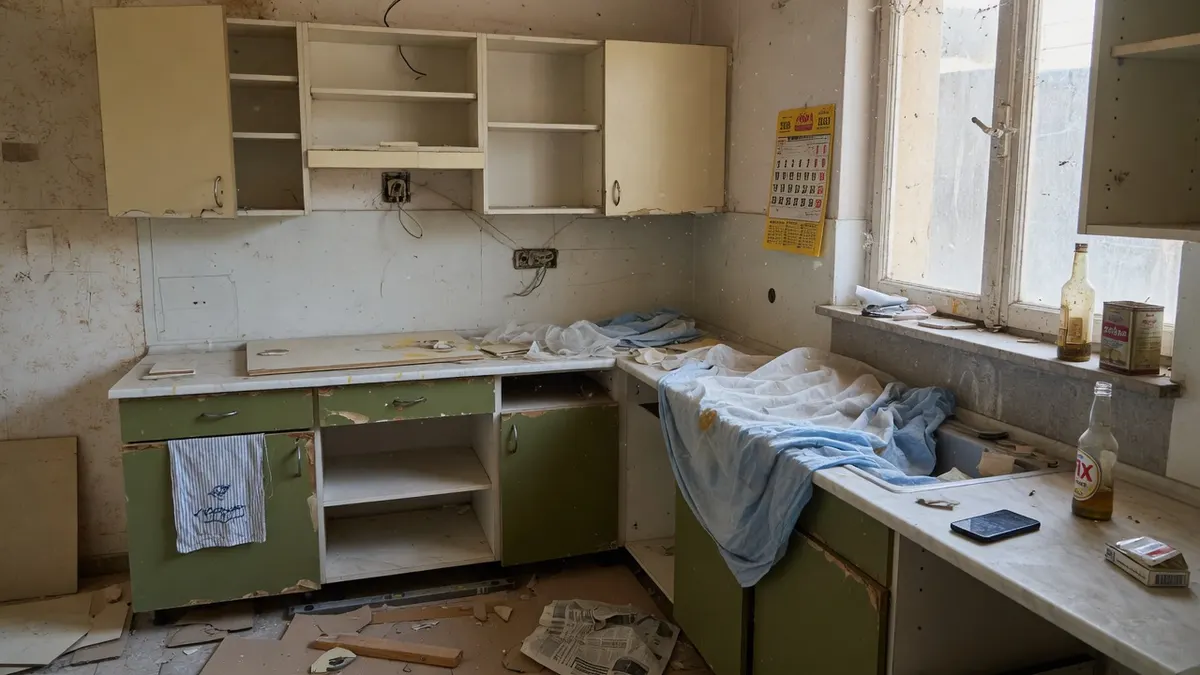
You are in a lived-in kitchen. A caller who wants a morning will not wait for a callback just to learn whether Thursday is free. An assistant can book those mornings if it reads the book first, treats a site visit as different from a start week, and asks kitchen, bathroom or whole flat, then occupied or vacant, before it places anything. Photos are a visit. A start is after the offer and the materials. If the book cannot be reached, the assistant does not guess. It takes the request and says so. The assistant texts the time, the type, and who should be there. It never offers a demolition day you have not signed.
Key takeaways
- Give the assistant the types and their real durations before you let it book — site visit, occupied start, vacant start, snagging.
- Mark demolition weeks and visit mornings in the same book it reads, including August.
- Test a move on an existing site visit and on a start week, separately, before you test a new kitchen.
- Turn on the SMS at the moment of booking, with who should be there for that type.
- If the book cannot be reached, the only answer is a callback.
- Check the first fifty bookings by hand. That is when you find the morning that was a look put into a demolition day.
When someone wants a morning and you are in dust
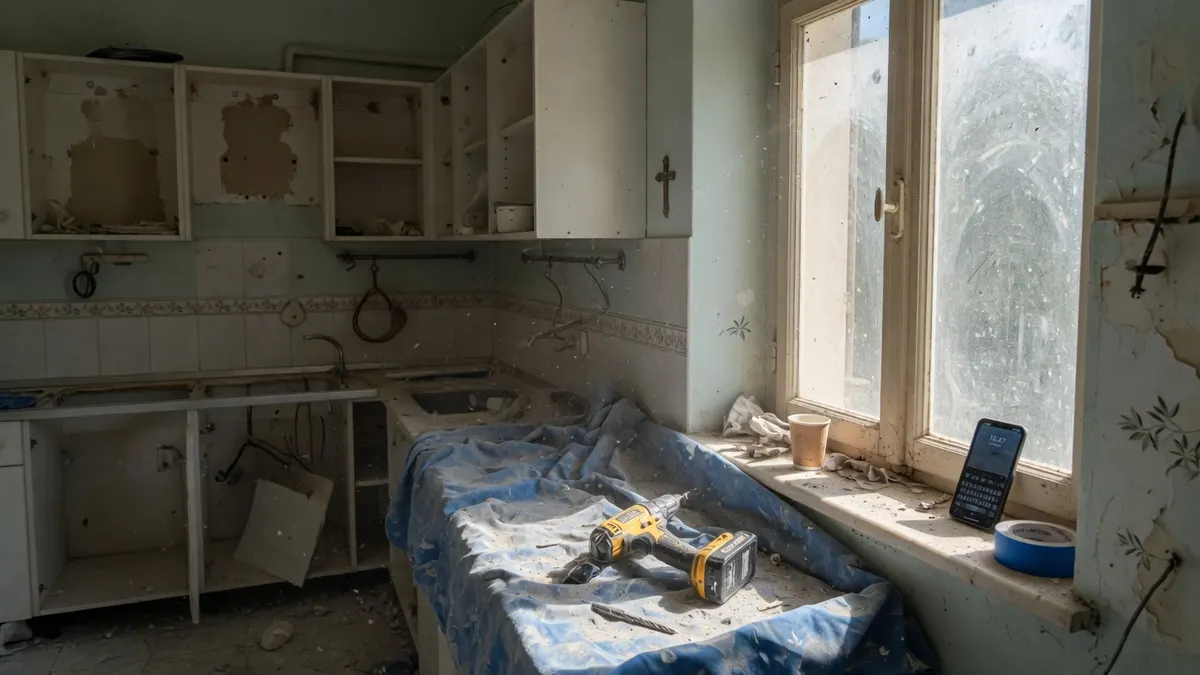
One of you is in a lived-in kitchen. The other is stripping a bathroom. The phone rings.
A caller wants Thursday at eleven for a look at the kitchen. A person who sent photos this morning wants an offer today. A manager wants ten minutes with keys to a vacant flat. You cannot pick up. The demolition is still open.
Those three callers are asking for a morning. They are not asking for the same morning.
The first one needs you, a tape, and the rooms. The second needs a visit, not a number from pictures. The third needs a vacant walk, and only if you actually take vacant work. If the assistant treats them as the next free hour, Thursday morning fills with a start week, the look arrives while you are in that dust, and the vacant flat is offered on a morning the agency does not have keys.
The assistant books only if three things are true. The type is one you offer. The morning is free in the book the crew works from. Nothing in the call is an offer from photos, a start from a box of tiles, or a permit answer. If any of those fail, it takes a request and says someone will call back.
A person who has to wait for a callback just to learn whether Thursday works has time to ring the next crew. That is why the morning has to be finished on this call. It is also why a guessed confirmation is worse than no confirmation. The person arrives. Nobody is free. The tenants are still in.
A site visit is not a start week
You already know this. The assistant does not, until you teach it.
A site visit is you, a tape, and the rooms. Someone is there to let you in, or the agency has left a key. They still live there, or they do not. The caller is told who should be there, they walk the rooms, they leave.
A start week is a crew, dust, and a family that either moves out or lives around the work. You have come off the other job. The rooms are ready, or the hours are agreed.
A vacant walk is keys and empty rooms. The hours are not the same as a lived-in kitchen. A snagging hour is not a demolition day.
If the assistant cannot tell these apart, you spend Thursday on people who only needed a key handover, and the family who needed a look after school is given ten minutes at the door while you still have a chisel in your hands.
Give it the types and the real durations before it is allowed to offer anything:
- Site visit
- Occupied start week
- Vacant start week
- Snagging hour
- Anything you do not want booked at all
People who just bought a vacant flat often call after the agency closes. The assistant can offer a walk tomorrow. It cannot offer a start tonight if you are not starting tonight. Do not give a snagging hour to that evening caller, and do not give a demolition week to someone who asked for a look.
Kitchen, bathroom or whole flat, then occupied, then any morning
The first question on this line is not when they are free. The first question is which rooms, then whether they still live there.
Those are two jobs if one is occupied and one is vacant. Two kinds of hours. Usually two lengths of visit. A kitchen is not a bathroom. A vacant walk is not a lived-in start. The confirmation, the reminder, and who should be there are different.
A caller who is both still gets two notes. If they want a look at the kitchen and also a start in the bathroom, they get a visit and, only after an offer, a start. Do not squeeze a look and a demolition into twenty minutes because they arrived as one call.
On a change it is the same question, first. “Move Thursday” is not enough. Thursday might be the site visit or the start. Both can share one mobile number. If the assistant picks the first match, it moves the wrong visit.
Ask kitchen, bathroom or whole flat. Then occupied or vacant. Then the address. Then find the existing morning. Then move it.
Two clients in the same block are common. Two kitchens on the pad after March are common. A surname plus “the flat” is not always enough. Take the address. Take the floor. Do not invent a match because the first three letters agree.
If they will not say which visit, it is not a booking yet and it is not a change yet. Take the name and the number and say someone will call back. Do not guess.
Mornings you have already closed
You already know which mornings you walk rooms and which weeks the book is closed because you are already in a kitchen. Put those mornings in the book the assistant reads. If they exist only on a pad next to the van, the assistant cannot see them.
On a closed demolition week you still take the phone, or the assistant does. A start is not offered. A site visit can still be offered if someone will be on the ground.
If a closed week is missing from that book, the assistant will offer Monday on a morning both of you are already in dust. The client arrives with the tiles. The demolition and the visit are then the same hour.
Visit mornings are for looks and anything that needs you in the rooms without a crew.
August needs its own dates. Some of you stop for two weeks. The published number still rings. Set the closure dates. Do not let the assistant book a start into a week when the crew is dark.
If you have closed occupied work this month, say so before a lived-in start is offered. A crew that only does vacant flats should say so on the first call, not after a booked morning.
Moving a morning that already exists
A caller who already has a Thursday is not making a new booking. They are changing one.
Handled as cancel-then-book, Thursday is still taken by their own visit. The assistant tells them that morning is not free.
The order is: rooms, occupied or vacant, address, find the existing morning, release it, place the new one. One change. Reversed, or split into two independent operations, the client is blocked by their own hour.
Let them cancel as well, especially on site visits. A cancellation the day before is a morning you can give to someone whose kitchen is still unwalked. The same cancellation arriving as a no-show is a morning gone. Write cancellations back to the book the same way bookings are written.
A same-day move in March is tighter. If Thursday is already a list of kitchens and they want to move a vacant walk onto Thursday, refuse the demolition morning and offer a visit on the ground, or take a callback. Do not squeeze them into the hour before you go back into the dust.
An offer from photos is not a reason to invent a visit type
People ask while they book. A caller moving a site visit will ask for a figure from the pictures. A person booking a start will ask whether Monday is possible because the tiles arrived. A manager booking a vacant walk will ask for a communal number.
None of those is a booking type.
The assistant says the offer comes after the visit. Then it finishes the morning, if there is a type you actually offer. It does not invent a “photo quote”. It does not name a start to win the booking. It does not answer a permit. It does not say the dust will be fine.
If the only thing they want is a yes on a figure from pictures, there is no visit type to invent. Take the request. Address. Occupied or vacant. Name and number. Someone will call back after they have walked the rooms.
What it must not do, even to be helpful:
- invent an offer from photos
- name a start because tiles arrived
- answer a permit question
- say the dust is fine in a lived-in flat
- quote last year’s kitchen as this flat
- book a communal block as if it were a private kitchen
Same-day occupied start, manager with keys, tiles they think mean Monday still bypass ordinary booking. Those are flags to a phone, not a search for the next free visit next Wednesday. If the only same-day capacity is a callback from you, say that. Do not invent a 17:00 that does not exist.
Vacant walks, snagging, and a Friday start
Vacant walk. Keys, empty rooms, the agency. The assistant takes who holds the key. It does not invent a figure. Mark the hours the agency opens the door. If they only open on Tuesdays, do not offer Monday.
Snagging. A short hour after a job. Mark it, or you will sit down for a start week with someone who only needed a list of small items.
Tenants still in. They booked a vacant walk and the tenants have not left. The assistant can take a move of the morning. It does not say you will work around the tenants. That is yours.
A site visit and a start week are not the same morning in the book. Mark them as two kinds of visit, or you will turn up with a crew for someone who only needed a tape.
What the confirmation has to name
At the moment the morning is placed, the assistant sends an SMS in the language of the conversation. The text says the time, the crew, kitchen or bathroom, occupied or vacant, the type, and who should be there.
The reminder goes out a day or two ahead, on the schedule you set. Its job is that the right person is at the door. It is not an offer sentence, not a start date, and not a way to begin a demolition in advance.
If a caller replies to the SMS with an offer question, that reply goes to you. Configure the path so a person sees it.
If the assistant does not know which type it booked, it should not invent a list. Confirm the time, confirm the rooms, and stop. A caller asked to empty six rooms they do not have will cancel, and you will read that as a no-show.
Site visit. Someone at home, or a key, the rooms they named. Not a request that they decide a figure on the call.
Occupied start. Hours they can live with, furniture out of those rooms, another bathroom if you have marked it. Not a number said before anyone has walked there.
Vacant start. Empty rooms, keys, agency hours. Not a yes that Monday is a demolition day because tiles arrived.
Snagging. The list they already have. Not a new offer.
A visit that starts with “the tenants are still in” is a visit you will book again, usually in a week that has no room. The list at confirmation, and the same list in the reminder, is how that is avoided.
When the book cannot be reached
Do not confirm.
If the assistant cannot read the book at that moment, it takes the request as a callback and says so. “Probably booked” is not a state a client can act on, and it is not a state you can use while you are in a kitchen.
A visit the crew has no record of is worse than no visit. The client turns up. Nobody is free. They will not book a second time.
The same rule applies to a move. If the assistant cannot see the existing Thursday, it cannot release it and it cannot place Friday. It takes the request. You do the change when the book is back.
What you configure first
- Appointment types and real durations. Site visit, occupied start, vacant start, snagging — and the ones you do not want booked.
- Which people take which visit. Kitchens, bathrooms, occupied flats, and the ones you turn away.
- Closed demolition weeks and visit mornings, in the same book the assistant reads. August dates as well.
- The rooms-then-occupied step as mandatory on any booking, change or cancellation.
- The callback sentence, verbatim, so an offer from photos does not become a new type, and a start is not named from a box of tiles.
- What to do if the book cannot be reached: take a callback, never a hopeful yes.
Then turn on the SMS at the moment of booking, with who should be there for that type, and the reminder a day or two ahead, in the language of the conversation.
Checking the first fifty
Look at the first fifty bookings by hand. The book entry, the type, the rooms, occupied or vacant, the duration, whether a demolition week sat underneath, whether a photo-offer was turned into a visit type.
You will find the morning that was a look put into a start week, the snagging that needs an hour rather than a day, the vacant walk that landed on a morning the agency does not have keys.
Listen, in those fifty, for a figure. If the assistant has named a number from photos, or last year’s kitchen as this flat, that is a configuration failure, not a successful booking.
After that, spot-check weekly for a month, and then every March week specifically. Keep anything that is an offer, a start, or a permit as a callback until you have a reason not to.
See pricing for how the product is charged.
AI receptionist, in-house staff, or a call centre
| CITT | In-house | Call centre | |
|---|---|---|---|
| Reads the book before offering a morning | Yes, the book the crew works from | Yes | Usually not — takes a message |
| Books after-school hours if you marked them | Yes, if you marked them | No | Sometimes |
| Treats a site visit as different from a start | If you marked the two types | Yes | Rarely sees the week |
| Starts with kitchen, bathroom or whole flat | Yes — before it looks at the book | Yes | Often jumps to what morning |
| Books an offer from photos | Never — the offer is after the visit | After they have walked the rooms | Sometimes books "a quote call" |
| Offers Monday because tiles arrived | No — start is after the signed offer | If they check the materials | Often from last week's pad |
| Sends the confirmation and who should be there | Automatically, by SMS | If they remember | Sometimes |
What a month of empty site visits costs
Worked from these assumptions — change any of them and the answer changes:
- Two people. About 16 booked mornings a month for site visits, occupied starts, or a vacant walk.
- An empty visit morning is not given to someone else the same day.
- About 12% of booked mornings arrive with nobody home, or the tenants still in a "vacant" flat. Check your own figure. Crews vary.
- Recoverable value of a used morning, €220. Put your own figure in. A site visit and a demolition day are not the same.
- A reminder that names who should be there cuts empty mornings by a third. Challenge this first.
- 16 mornings × 12% = about 2 empty mornings a month.
- 2 × €220 = €440 of reserved time sitting empty.
- A third avoided returns about €145 a month.
- Over 11 working months — 11 × €145.
Roughly €1,595 a year, from a text that names the rooms and who holds the key, not only the time.
What it costs
CITT is pay as you go: no packages, no minimum, no contract. The current rates — the monthly fee per number and the per-minute rate — are on the pricing section of the home page, which is the only place they are published.
Frequently asked questions
Can it book a site visit while I am in a lived-in kitchen?
It reads the same book the crew works from and checks the morning before offering it. A week you have closed because you are already in a demolition, or because the other person is stripping a bathroom, is never offered as a start, if you marked it. Site visits can still be offered that day if someone will be on the ground. If the assistant cannot reach the book at that moment, it does not guess. It takes the request as a callback and says so. A visit the crew has no record of is worse than no visit. The client turns up and nobody is free. The tenants are still in.
What about someone moving an existing morning?
The assistant asks kitchen, bathroom or whole flat first, then occupied or vacant, then the address, and treats the move as one change. Handled as cancel, then book, Thursday is still taken by their own visit, and they are told that morning is not free. A client who has a site visit and a start week on the same phone must say which visit is moving.
Will it book a morning to give an offer from the photos?
It will book a site visit if you allow that type. It will not book a session in which the assistant itself names a figure from pictures. The offer is yours after you have walked the rooms — a person, not the voice on the phone. Dust in a lived-in flat is yours to discuss on that visit, not a sentence on the booking call.
Should it book a start against any free week?
A start needs a signed offer and materials that are actually in. Mark the demolition weeks. If Monday is already closed because you are in another kitchen, do not offer it. The assistant takes the rooms and offers only the kind of visit you marked. It does not name a start because a box of tiles is in the corridor.
Who sends the confirmation?
The assistant, by SMS, in the language of the conversation, at the moment of booking, including who should be there for that type. The reminder goes out ahead of the morning on the schedule you set. Neither requires anyone on the ground to type a number.
Can clients cancel through it too?
Yes, and you should let them, especially on site visits. A cancellation the crew hears about the day before is a morning that can go to someone who still has to walk a kitchen. The same cancellation arriving as a no-show is a morning gone. Cancellations are written back to the book the same way bookings are.