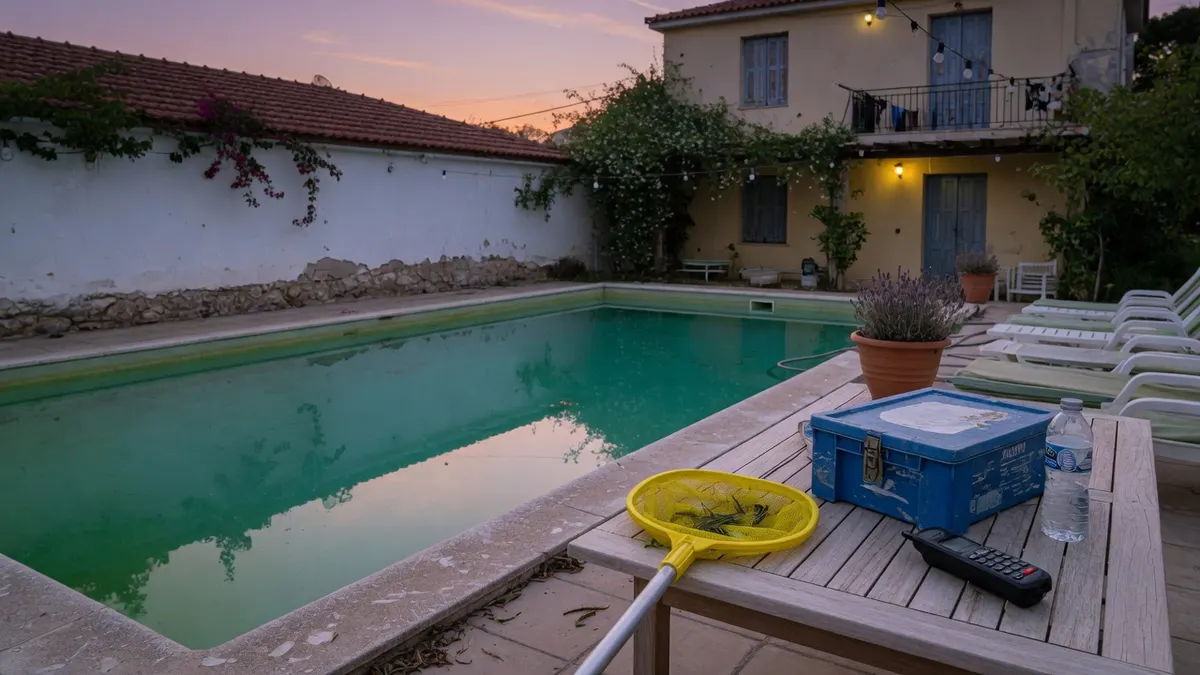
Multilingual phone reception for pool service
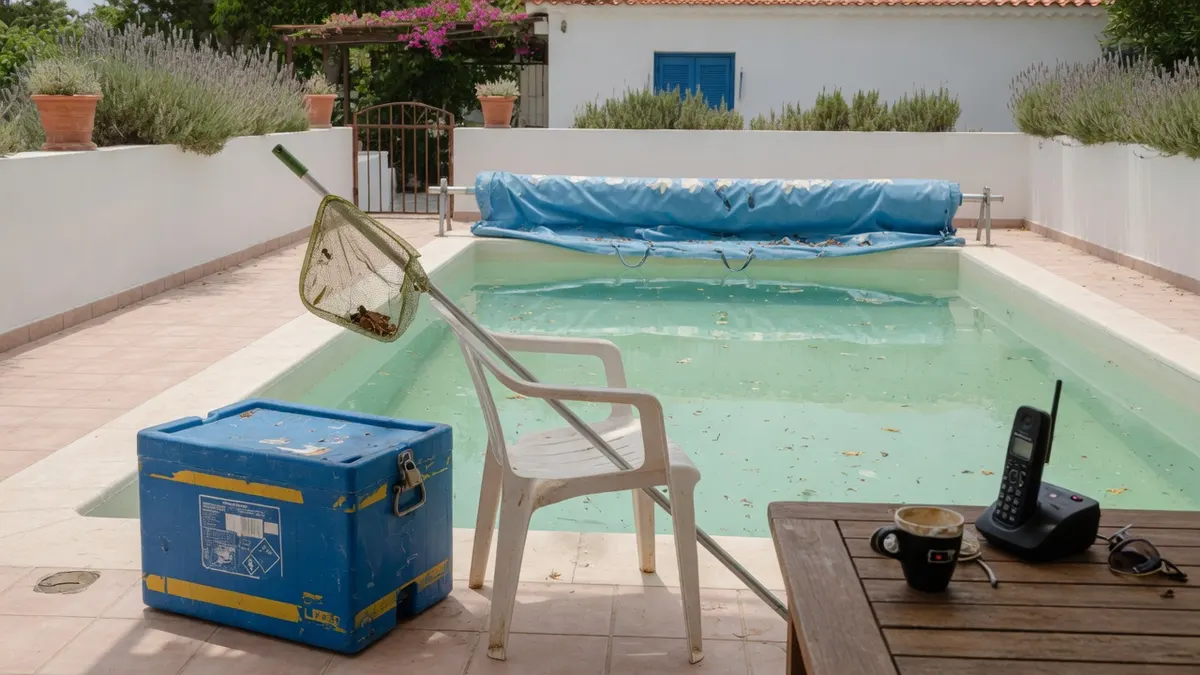
Quick summary
- A published Greek number already takes English, German, French and Italian in the same June week.
- The assistant hears the language on the first sentence and continues in it. It covers 70+ languages, and it can switch if they mix.
- Villa or hotel is still the first question. A name in English does not tell you which job it is.
- A chemical question in German is still a chemical question. Fluency does not let it name a dose.
- The spoken rule does not change: the technician tests on site. A photo of green water is still not a recipe.
- The confirmation SMS goes out in the language of the call, with who must be there with the key.
TL;DR
You are in a plant room when a villa owner rings in English about green water and guests on Friday, or a hotel manager rings in German because the pump is down before breakfast. They will not wait for the colleague who is comfortable in English to close the kit. An assistant answers in the language it hears — 70+ languages, and it can switch if they mix Greek and English on the same call. It asks villa or hotel first, then green, pump or cover, books a time that is free, and refuses anything that sounds like a chemical, a brand or “can they swim”. It will not read a Greek label on a drum and tell them what it means.
Key takeaways
- Leave language detection on. Pinning the line to Greek is how the 07:20 English call never reaches you.
- Put villa or hotel in every language you actually hear, not only the two you staff.
- Write the callback sentence once and never vary it: the technician tests on site.
- Do not let it explain a Greek chemical label, name a dose, or say they can swim because they asked in English.
- Send the SMS in the language of the conversation, with who must open for that visit.
- Read the first multilingual transcripts with a technician. That is where a soft recipe creeps in.
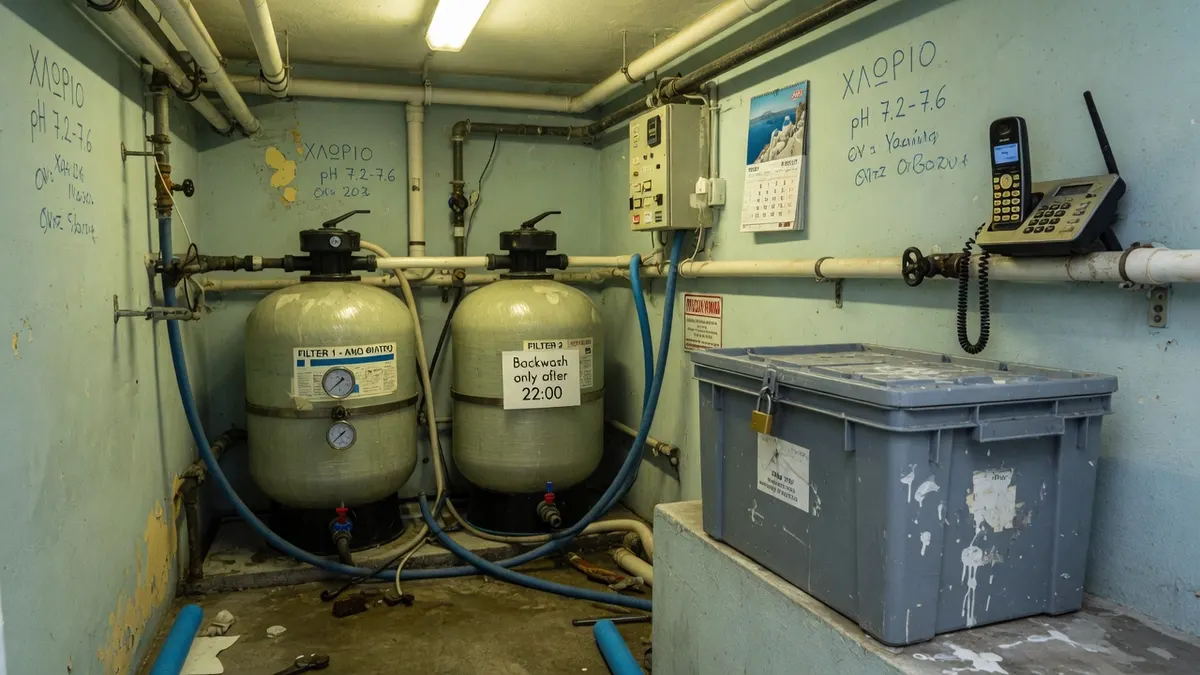
The first word is not Greek
A villa owner says “do you speak English?” You are in a plant room. The person who would have taken the English call is on a deck with a kit open. You cannot pick up. They will not wait.
The number they dialled is the one on the van, the card with the housekeeper, and the listing a manager forwarded. Those pages are in Greek. The caller is not. In a Greek route that is English, German, French and Italian in the same June week, and often more than one of those before breakfast.
Thirty seconds of hold, or a promise that someone who speaks English will ring back, is enough. They hang up and dial the next firm. Guests on Friday will not wait. A hotel that opens at eight will not wait.
Villa or hotel still has to be asked in English
The language does not change the split. Villa or hotel first. Then green, pump or cover.
A caller who is fluent in English will still ask what to pour. Fluency is not a licence. The sentence is the same in every language: the technician tests on site. This call books the visit.
If they mix — address in Greek, colour in English — the assistant stays with them. It does not drop “anyone swimming” because the words arrived in two languages. A mixed call is how a child fails to land on the note.
Do not pin the line to Greek. The 07:20 English call is the one that never reaches a voicemail in a language they would use. Leave detection on.
A drum label is still a dose
They have a drum in the shed. The text is in Greek. They want you to tell them what it says, and how much to put in tonight because of Friday’s guests.
That is a chemical question. Kindness does not make it a translation job. The assistant records that they have something in the shed, tells them not to pour until the visit, and books the time. The technician reads the label on the deck.
The same for a photo of green water with a caption in German. Not a test. Not algae named as a recipe. Book the visit.
If they ask whether they can swim, in any language, flag it. Do not invent a yes in fluent English to sound safe.
Who must open, in the language they used
The SMS follows the call. English in, English out. A Greek text to an Italian owner is how Friday’s villa is locked when you arrive.
Who has the key: housekeeper, owner abroad, hotel engineer. Write it in their language. The assistant can do that in 70+ languages. You do not type it from the plant room.
If only one technician speaks English on site, mark that person’s book. Reception in English is not a promise that the visit is in English. Say so on the call if you have that line in the notes. The assistant should not invent a bilingual technician.
Hotel breakfast, and the foreign manager
A hotel kitchen of staff who speak English to guests and Greek to suppliers. They ring at seven. They will not leave a Greek voicemail.
The assistant takes hotel, whether the pool is in use, the opening hour. It does not close the pool in English because the manager asked in English. It does not name a chemical in German to keep breakfast on track. It flags a same-day phone.
Child swallowed water that looks wrong: transfer, in the language of the call, to a phone you actually hold. Collect a name and a number while it connects. Do not tell them what to do at the pool in any language.
What you set first
Leave detection on. Write villa or hotel and the green / pump / cover split in the facts, not as a Greek-only script. Write the callback sentence once: the technician tests on site.
Mark who on the route can take an English visit if that matters. Turn the SMS language to follow the call. Read the first transcripts with a technician — that is where “just shock it” in English creeps in.
Do not put a chemical table in any language. It will read the table out.
Rates live on the pricing section of the home page. They are not repeated here.
What changes after it answers in their language
A person who would have hung up now has a first-visit note in their words, villa or hotel, a time that is free, and an SMS they can actually read.
It does not decide the dose because they asked in English. It does not decide swim. Villa and hotel are still the labels. They are not a recipe in translation.
The visit is still the deck. The difference is that you now drive to a villa that booked at 07:42, instead of discovering at noon that someone rang, said “hello”, and went to the next firm.
AI receptionist, in-house staff, or a call centre
| CITT | In-house | Call centre | |
|---|---|---|---|
| Answers in the caller's language | 70+ languages, heard on the line | One or two | Whatever was staffed |
| Switches mid-call | Yes | Rarely | Transfer, if someone exists |
| Asks villa or hotel first | Same question in every language | If they remember | Often jumps to what time |
| Names a chemical because they asked in English | Never — the technician tests on site | Tempted to | Tempted to |
| SMS in the language of the call | Yes | If they type it | Sometimes |
| Transcript the technician can use | Caller's words, language noted | A paraphrase | A short note, often in Greek |
What a month of unanswered English pool calls costs a small route
Worked from these assumptions — change any of them and the answer changes:
- About 85 inbound calls a month in season, two technicians.
- This example treats 14 of those as callers who open in a language nobody on the van speaks in that hour.
- Of those 14, 7 hang up, or ask to be called back by someone who speaks English and then do not answer.
- 4 of the 7 were first villas — guests on Friday, or a housekeeper with a photo.
- A first visit that stays is worth about €130 — put your own figure in, not ours.
- 4 first visits never reach a technician, because the first half-minute had no shared language.
- 4 × €130 = €520 of first-visit work in one month.
- Over a 14-week swimming season — this example counts 3.5 months, 3.5 × €520.
About €1,820 in that season, from the first sentence of the call.
What it costs
CITT is pay as you go: no packages, no minimum, no contract. The current rates — the monthly fee per number and the per-minute rate — are on the pricing section of the home page, which is the only place they are published.
Frequently asked questions
Do we have to set up each language ourselves?
No. The assistant recognises the language from the first sentence and continues in it, including switching mid-call if the caller changes. What you set are the facts of the route — villa or hotel, green, pump or cover, the callback sentence, who must open — so those facts are there whatever language arrived.
Can it explain a Greek drum label to someone who does not read Greek?
No, and you should refuse any system that will try. Explaining what a drum, a tablet or a bottle means is a dose, even when the motive is kindness. It records that the caller has something in the shed, books a visit or flags a same-day callback, and tells them not to pour anything until the technician has tested. The technician reads the label.
What if the caller mixes Greek and another language?
That is common on this line, especially with addresses and the word for green. The assistant can switch mid-call. Villa or hotel and the callback sentence stay in force in both languages. A mixed call is not a reason to drop the rule.
Will the SMS go out in Greek to someone who spoke English?
It should go out in the language of the conversation. That is a setting, not a hope. A first-visit confirmation in the wrong language is how a Friday villa misses the time and decides the route cannot handle them.
Does an answer in English mean the visit will be in English?
No. Reception in 70+ languages is not a water conversation in 70+ languages, and it is not a promise that the technician on the deck will speak English unless you have marked a person who can do that. It gets the caller to a time they can book. The visit is still yours. If only one person can take it in English, the assistant offers times from that person's book.
Is the transcript usable if the call was not in Greek?
You get the caller's words, a summary, and a note of the language. That is more usable than a Greek paraphrase written from memory between two decks. A technician who needs a full written translation of a long call still commissions one. They are not starting from nothing.