Missed calls at a christening the photographer cannot take
Quick summary
- You are on one knee in the aisle. The phone is in the jacket on the pew. You cannot pick up.
- A couple who asked if you are free on 14 June hangs up at the beep and rings the next name they saved.
- The people who leave a message already know you — a gallery, a sitting to move. The tape is the wrong count.
- The first question is wedding, christening or studio. A date is not a sitting.
- It checks the book before it says anything about that Saturday. It does not invent a package price.
- Forward after a short ring so you still take the call if you can step out of the studio.
TL;DR
Saturday. A parish church. The baby is in white. You are in the aisle with the long lens. The phone rings in the jacket on the pew. You do not look. The couple who wanted 14 June will not wait for a beep. They hang up and ring the next photographer they saved. The bride from last week may leave a message about the gallery; the new date will not. An assistant answers those rings, asks wedding, christening or studio, and looks at the book you already use. It will not say a Saturday is free unless that book shows it. It will not quote a wedding package from a description. It speaks the language they started in — 70+ languages — and texts the confirmation in that language.
Key takeaways
- Pull unanswered-call figures by hour, and look at Saturday on its own before you judge the week.
- Do not judge the loss by the messages on the tape — a couple who asked about a wedding date hangs up at the beep.
- Forward after a short ring so you still take the call between setups, and the assistant takes what is left.
- Tag wedding, christening and studio separately. A new date and a gallery question are not one unanswered pile.
- Connect the book you already use. If the book does not show that Saturday free, the assistant takes a name. It does not invent a yes.
- Re-count unanswered Saturday calls after four weeks. If they have not dropped, the forward is wrong, not the script.
The font, the jacket, and a phone nobody can take
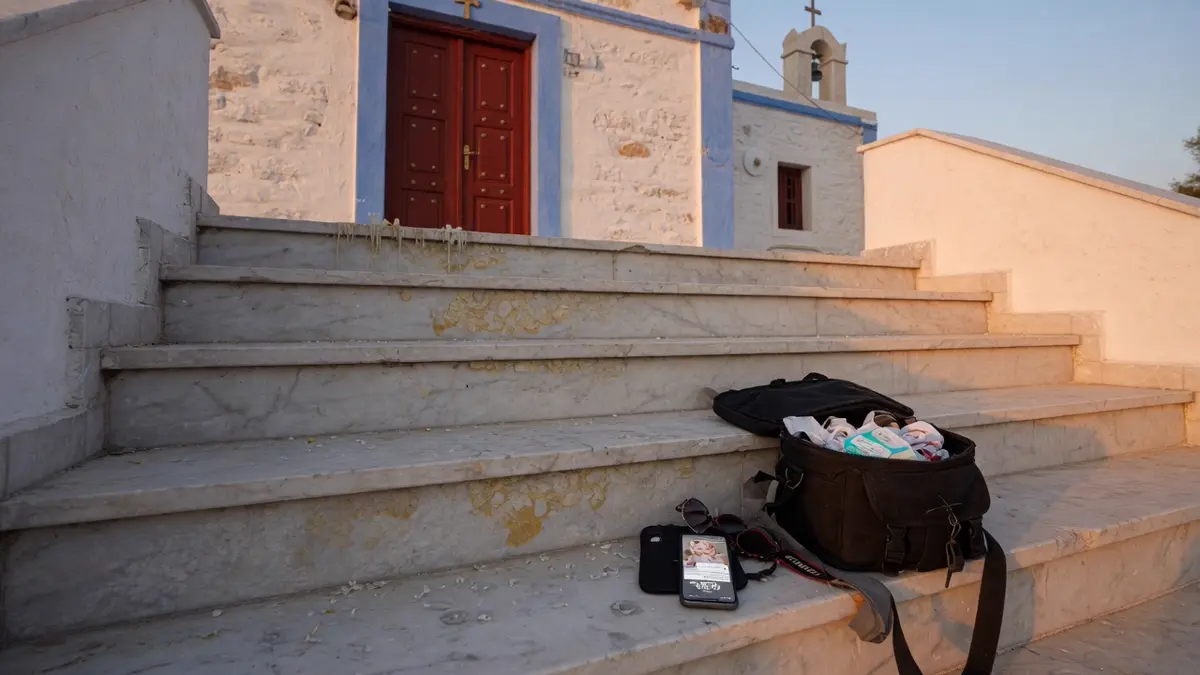
Saturday. A parish church. The baby is in white. The godfather is at the font. You are on one knee in the side aisle with the long lens. Your jacket is on the pew. The phone is in the jacket. It rings.
You do not look. The mother will see you look. The priest will see you look. The moment is the reason they hired you, and it does not pause for a number you do not recognise.
Later you are in the car to the hall, or you are in the garden for the family groups, or you are waiting for the cake. It rings again. Your hands are on a camera, or on a flash, or on a child who will not stay on the chair. You still cannot pick up.
The burst is on the one day you are already inside someone else’s ceremony. A person you hired for weekday sittings is not in that aisle.
The person who called is often already scrolling. They have your Instagram and two other names in the same saved folder. They asked a short question — are you free, do you do baptisms, what does a wedding cost — and they will not record a voicemail in a church car park. They hang up and dial the next name.
You see the missed calls when you sit down with the cards. Two of the numbers will not pick up when you ring back. They already spoke to someone who answered.
A Tuesday morning in the studio can be quiet. A June Saturday at noon is not. Average the week and the christening disappears into a calm figure, and you hire as if the gap were a missing weekday receptionist. Pull Saturday on its own. That is the day the next name is already saved, and you cannot put the camera down.
Who hangs up, and who leaves a message
Not every unanswered call is worth the same.
Someone rings about a gallery from last Saturday. The link, a photo they cannot find, whether the sneak peek is coming. They already had the day. They know your name. They will record a message, or they will write on Instagram. These are the calls you see, so these are the calls that shape how large the problem feels. They are also the cheapest miss.
Someone rings about the 14th of June. No names yet, no church, no trace in the diary. They had you and two other photographers in the same glance. They hear the beep and treat it as nobody there. They hang up. This is the call that would have paid for the month.
Someone asks what a wedding costs. Hours, a second shooter, an album, an island — they have not said any of that. If nobody picks up they do not leave a brief on a tape. They ring the next person who answers and they take the first number that sounds ready.
Someone wants a family sitting next week. Studio or outdoors, four people, a weekday if you have one. If it keeps ringing they may try again, because they already know you. They may leave a message. That is not a new Saturday. It is an hour you can still put on a Tuesday if you call them back before they book someone closer.
The messages you do get are not the Saturdays you lost
The people who record a message already had a wedding, or want a sitting in November, or know which gallery they are waiting for. The people who will not record one are sitting in a car after a venue visit, with 14 June still open and three names in the same folder.
So you hear last week’s bride asking when the photos will be ready, and you do not hear the couple who rang about June and booked someone else. If you judge the problem by the messages, you conclude you miss a couple of gallery questions. The log says otherwise, once you isolate Saturday.
A caller who speaks no Greek will not leave a long message in Greek. English from a couple flying in for a church in Glyfada. German from a mother calling after a venue visit. French, Italian, in the same month. They hang up at the beep and ring the next photographer who answers in their language.
A direct message on Instagram is a person who decided you were worth a wait. It is a useful channel. It is not a count of the people who tried the number on the card. The couple with a date and three names does not open the app and type. They try the number, then the next number.
If you have never asked the provider for unanswered calls by hour, do that before you change a script or a hire. Four spring weeks is enough to see the shape. Look at Saturday. Look at the hour you are usually inside a church. Leave the rest of the week as one figure until you have those two.
Three rings while you are still at the font
The calls do not arrive one, then a gap, then one. They arrive as a new wedding date, a christening question, a package price, and a “can we move Tuesday” in the window it takes to photograph the godfather.
Hire someone for the studio on Saturday and they take the first sitting call. Callers three and four still hear ringing, or a busy tone, or the beep — and they are often the new dates, not the sitting. One extra pair of hands in the studio still leaves couples on the next name. The assistant can hold more than one conversation while the camera stays up.
A second mistake is quieter. Forward every ring at once, including the ones you would have taken between setups, and the client who only wanted to move a headshot never hears you. Then you decide the assistant does not sound like you. Leave the forward on. Set it for fifteen or twenty seconds. You keep what you can reach. The assistant takes the rest. Calls you answer cost nothing.
A second line in the same jacket does not change this. The third caller is still waiting. What changes it is that the third call is answered while you are still in the aisle.
After the cards, and the hour you thought was quiet
Evening is when you sit down. The cards come out. The paper diary is open. You scroll the missed list. Two numbers will not pick up. They already spoke to someone who answered at noon, while you were at the font.
Morning after a wedding is no quieter in the way that matters. You are editing, or you are asleep, or you are driving home from an island. The phone on the desk rings through the studio. The caller is often last night’s mother asking when they can see a photo, or today’s couple asking if 14 June is still free. You hear it. You cannot pick up with a card still copying.
That second call is not a gallery question. Opening a “yes, June is fine” from memory, because you are tired and it sounded familiar, wrecks the book. Write the rule you already say out loud: no Saturday from a feeling. The book, or a name and a number.
If the assistant says “I think the 14th is open” and you are already in Kifisia that day, it has not heard the question. The true answers are short. That Saturday is booked. Here is another date if the event can move — and a wedding almost never can. Or I will take a name and Maris will call you. An empty rule becomes a yes you cannot keep.
A gallery complaint in the morning is another call again. The assistant does not offer a free reshoot, invent a delivery day, or promise a sneak peek you did not authorise.
A Saturday it must not invent when it answers
Catching the call is not the whole job. A yes the book does not show is a worse miss than a ring that went unanswered.
You may already be in a church that Saturday. A hold you have not released may still be sitting on that date. The paper diary and the calendar on the phone list the same days. If the assistant says 14 June is free because it sounded likely, two couples think they have you.
A couple you never spoke to books the next photographer, and you lose the Saturday. Two couples you both promised meet in the inbox, and you lose the day and the name.
It looks at the book you connected. If that book shows the Saturday free, and it already knows they mean a wedding or a christening, it may take the next step you allow — a hold, a meeting, or a callback for you to finish. If the book is silent, slow, or down, it does not fill the gap with a yes. It takes the date and the number and stops.
Do not type a hopeful line into the notes. “June is usually open” will be read out. If a Saturday is not free until you have looked, do not give the assistant a sentence that sounds like it is.
A couple who rings from a venue car park and last week’s bride who already had you are not the same person. The first needs the book. The second needs the job that is already there. Ask which they are before anyone talks about a free Saturday.
A wedding that already lives as a hold is not something the assistant moves on the phone. “Can we move to the 21st” on a date you have not confirmed is a request. You decide.
Wedding, christening, or studio — even on a call you just caught
Picking up is not enough if the first question is “what date”. A wedding, a christening, and a studio hour then land in the same note.
A wedding. Church or town hall, then a reception. That Saturday is gone once you say yes. Hours, a second shooter, an album, travel to an island — those are later, and they are yours. The assistant’s job on the first call is to find out that it is a wedding, to take the date, and to refuse to invent the rest.
A christening. Still a church. Still usually a Saturday. Still a hall afterwards. It is shorter than a wedding and it is not a studio hour. Do not let the assistant treat it as a gap you can put a sitting into, and do not let it stack a morning baptism in Kifisia on top of an afternoon wedding in Glyfada because there is a gap on the page. If you ever shoot two events in one day, you mark that yourself.
A studio portrait. Family, maternity, newborn, a headshot. This is the work that can be booked on the call. How many people, studio or outdoors, then a time the calendar can confirm. It must not drop that hour onto a Saturday that is already a wedding.
One call can hold two of these. “Are you free 14 June, and can we do a family sitting next week?” is a wedding and a studio hour. Hear both. Note both. Confirm neither until the calendar shows they can.
Write the first question the way you would for a new person on the phone: wedding, christening, or studio. One sentence is enough. Skip it and the wrong day goes in the book.
A package is the same kind of trap. Hours of coverage and a civil ceremony plus a church three hours later are not the same job as a parish wedding and a hall next door. Santorini in June is not Glyfada. The assistant may repeat a published studio item you typed in — a family sitting, a newborn hour, a listed headshot. If you have no published figure for unseen wedding work, it takes the request. Do not put a wedding number in the notes. It will read the number out.
How CITT handles a missed photographer call
- The number on the card stays yours. A forward sends what you do not answer. A call you pick up between setups never leaves your phone.
- Several calls are answered at once. A Saturday burst is a set of conversations, not a stack of missed calls in a jacket.
- It asks wedding, christening or studio first, then takes the facts that belong to that request.
- It looks at the book you already use before it says a Saturday is free, and writes only what you allow.
- It repeats the hold rule you wrote — forty-eight hours, or no hold at all, only a callback.
- It confirms by SMS, in the language of the call — 70+ languages.
- What cannot be finished on the call — an unpublished package, a Saturday the book will not confirm, an island, a second shooter, a gallery complaint — goes to you as a tagged note.
- You get the transcript, the summary, and which of the three requests the caller made, tagged so Saturday is not one pile called “missed”.
What it will not do
You keep the camera up. The assistant picks up.
It will not invent a free Saturday. If the book does not show one, the caller gets a name taken, not a yes.
It will not invent a wedding package, a travel fee, or a second photographer. A studio price is only a figure you typed in.
It will not put a sitting onto a Saturday that is already a wedding. It will not treat a christening as a gap before someone else’s vows.
It will not offer a free reshoot, a sneak peek, or a gallery date you did not write down. It takes the request. A human decides.
It will not treat a gallery question as a new date, or a studio hour as a whole Saturday. Mark the three requests, or the wrong day goes in the book.
What you set up first
- The Saturday slice of the call log. Unanswered calls, by hour, four busy weeks back. If you skip this you will never know whether anything moved, and you will argue from the feeling of the evening list.
- Forward on no-answer, not always. Fifteen to twenty seconds. You keep the calls you can take between setups.
- Three tags: wedding, christening, studio. The weekly summary is useless if Saturday is one pile.
- The book you already use. If the book does not show that Saturday free, the assistant takes a name. It does not invent a yes.
- The hold rule, said in one sentence the assistant can repeat — forty-eight hours, or no hold, only a callback.
- Re-pull the Saturday log after four weeks. Compare unanswered calls, not assistant volume.
Then the published studio prices it may repeat, the studio address, where to park, how a sitting is cancelled, and one line that forbids a package price from the phone. Do not give it a wedding figure it would read out.
Rates for the service live on the pricing section of the home page. They are not repeated here.
Put your own Saturday figure in
The worked example above is arithmetic on stated assumptions. A parish wedding in Glyfada and a destination Saturday on Santorini are not the same day. Put your own figure in. If Saturday still justifies the change with your number, the argument is real.
Count unanswered calls on the days you are already in a church. Then count them again.
AI receptionist, in-house staff, or a call centre
| CITT | In-house | Call centre | |
|---|---|---|---|
| Phone during a ceremony | Several calls answered at once | After the kiss, if the phone is still ringing | Depends who was rostered |
| Several calls in the same few minutes | Several conversations at once | One, then a busy tone | Depends on the Saturday roster |
| First question | Wedding, christening, or studio | Yes — they can hear it | Often jumps to the date |
| Says 14 June is free from memory | Never — book or callback | If they remember the diary | Reads a shared sheet, if someone updated it |
| Quotes a wedding package unseen | No — takes the brief and a callback | Can talk hours and the album | Reads a number from a sheet |
| Who hangs up at the beep | Still answered | Gone — they ring the next name | A message for Monday |
| Couple's language | 70+ languages | One or two | Whoever is on that shift |
The Saturday tape that under-counted a christening
Worked from these assumptions — change any of them and the answer changes:
- You are shooting a christening from the church in the morning into the hall in the afternoon.
- On that Saturday about 14 inbound calls reach the number on the card. You take none of them. Your hands are on a camera.
- Of the 14, 3 leave a message and 11 leave nothing.
- Of the silent eleven, 4 are new questions about a wedding date.
- A booked wedding Saturday is worth about €1,100 to the studio — YOUR figure will differ, and this is the number to change first.
- Not every enquiry becomes a Saturday you could take. This example assumes 2 of those 4 would have been dates you could still hold. Change that if yours is lower.
- The tape after you sit down with the cards shows 3 people. That is the number the studio believes.
- The provider's log shows 14 unanswered. The other 11 are the ones nobody counted.
- 4 of the 11 silent calls were new wedding dates. If 2 of those 4 would have been Saturdays you could take, that day is €2,200 that never reached you.
- Six Saturdays you already had a job, at that rate — 6 × €2,200. Put your own Saturdays in.
About €13,200 a season, from Saturdays you were already working — and only if you accept the conversion above. Change it.
What it costs
CITT is pay as you go: no packages, no minimum, no contract. The current rates — the monthly fee per number and the per-minute rate — are on the pricing section of the home page, which is the only place they are published.
Frequently asked questions
How do I find out how many Saturday calls I actually miss?
Ask your telephony provider for unanswered calls by hour, and isolate Saturday. If you have never done this, start there. The tape is the wrong count: a couple who asked whether you are free on 14 June hangs up at the beep and rings the next photographer they saved. The log is the number to work from.
Would hiring someone just for Saturday not fix this?
A person you hire for weekday sittings does not sit in the aisle with you. They can take a studio call on a Tuesday. They cannot take the burst that arrives while you are at the font, then again in the car to the hall, then again during the groups. One extra person on a weekday changes how many hands can leave a light stand. It does not change how many people ring during someone else's ceremony.
Does the Instagram form not catch them?
Some of the calm ones, later. A couple already looking at three names in the same saved folder does not open a form and wait. They try the number on the card. If it rings out, they try the next name. Direct messages are from the people who already decided you were worth a wait.
What happens to the calls I do answer?
Nothing, and nothing is charged. The forward only sends a call onward when it has rung for the seconds you choose. A call you pick up between setups never leaves your phone.
Can it tell a caller I am free on 14 June?
Only if the book you connected shows that Saturday free, and only after it knows whether they mean a wedding, a christening or a studio hour. A silent or stale book is a name and a number, not a yes. Answering the missed call with a guessed Saturday is worse than leaving it unanswered: you may already be in a church that day, and two couples then think they have you.
How soon can I tell it worked?
Four weeks of Saturdays, against the same unanswered-call figure you pulled at the start. Do not use “calls the assistant handled” as the measure — that number cannot tell you whether anyone is still ringing out while you are at the font.