Book kindergarten visits without mixing papers and pickup
Quick summary
- The assistant reads the diary before it offers a time, so a papers drop is never offered as a director sitting.
- A time to leave an AMKA and a first visit with the child are different bookings. Get that wrong and a family sits in ten minutes reserved for the yard.
- Place, illness, pickup or collect first. Then the child's name. Then the diary.
- Anything that sounds like pedagogy, a fever treatment, or a new collect name stays a callback.
- If the assistant cannot read the diary, it takes a callback. It does not guess.
- The assistant texts the time, the type, and which papers to bring, so what arrives is what you can use.
TL;DR
You are at the door. A parent who wants a time will not wait for a callback just to learn whether Thursday after drop-off is free. An assistant can book those times if it reads the diary first, treats a papers drop as different from a director sitting, and asks place or visit before it places anything. A place is a waitlist. A visit is a visit. A pedagogy question is not a new visit type — the director will talk to them. If the diary cannot be reached, the assistant does not guess. It takes the request and says so. The assistant texts the time, the type, and which papers to bring.
Key takeaways
- Give the assistant the types and their real durations before you let it book — papers drop, director sitting, trial morning, waitlist callback.
- Mark drop-off hours, pickup hours and August close in the same diary it reads.
- Test a move on an existing papers drop and on a director sitting, separately, before you test a new place.
- Turn on the SMS at the moment of booking, with the paper list for that type.
- If the diary cannot be reached, the only answer is a callback.
- Check the first fifty bookings by hand. That is when you find the hour that was a fever put into a director sitting.
A time that is actually free, after the door is quiet
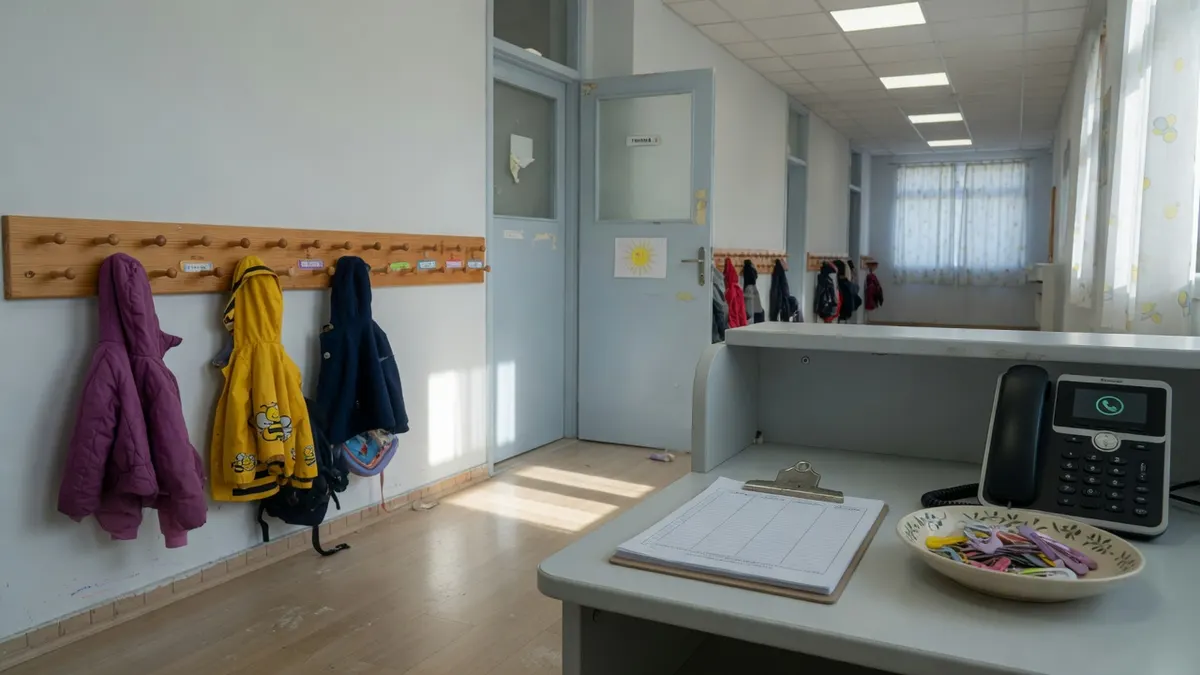
The parent who wants a slot will not wait until you have hung the last bag. They will ask for eight, because eight is when they are already on the street. Eight is drop-off. A family standing in the cloakroom with an AMKA while you have a child on a hip is not a visit. It is a blockage.
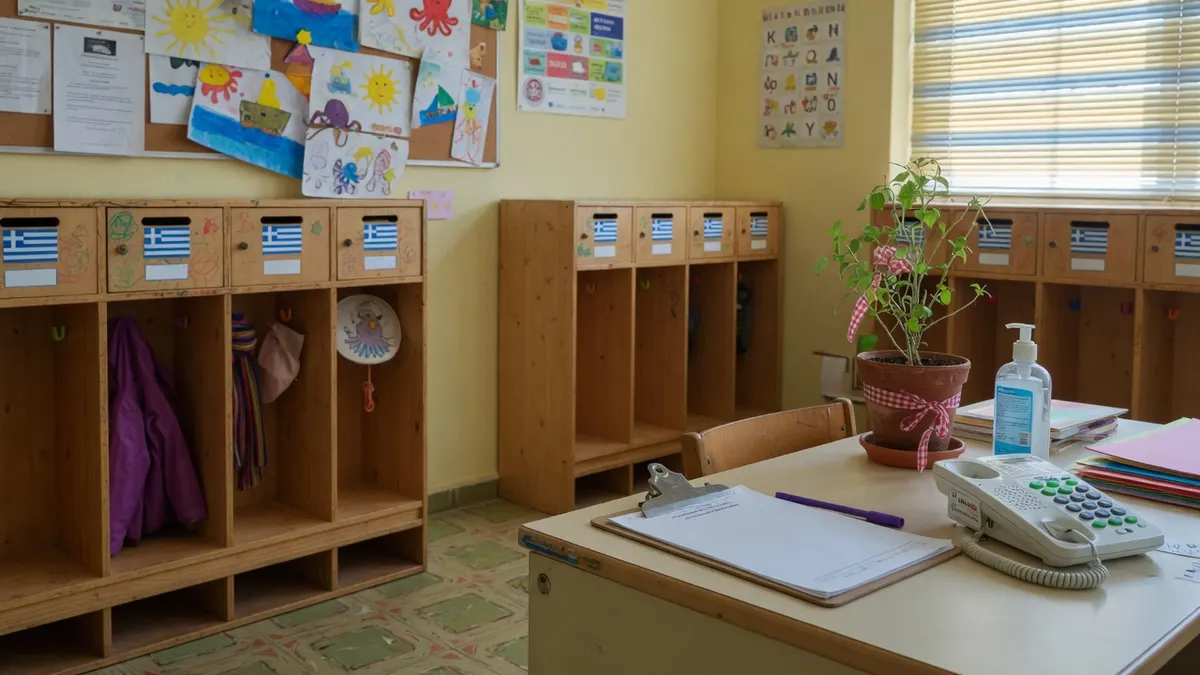
The assistant reads the diary you already keep. It offers only hours you marked as visitable. After the door is quiet. Before pickup. A late afternoon when the rooms have gone home. It does not invent Thursday from last week’s pad.
If it cannot see the diary, it takes a callback. A guessed time is worse than no time. You then spend the morning apologising in the yard.
Papers, sitting, trial morning, first day
These four are not one booking with a different label.
Papers drop. AMKA, vaccination booklet, a form from the municipality, a photocopy of an ID. Ten minutes at the office. The child does not need to come. The assistant names the list you typed in. It does not invent which document a clerk will accept.
Director sitting. A new family, a waitlist conversation, a parent who wants to talk about hours. You, a quieter room, half an hour. Not 08:15. Not a slot you blocked for the cook.
Trial morning. The child comes. You have a rule for how long, and whether a parent stays. Write the rule. The assistant books only if the room that day still has the space you allow for a visitor. It does not add a trial on top of a full infant room.
First day. This is not a diary convenience. A first day happens when a counted cot is free and the papers are in. The assistant does not write a child into Monday because the parent asked for a time. If the room is full, the honest booking is a waitlist and, if you offer it, a papers drop.
Mix them and Thursday fills with booklets while the family who needed you sits at the gate for ten minutes.
The split still comes before the diary
Place, illness, pickup, or who may collect. Then the child’s name. Then, and only then, a look at the week.
A fever is not a sitting. “Maria will not come today” is an absence. If they also want a time to talk about coming back, that is a second note. Do not let the assistant park the absence behind a hunt for Thursday.
A pickup change is not a visit. “Yiayia at 16:30” is a collect check. If yiayia is on the list, there is nothing to book. If she is not, the assistant flags you. It does not create a “meet the grandmother” slot to sound organised.
A pedagogy question is not a visit type. “Will she settle?” can become a director sitting if you offer those for new families. The assistant still does not answer it on the way to the booking.
What must not be offered as a time
Drop-off. Pickup. The hour you eat. August weeks when the rooms are dark. A public holiday you marked. A room that is closed to visitors because of illness in the house — if you typed that close.
The assistant should say the close, not hunt for a gap that does not exist. Parents remember the SMS. An SMS that offers 08:15 trains them to arrive at the worst moment.
If you run a short Friday, mark Friday. If you lock the gate at 16:00 in August, mark August. A booking into a dark week is a family on the pavement with a child and a folder.
The SMS is part of the booking
The text names the time, the type, and the papers. “Thursday 16:45, papers drop, bring AMKA and the booklet.” Not “see you tomorrow.” Tomorrow at eight is how the cloakroom fills.
It goes out in the language of the call — 70+ languages. A parent who booked in English should not receive a Greek list they then ignore.
Turn the SMS on at the moment of booking, not in the evening digest. The parent who is still in the car can turn around for the booklet.
If you change a time, the assistant writes the new time into the same diary and sends a new text. It does not leave the old Thursday live.
Illness, collect, and a visit on the same call
People stack. They say the child is off, and also they want to bring papers, and also can the neighbour collect on Friday.
That is three notes. The absence goes on today’s list. The papers drop goes into a visitable hour. The neighbour goes to the collect list you already keep — or to you, if the neighbour is not on it.
If the assistant books one “catch-up” at 09:40 and stuffs all three into it, you sit down with a booklet, an absence you already knew, and a collect question you cannot answer in ten minutes.
Write the stacking rule: split, then book only the part that is a visit.
Trial mornings that collide with the count
A trial morning uses a chair. If the infant room is at the maximum you set, a trial is an extra pair of hands on a lap. The assistant must see that count.
If you allow one visitor on a quiet Tuesday, mark Tuesdays. If you never trial on Mondays because Mondays are fevers, mark Mondays closed for trials.
The assistant does not say the child will “see how they like it” as if that were a pedagogy promise. It books the window you described. Whether the child stays is a conversation after, with you.
What you configure before it books
Types and durations. Closed blocks: drop-off, pickup, lunch, August. The paper list per type. Whether a trial may happen before papers. The maximum in each room, including visitors. The sentence that forbids pedagogy and a treatment.
Then test. Move a papers drop. Move a director sitting. Do not test those two as if they were the same hour. The first fifty bookings are where you find the 08:15 that slipped through.
If the diary cannot be reached, the only honest sentence is a callback. See pricing for how a call you pick up is treated.
What a good week of visits looks like
The cloakroom is for children and bags. The office hour is for folders. The yard conversation is yours.
The assistant’s job is to keep those from sitting on top of each other. A parent who would have turned up at eight now has 09:40 and a list. A parent who would have asked you, at the door, whether the child is ready, now has a sitting after pickup — and still no answer on the phone.
It will not invent a first day. It will not put a trial on a full room. It will not offer a time it cannot see.
Rates live on the pricing section of the home page.
AI receptionist, in-house staff, or a call centre
| CITT | In-house | Call centre | |
|---|---|---|---|
| Reads the diary before offering a time | Yes, the diary the director works from | Yes | Usually not — takes a message |
| Books after drop-off and before pickup | Yes, if you marked them | No, they are at the door | Sometimes |
| Treats a papers drop as different from a sitting | If you marked the two types | Yes | Rarely sees the week |
| Starts with place, illness, pickup or collect | Yes — before it looks at the diary | Yes | Often jumps to what time |
| Books a pedagogy conversation as if it were advice | Never — the director will talk in person | The director does, in the yard | Sometimes books "a settle chat" |
| Sends the confirmation and which papers to bring | Automatically, by SMS | If they remember | Sometimes |
What a month of empty director sittings costs
Worked from these assumptions — change any of them and the answer changes:
- Two people. About 28 booked times a month to leave papers, sit with the director, or walk a trial morning.
- An empty director hour is not given to someone else the same day.
- About 12% of booked times arrive with the wrong papers, or nobody comes. Check your own figure. Kindergartens vary.
- Recoverable value of a used hour, €70. Put your own figure in. A director sitting and a ten-minute drop are not the same.
- A reminder that names which papers to bring cuts empty times by a third. Challenge this first.
- 28 × 12% = about 3 empty or unusable visits in a month.
- A third of those, 1 visit, is the one a named reminder would have saved.
- 1 × €70 = €70 that month, from one recoverable sitting.
- Ten open months — 10 × €70. Put your own months in if you close in August.
About €700 a year from empty director hours — only if you accept the reminder effect. Change it.
What it costs
CITT is pay as you go: no packages, no minimum, no contract. The current rates — the monthly fee per number and the per-minute rate — are on the pricing section of the home page, which is the only place they are published.
Frequently asked questions
Can it book a first day in a room that is full?
No. A first day is not a diary trick. It checks the waitlist and the count you gave it. If the room is full, it offers a waitlist and, if you marked it, a visit to leave papers. It does not write a child into Monday because the parent asked for a time.
What if they want to come during drop-off?
Mark drop-off as closed for visits. The assistant should not offer 08:15 for a director sitting. After the last bag is on the hook, or before pickup, are the hours you actually have. If the diary cannot show those blocks, do not let it book.
Can it book a trial morning without the papers?
Only if you said a trial morning may happen before enrolment. Many of you want the AMKA and the booklet on the desk first. Write that. The assistant repeats the paper list on the SMS. It does not invent which documents the municipality wants.
They asked if the child is ready. Is that a booking?
It is a callback, or a director sitting if you offer those for new families. It is not a diagnosis and it is not a pedagogy hour the assistant can fill with advice. Book the sitting. Do not let it answer on the same call.
What if the diary is down?
It takes the request and says someone will call back. It does not guess Thursday from last week's pad. A guessed time at drop-off is a family standing in the cloakroom while you have a child on a hip.
Do they get a text?
Yes, if you turn it on. The SMS names the time, whether this is papers, a sitting or a trial morning, and which documents to bring. It goes out in the language of the call. See [pricing](/en/#pricing) for how answered calls are treated.