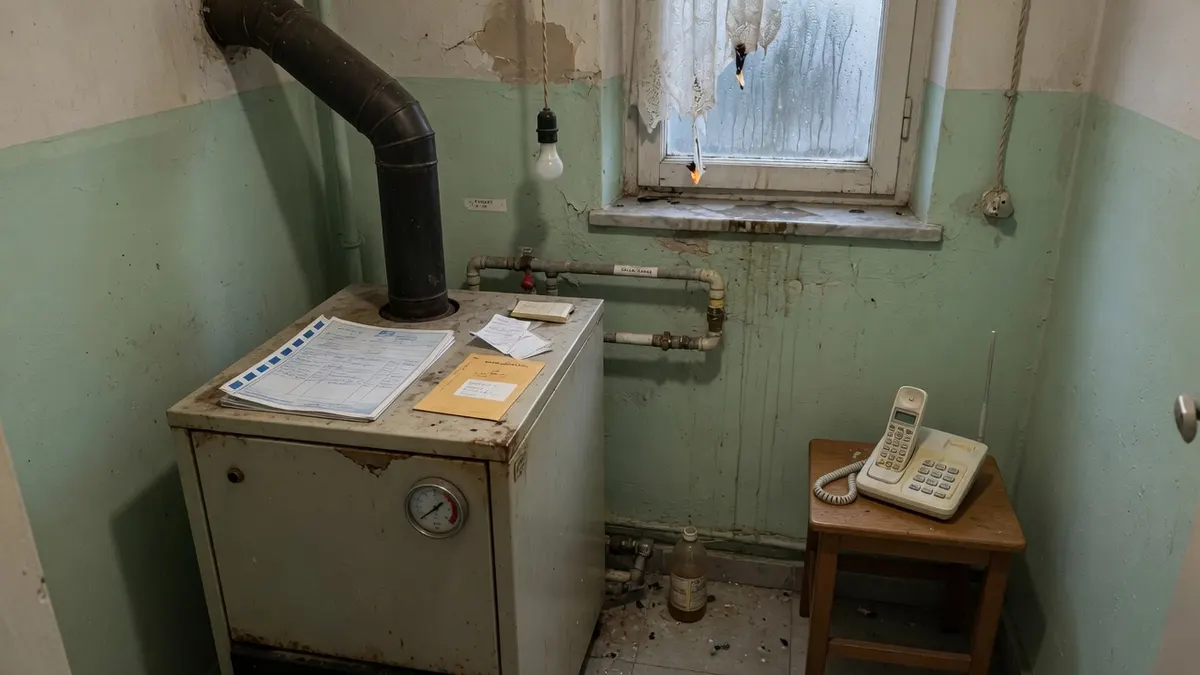
Service chase and lockout follow-up for heating vans
Quick summary
- You are in a basement. The October service list and yesterday's lockout without a key still have to be chased.
- The list is a named plant, a morning reminder, or a missing key. Not a second opinion on which button to press.
- Every call starts with the address or the name on the file. If they do not recognise them, the call stops.
- It does not tell them to reset. A missing key is a yes or no. What the red light means is a callback.
- If they ask which button to press, the assistant writes the question down and says the technician looks at the boiler.
- SMS does the first reminder. The voice call is for the plant that still has no key the morning after a frost.
TL;DR
You are in a basement. Twelve October service letters are still unanswered and yesterday's lockout still has no plant-room key. Nobody is going to spend the afternoon ringing. An assistant works the list you give it: address or name on the file, one purpose. It asks whether someone will be there with the key. It does not say what the red light means, whether the tank is empty, or which button to press. If they ask, it writes the question down and says the technician looks at the boiler. It can book a morning if that morning is free. It will not ring a tenant's mobile about a communal plant that is not on their file.
Key takeaways
- Build each list from your own files: address or name, the number on the file, and one purpose.
- Do not put a tenant mobile on a communal chase unless that number is the number on the file.
- Write the purpose as a reminder or a chase, not as a question about a reset.
- If the client asks which button to press, the assistant ends the call and flags the technician to call back.
- Check the book before you speak a morning. Do not read Thursday off last week's pad.
- Keep boiler prices and last year's neighbour off the script. The technician looks at the plant.
The lists on the seat while you are in a basement
The jacket is still open. Twelve October letters are still unanswered. Yesterday’s lockout still has no key. You are not going to spend the afternoon ringing.
That is the outbound problem on this van. Not a campaign. Not a hunt for new boilers. A list of plants you already know, an address you have already written down, and nobody free to ring because both hands are on a gun.
The assistant works only the list you give it. One purpose each. Will someone be there with the key. Can we keep Thursday for the clean. Did the hopper get emptied. It does not add “and while I have you, do you want a quote”.
Open with the plant, or stop
The call says the van name, the address or the name on the file, and asks whether this is that person. If they do not recognise the plant, the call ends. A tenant who picked up the manager’s phone does not get a briefing on a communal lockout. A neighbour who answered a house mobile does not get a hopper lecture.
Communal files are the usual trap. The number on the file is the manager. A tenant who is cold will pick up anything. The assistant does not move the conversation onto their mobile unless that mobile is the number you entered.
One purpose, then the book
A key chase is a yes or no, then a morning if the book has one. A service reminder is a window you already wrote down, checked again before it is spoken. If Thursday has since filled with a lockout, the assistant does not read Thursday off last week’s pad. It checks, or it takes a callback.
If they ask which button to press, the chase is over. The question is written in their words. The technician calls back. A reminder that becomes a walkthrough has no one in front of the boiler.
If they ask whether the tank is empty, or what a new boiler costs, those are callbacks too. The assistant does not fill the silence with last year’s neighbour.
October is not January
October is letters. People still have heat. They forget. The chase is a morning and a key, not a rescue.
January is lockouts. The chase is yesterday’s plant that still has no access, or a shop that said they would be there and were not. Shorten the list. Same-day flags stay on a phone you hold. Do not let the assistant work a long October list while five January lockouts are waiting for a key.
August, if you chase summer checks, needs its own dates. Do not ring a mountain house in a week you cannot reach the village.
What you put on the list
Address. Name. Number on the file. Fuel. One purpose. Whether a morning is already in the book. Who should hold the key.
You do not put a reset diagram. You do not put a price. You do not put a tenant who once called about a radiator on a communal plant chase.
Export the files. Tick them. The assistant does not invent a fourth name because the afternoon looks quiet.
What a good outbound call sounds like
Van name. Plant. Are you the person on the file. Purpose in one sentence. Yes or no. A morning that exists, or a note. Stop if they ask for a reset. SMS of the reminder, not of a sequence.
There is no “press it until we arrive”. There is no quote. There is no tenant briefed about a basement they cannot open.
If the assistant is efficient and still talks them through a lockout so the file can move, you own that sequence. Put the person who still has no key on tomorrow’s morning, and put the button question on a callback with your name on it.
Rates live on the pricing section of the home page. They are not repeated here.
Who is not on the list
A lead who sent a photo of a plate last spring is not a chase. That is inbound work if they ring again. Outbound here is plants you already opened, letters you already sent, lockouts you already took.
A spouse’s mobile, a shop downstairs, the café that holds keys for the block — only if that number is the number on the file. A helpful neighbour is how a communal plant gets described to the wrong person, and how a reset request arrives from someone who does not own the basement.
Do not chase a heat-pump terrace and an oil plant on the same script. The purpose line has to name the fuel, or the person who picks up will answer for the wrong jacket.
After the call
You see the purpose, whether they will be there, the morning if one was booked, and any question that stopped the chase. You do not see a completed reset. You do not see a price. You do not see a tank declared empty from a sentence.
If half the October list still has no key after two weeks of calls, the problem is not the greeting. It is the number on the file, or a manager who is not the person who opens the door. Fix the list. Do not lengthen the script.
The value of a recovered morning is yours to put in. The worked example above is arithmetic on stated assumptions. A van that lives on communal oil and a van that lives on wall boilers are not the same week. Put your own figure in.
AI receptionist, in-house staff, or a call centre
| CITT | In-house | Call centre | |
|---|---|---|---|
| Key chase after a frost lockout | Yes, from your list | When someone has time | If you write a script |
| October service reminders | Yes | Yes | Sometimes |
| Starts with the address or the name | Yes | Yes | If you insist |
| Reads a reset to hurry the key | Never — the technician looks at the boiler | The technician does, at the plant | A risk if the script drifts |
| Answers whether the tank is empty | No — flags a technician | The technician does | Must not; sometimes does |
| Offers a morning the book does not have | No — checks the book, or takes a callback | If they check | Often from last week's pad |
| Rings a tenant about a communal plant | No — only the number on the file | Only if you said so | A risk if the list was not read |
What unchased October letters cost one week
Worked from these assumptions — change any of them and the answer changes:
- Two people, 22 open service files in October, each waiting on a morning or a key.
- This example treats 8 of those 22 as still unanswered two weeks after the letter.
- A morning that sits empty, or is pulled when the key arrives at four, wastes about €140 of reserved time — put your own figure in, not ours.
- A two-week outbound chase recovers half of those missing mornings. Challenge this first; vans vary.
- 8 files still open on paper, two weeks out.
- Half recovered — 4 mornings that move on the key they needed.
- 4 × €140 = €560 of reserved time protected, in one week of chasing.
- Several such weeks before the frost — this example counts four.
About €2,240 a season of van time, from calls that only ask whether someone will be there with the key.
What it costs
CITT is pay as you go: no packages, no minimum, no contract. The current rates — the monthly fee per number and the per-minute rate — are on the pricing section of the home page, which is the only place they are published.
Frequently asked questions
Can it tell them what is missing for the service?
It can name the item you put on the list — the plant-room key, access to the tank, the hopper emptied. It should not rebuild the boiler on the call, and it should not decide that a particular noise means the service is overdue. If they ask which button to press, that is a callback. The technician looks at the boiler.
What if they ask for a reset, on the chase call?
The assistant does not answer. It says the technician looks at the boiler, takes the question in their words, and ends the chase. A chase that becomes a lockout walkthrough has no one in front of the plant, no note of a decision, and no technician attached. The transcript still helps — you return a real question rather than “they rang”.
Can it offer a new morning for the clean?
Yes, if you allow that purpose and if it checks the book before it offers a morning. It still does not tell them what the red light means beyond the list you entered. A reminder that starts reading a reset has stopped being a reminder.
Does it still ask for the address when we ring?
Yes. The call opens with the van name, the address or the name on the file, and it stops if the person on the line does not recognise them. That is how you avoid briefing a tenant about a communal plant, or a neighbour about someone else's lockout.
Can it chase an annual service from an existing client?
As a morning reminder, yes: we have a window this week, can you be there, here is who should hold the key. Not as a sentence that the boiler is safe until Friday, and not as a price. “We still have Thursday at 09:00 for the oil clean” is reception. “Just press reset until then” is override.
Who decides who is on the list?
The van. The assistant does not invent people to ring. You export or tick the files that need a reminder or a chase, with one purpose each. A list that mixes “where is the key” with “see if they want a new boiler” is two jobs, and only the first one belongs here.