Book heating visits without mixing lockout and service
Quick summary
- The assistant reads the book before it offers a morning, so a lockout is never offered as an annual clean.
- A thermostat look and a communal plant are different bookings. Get that wrong and a manager sits in twenty minutes reserved for a jacket.
- Oil, gas or pellet first. Then lockout or service. Then the book.
- Anything that sounds like a reset, a bypass, or a twenty-minute arrival stays a callback. The technician looks at the boiler.
- If the assistant cannot read the book, it takes a callback. It does not guess.
- The assistant texts the window, the fuel, and who must be there with the plant-room key.
TL;DR
You are in a basement with the burner open. A caller who wants a morning will not wait for a callback just to learn whether Thursday is free. An assistant can book those mornings if it reads the book first, treats a lockout as different from an annual clean, and asks oil, gas or pellet before it places anything. A lockout is a note. A service is a morning. A reset question is not a new visit type — the technician looks at the boiler. If the book cannot be reached, the assistant does not guess. It takes the request and says so. The assistant texts the window, the fuel, and who holds the key.
Key takeaways
- Give the assistant the types and their real durations before you let it book — lockout look, annual clean, radiator, new-boiler survey, communal plant.
- Mark plant-room mornings and service days in the same book it reads, including August.
- Test a move on an existing annual clean and on a lockout look, separately, before you test a new boiler survey.
- Turn on the SMS at the moment of booking, with who must be there and which plant.
- If the book cannot be reached, the only answer is a callback.
- Check the first fifty bookings by hand. That is when you find the hour that was a lockout put into a service morning.
When someone wants a morning and you are in a basement
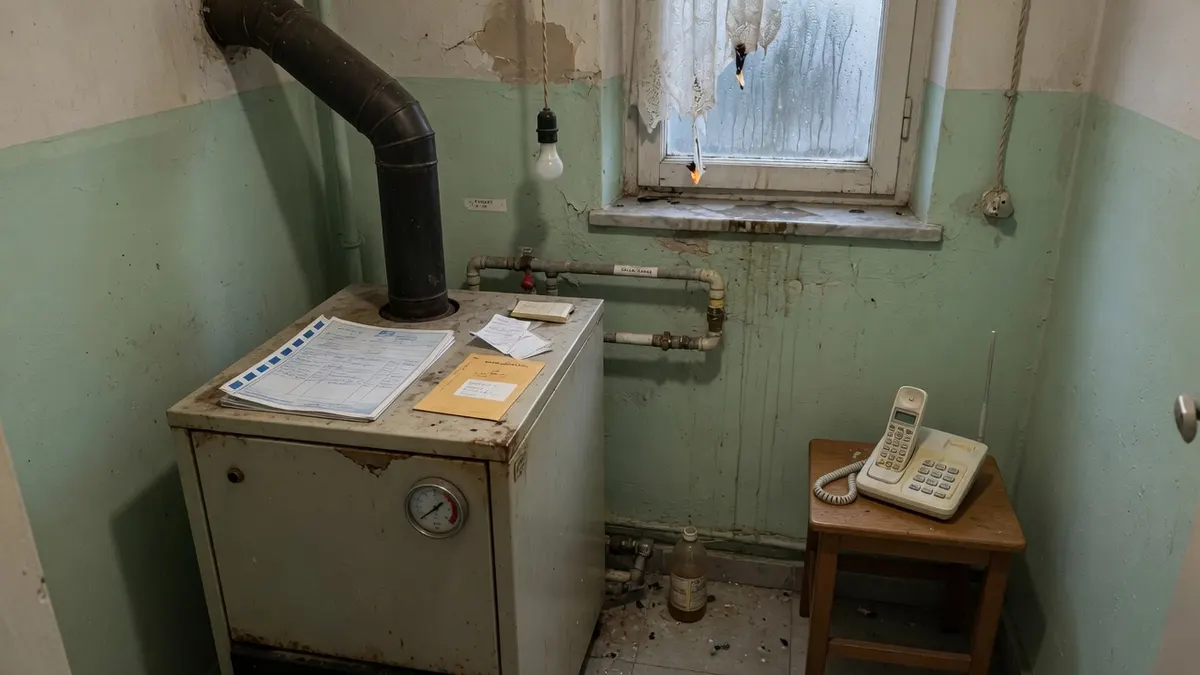
One of you is inside a jacket. The other is on a landing with a radiator key. The phone rings.
A manager wants Thursday at nine for the annual clean. A tenant wants someone today because the house is cold. A shop wants twenty minutes for a thermostat that will not come on. You cannot pick up. The burner is still open.
Those three callers are asking for a time. They are not asking for the same time.
The first one needs you, three hours, and a key to the plant room. The second needs a human who knows where the van is, not a hole in Thursday. The third needs a short look on a landing. If the assistant treats them as the next free hour, Thursday morning fills with a lockout that should have been a phone, the clean arrives while you are still on that lockout, and the thermostat is offered on a morning you have already closed.
The assistant books only if three things are true. The type is one you offer. The morning is free in the book the van works from. Nothing in the call is a reset, a bypass, or a twenty-minute arrival. If any of those fail, it takes a request and says the technician will call back.
A tenant who has to wait for a callback just to learn whether Thursday works has time to ring the next van. That is why the morning has to be finished on this call. It is also why a guessed hour is worse than no hour. The manager is at the door with a key. You are in someone else’s basement.
Oil, gas or pellet, then the type, then the book
The order is the fuel, then what kind of visit, then whether that morning exists.
A lockout look is not an annual clean. An annual clean is not a new-boiler survey. A new-boiler survey is not twenty minutes on a landing. Write the types with the minutes you actually spend, or the assistant will do what every rushed person does: drop the next name into the first hole.
Communal plant is its own type. The key is with the manager, or with a tenant on the ground floor, or in a box you already have. If the assistant books a communal morning as if it were a wall boiler in a flat, you spend the first hour finding out who can open the door.
Heat pumps, if you run them, are not oil mornings. Mark them. A terrace unit in Glyfada is not a basement in a mountain village.
August is not a hole. If the van is dark, those days are closed in the same book. A clean booked into a beach week is a manager you then have to call, and a plant that waits until September.
What must not be booked
A reset session. There is no such visit. If they ask which button to press, that is a lockout note and a phone, not a Thursday at eleven in which the assistant reads a sequence.
A twenty-minute arrival. The assistant does not put “someone will be there at 10:20” in the book. It offers a window you marked, or it flags you.
A boiler price meeting. They can book a survey. They cannot book a number. The quote is yours, after you have stood in the plant room.
A tenant opening a locked basement. The assistant takes who will be there. If nobody with a key is named, it does not confirm the morning. It takes a callback.
If the book cannot be reached — the signal in the basement dropped, the calendar is down — the only honest sentence is that someone will call back. A spoken Thursday that never landed is a wasted key.
Moving a morning without losing the fuel
People ring to move the clean, then mention the red light. Those are two jobs. The assistant moves the clean only after it has the fuel and the address. The lockout is a separate note, flagged today.
If they say “move Thursday” and they have both a radiator look and a survey on the file, the assistant asks which one. Cancel-then-book on the wrong type leaves Thursday blocked by a visit they no longer want, and the survey sitting on a morning that belongs to someone else.
Test this on a real clean and a real lockout look before you let it touch a communal plant. The first fifty bookings are where you find the hour that was a red light dropped into a service morning.
What the SMS has to carry
The window. The fuel. The address. Who must be there with the key. If the plant is communal, the name of the manager. If it is a survey, the line that the quote comes after the visit, not from a photo of the plate.
A reminder that only says “Thursday 09:00” is how you arrive to a locked door. A reminder that names the oil plant and Kostas with the key is how the morning starts on time.
Send it in the language of the call. A German owner of a mountain house who booked in German and gets the text in Greek will miss the window, and you will miss the plant.
What you set first
Write the visit types with minutes. Mark who is out on Monday. Mark August. Give it the sentence that forbids a reset. Give it the same-day list: gas smell, carbon monoxide, water on the floor, lockout with no heat. Let cancellations write back to the book.
Then book one clean, move it, cancel it, and read the book with your own eyes. If Thursday is still taken by a visit that no longer exists, do not open the rest of the week.
Rates live on the pricing section of the home page. They are not repeated here.
Plant-room mornings are not landing minutes
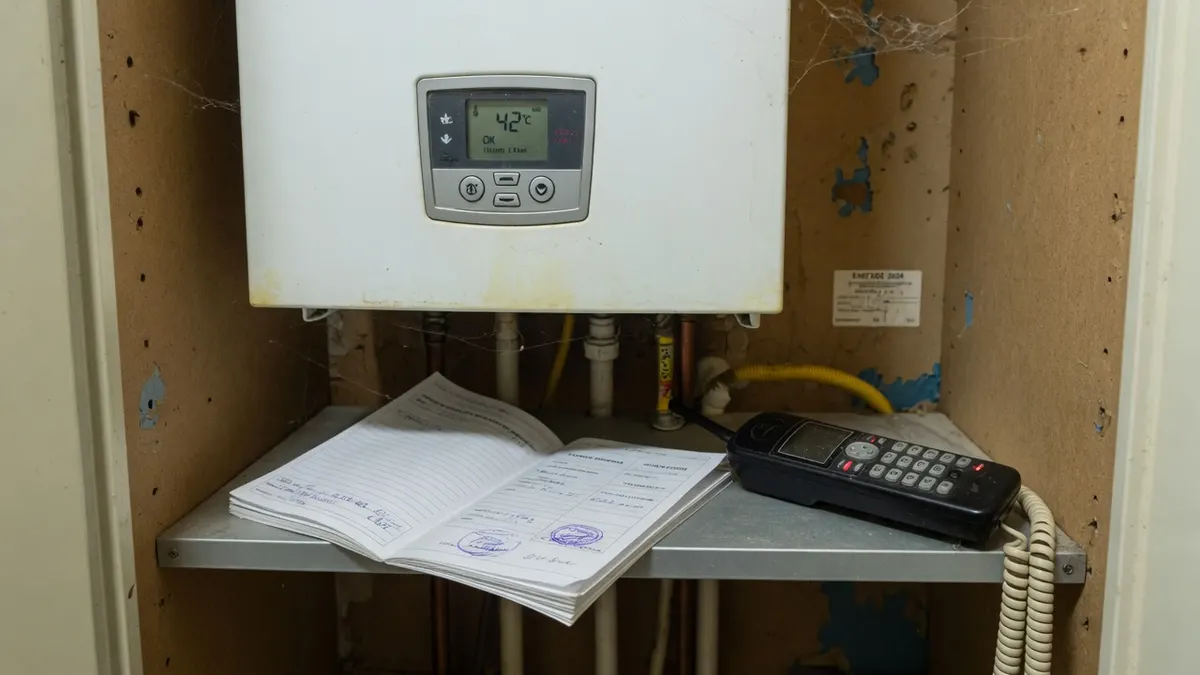
A wall-boiler look in a third-floor flat is a bag and a pair of hands. A communal oil plant under a block is a different day. The jacket comes off. The flue wants a look. The tank, the lines, the pump, the vessel — that is not a gap between two radiator bleeds.
If the assistant only knows “heating visit”, it will offer the manager the half hour you left after a thermostat. You will spend that half hour explaining why you have to come back. The manager will ring the van that already knew the plant was a morning.
Write the minutes you actually stay. A clean on a small oil burner is not a pellet hopper and an auger. A heat-pump look on a terrace is not a basement. The book has to carry those as different types, or Thursday fills with the wrong jacket.
Building managers book for three flats at once. That is still one plant if the heat is communal, and three visits if each flat has its own wall unit. The assistant asks. A single Thursday morning cannot hold three separate boilers unless you marked it that way.
The key is part of the booking
No key, no plant. The confirmation that does not name who opens the door is how you idle on the pavement. The assistant asks, on every communal morning, who will be there. If the caller is a tenant who does not have the basement key, the morning is not confirmed. It becomes a callback to the manager.
Some of you leave a key in a box. Some of you have a copy. Mark that on the building, not as a guess on the call. The assistant should not tell a stranger that a key is in a box.
Saturday frost mornings, if you take them, live in the same book. An annual clean does not belong there. A lockout does. If you do not mark the difference, the assistant will offer a Saturday clean to someone who only needed a note, and you will drive for a job that could have waited until Monday.
What a good booking sounds like
Fuel. Type. Address. Key. Morning that exists. Refusal of the reset, said out loud, if they asked. SMS in the language they used.
There is no “come at 10:20”. There is no “press the red one until we get there”. There is no quote from a plate. There is no communal plant dropped into a radiator gap.
If the assistant is friendly and still puts a lockout into a service morning, you own that hour. Put the person who rang about the red light at 11:10 on a note, and put the clean on a morning the book can honour.
AI receptionist, in-house staff, or a call centre
| CITT | In-house | Call centre | |
|---|---|---|---|
| Reads the book before offering a morning | Yes, the book the van works from | Yes | Usually not — takes a message |
| Books evenings and Saturday frost mornings | Yes, if you marked them | No | Sometimes |
| Treats a lockout as different from a clean | If you marked the two types | Yes | Rarely sees the week |
| Starts with oil, gas or pellet | Yes — before it looks at the book | Yes | Often jumps to what morning |
| Books a reset session | Never — the technician looks at the boiler | The technician does, at the plant | Sometimes books "a reset chat" |
| Sends the confirmation and who holds the key | Automatically, by SMS | If they remember | Sometimes |
What a month of empty burner mornings costs
Worked from these assumptions — change any of them and the answer changes:
- Two people. About 28 booked mornings a month for annual cleans, radiator looks, or a new-boiler survey.
- An empty plant-room morning is not given to someone else the same day.
- About 10% of booked mornings arrive with no key, or nobody comes. Check your own figure. Vans vary.
- Recoverable value of a used morning, €140. Put your own figure in. A communal plant and a thermostat look are not the same.
- A reminder that names who holds the key cuts empty mornings by a third. Challenge this first.
- 28 mornings × 10% = about 3 empty mornings a month.
- 3 × €140 = €420 of reserved time sitting empty.
- A third avoided returns about €140 a month.
- Over the heating months — this example counts 6 — 6 × €140.
Roughly €840 a season, from a text that names the key, not only the hour.
What it costs
CITT is pay as you go: no packages, no minimum, no contract. The current rates — the monthly fee per number and the per-minute rate — are on the pricing section of the home page, which is the only place they are published.
Frequently asked questions
Can it book a burner clean while I am in someone else's basement?
It reads the same book the van works from and checks the morning before offering it. A day you have closed because you are already in a communal plant, or because the other person is on lockouts, is never offered as a clean, if you marked it. Thermostat looks can still be offered that day if someone will be on a landing. If the assistant cannot reach the book at that moment, it does not guess. It takes the request as a callback and says so. A morning the van has no record of is worse than no morning. The manager turns up with a key and nobody is free.
What about someone moving an existing morning?
The assistant asks oil, gas or pellet first, then lockout or service, then the address on the file, and treats the move as one change. Handled as cancel, then book, Thursday is still taken by their own visit, and they are told that morning is not free. A client who has a lockout look and an annual clean on the same phone must say which visit is moving.
Will it book a time to talk them through the reset?
It will book a look at the boiler, or an annual clean, if you allow those types. It will not book a session in which the assistant itself reads a reset. A lockout is work in front of the plant. The technician looks at the boiler — a person, not the voice on the phone.
Should it book a communal plant against any free hour?
A communal plant is a long morning and a key. Mark how long you actually need. The assistant takes the building and who will be there. It does not drop a three-hour plant into a twenty-minute radiator gap. It does not tell a tenant to open a locked basement.
Who sends the confirmation?
The assistant, by SMS, in the language of the conversation, at the moment of booking, including the fuel and who must be there with the key. The reminder goes out ahead of the morning on the schedule you set. Neither requires anyone in the van to type a number.
Can clients cancel through it too?
Yes, and you should let them, especially on annual cleans after the first frost. A cancellation the van hears about the day before is a morning that can go to someone who still has no heat. The same cancellation arriving as a no-show is a jacket unused. Cancellations are written back to the book the same way bookings are.